
Which US Airport to Fly Into: Gateways by Destination
Where to land for New York, Florida, California, Las Vegas and the national parks, the backup airport for each, and when an open-jaw ticket makes sense.
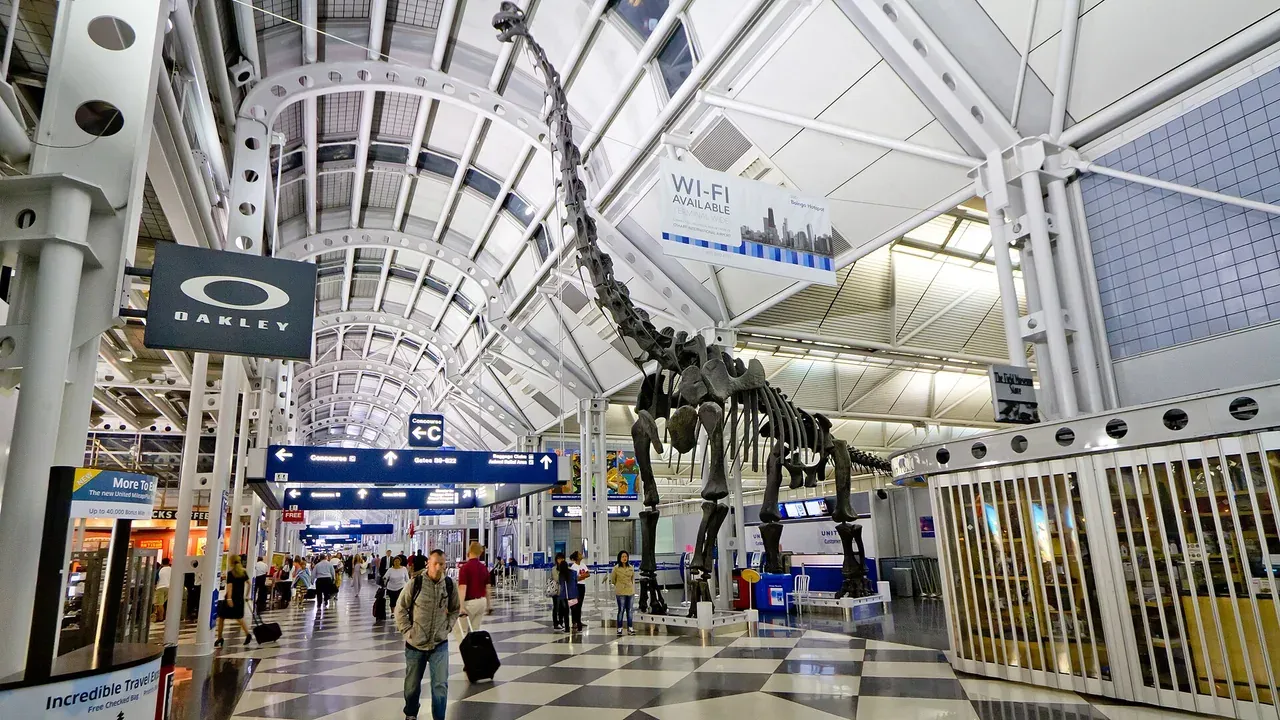
Fly into the city where the first days of your trip happen and home from the one where it ends. For New York that’s JFK or Newark, for Southern California it’s LAX, for the Southwest parks it’s Las Vegas, and a trip that crosses the country belongs on an open-jaw ticket, into one coast and out of the other. A cheaper fare into the wrong airport can come straight back as a domestic flight or a lost day on the road.
Where to land, destination by destination
| Where you’re going | Fly into | Backup airport | Open jaw makes sense when |
|---|---|---|---|
| New York City | JFK | Newark (EWR) | the trip ends in Florida, California or Chicago |
| Boston and New England | Boston Logan (BOS) | Providence (PVD) | you finish in New York or Washington |
| Washington, DC | Washington Dulles (IAD) | Baltimore/Washington (BWI) | you start in New York and take the train south |
| Miami and the Keys | Miami (MIA) | Fort Lauderdale (FLL) | you drive north and fly home from Orlando |
| Orlando and the theme parks | Orlando (MCO) | Orlando Sanford (SFB) | the trip ends in Miami or the Keys |
| Chicago and the Midwest | O’Hare (ORD) | Midway (MDW) | you head west and fly home from the coast |
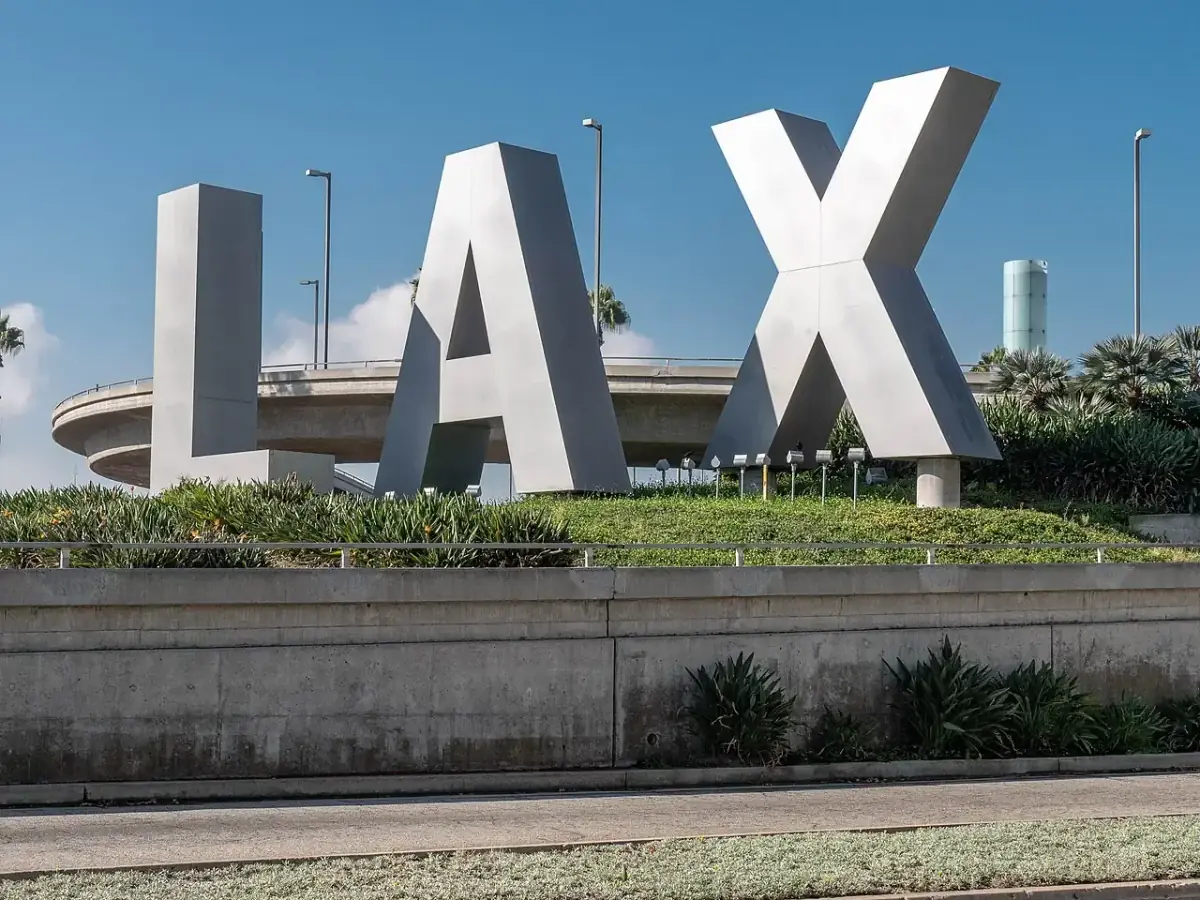
| Los Angeles and Southern California | LAX | Burbank (BUR) or Long Beach (LGB) | you drive up the coast and fly home from San Francisco |
| San Francisco and Northern California | SFO | Oakland (OAK) or San Jose (SJC) | the trip ends in Los Angeles or Las Vegas |
| Las Vegas and the Southwest parks | Las Vegas (LAS) | Phoenix (PHX) | the route finishes in Los Angeles or San Diego |
| Seattle and the Pacific Northwest | Seattle-Tacoma (SEA) | Portland (PDX) | you finish in Portland or San Francisco |
| Yellowstone and Grand Teton | Bozeman (BZN) or Jackson (JAC), via a US hub | Salt Lake City (SLC) | you enter the parks on one side and leave from the other |
A backup airport earns its place when the main gateway’s fares or schedules don’t work on your dates. It isn’t cheaper by default, and it can cost you a connection, a longer ride into town or a rental return you hadn’t planned for. Yellowstone is the row where the small airport is the plan, not the fallback. The park service lists Bozeman and Billings in Montana, Jackson and Cody in Wyoming and Idaho Falls as the airports near the park with flights all year, so from overseas you’ll connect through a bigger US airport first.
On the East Coast the train does the repositioning. Acela is scheduled at 2h 56m to 3h 25m between New York and Washington, so landing in New York and flying home from Dulles costs a morning, not a flight. Amtrak train travel USA has the fare types, the Rail Pass rules and the other routes worth riding.
How to choose between two gateways
Nonstops from home
The airports with the most international traffic give you the widest choice of nonstops. In May 2026 the US International Trade Administration counted 2.9 million international passengers through JFK, ahead of Miami with 2.1 million, LAX with 2 million, and O’Hare and San Francisco with 1.4 million each. On the other side of the ocean, London Heathrow was the busiest foreign airport for US flights that month, with 1.7 million.
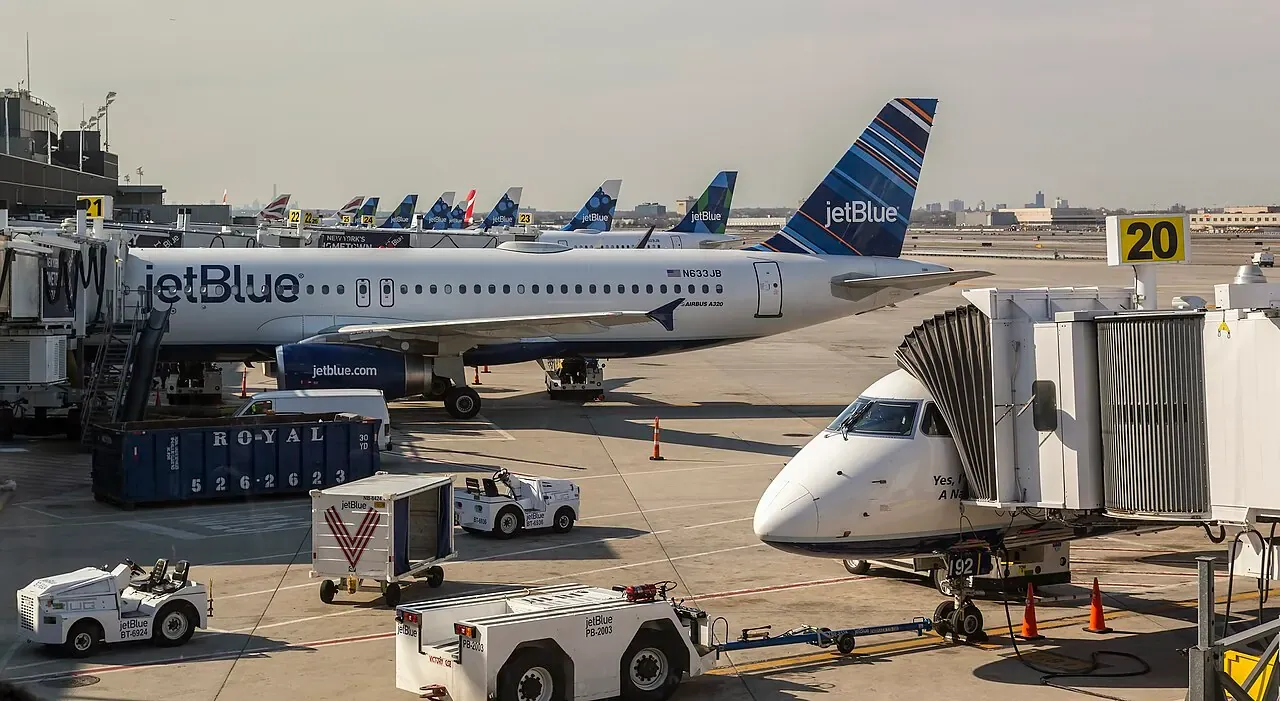
Start with the route map of the airport you’re leaving from, not with the city you want. On a trip of a week or two, a nonstop into your second-choice gateway is often a better trade than a connection into your first, because the connection is where a US arrival gets complicated.
Where you connect
Immigration and customs happen at your first US airport, not your last one. Fly London to Denver through Chicago and you’ll see a CBP officer at O’Hare, collect your checked bags, clear customs, drop the bags again for the domestic flight and go back through TSA security before the gate. Since April 2025 CBP has let passengers on selected international flights skip that bag recheck, starting with American Airlines’ Sydney-Los Angeles flight and since joined by routes such as Seoul-Atlanta and Qatar Airways’ Doha-JFK, so don’t plan around it until your airline confirms it for your flight.
The exception is preclearance. At 16 airports in six countries, including Dublin and Shannon in Ireland and Toronto, Vancouver, Montreal and Calgary in Canada, you clear US immigration before you board. You skip the CBP and TSA lines on arrival and walk straight to the connection, and CBP itself pitches that as a way to make tighter domestic connections work. If you’re coming via Ireland or Canada, a preclearance airport can turn a connecting itinerary into the easier option.
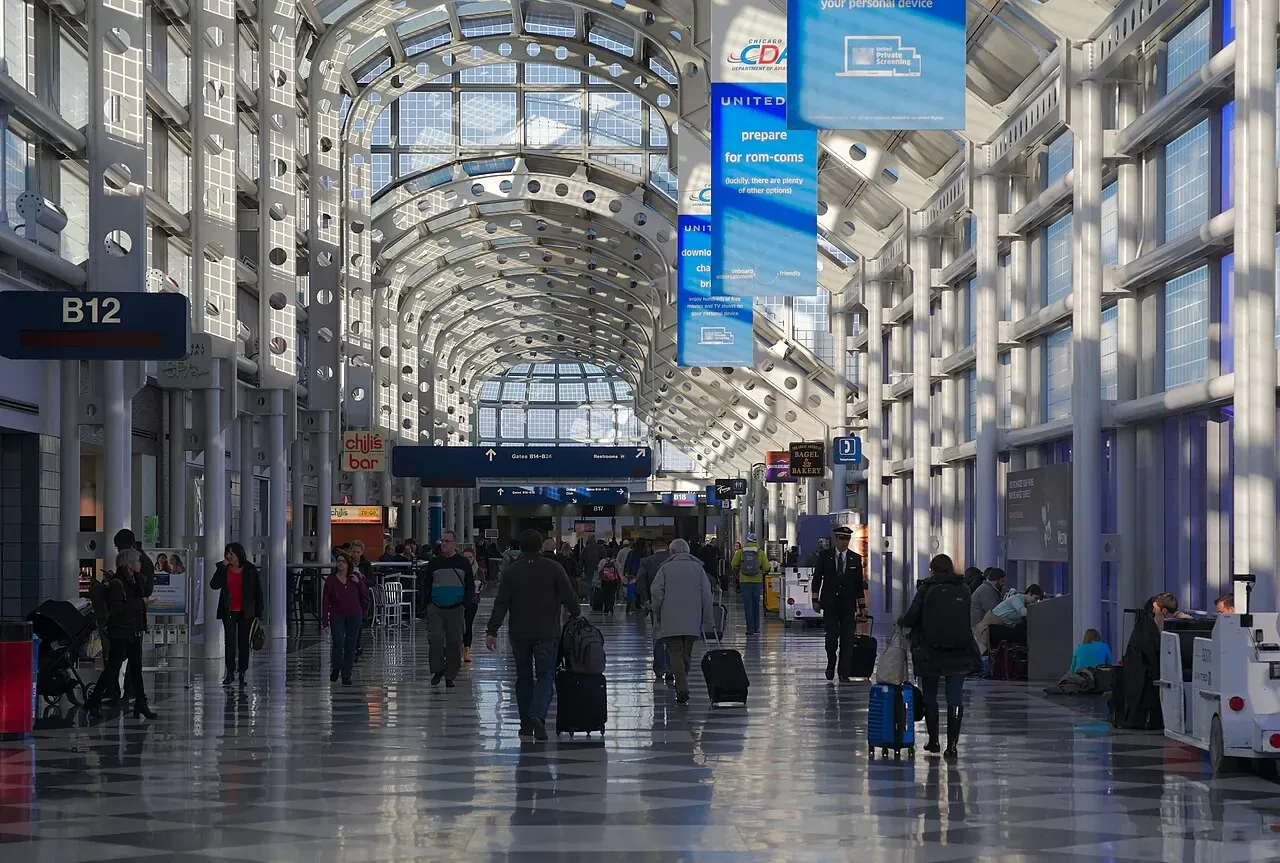
Paperwork comes before any of it. Unless you’re a citizen of Canada or Bermuda, the airline won’t board you without an approved ESTA or visa, and Global Entry and TSA PreCheck explains which faster lanes your passport can actually use.
Getting into town from each gateway
The fare into town is small at most gateways and adds up in New York, where AirTrain JFK is $8.75 before you’ve paid for the subway or the LIRR and NJ Transit from Newark to New York Penn Station is $17.25 with the AirTrain fee included. What the airport ride costs in 10 North American cities lines the fares up side by side.
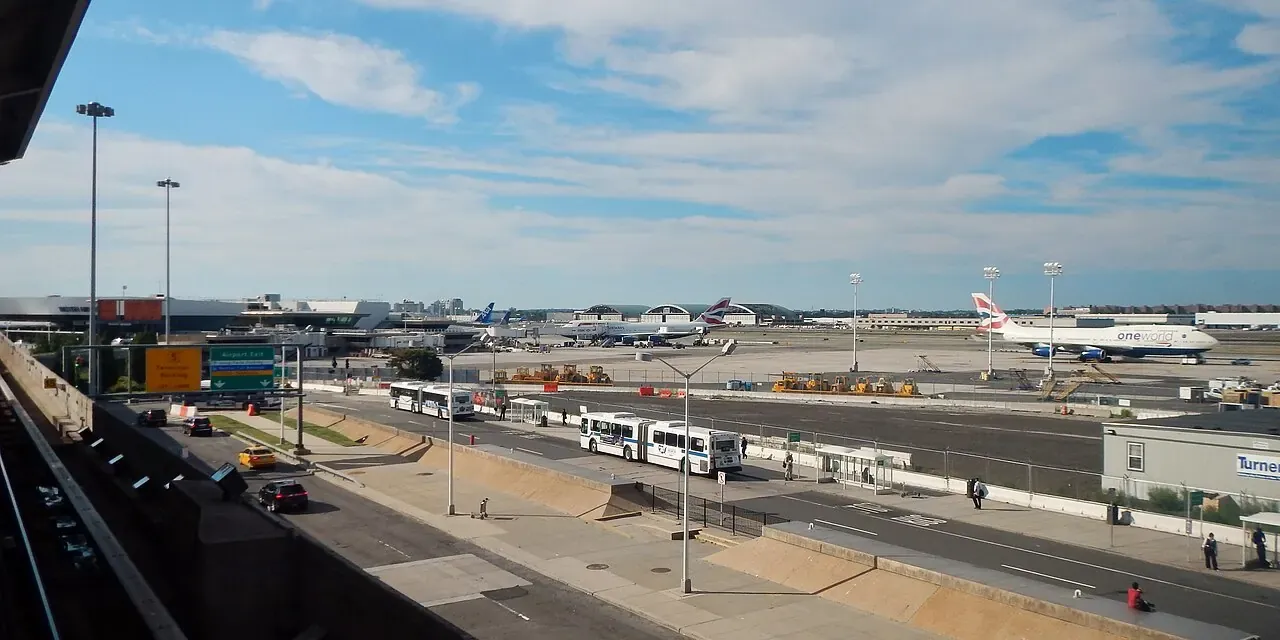
- JFK: AirTrain to Jamaica or Howard Beach, then the subway or LIRR, or a yellow cab on the flat fare. JFK to Manhattan
- Newark: AirTrain from your terminal to the airport rail station, then NJ Transit to New York Penn Station, about 30 minutes from that station, all on one ticket. While AirTrain Newark is being replaced, a Port Authority shuttle bus can stand in for it on weekdays, so check NJ Transit’s station advisories for your arrival day.
- Boston Logan: the free Silver Line SL1 bus to South Station. Boston Logan to downtown
- Miami: the Route 150 Airport Express bus to South Beach. Miami Airport to South Beach
- Chicago O’Hare: the CTA Blue Line, a walk from Terminals 1, 2 or 3; from Terminal 5 you’ll ride the airport train first. O’Hare to downtown Chicago
- Los Angeles: the FlyAway bus to Union Station, or Metro rail from the LAX/Metro Transit Center. LAX to Los Angeles
- San Francisco: BART from the International Terminal. SFO to San Francisco
- Atlanta: MARTA rail from the Domestic Terminal. ATL to downtown Atlanta
- Seattle-Tacoma: Link light rail, which you’ll reach through the parking garage. SEA to downtown Seattle
- Las Vegas: a posted taxi zone fare or the RTC bus. LAS to the Strip
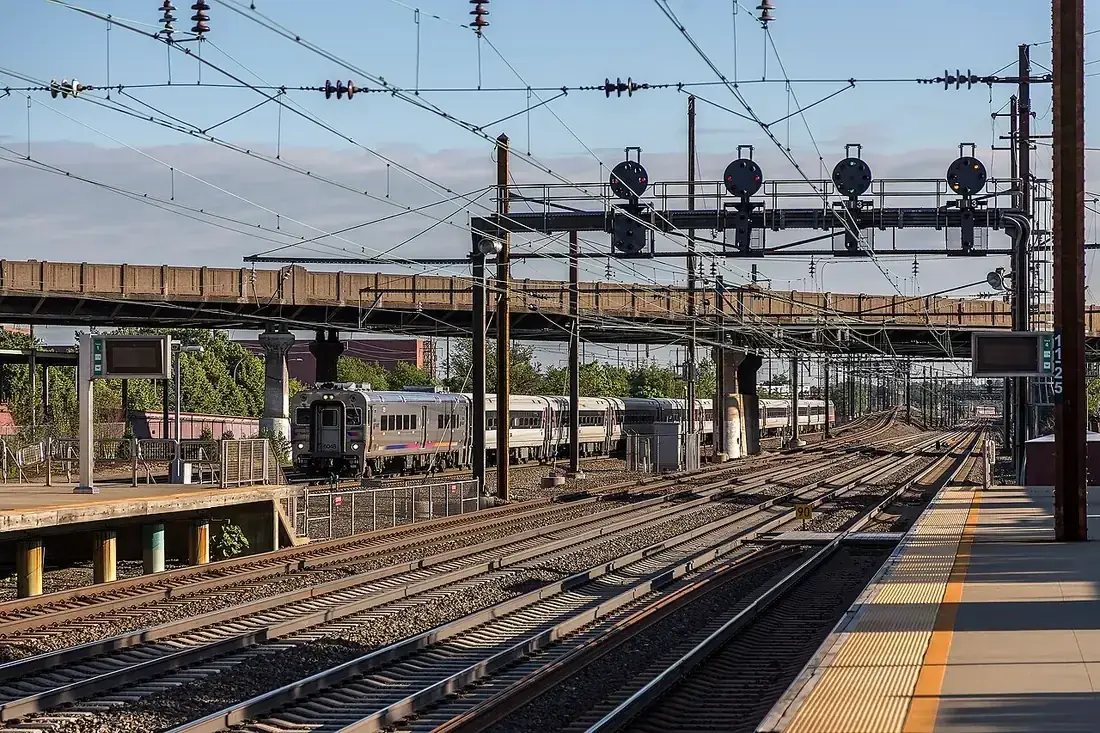
Open jaw: into one city, home from another
An open-jaw ticket flies you into one city and home from another: into JFK and out of LAX, into Las Vegas and out of San Diego. You’re no longer paying, in money or in days, to get back to where you started.
It fits a trip shaped like a line. New York, the train to Washington and home from Dulles. A California drive from Los Angeles up to San Francisco. A Southwest parks route that ends at the Pacific. It doesn’t fit a week based in one city, and it can backfire with a rental car, because returning a car somewhere other than where you picked it up can bring a one-way charge. Once you’ve landed, getting around the USA compares flying, driving and the train between cities.
Price it both ways, as a multi-city itinerary and as two one-way tickets on the same dates. Whichever comes out ahead, keep each direction on one ticket: if a late first flight makes you miss your connection, rebooking you is then the airline’s problem, not yours. Try a few date pairs too, because the gap between an open jaw and a plain round trip changes with the dates.
If you need a car on day one
Airport rentals often include concession-recovery or customer-facility fees, but that doesn’t make a downtown branch automatically cheaper. Compare full totals for the same dates and vehicle class, then add what it costs in money and time to reach an off-airport branch. If your first 24 hours are all city, whether that’s Manhattan, downtown Chicago or central LA, picking the car up later can save a day of rental and a night of parking. Renting a car in the USA covers age fees, insurance and one-way drops, rental car insurance in the USA weighs the counter’s cover against your credit card’s, and driving in the USA handles tolls and gas once you have the keys.
Admission and opening hours
- Admission price
- One-way rail fares from the New York airports, checked 17 September 2026 on the operators' own pages: NJ Transit from Newark Airport to New York Penn Station $17.25 with the AirTrain fee included; AirTrain JFK $8.75 before the subway or LIRR fare.
While AirTrain Newark is being replaced, a Port Authority shuttle bus can stand in for it on weekdays, so check NJ Transit's Newark Airport station advisories for your arrival day. Taxi and rideshare totals move with traffic and are not quoted here.
Details checked: September 17, 2026
Read also

Transport · 8 min read
ATL Airport to Downtown: MARTA, Taxi and Rideshare
Verified · August 28, 2026MARTA is $2.50 and about 16 minutes to Five Points. Airport taxis still publish flat fares: $37.50 downtown, $39.50 Midtown, $49.50 Buckhead.

Transport · 8 min read
SEA to Downtown Seattle: Link, Taxi and Rideshare
Verified · August 23, 2026Link light rail is a flat $3 and about 38 minutes to Westlake. Taxis use a meter with a $20 airport minimum - there is no regulated flat fare to downtown.

Transport · 10 min read
SFO to San Francisco: BART, Taxi and Rideshare
Verified · August 20, 2026BART to downtown is $11.80 and takes about 30 minutes, but you don't step straight onto a train. Taxi, rideshare and Caltrain routes, checked 20 Aug 2026.

Transport · 9 min read
Boston Logan to Downtown: Silver Line, Taxi and Ferry
Verified · August 19, 2026Silver Line SL1 is free from Logan. Taxi meters run extra with a $2.75 toll, Uber picks up at the garage, and the ferry is seasonal.