
Airport to Downtown: 10 North American Cities
What the airport-to-downtown ride costs in 10 US and Canadian cities, checked with the operators: free in Boston, $5 in Chicago, $11.80 in San Francisco.
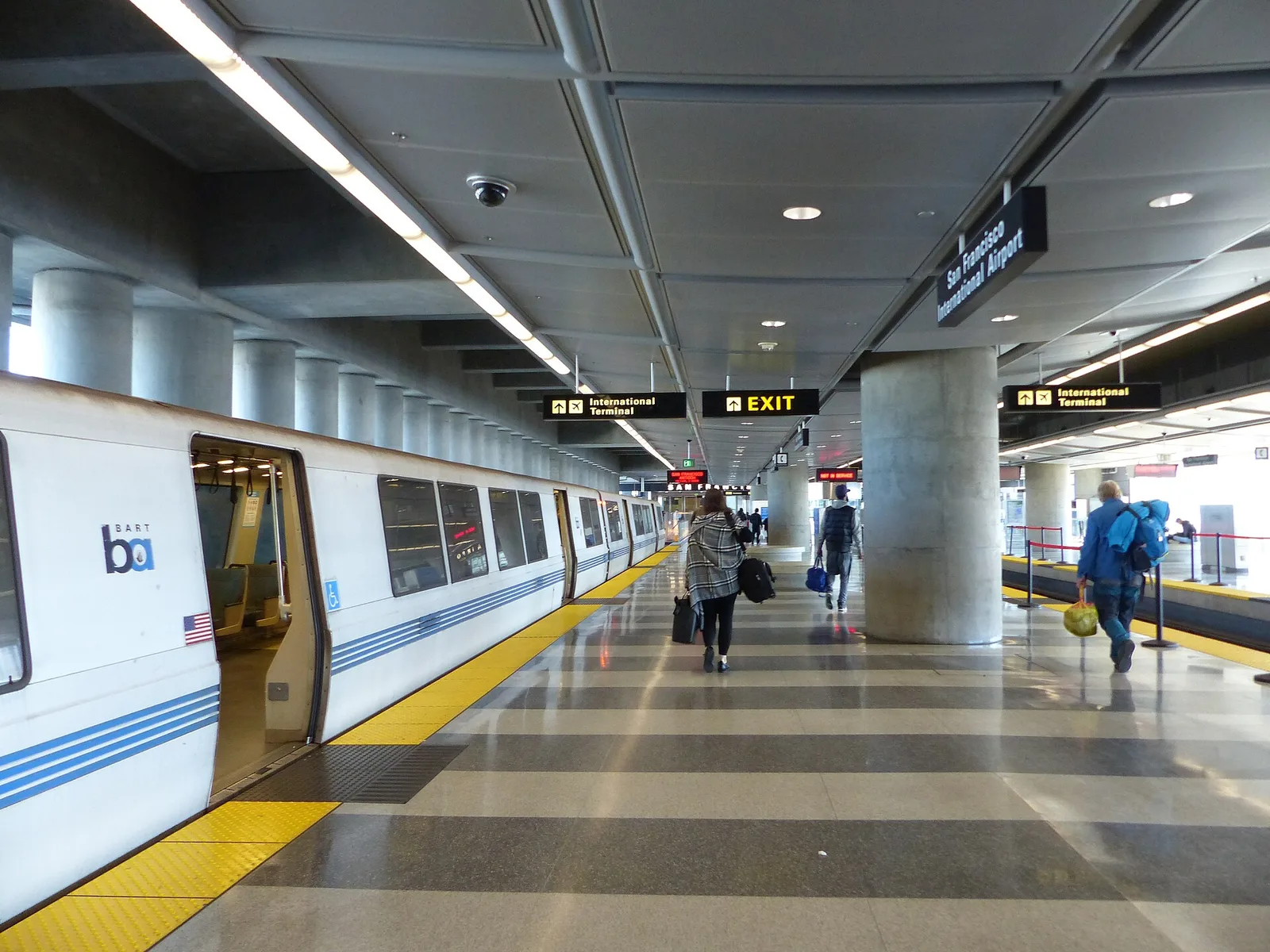
Land in North America and the ride from the airport into downtown costs anywhere between nothing at all and $11.80. That’s the full spread across ten cities, and it catches people out in both directions. Some arrive braced for the worst and find the train costs less than a coffee. Others assume that a rich country means an expensive airport link, take the first cab they see, and pay sixty dollars for a trip that a bus does for free.
Every number below came from the operator, not from an aggregator, because aggregators are where stale fares go to live forever. All ten were checked on 13 August 2026 against the agency that actually sets the price: the MBTA’s own Logan Airport page, BART’s fare API, the CTA fare chart, TransLink’s zone table, UP Express ticketing.
The table
Cheapest public option from the main international airport into the city center, one adult, one way. The local column is what you actually pay. Conversions use 1 CAD = 0.718 USD, the European Central Bank rate dated 12 August 2026.
| City | Airport | What you take | Local fare | In USD |
|---|---|---|---|---|
| Boston | BOS | Silver Line SL1 bus | free | free |
| Los Angeles | LAX | free shuttle + C or K Line | $1.75 | $1.75 |
| Atlanta | ATL | MARTA rail | $2.50 | $2.50 |
| Calgary | YYC | Route 300 BRT | C$4.00 | $2.87 |
| Seattle | SEA | Link 1 Line | $3.00 | $3.00 |
| Chicago | ORD | Blue Line | $5.00 | $5.00 |
| Vancouver | YVR | Canada Line SkyTrain | C$10.70 | $7.68 |
| Toronto | YYZ | UP Express | C$12.35 | $8.87 |
| New York | JFK | AirTrain + subway | $11.75 | $11.75 |
| San Francisco | SFO | BART | $11.80 | $11.80 |
The gap between the cheapest paid option and the most expensive is 6.7 times. Boston sits outside that comparison entirely, because Boston charges nothing.
Boston is free, and almost nobody expects it
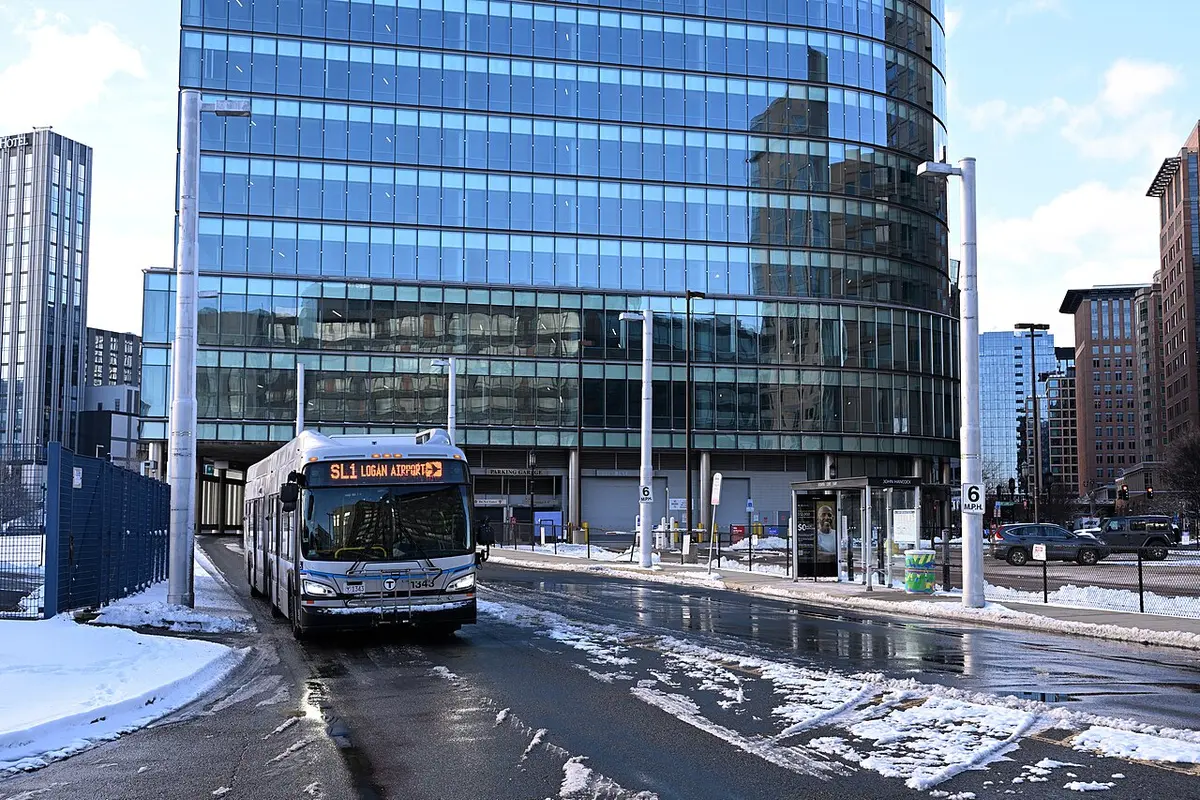
The MBTA puts it plainly on its own Logan Airport page: service from Logan Airport is always free. The Silver Line SL1 bus calls at every terminal and runs to South Station downtown, where it meets the Red Line and commuter rail. You do not tap anything, you do not buy anything, you get on.
The catch is direction. Going the other way you pay, though not much: a $2.40 subway fare gets you to South Station and the transfer onto the SL1 is free from there. So a return trip to and from the airport costs $2.40 in total.
This is the single best deal in the table, and it’s invisible from outside. Nothing at the airport advertises “free”, and most visitors have already queued for a taxi before they find out.
Los Angeles now has a train, and it is $1.75
Until recently, “take transit from LAX” was advice you gave to people you didn’t like. That changed on 6 June 2025, when the LAX/Metro Transit Center station opened.
Here is how it works today. A free shuttle runs every ten minutes from every LAX terminal to the LAX/Metro Transit Center. From there the C Line and K Line take you into the network, and Metro charges a flat $1.75 for any trip, any distance. Downtown is roughly 45 to 60 minutes door to door.
One thing to know before you plan around it: the Automated People Mover, the driverless rail link that will replace that shuttle bus with a direct train from the terminals, is not open yet. LA Metro’s own page says it is expected in 2026. Until it opens, the shuttle is the connection, and it works, but it is a bus in LA traffic.
Chicago is the only city that charges extra for being an airport
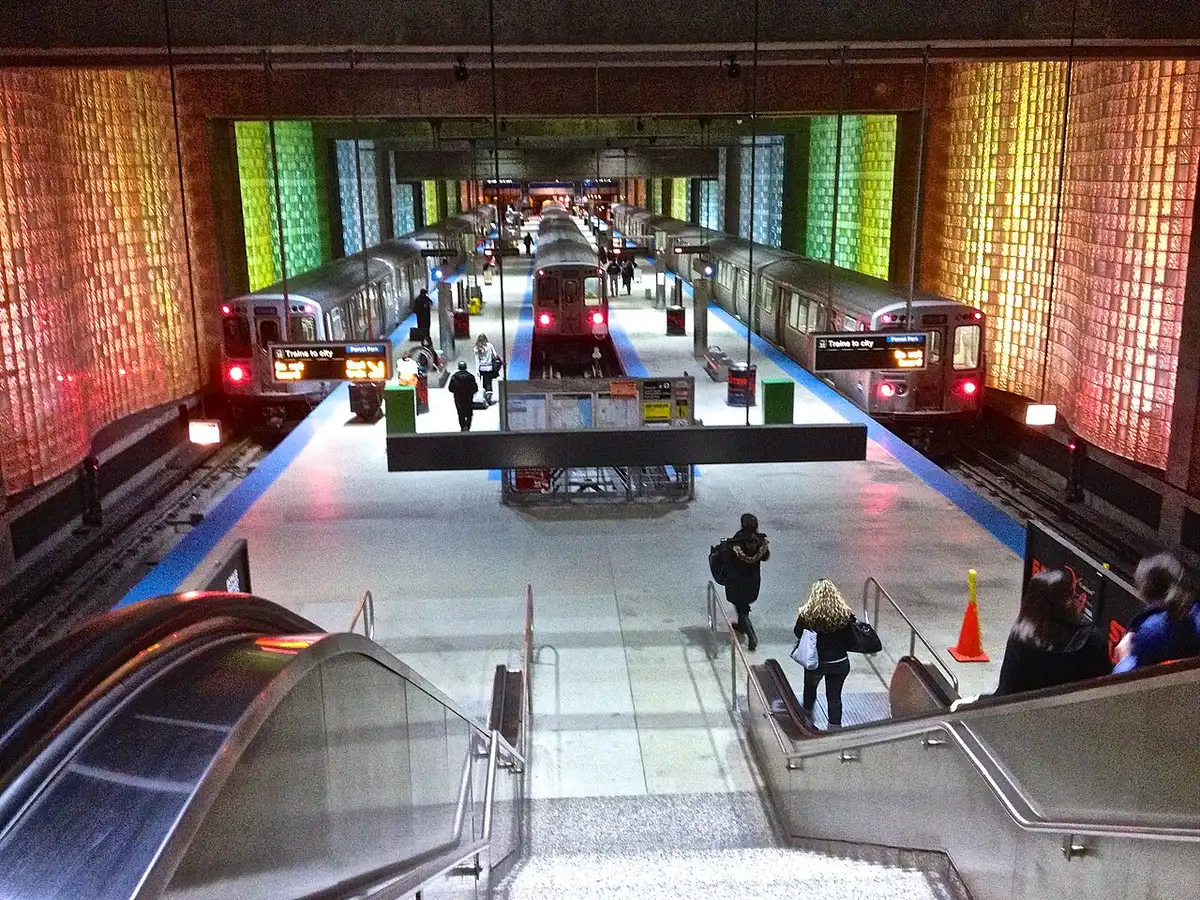
The CTA’s fare chart carries an asterisk that most visitors never see. The standard ‘L’ fare is $2.50. But there is a separate line for the fare from O’Hare, and it is $5.00, deducted on entry at that station only.
The CTA isn’t hiding it. The same fare chart offers a tip: use an unlimited pass to board at O’Hare and pay no extra charge. Since a 1-Day CTA/Pace Pass costs $5, that is the same money for a day of unlimited travel instead of one ride. If you are going to take a single other trip that day, the pass is strictly better, and the airport machines sell it.
Midway, incidentally, does not carry the surcharge. Fly into the other Chicago airport and the Orange Line downtown costs the standard $2.50.
Vancouver has a hidden surcharge that more than doubles the fare
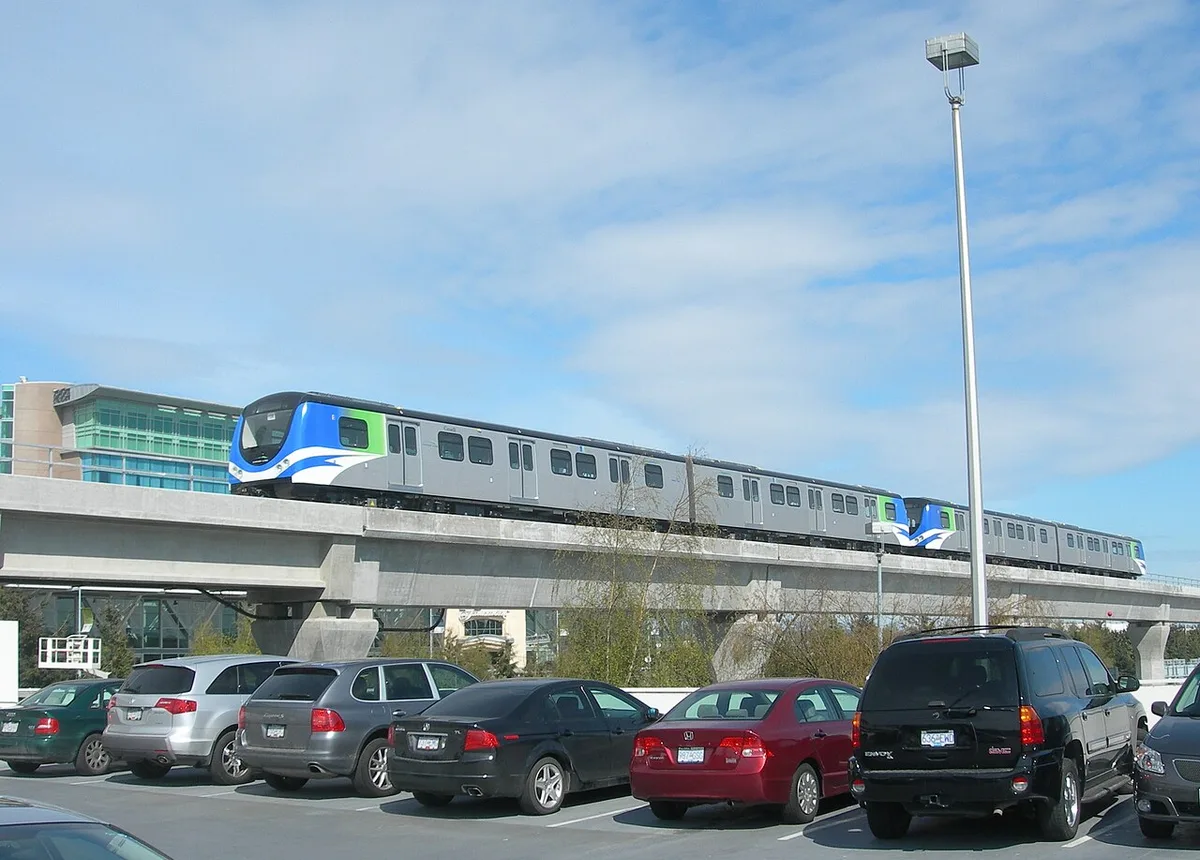
Look up a 1-zone SkyTrain fare in Vancouver and you get C$2.85 on stored value. That’s the number people quote, and it’s wrong for the airport.
TransLink applies a YVR Airport AddFare of C$6.50 to any journey starting at YVR-Airport, Sea Island Centre or Templeton, at all times. The zone chart is the other half of the trap: the airport sits in Zone 2 and downtown in Zone 1, so a weekday daytime run is a two-zone fare. That makes the real cost C$10.70 on a Compass card, or C$11.60 tapping a bank card or phone. After 6:30 p.m. on weekdays and all weekend every trip counts as one zone, which brings it down to C$9.35 and C$10.00. Either way the surcharge is larger than the fare it is added to.
There’s a well-known way around it that we won’t pretend is a secret: the AddFare applies to journeys starting on Sea Island. Going the other direction, towards the airport, it doesn’t apply, so the inbound and outbound legs are not the same price. Our sister site has the full breakdown in Vancouver airport to downtown, including which station the AddFare stops applying at.
Toronto is expensive in dollars and cheap in minutes
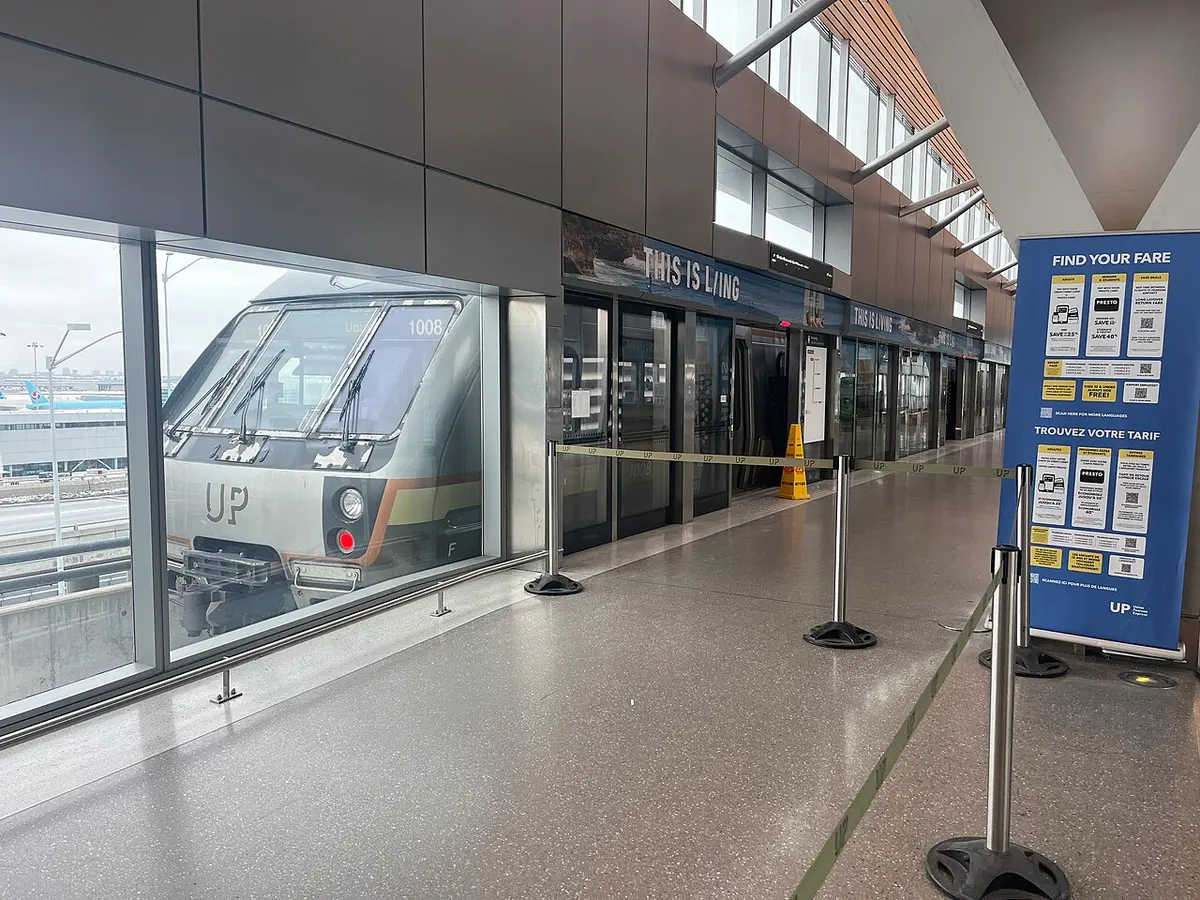
At C$12.35 the UP Express is the priciest single ticket in the table by local currency. In US dollars it comes to $8.87, which puts it below both New York and San Francisco, and for that you get the fastest and most reliable ride of any city here: Pearson to Union Station, 25 minutes, a train every quarter of an hour, with luggage racks and no transfers.
Toronto also has a cheaper way, and it’s worth knowing if you are counting: the TTC 900 bus from the airport connects to the subway on a standard TTC fare. It takes longer and involves a change, but it costs a fraction of the express. Toronto airport to downtown on Canada Guidebook compares the two properly, with timings.
New York: the ticket is not the number you looked up
New York is the one place in this table where the headline fare is genuinely misleading, because there are two of them stacked.
The AirTrain out of JFK is $8.75 on its own, paid on exit at Jamaica or Howard Beach. Then you still need the subway or the LIRR to get anywhere, and the subway is $3.00 since the January 2026 increase. So the honest JFK number is $11.75, and the AirTrain half of it alone costs more than the entire airport trip in five of the ten cities on this list.
That $3.00 is worth noting on its own if you last visited a while ago. The MTA fare was $2.90 until 4 January 2026, and plenty of guides still print the old figure.
San Francisco tops the table, at $11.80
BART’s own fare API gives $11.80 for SFO to Powell Street - and BART is distance-based, but in this case that doesn’t mean the fare moves around: Powell, Civic Center, Embarcadero and Montgomery all sit close enough together that a live query returns the identical $11.80 for all four. There is no separate airport surcharge in the Vancouver sense; SFO is simply far out and the fare reflects the distance.
What you get is a 30-minute ride from a station inside the International Terminal, with a free AirTrain shuttle from the other terminals to reach it. BART doesn’t sell paper tickets any more, so you tap a contactless bank card, a phone, or a Clipper card, and every traveler aged five and up needs their own. Landing at a different terminal, or want the taxi and rideshare pickup points too? Our SFO to San Francisco guide covers all of it terminal by terminal.
What this means when you plan
Three practical things fall out of the table.
Look up the airport fare, not the city fare. Vancouver and Chicago both charge more for starting at the airport than for the same trip anywhere else on the system. If you budget from a general fare chart, you will be wrong by a factor of two or three.
Check the direction. Boston is free inbound and paid outbound. Vancouver is surcharged outbound from the airport and not inbound. Assuming a round trip costs double the one-way is wrong in both cities, in opposite directions.
Check whether a day pass costs the same. Chicago is the clearest case: the airport single ride and the all-day pass are both $5. Anywhere the airport fare carries a premium, it is worth thirty seconds to compare the two before you tap. Calgary works the same way, and Calgary airport to downtown covers how the 90-minute ticket plays out on Route 300.
For the trip itself, our Amtrak train travel guide covers fare types, the USA Rail Pass and scheduled times on seven routes, and the Grand Canyon guide is the classic follow-on once you have landed in the southwest.
Two cities we left out, and why
Montreal and Ottawa belong in a table like this and are not in it. Both transit agencies, STM and OC Transpo, refused automated requests to their public fare pages while we were compiling the figures, and we weren’t willing to publish a number we had not seen at the operator. A row that says “roughly” would undo the point of the whole page. When we can confirm them at the source, we will add them.
Read also

Transport · 8 min read
ATL Airport to Downtown: MARTA, Taxi and Rideshare
Verified · August 28, 2026MARTA is $2.50 and about 16 minutes to Five Points. Airport taxis still publish flat fares: $37.50 downtown, $39.50 Midtown, $49.50 Buckhead.

Transport · 8 min read
SEA to Downtown Seattle: Link, Taxi and Rideshare
Verified · August 23, 2026Link light rail is a flat $3 and about 38 minutes to Westlake. Taxis use a meter with a $20 airport minimum - there is no regulated flat fare to downtown.

Transport · 10 min read
SFO to San Francisco: BART, Taxi and Rideshare
Verified · August 20, 2026BART to downtown is $11.80 and takes about 30 minutes, but you don't step straight onto a train. Taxi, rideshare and Caltrain routes, checked 20 Aug 2026.

Transport · 9 min read
Boston Logan to Downtown: Silver Line, Taxi and Ferry
Verified · August 19, 2026Silver Line SL1 is free from Logan. Taxi meters run extra with a $2.75 toll, Uber picks up at the garage, and the ferry is seasonal.