
Grand Canyon National Park Guide: South Rim & North Rim
South Rim or North Rim, free shuttles, the Rim Trail, how far to hike below the rim safely, and where to sleep - Village, Tusayan or Flagstaff.
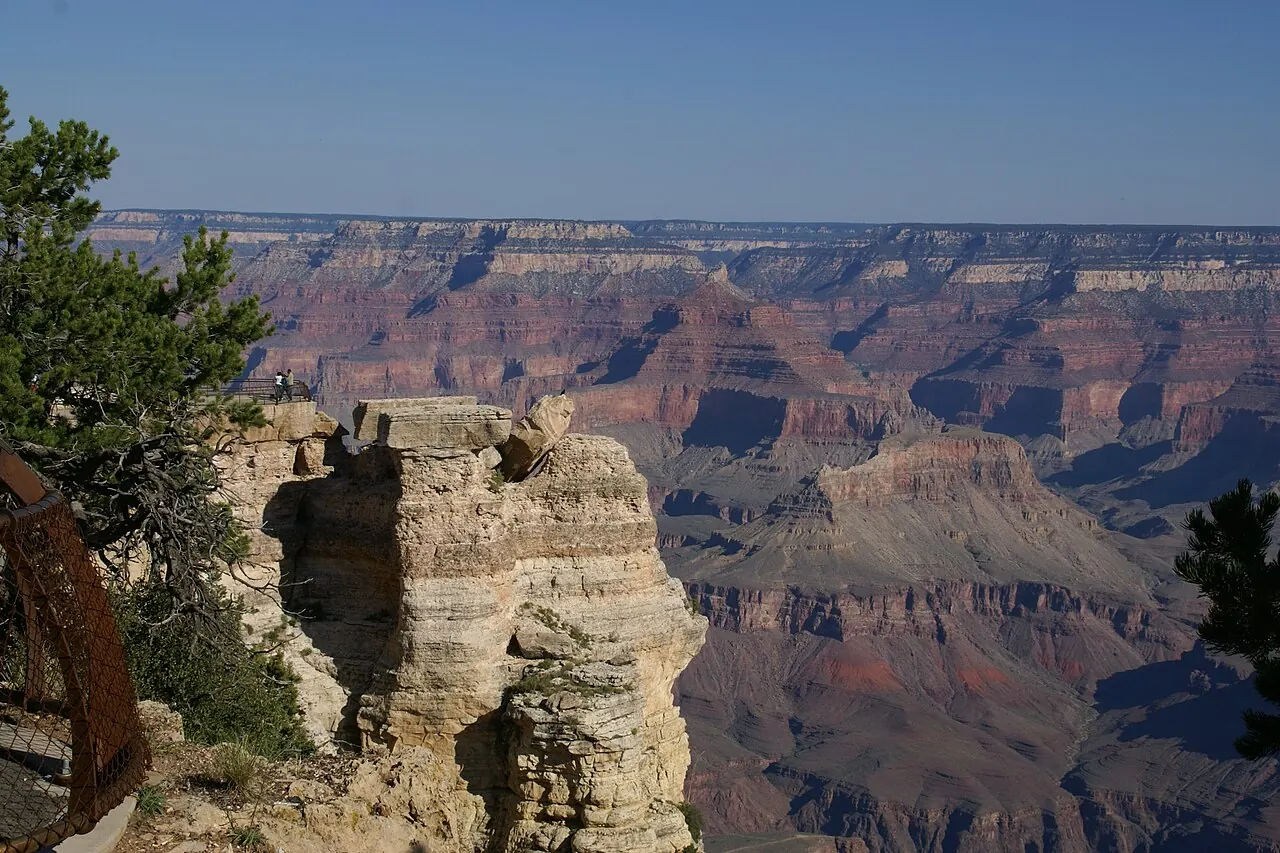
Almost everyone means the South Rim when they say Grand Canyon: it’s open 24 hours a day all year, it holds the visitor center, the historic village, the free shuttle network and the great majority of the park’s visitors - about 4.4 million in 2025, down from 4.92 million in 2024. The North Rim is a thousand feet higher, four and a half hours away by road, and closed to vehicles for the winter: the usual closure runs December 1 to May 14, and in 2026 the entrance gate shuts at sunset on November 30, or sooner after the first major snowstorm. It reopened in 2026 after the 2025 Dragon Bravo Fire with day-use services only, and since October 15 the campground and the general store have closed too (NPS, as of October 19, 2026).
The single most useful thing to understand here’s not which viewpoint to pick. It’s how quickly the canyon punishes an ordinary day hike, because the walk that felt easy on the way down becomes a two-thirds-of-your-energy climb in 100F-plus heat on the way back up.
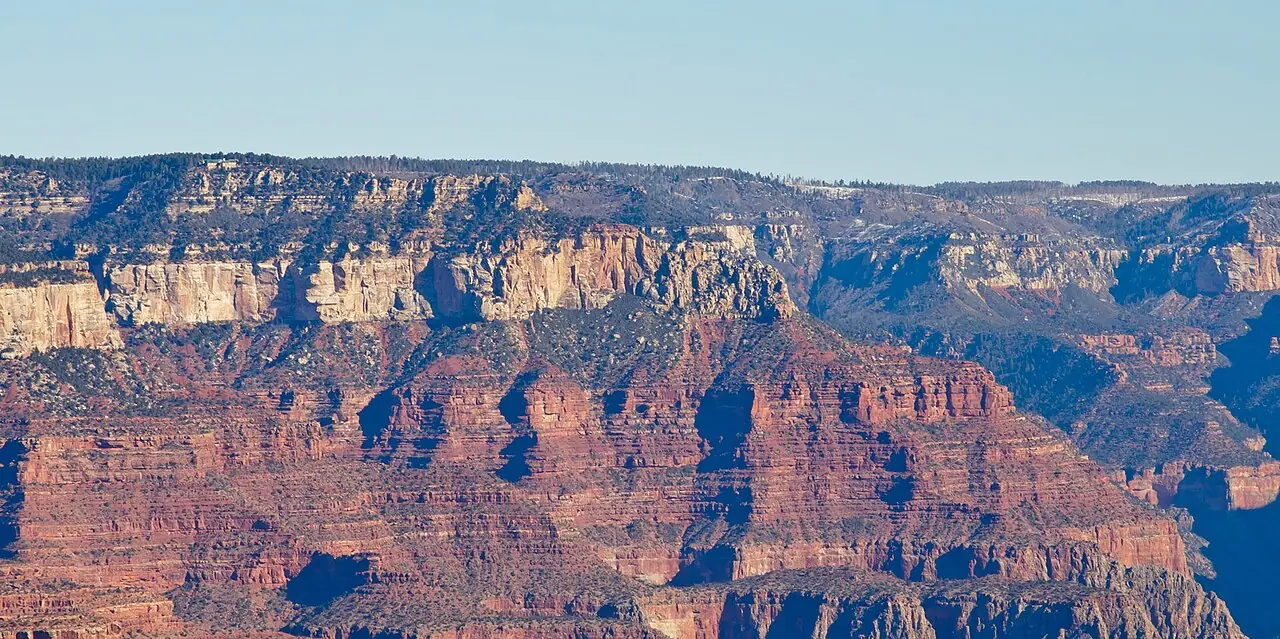
South Rim vs North Rim in 2026
The South Rim is the practical choice for a first visit and for anything under three days. It’s on the Interstate 40 corridor, ninety minutes from Flagstaff and an hour from Williams, and it has the infrastructure: restaurants, a railway station, a medical clinic and free shuttles, though its lodges have been closed to overnight guests since August 31, 2026 (see Where to sleep below).
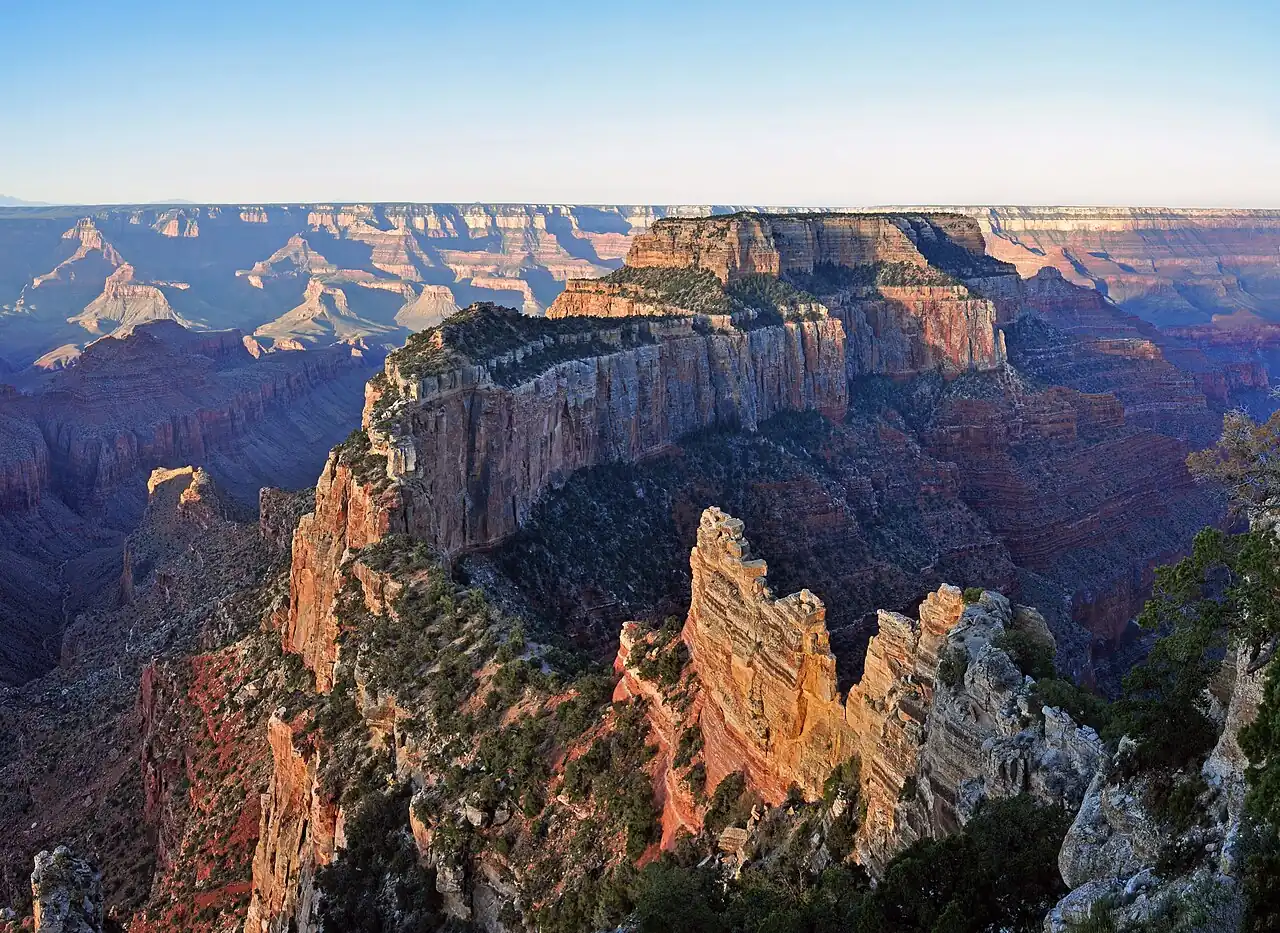
The North Rim is quieter and greener, sits among spruce and aspen, and looks across the canyon rather than into its main bend. It’s a very different experience - and in 2026 it’s a stripped-down one. The Dragon Bravo Fire in 2025 destroyed between 50 and 80 structures on the North Rim, including the historic Grand Canyon Lodge and the North Rim Visitor Center.
The park reopened it on May 15, 2026 in a stepwise way. Here’s what that means on the ground:
- Highway 67 is open until the gate closes; the scenic roads are shut until November 3, 2026. The entrance gate on State Route 67 closes at sunset on November 30, 2026, or after the first major snowstorm, whichever comes first. Cape Royal Road and Point Imperial Road, the roads to the main viewpoints, are closed from sunset October 15 to sunrise November 3, 2026 for road repair (as of October 19, 2026). NPS warns that snow, ice and rain are common on the North Rim in late fall and that emergency response will be extremely limited.
- There’s no overnight lodging on the North Rim in 2026, and the campground has closed too. The North Rim Campground closed for the 2026 season as of October 15, 2026; NPS’s status page lists a tentative reopening date of May 15, 2027. NPS points campers to the National Forest’s DeMotte Campground, 7 miles north of the park boundary, open for first-come, first-served camping through October 31, 2026. Lodging, food and fuel are about 45 miles north at Jacob Lake. Cottonwood Campground below the rim has been closed since the August 29, 2026 flash flood.
- Services are gone for the season. The general store closed on October 15, 2026, and there’s no fuel on the North Rim: the gas station closed on September 19, 2026, and the nearest fuel is at Jacob Lake or the North Rim Country Store, outside the park. NPS lists all North Rim water as off, so bring your own drinking water and food.
- Several rim trails remain closed by fire damage: Bright Angel Point, Widforss, Transept, Ken Patrick (west) and Uncle Jim. Open on foot are the Bridle, Arizona (except between the North Kaibab Trailhead and the Old Entrance Road), Ken Patrick (east), Cape Royal, Cliff Springs, Cape Final, Roosevelt Point and Point Imperial trails. NPS still lists the Cape Royal, Cliff Springs, Cape Final, Roosevelt Point and Point Imperial trails as open, but the two scenic roads that serve them are closed to vehicles until November 3, 2026, so confirm how you’d reach a trailhead before you drive up.
- The entire North Kaibab Trail, from the North Kaibab Trailhead to Phantom Ranch, has been closed since a flash flood on August 29, 2026, along with Phantom Ranch and the river bridges. NPS gives no estimated reopening date, so rim-to-rim hikes aren’t possible for now.
If you want the North Rim in fall 2026, treat it as a self-sufficient day trip before the gate closes, and check the park’s status page before you commit - it changes as repairs progress. NPS asks visitors to carry food, water, fuel and emergency supplies. Still deciding which rim, or wondering whether the glass Skywalk you saw online is either one of them? Grand Canyon South Rim vs North Rim breaks the decision down further, including drive times from Las Vegas and Phoenix.
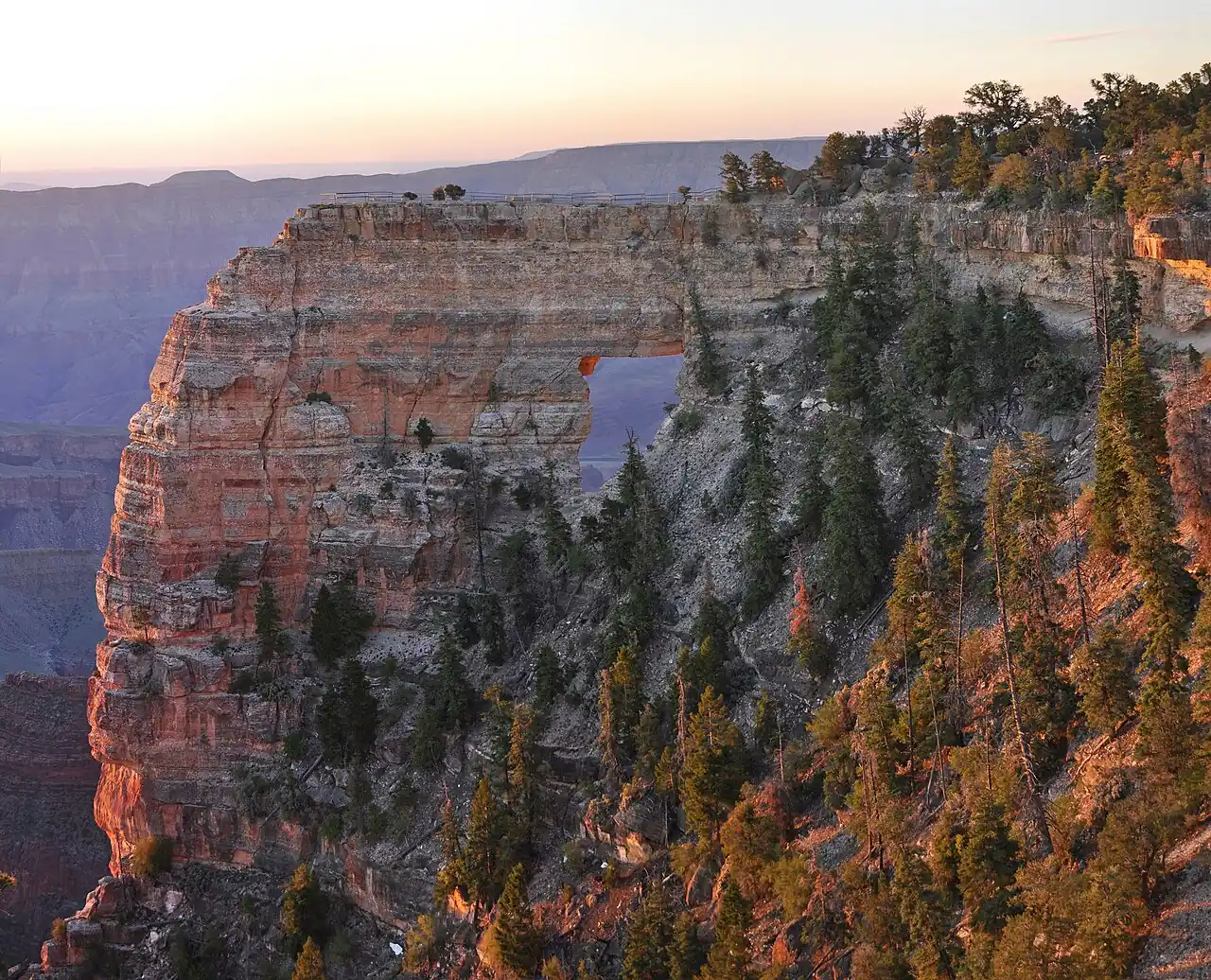
The Rim Trail and the free shuttles
The South Rim’s best-value activity costs nothing and requires no fitness. The Rim Trail runs roughly 13 miles along the edge, from the South Kaibab trailhead area west to Hermits Rest, threading past Mather, Yavapai, Hopi, Mohave and Powell points. The paved, close-to-level stretch most people picture is the Mather Point to Village section; west of the Village toward Hermits Rest it’s not wheelchair-accessible and takes on steep grades and steps.
What makes it work is the shuttle. From September 12 to November 30, 2026, three free routes run plus the early Hikers’ Express: Village (Blue) for the lodges and Market Plaza, Kaibab Rim (Orange) for the South Kaibab trailhead, Yaki Point and Yavapai Geology Museum, and Hermit Road (Red) for the seven-mile western scenic loop; the Hikers’ Express leaves Bright Angel Lodge at 6, 7 and 8 a.m. The Tusayan (Purple) route connecting the gateway town runs in summer only. No tickets - your entrance fee pays for it. Village route buses come every 12 minutes between 10 a.m. and 7 p.m.
So the smart move is: walk one section of the Rim Trail in whichever direction the light is best, then ride the bus back. Mather Point to Yavapai Point is the easy paved classic, about 0.7 miles (1 km) one way, with the geology museum as a payoff at the end.
Note the restriction that catches drivers out: Hermit Road is closed to private vehicles for most of the year - March 1 to November 30 in 2026, and the park sets the window each season. During those nine months the Red Route bus, a bike or your feet are the only ways along it.
One more thing the South Rim throws at summer visitors: the South Entrance on Highway 64 backs up badly from mid-morning, and the line can cost you the better part of an hour. If you’re coming from the east - Page, Monument Valley or a night in Cameron - use the East Entrance at Desert View instead and skip it. Page is about two and a half hours north and is worth the detour on the way in: see our guide to Antelope Canyon tours for the booking rules, because none of the slot canyons there can be visited without a guide. Then park once, early: the lots around the visitor center at Mather Point fill by mid-morning in July, and once they do, the free shuttle from Tusayan or your hotel beats circling for a space.
Going below the rim without getting hurt
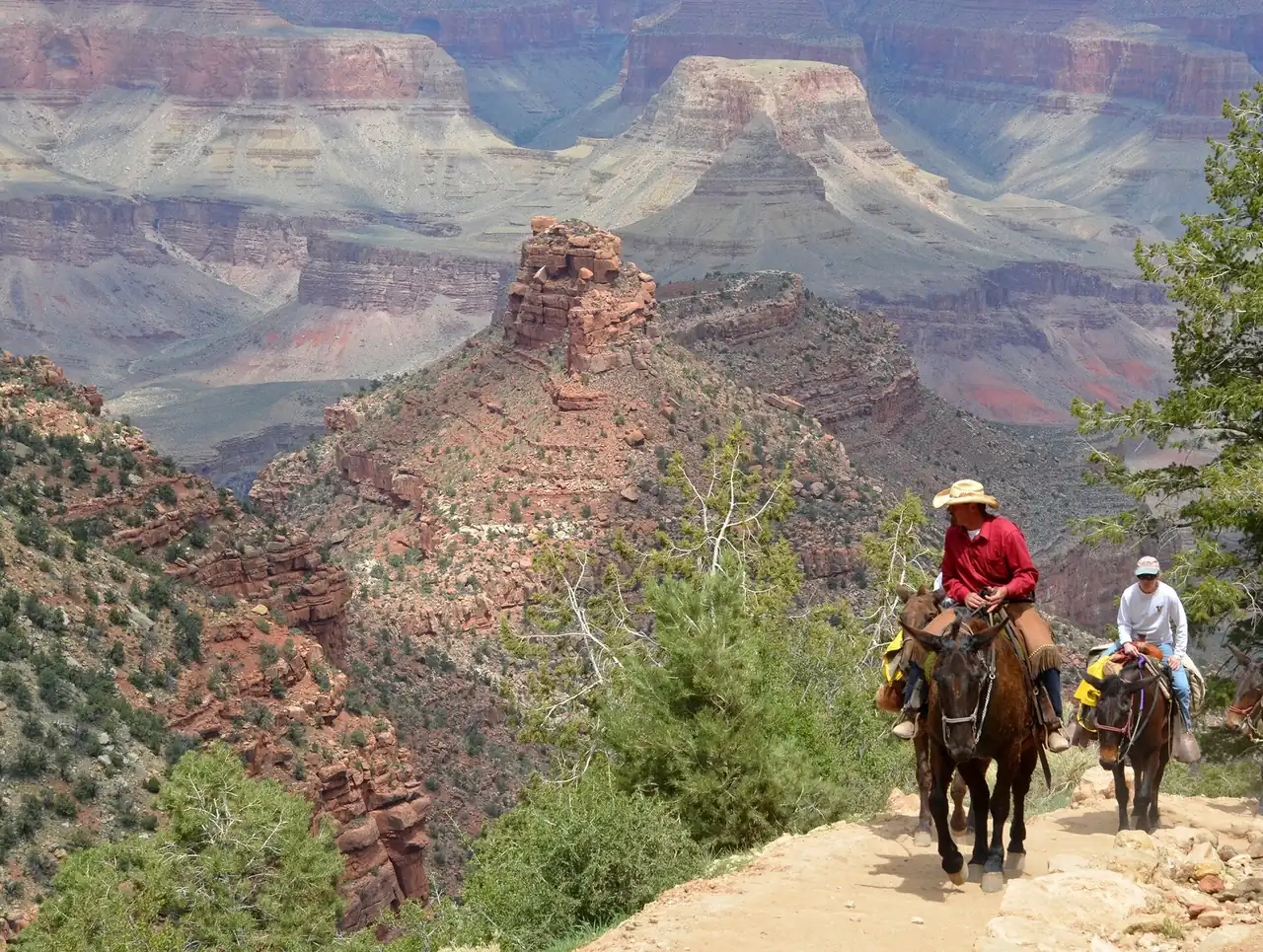
This is the part where the Grand Canyon differs from every other park in this guide. You descend when you’re fresh and climb when you are exhausted, in heat that increases as you drop.
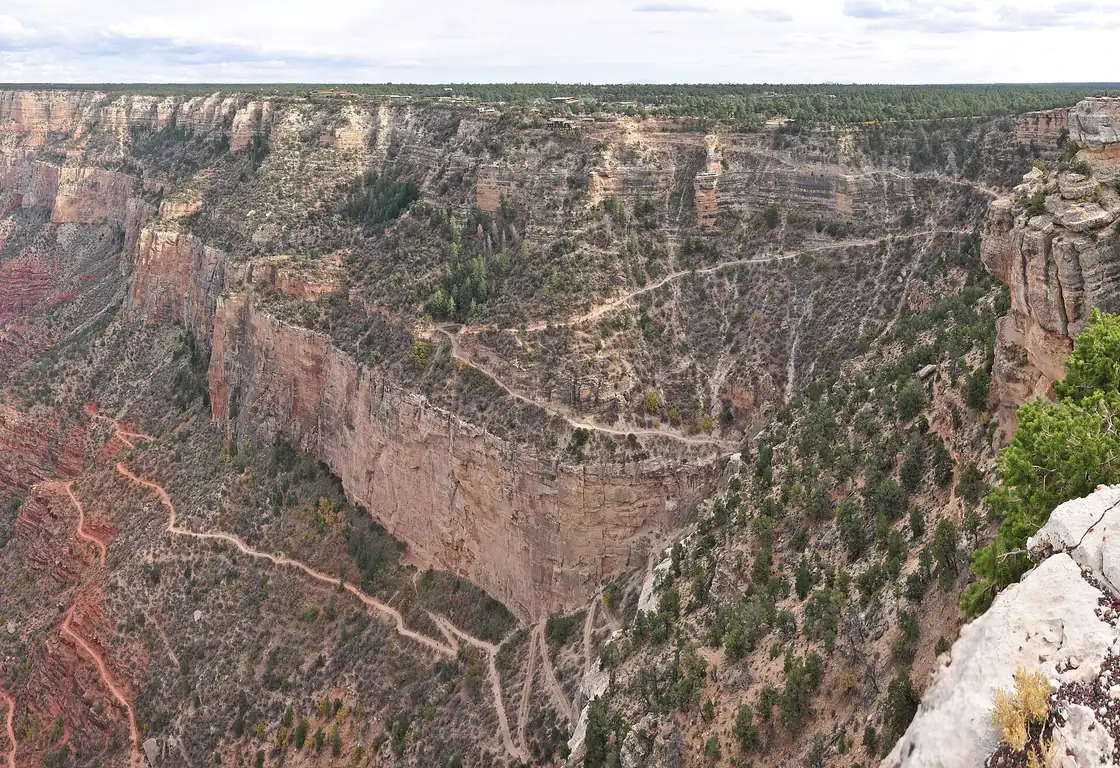
The park’s rule is unambiguous: “Do not attempt to hike from the rim to the river and back in one day, especially between May and September, when extreme heat can quickly become life-threatening.” People ignore this every summer and the rangers spend their season pulling them out.
Practical limits published by the park for day hikes:
| Trail | Recommended maximum | Character |
|---|---|---|
| Bright Angel Trail | up to 12 miles round trip | some shade; as of October 19, 2026 the open part ends at the Mile-and-a-Half Resthouse, and NPS closes the stretch beyond it to Havasupai Gardens through Thursday, October 22; water at the resthouses and Havasupai Gardens is off |
| South Kaibab Trail | up to 6 miles round trip | steep, exposed, no water on the trail; the trailhead has drinking water from a tank (as of October 15, 2026); closed below the Tip-Off |
Keep two numbers in your head. Allow one third of your time to descend and two thirds to ascend - if you have four hours, turn around after 80 minutes, not two hours. And on any hike over 30 minutes, take salty snacks alongside water or a sports drink; the park explicitly warns about drinking water without replacing salt, and says to eat about twice as much as you normally would.
South Kaibab has the better views and no water on the trail itself, which is precisely the combination that gets people in trouble. If you only do one, do Bright Angel down to the 1.5-mile resthouse and back, start at dawn, and be out before midday. In late summer, watch for afternoon thunderstorms - the rim and the upper trails are exposed to lightning. As of October 15, 2026, NPS lists drinking water from a large tank next to the restrooms at both the Bright Angel and South Kaibab trailheads, while the water along the trails stays off, so carry every drop you’ll need below the rim.
Fees, and the surcharge for overseas visitors
Entry is $35 per vehicle, $30 per motorcycle or $20 per person walking or cycling in, valid seven days. The Grand Canyon annual pass is $70, and only US citizens and permanent residents can buy it.
Since 2026 there’s an additional charge that hits international visitors: each non-US resident aged 16 or over pays $100 on top, unless admitted on an annual or America the Beautiful pass. The non-resident America the Beautiful pass is $250.
Here’s the trap in the surcharge: the standard $35 entry is per vehicle, but the $100 is per person, so the bill scales with the size of your group rather than the car. Two overseas adults pay $35 plus $200 - $235 at the gate - against $250 for a pass that then covers every federal site for twelve months, and on the non-resident America the Beautiful that pass covers the holder plus three other adults. If your route also takes in Zion, Yellowstone or Yosemite, all of which levy the same surcharge, the math tilts further toward the pass. One caveat: NPS’s own pages disagree on whether a park-only $70 annual pass waives the surcharge; the one pass NPS explicitly names as covering it’s that $250 America the Beautiful Non-Resident Annual Pass, so confirm at the entrance station before you pay. Children under 16 are not charged the surcharge, which is what tips the arithmetic for a family with kids.
Where to sleep
Grand Canyon Village (inside the park) is normally the only way to be on the rim at sunrise without a pre-dawn drive, but NPS halted all overnight lodging in the park, including El Tovar, Bright Angel Lodge, Maswik and Yavapai Lodge, on August 31, 2026 under Stage 4 water restrictions after a flash flood damaged the Transcanyon Waterline. Xanterra has extended its in-park lodge closures through November 19, 2026 (its alert page was updated October 13, 2026). NPS’s September 19 release projects pumping from the Bright Angel Creek intake by November 16 and distribution to the South Rim by Thanksgiving, with concessionaires then beginning a phased return to overnight guests; NPS calls those dates tentative. Delaware North’s Yavapai Lodge and Trailer Village are closed to overnight guests too, with no reopening date posted as of October 19, 2026. Check nps.gov/grca/planyourvisit/lodging.htm before you book.
Tusayan is six miles south of the South Entrance, effectively a strip of hotels, restaurants and an IMAX. While the park lodges are closed it’s the nearest place to sleep, since NPS says Tusayan hotels aren’t affected, and the free Purple Route shuttle runs from it into the park in summer, which removes the parking problem entirely.
Williams is about an hour away, a small Route 66 town, cheaper, and the terminus of the Grand Canyon Railway - a daily train that drops you at the historic depot in the village, which is an unusually pleasant way to arrive without a car.
Flagstaff is about 90 minutes out and the best base if you want a real town: proper restaurants, a university, altitude that keeps summer nights cool, and easy links to Sedona and Route 66. Phoenix is roughly four hours south, which is a long day trip but a common one from a Phoenix car rental.
Practical notes
- Sunrise and sunset are the point. Midday flattens the canyon into haze. Mather and Yavapai for sunrise, Hopi or Pima for sunset.
- The South Rim sits at around 7,000 feet. Arriving from sea level, expect to be slower and thirstier than usual on day one.
- Book Village lodging absurdly early for 2027 and later, and check for cancellations if you missed the window. For fall 2026, check first: Xanterra’s in-park lodges are closed through November 19, 2026 (as of October 19, 2026), and the date has been extended before.
- South Rim to North Rim is 212 miles and about 4.5 hours by road, via Cameron and Jacob Lake. It’s not a day trip from one rim to the other and back.
- Confirm North Rim status on nps.gov before you drive: post-fire repairs mean trail and service closures shift through the season.
Read also
- All our national park guides
- The rim-by-rim decision in full, plus the Skywalk mix-up to avoid: Grand Canyon South Rim vs North Rim
- The neighboring Utah headliner and its permit system: Zion National Park
- Geothermal basins and wildlife distances: Yellowstone National Park
- Waterfall seasons and the Half Dome cables: Yosemite National Park
- Free to enter, and no non-resident surcharge: Great Smoky Mountains National Park
On the map
The map loads on click - to keep the page lightweight.
The map didn’t load. Check your connection and refresh the page.
Admission and opening hours
- Admission price
- $35 per vehicle, $30 per motorcycle, $20 per person on foot or bicycle, valid 7 days. Grand Canyon annual pass $70. Non-US residents aged 16+ pay an extra $100 unless admitted on an annual or America the Beautiful pass.
- Opening hours
- South Rim open 24 hours, year-round. North Rim: open for day use until the State Route 67 entrance gate closes at sunset on November 30, 2026, or after the first major snowstorm, whichever comes first (the usual winter closure of the road and the North Rim runs December 1 to May 14). Cape Royal Road and Point Imperial Road are closed from sunset October 15 to sunrise November 3, 2026, and the North Rim campground, general store and gas station are closed for the season. Status as of October 19, 2026; check nps.gov/grca/northrimstatus.htm before you go.
Since August 31, 2026, NPS has halted all overnight lodging inside the park under Stage 4 water restrictions, and the North Rim has no overnight lodging in 2026. Check nps.gov/grca before traveling. Xanterra's in-park lodges are closed through November 19, 2026 (as of October 19, 2026).
Details checked: October 19, 2026
Read also

National Parks · 12 min read
Canyonlands and Capitol Reef: Utah's Two Quiet Parks
Verified · August 29, 2026Canyonlands $30, Capitol Reef $20 for the Scenic Drive - what each park costs, which district to skip, and which one wins if you only have a day.

National Parks · 8 min read
Indiana Dunes from Chicago: Beaches & the $25 Gate
Verified · August 26, 2026Leave Chicago early for West Beach, the Dune Succession Trail and the South Shore Line to Dune Park. National and state park fees do not cross.

National Parks · 8 min read
Carlsbad Caverns: Natural Entrance and Bat Flight
Verified · August 25, 2026$15 entry plus $1 timed reservation, Natural Entrance vs elevator, Big Room loop, and free bat flights April-Oct.

National Parks · 8 min read
White Sands: Dunes, Sledding and Closures
Verified · August 25, 2026Gypsum dunes, $25 entry, sledding tips, and why missile-range tests can close Dunes Drive for hours - check NPS the morning you go.