
Grand Canyon South Rim vs North Rim: Which to Visit & How
South Rim or North Rim: drive times from Vegas and Phoenix, what is actually open in 2026, and why the glass Skywalk you saw online is neither.
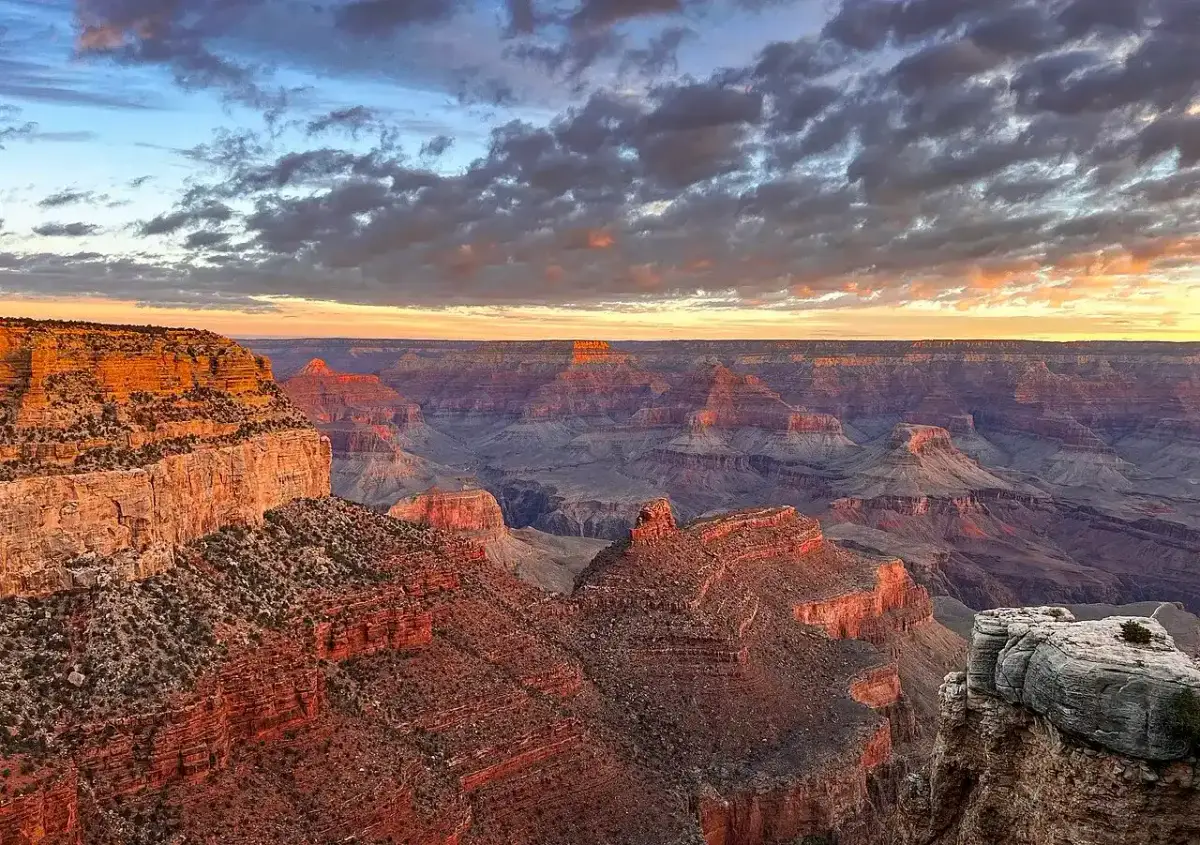
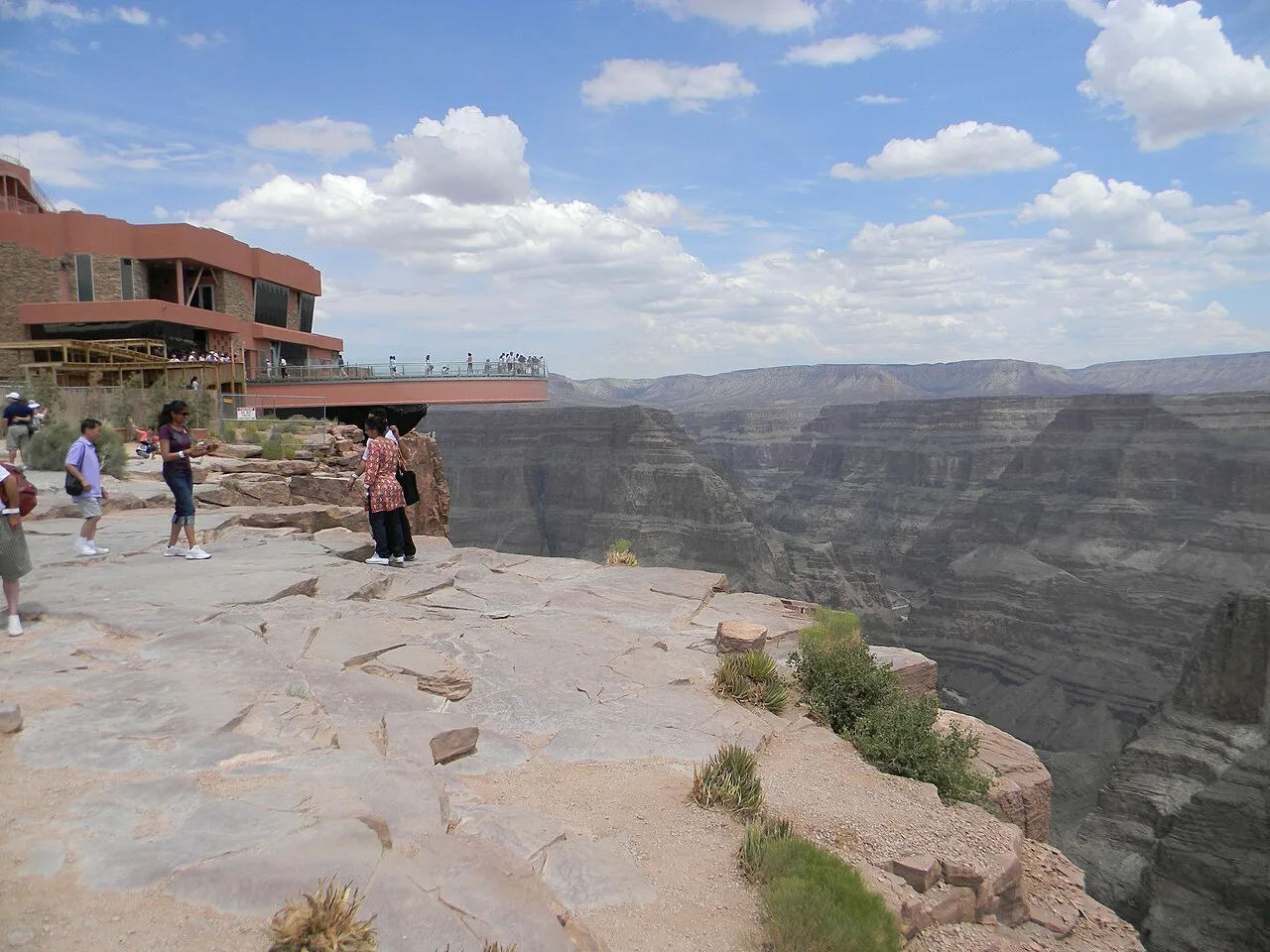
Type “Grand Canyon from Las Vegas” into a search bar and most of what comes back isn’t the national park at all. It’s Grand Canyon West, home of the glass Skywalk, run by the Hualapai Tribe on their own reservation land, closer to Vegas than either rim of the actual park. It’s a real place, and a reasonable day trip. It just isn’t the South Rim or the North Rim - and mixing up the three is the single most common way a Vegas-based canyon trip goes sideways. Once that’s sorted, the choice comes down to three things: how far you’re willing to drive, what season you’re traveling in, and whether you want company or quiet.
Three rims, one name, only two inside the park
Grand Canyon West sits on the Hualapai Reservation, established in 1883, and it’s owned and run by the Hualapai Tribe rather than the National Park Service. A different canyon section entirely, two to two and a half hours from Las Vegas by the tribe’s own description. Three ticket tiers price it, and the cheapest way onto the Skywalk isn’t the one most people buy first. General Admission is $67 and doesn’t include the Skywalk at all, while the Sunset Pass at $59 - entry after 3 p.m. - includes it, along with Eagle Point, Guano Point and the shuttle between them. The All-Access Pass at $99 adds the zipline and a few extras on top. One catch: the tribe’s help page also says this pass “is required for all visitors,” while its ticket store still sells the other two tiers, so check what the checkout offers for your date. Gates open at 8 a.m. General Admission and the All-Access Pass stop selling at 4:30 p.m. - an hour later, at 5:30 p.m., in the summer months -, but the Sunset Pass runs on its own clock - last ticket and last entry at 5:15 p.m. daily. The park itself stays open every day of the year.
The South Rim and North Rim are the two developed sections of Grand Canyon National Park itself, both federally managed, both covered by the same NPS entrance fee. They’re 212 miles apart by road - about 4.5 hours via the East Entrance, Cameron and Jacob Lake - and they don’t share a bridge or a shuttle. Pick one, or budget most of a day to move between them.
90 minutes from Flagstaff, about five hours from Vegas
The South Rim is the default for a reason: it sits closest to the interstates and the airports most visitors already fly into. Flagstaff is about 90 minutes away, Williams about an hour, and Phoenix roughly four hours south. If you’re landing at PHX and sleeping in the valley before that drive, where to stay in Phoenix is downtown vs Scottsdale vs Tempe. Las Vegas is the outlier. It’s about 276 miles through Kingman and Williams, and most people do it in four and a half to five hours - the longest of the four gateway drives by a wide margin.
The North Rim is the shorter drive on paper - about 265 miles from Las Vegas, because the route cuts north through Utah on I-15 and drops south again through Fredonia and Jacob Lake, rather than looping the long way around through Arizona. It isn’t the faster one, though. The last stretch, on US-89A and State Route 67, climbs and curves through the Kaibab National Forest, and that erases the mileage advantage: figure around 5 hours 30 minutes, a bit longer than the drive to the South Rim despite the shorter route. Distance alone doesn’t predict drive time out here. And for five and a half months of the year the question is moot anyway - State Route 67, the only paved way onto the North Rim, is gated shut to every vehicle from December 1 to May 14.
What’s open on each rim in 2026
The South Rim never closes. It’s open 24 hours a day, every day of the year, with a medical clinic, a railway depot and free shuttles. Since August 31, 2026, though, it has run under Stage 4 water restrictions after a flash flood damaged the Transcanyon Waterline: NPS halted all overnight lodging in the park, allows only dry camping and says many restaurants are closed or on shorter hours, and it expects a phased return of overnight stays by Thanksgiving, dates it calls tentative. Hotels in Tusayan, outside the park, aren’t affected.
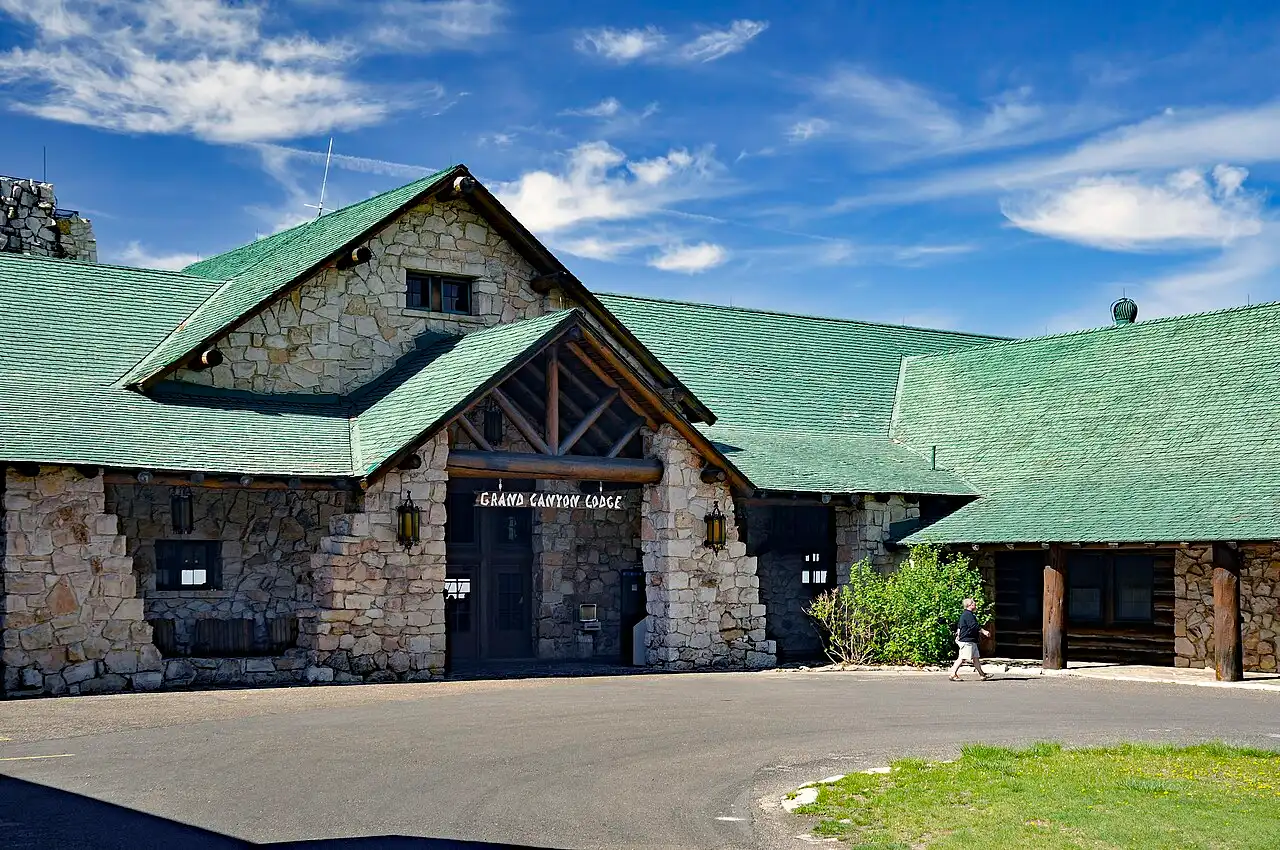
The North Rim’s 2026 season is a rebuild in progress. It reopened on May 15, 2026 after the 2025 Dragon Bravo Fire, which the park service says caused between 50 and 80 lost structures - including the Grand Canyon Lodge, destroyed outright by the fire on July 13, 2025. Crews spent fall 2025 stabilizing what was left of the site and clearing hazards before winter, not deciding whether the building could be saved - by then, it already couldn’t be. There’s no overnight lodging on the North Rim at all this year, and the only place to sleep is the North Rim Campground (June 1 through October 15, run by a concessioner and booked on recreation.gov, not the park’s usual system), since Cottonwood Campground below the rim has been closed since the August 29, 2026 flash flood. The whole season also runs under Stage 2 fire restrictions - no wood or charcoal fires anywhere, including campfires - because of limited water in the burn area. The North Kaibab Trail reopened for foot traffic on May 15, but a flash flood on August 29, 2026 closed the entire trail, from the North Kaibab Trailhead to Phantom Ranch, and NPS gives no estimated reopening date, so a rim-to-rim hike isn’t possible until it reopens.
Why the North Rim stays quiet
Even in a normal year without fire damage, the numbers tilt hard toward the South Rim. The park service puts it plainly: the South Rim takes in about 90% of all park visitation, out of roughly 4.4 million visits in 2025. The North Rim gets whatever’s left of that other 10%, and the structural reasons aren’t subtle. It’s gated shut for five and a half months a year while the South Rim runs continuously. It has one paved approach road against the South Rim’s two entrances, plus a heritage railway running into Williams. And even before the fire, its lodge held a fraction of the rooms available in Tusayan, Williams and Flagstaff combined. Fewer beds, a shorter season and a longer drive from every major airport add up to a rim that stays uncrowded even in August - which is exactly the point for the people who go there on purpose.
Thirteen paved miles, or a view nearly to yourself
The South Rim’s case is convenience layered on top of the view. The Rim Trail, paved in part, runs about 13 miles past Mather, Yavapai, Hopi, Mohave and Powell points, free shuttles cover the ground you don’t want to walk, and the park’s mule rides leave from here; with Phantom Ranch closed since the August 29, 2026 flood, Xanterra’s current rides are the Canyon Vista ride and the Havasupai Garden ride. Want to descend below the rim on foot instead? The Bright Angel and South Kaibab trails both start at the South Rim, with rangers and rescue capacity close by, but as of late September 2026 NPS has the water turned off at both trailheads and along the trails, and South Kaibab is closed below the Tip-Off, so carry all the water you need.
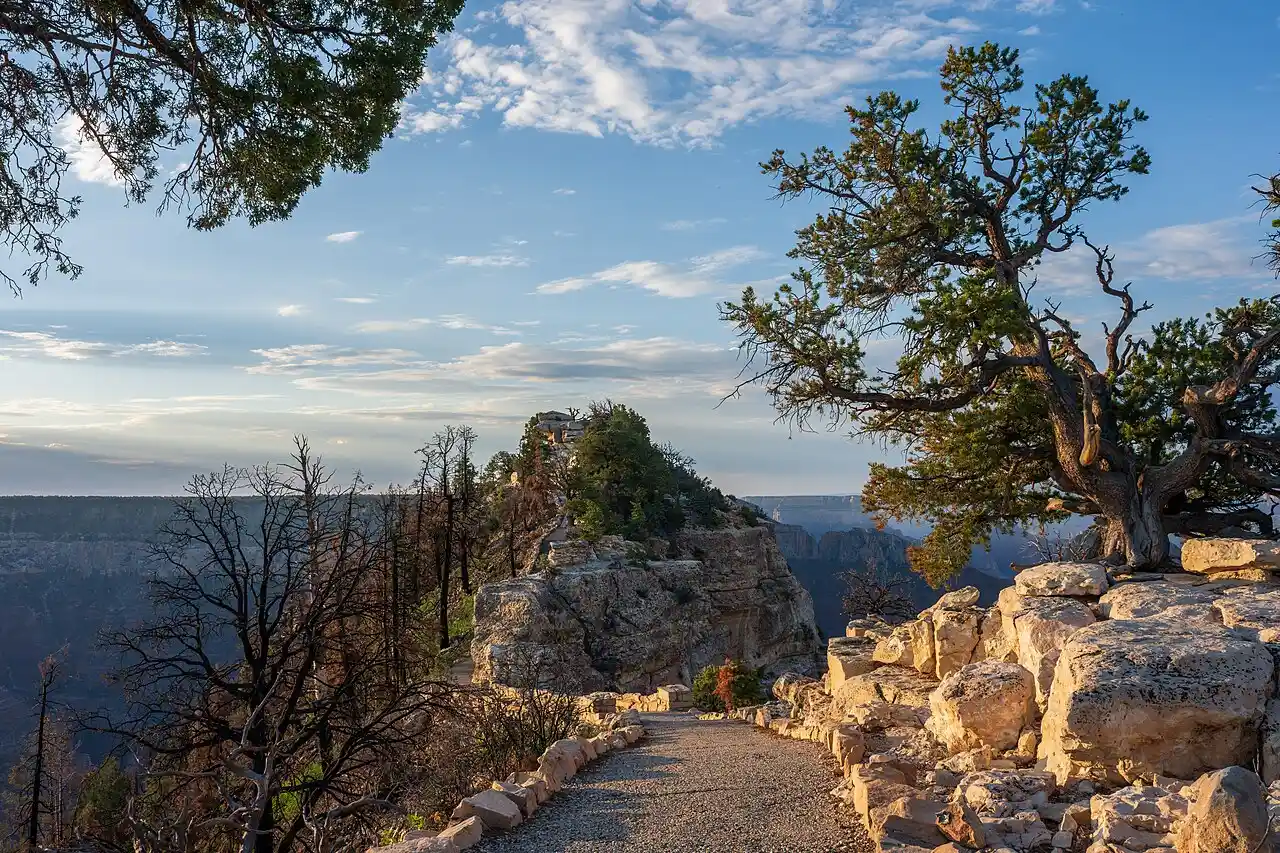
The North Rim’s case is the view itself, from an angle almost nobody else is looking at it from. It sits roughly a thousand feet higher than the South Rim, in a different world of spruce, fir and aspen instead of piñon-juniper scrub, and it looks across the canyon’s main bend rather than into it. Cape Royal, Point Imperial and Angels Window are all reachable by paved road since the 2026 reopening. Bright Angel Point itself, normally a five-minute walk from the parking area to one of the best short views in the park, is closed for the whole 2026 season along with Widforss, Transept and Uncle Jim - Cape Royal Trail is the open, comparably short walk to take this year, with Cliff Springs, Cape Final, Roosevelt Point and Point Imperial trails also open.
Matching the rim to your trip
A first visit, a short trip, or you’re flying into Phoenix or Flagstaff: the South Rim. It’s closer to where you’re already landing, it never closes, and the infrastructure means fewer things can go wrong.
A Vegas base with one day to spare and no interest in a long drive: Grand Canyon West, not either rim of the park. Accept that it’s a different experience and book it on its own terms - ideally the Sunset Pass if the Skywalk is the point and the checkout still offers it for your date.
A Utah loop through Zion, Bryce or Antelope Canyon, a return visit, or you’d rather photograph the canyon without a crowd in every frame: the North Rim, between mid-May and mid-October only. Check the park’s current status page before you commit - post-fire repairs are still shifting trail and service closures through the season.
A rim-to-rim hike: not possible for now. A flash flood on August 29, 2026 closed the entire North Kaibab Trail, Phantom Ranch and the river bridges, and NPS gives no estimated reopening date, so check nps.gov/grca before you plan one.
Confirm before you drive
- South Rim lodging and water - in-park hotels and Trailer Village have been closed to overnight guests since August 31, 2026 under Stage 4 water restrictions, campgrounds are dry camping only, and NPS asks visitors to bring their own drinking water.
- North Rim road status - State Route 67 is shut to all vehicles December 1 through May 14, every year without exception.
- Fire restrictions - Stage 2 is in force across the North Rim for the whole 2026 season; no campfires anywhere, including established rings.
- North Rim Campground bookings - run through recreation.gov by a concessioner (Aramark), not the standard NPS system, so double-check your confirmation matches the dates you think you have.
- Trail closures - since the August 29, 2026 flash flood, the entire North Kaibab Trail, Phantom Ranch, the Black and Silver bridges and the South Kaibab Trail below the Tip-Off are closed, with no estimated reopening; check nps.gov/grca/planyourvisit/key-messages.htm before any hike below the rim.
- The non-resident surcharge - anyone 16 or older who isn’t a US resident pays an extra $100 at either rim of the national park, on top of the standard entrance fee, unless admitted on an annual or America the Beautiful pass. The $250 Non-Resident Annual Pass explicitly covers it (and pays for itself fast on a multi-park trip); the only annual pass a non-US resident can buy is the $250 Non-Resident Annual Pass; the $70 park pass and the $80 Resident pass are sold to US citizens and residents only. The surcharge doesn’t apply at Grand Canyon West, which has its own separate pricing.
Read also
- The full park guide - fees, hiking safety, shuttles and where to sleep: Grand Canyon National Park
- Slot canyon tours en route between the rims: Antelope Canyon tours
- The other big Navajo Nation stop nearby: Monument Valley tours
- Mandatory shuttle and the Angels Landing permit lottery: Zion National Park
- Whether the annual pass beats paying at the gate: the America the Beautiful Pass
Good to know
South Rim and North Rim fees and hours are set by the National Park Service. Grand Canyon West (the Skywalk) is a separate, privately run destination on Hualapai land and is not part of the national park - its prices and hours come from the Hualapai Tribe, not NPS.
Details checked: September 26, 2026
Read also

What to see · 10 min read
Disneyland California Tickets: Park Hopper, Lightning Lane
Verified · August 22, 2026Seven tiers run $104-$224, Hopper adds $70-$135, and Anaheim still requires a reservation Florida dropped. What each Lightning Lane tier buys in 2026.

What to see · 8 min read
Universal Studios Hollywood Tickets: Express Pass or Not
Verified · August 22, 2026Universal Express is its own ticket - $199-$329, admission included. What it covers and when it's worth it in 2026.

What to see · 10 min read
Universal Orlando Tickets: Park-to-Park and Express
Verified · August 22, 2026Base vs Park-to-Park, how many Epic Universe days each ticket buys, when Express pays - Orlando, not Hollywood. Reported calendar ranges, August 2026.

What to see · 11 min read
Hoover Dam Tour from Las Vegas: Tickets and Getting There
Verified · August 14, 2026Hoover Dam tickets ($15-$40), Powerplant vs Dam Tour, $10 parking, and the drive from Las Vegas - what to book and what sells out on site.