
Monument Valley: Tours, the Valley Drive & Navajo Rules
Monument Valley tour prices, the $15 self-drive Valley Drive, the one hike without a guide, and the Navajo Nation rules that trip visitors up.
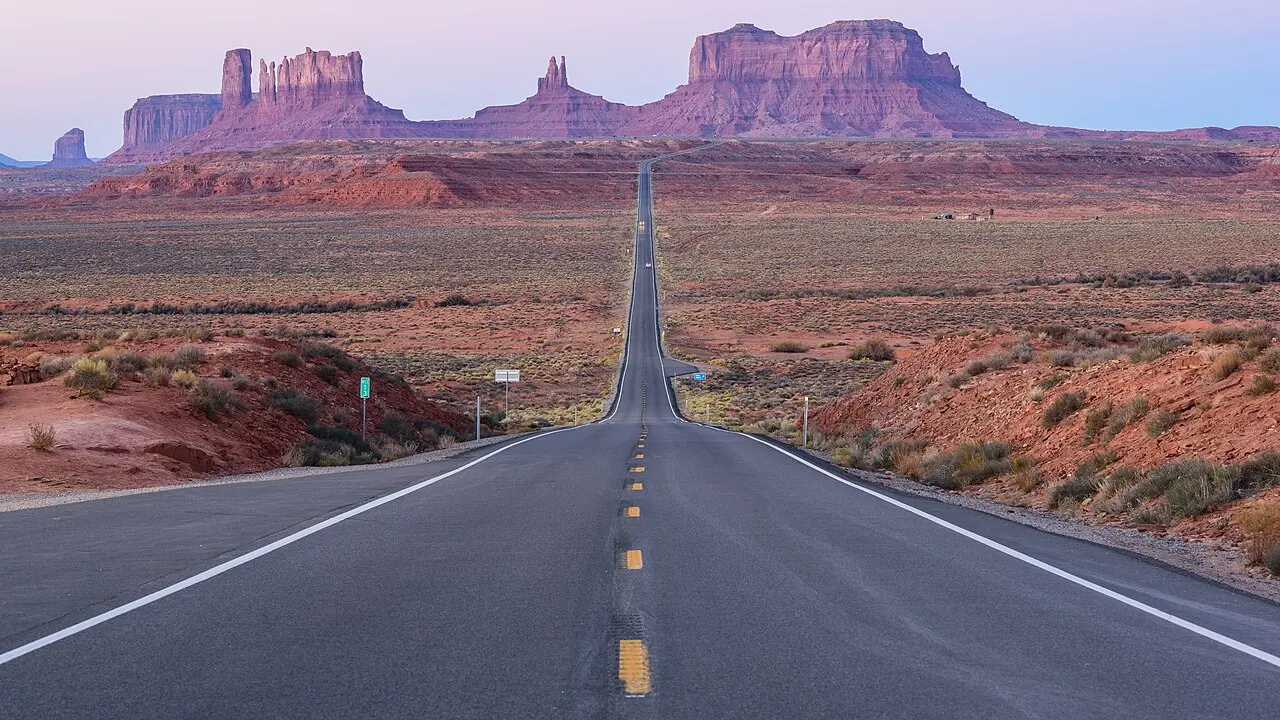
Monument Valley splits cleanly into two different trips, and most people only plan for one of them. The 17-mile Valley Drive loop is legally self-drivable in an ordinary car for $15 a vehicle, plus a separate $10-per-person park fee. The backcountry - Ear of the Wind and the other landmarks you’ve seen in every John Ford western - is guide-only no matter how much you’re willing to pay at the gate. Figure out which trip you want before you book anything.
That distinction is Navajo Nation policy, not a sales pitch. This is tribal land, not a National Park Service unit, and the rules run differently than at the Grand Canyon or Zion down the road.
The Valley Drive: self-drive rules and the real fee
Confirm the fee at the gate before you assume a number. Navajo Parks’ own pages don’t fully agree with each other: the main Monument Valley page lists a $15 vehicle charge for the Scenic (Valley) Drive plus a separate $10-per-person daily fee, while the department’s own entry-fee page states $8 per person, per location. Same department, two different numbers - not an outside operator’s site getting it wrong, the park’s own materials disagreeing with themselves. Budget for the higher figure and let the gate correct you down if it’s actually less.
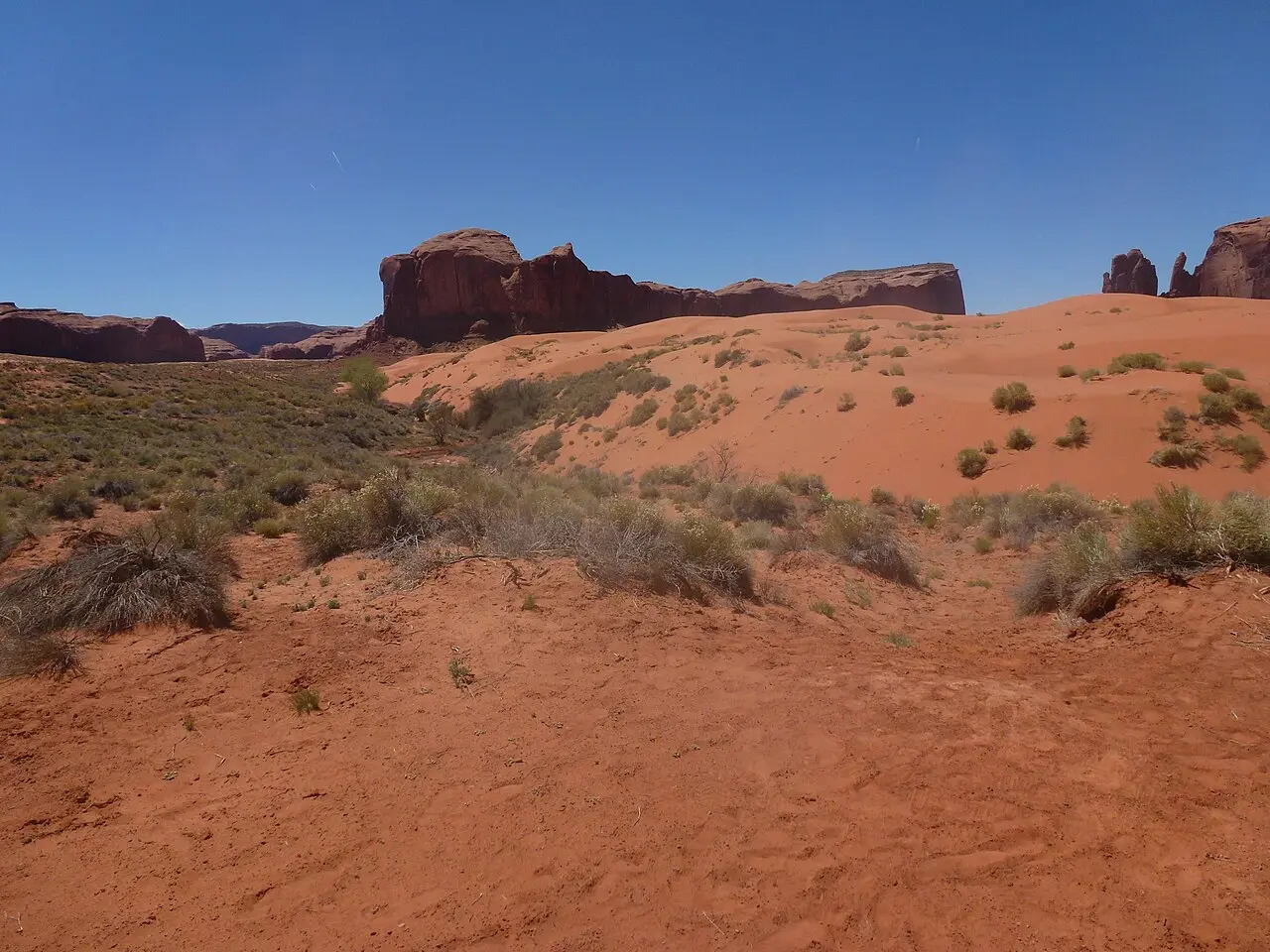
Navajo Parks doesn’t sugarcoat what you’re driving into: “very rough terrain and deep sand dunes,” worse in monsoon season, and the park’s own recommendation is an SUV or truck rather than a sedan. You enter the loop entirely at your own risk - the department says plainly that it isn’t liable for vehicle damage on the drive or anywhere else on tribal park land. Motorcycles and RVs are banned outright, not just discouraged. If you’re renting, that combination (rough terrain plus a liability waiver from the park itself) is exactly the moment to check your rental agreement rather than after you’re stuck in sand: many standard rental contracts exclude unpaved or off-road driving from collision coverage, and cards that otherwise cover you, like Chase Sapphire’s CDW, explicitly carve out “off-road use.” Book a class that matches the road, not just your budget.
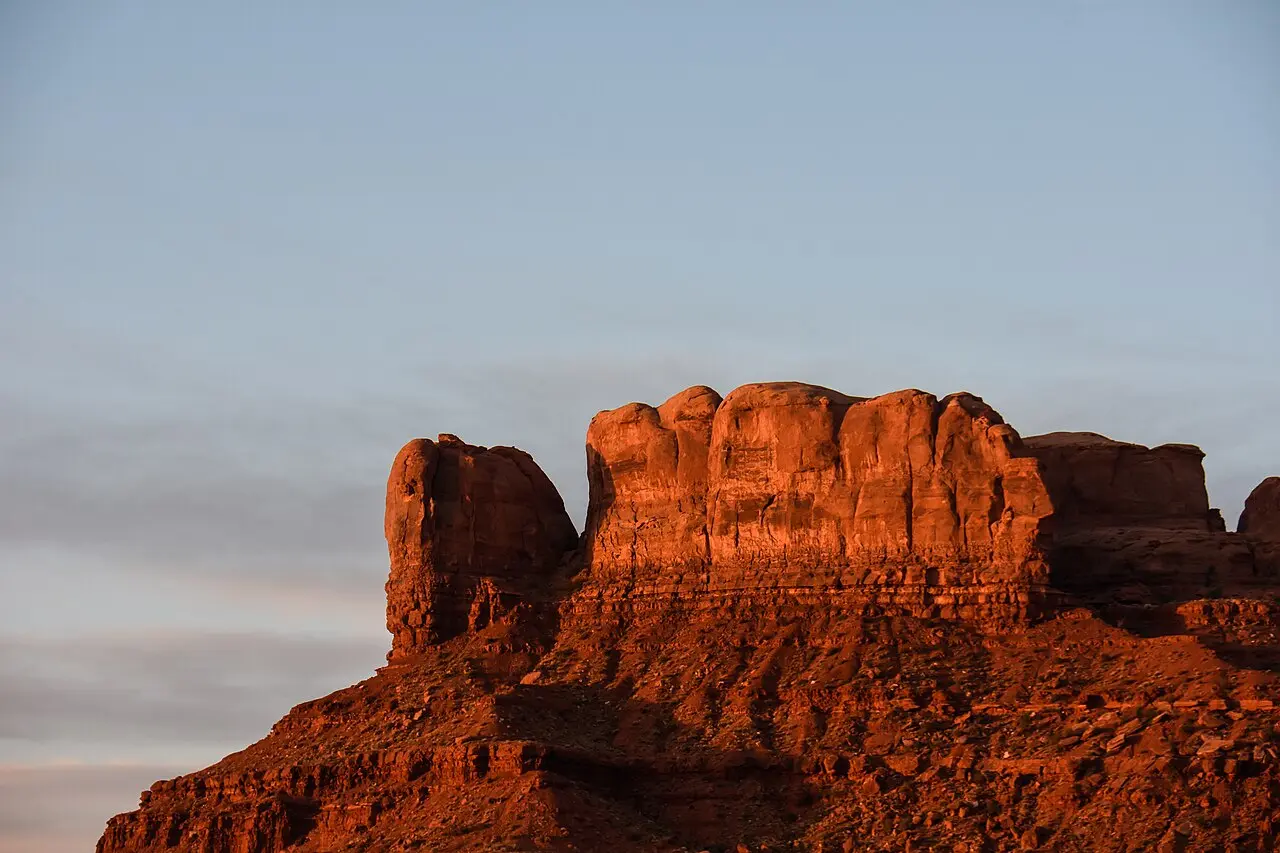
Hours run 8 a.m. to 5 p.m. in winter with last entry at 2:30 p.m., and 8 a.m. to 7 p.m. in summer with last entry at 4:30 p.m. Sunset light on the buttes is worth timing around, but the last-entry cutoff is real and enforced, not a suggestion.
What a guided tour adds that the loop drive can’t
The self-drive loop shows you the famous view. It does not get you to Ear of the Wind, the other backcountry landmarks, or the interpretation that turns silhouettes on a horizon into an actual story. More than two dozen operators are authorized by Navajo Nation Parks - the exact count shifts as companies come and go, so treat any specific number as a snapshot rather than a fixed list. If you’d rather not book ahead, the park’s own Tour Operator Booth runs 8 a.m. to 5 p.m. in summer and 8 a.m. to 6 p.m. in winter, and several operators sell tours there on arrival.
Pricing clusters by length rather than by operator. Simpson’s Trailhandler Tours runs a standard 2.5-hour Jeep Tour at $85, with Mystery Valley at $150 for 3.5 hours and a 2.5-hour Sunrise Tour at $225. Navajo Spirit Tours prices its 1.5-hour tour at $65 per person and its 2.5-hour tour at $75, with kids 12 and under free - a genuinely different structure from a flat per-vehicle Jeep rate, worth comparing if you’re traveling with a family. Longer specialty formats run further still: hiking tours into Mystery Valley or Hunts Mesa land around $350 for five to six hours, and an overnight Hogan Stay comes in at $295 for the full 17-hour experience, dinner and campfire included.
That’s a wide enough spread that “book a tour” isn’t really one decision. A short 1.5 to 2.5-hour drive gets you the highlights and the guide’s stories; the half-day and overnight formats are for people who want the landscape more than the summary.
The one hike you don’t need a guide for
Every backcountry landmark requires an authorized guide, with one specific exception: the Wildcat Trail, a loop around West Mitten Butte that starts a short walk from the visitor center. Numbers disagree here too - Navajo Parks’ own page lists it at 1.5 miles, while independent hiking guides and GPS-tracked routes put the full loop closer to 3.2 miles, about 4 with any backtracking. Either way, it’s flat, sandy, and takes most people 1.5 to 3 hours depending on how many photo stops happen along the way, with views of both Mitten Buttes and Merrick Butte from ground level instead of a viewpoint pullout.
Sign in and out at the Visitor Center before you go, which the park treats as a real rule, not a formality. There’s no shade on the trail and no water source, so carry more than you think you’ll drink, and treat it the way you’d treat any exposed desert walk rather than a casual stroll near a parking lot. One more rule worth knowing before you pack a real camera: a special-use permit is required for any commercial photography, filming, wedding or painting on park land, on the trail or anywhere else - a phone snapshot for yourself is fine, a paid shoot is not, without paperwork first.
Thirteen miles north: the view that costs nothing
Right around mile marker 13 on US-163, thirteen miles north of the park entrance, the highway runs dead straight toward the Mittens and Merrick Butte in the distance - the shot from the “Forrest Gump” film, and the reason locals just call it Forrest Gump Point. No fee, no reservation, no operator. Pull into one of the small gravel shoulders on either side of the road, take the photo, and get back off the traffic lane, because US-163 stays a real through-road the entire time you’re standing on it.
It’s the single best free stop in the area, and it pairs naturally with a self-drive loop day: the view from the highway costs nothing, and the view from inside the park costs $15 a vehicle. Do both rather than choosing one.
Why this valley is in every Western you’ve seen
Monument Valley’s film history explains why the landscape feels so instantly familiar even on a first visit. In the 1930s, lodge owner Harry Goulding pitched the valley to director John Ford, who shot “Stagecoach” here in 1939 - the film that made John Wayne a star. Ford returned repeatedly through the 1960s, filming Fort Apache, She Wore a Yellow Ribbon, Rio Grande and The Searchers in the same buttes tourists photograph today. Cast and crew stayed at Goulding’s Lodge, which still operates near the park entrance and runs a small trading-post museum worth a stop if Western film history interests you at all.
The time-zone trap shared with Page
If Monument Valley is one stop on a loop that also includes Page and Antelope Canyon, and it usually is, know this before you’re the group that shows up an hour off: Arizona doesn’t observe daylight saving time, so Page runs on Phoenix time all year. Monument Valley, sitting on Navajo Nation land that does observe DST, is an hour ahead of Page from March through November. A phone left on automatic time can grab a signal from the wrong side of the state line and quietly jump the display without you noticing. Set your clock manually for wherever you’re standing that day. Our Antelope Canyon tours guide walks through the same trap in more detail, since it costs people tours on that side of the loop just as often.
Monument Valley sits roughly 130 miles from Page - about two and a half hours of driving - which makes the two a natural pairing on the same Southwest loop. The Arizona travel guide covers how to string Monument Valley, Page and the Grand Canyon together into one route without doubling back on yourself.
Read also
- The wider trip: Arizona travel guide
- The other Navajo tribal-land stop on the same loop: Antelope Canyon tours
- Pricing the drive: renting a car in the USA
- Fly in from the west: things to do in Las Vegas
On the map
The map loads on click - to keep the page lightweight.
The map didn’t load. Check your connection and refresh the page.
Admission and opening hours
- Admission price
- Valley Drive self-drive: $15 per vehicle, plus a separate general park fee that Navajo Nation Parks' own pages state two different ways - $10 per person, per day on the main Monument Valley page, $8 per person, per location on the site's own entry-fee page (confirm the exact total at the gate). Guided drives from an authorized operator: roughly $65-$150 per person for 1.5-3.5 hours; specialty tours (sunrise, hiking, overnight) run $150-$350. An SUV or truck is the vehicle Navajo Parks itself recommends for the loop.
- Opening hours
- Winter: 8 a.m.-5 p.m., last entry 2:30 p.m. Summer: 8 a.m.-7 p.m., last entry 4:30 p.m. Motorcycles and RVs are prohibited on the loop drive. Tour Operator Booth: 8 a.m.-5 p.m. summer, 8 a.m.-6 p.m. winter, as published by Navajo Parks.
Fees checked against the Navajo Nation Parks and Recreation site in August 2026. Navajo Parks' own pages disagree with each other on the exact per-person fee, so treat the total as confirm-at-the-gate rather than fixed.
Details checked: August 5, 2026
Read also

What to see · 10 min read
Disneyland California Tickets: Park Hopper, Lightning Lane
Verified · August 22, 2026Seven tiers run $104-$224, Hopper adds $70-$135, and Anaheim still requires a reservation Florida dropped. What each Lightning Lane tier buys in 2026.

What to see · 8 min read
Universal Studios Hollywood Tickets: Express Pass or Not
Verified · August 22, 2026Universal Express is its own ticket - $199-$329, admission included. What it covers and when it's worth it in 2026.

What to see · 10 min read
Universal Orlando Tickets: Park-to-Park and Express
Verified · August 22, 2026Base vs Park-to-Park, how many Epic Universe days each ticket buys, when Express pays - Orlando, not Hollywood. Reported calendar ranges, August 2026.

What to see · 11 min read
Hoover Dam Tour from Las Vegas: Tickets and Getting There
Verified · August 14, 2026Hoover Dam tickets ($15-$40), Powerplant vs Dam Tour, $10 parking, and the drive from Las Vegas - what to book and what sells out on site.