
Things to Do in Las Vegas
Las Vegas beyond the casino floor: the Strip vs Fremont Street, shows, the real food scene, what costs nothing, and the best desert day trips.
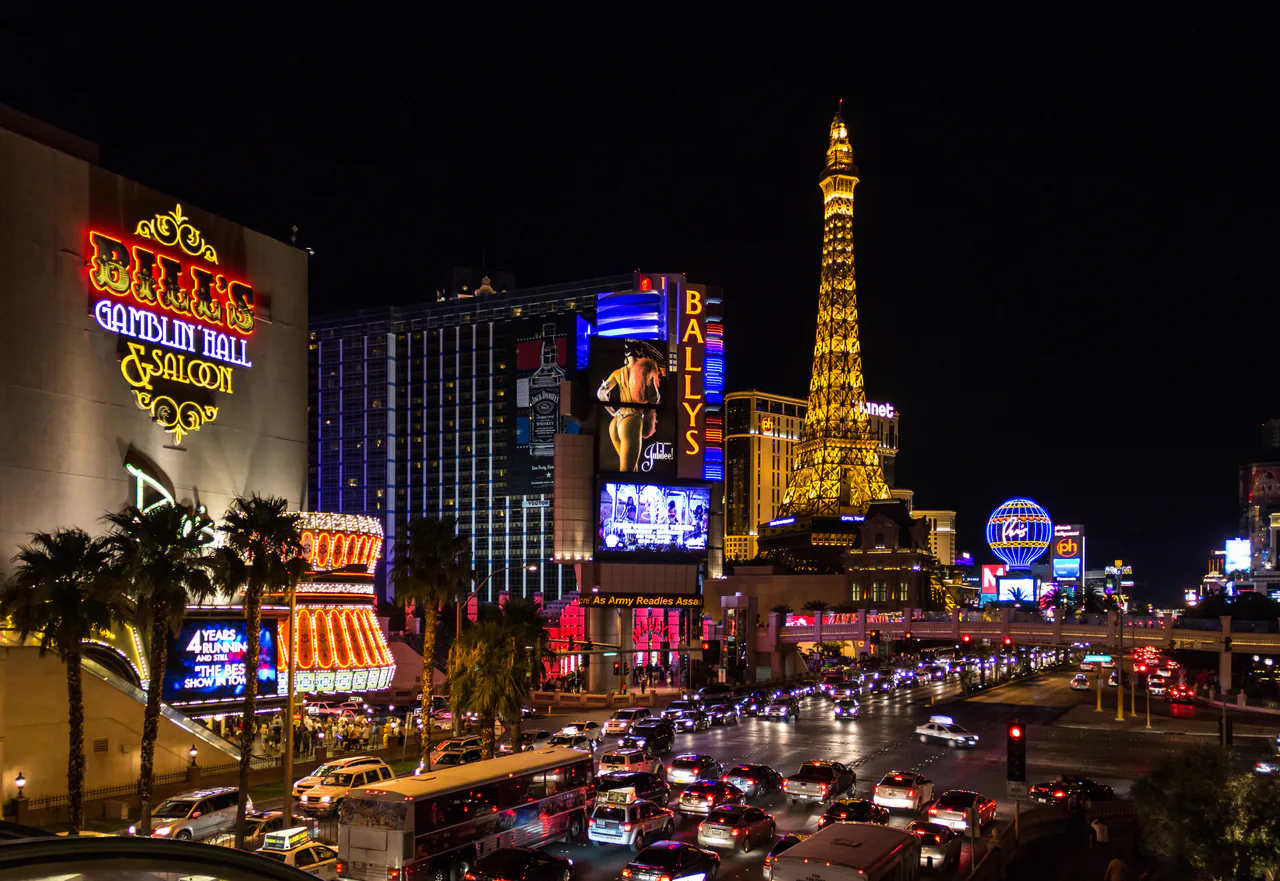
Las Vegas is two cities four miles apart. The Strip is the one on the postcards: 150,300 hotel rooms, replica landmarks, and resorts built so you never have to leave. Downtown, around Fremont Street, is the older, scruffier, cheaper original, and it’s where a lot of people end up having their best night. A good three-day trip uses both, plus one morning in the desert, and the average visitor stays 3.2 nights - which is about right.
The thing worth internalizing before you land is that Las Vegas is designed to blur distance. The Strip is roughly four miles long and the resorts are enormous, so a hotel that looks “next door” on a map can be a 25-minute walk through two casino floors and over a pedestrian bridge. Plan your days by cluster, not by mile.
The Strip: work it in three clusters
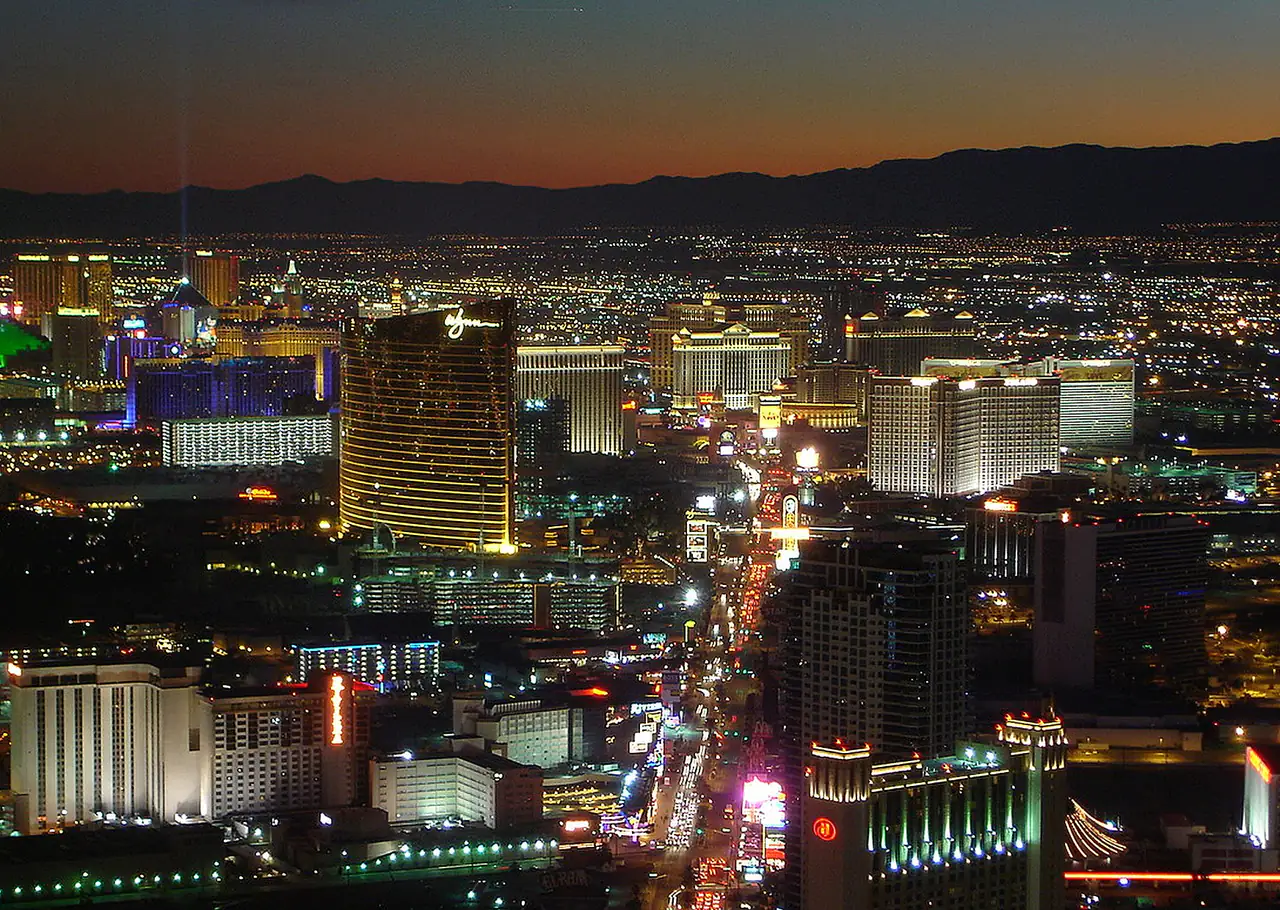
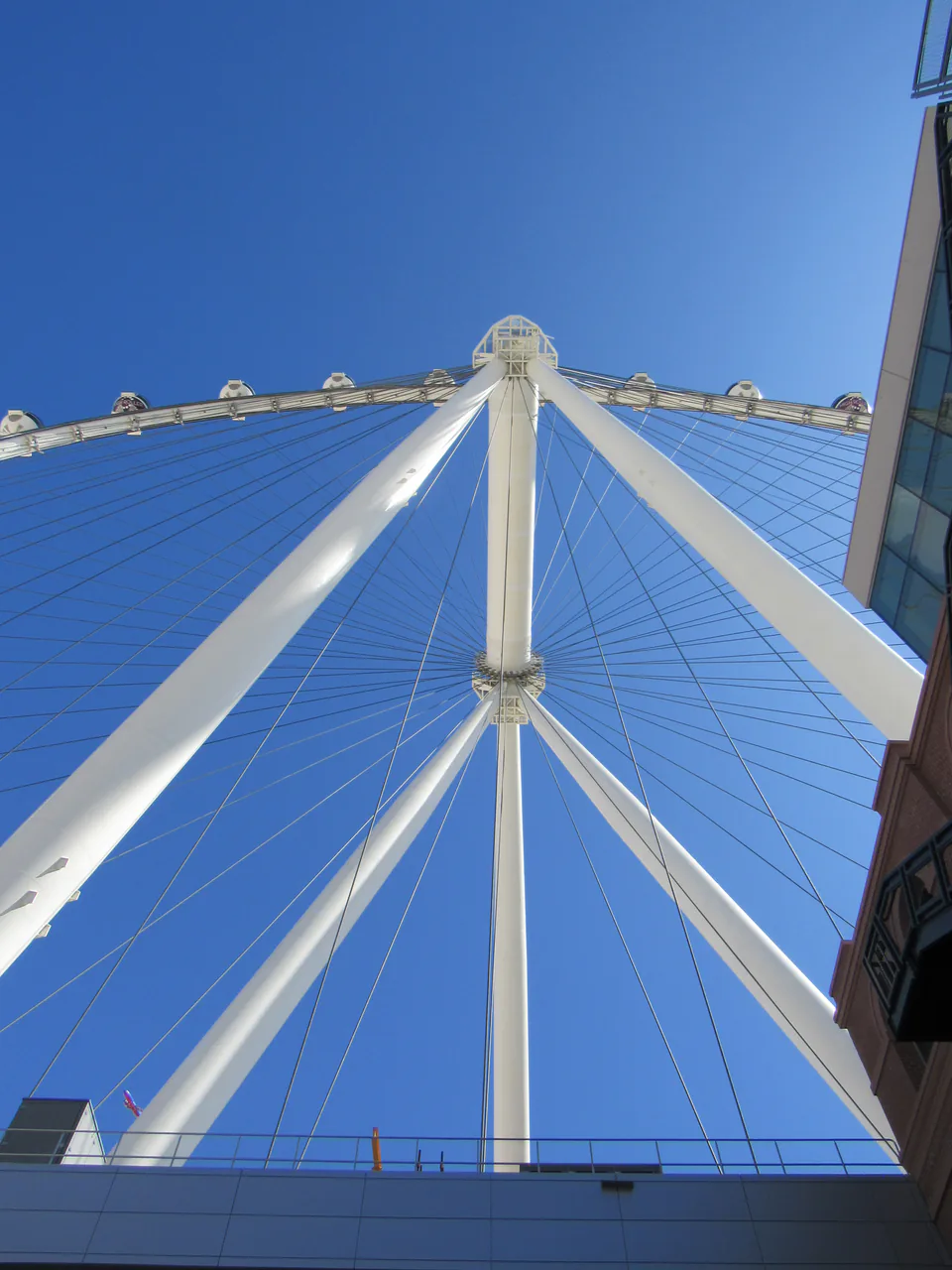
Rather than trying to walk the whole boulevard, split it. The south cluster runs from Mandalay Bay through Luxor, Excalibur, New York-New York and MGM Grand: the theme-park end, best at night when the Luxor’s light beam is on. The center cluster from Bellagio and Caesars Palace through the Cosmopolitan, Paris and the LINQ is the densest and the one you’ll spend the most time in. The north cluster past the Venetian and Wynn up to Resorts World and the Sahara is quieter, and it’s where Sphere sits, just east of the Venetian.
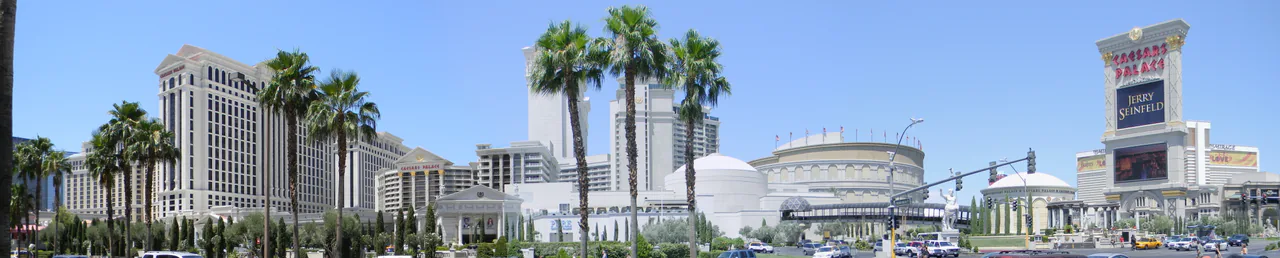
Caesars Palace is worth a wander even if you’re staying elsewhere: the Forum Shops, the Colosseum where the big residencies play, and a garden and fountain frontage that most people walk straight past on their way to the Bellagio.
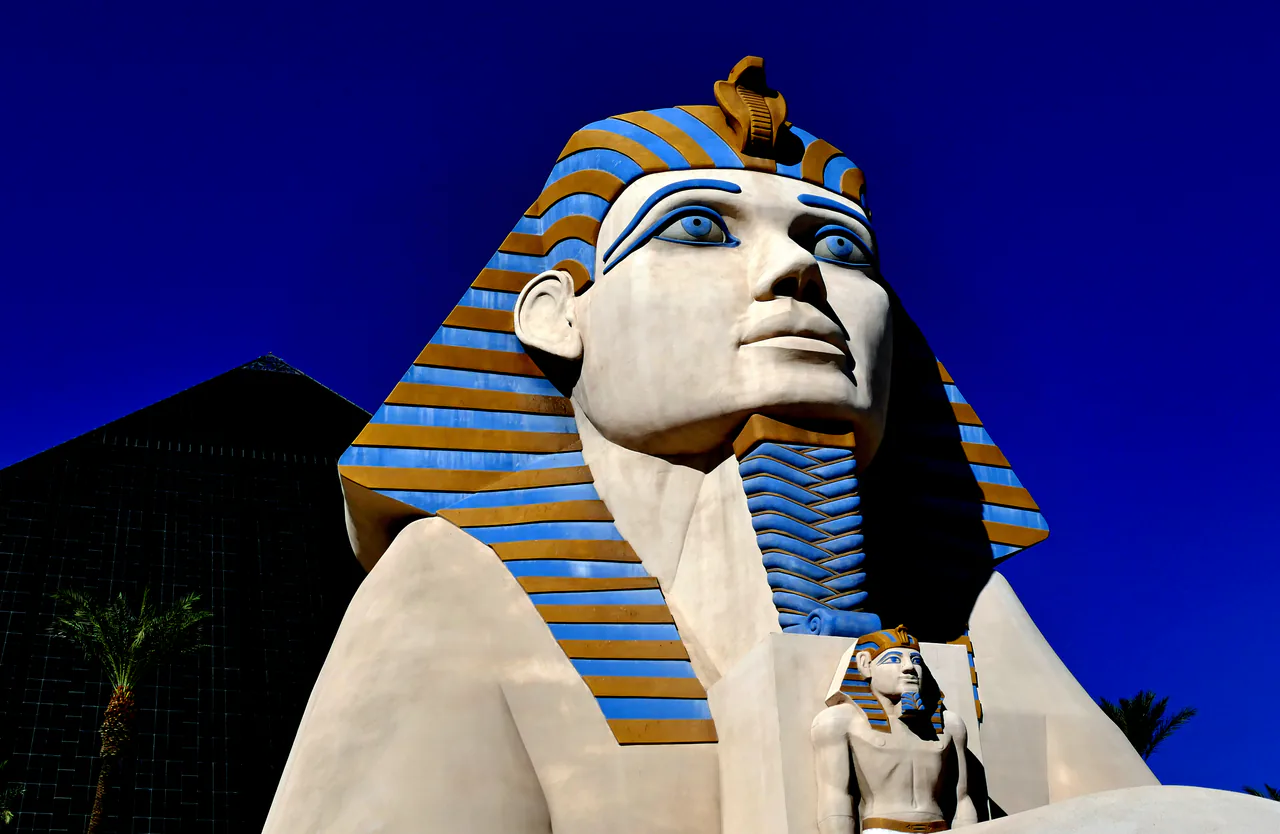
At the south end, the Luxor pyramid and the Sphinx out front are the most photographed piece of architectural nonsense in America, and they’re free to walk up to.
What’s free
More than you’d expect, and it’s the difference between a cheap trip and an expensive one.
The Fountains of Bellagio run in front of the lake on Las Vegas Boulevard: every 30 minutes from 3 p.m. on weekdays (from noon on weekends), then every 15 minutes from 8 p.m. until midnight. They cost nothing, they’re cancelled in high wind, and the best free view is from the Bellagio side of the pedestrian bridge over Flamingo Road, not from the crowd at the rail.
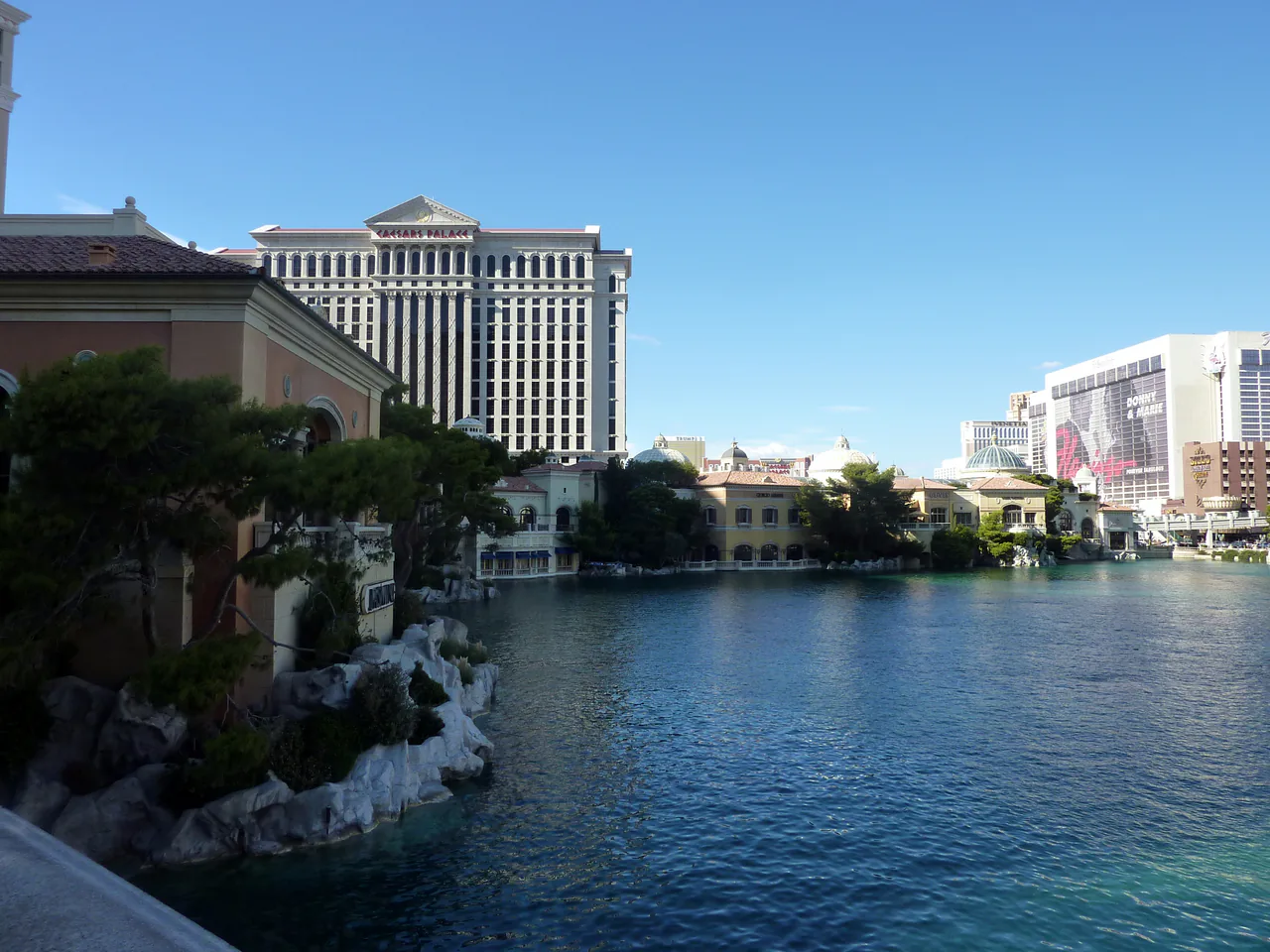
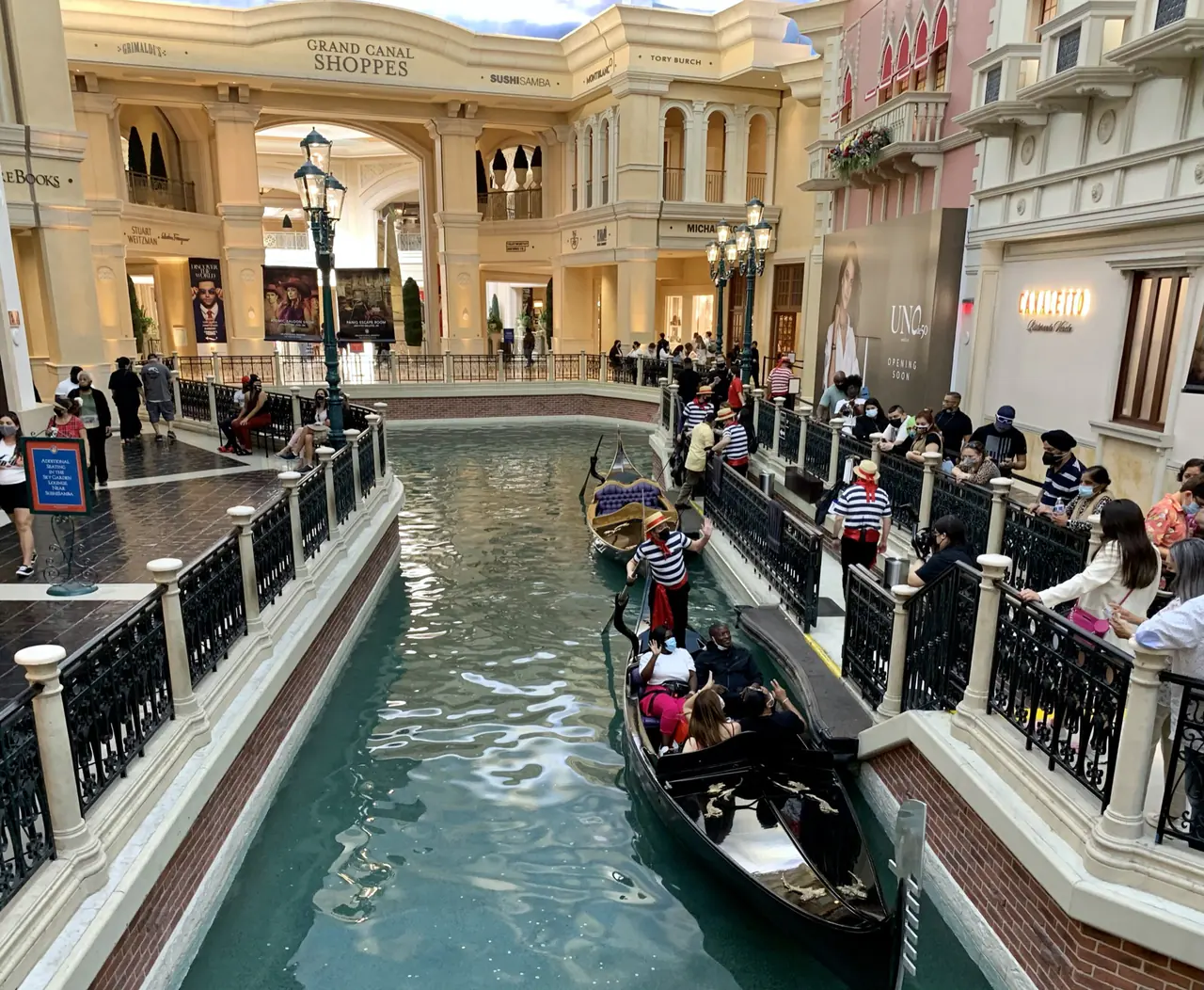
Also free: the Bellagio Conservatory, replanted five times a year; the Venetian’s Grand Canal Shoppes with its painted sky and gondolas, which you can walk without paying for a ride; the flamingo and pelican habitat behind the Flamingo hotel; the volcano and garden frontages along the boulevard; and every casino floor in the city, where nobody expects you to gamble to stand there.
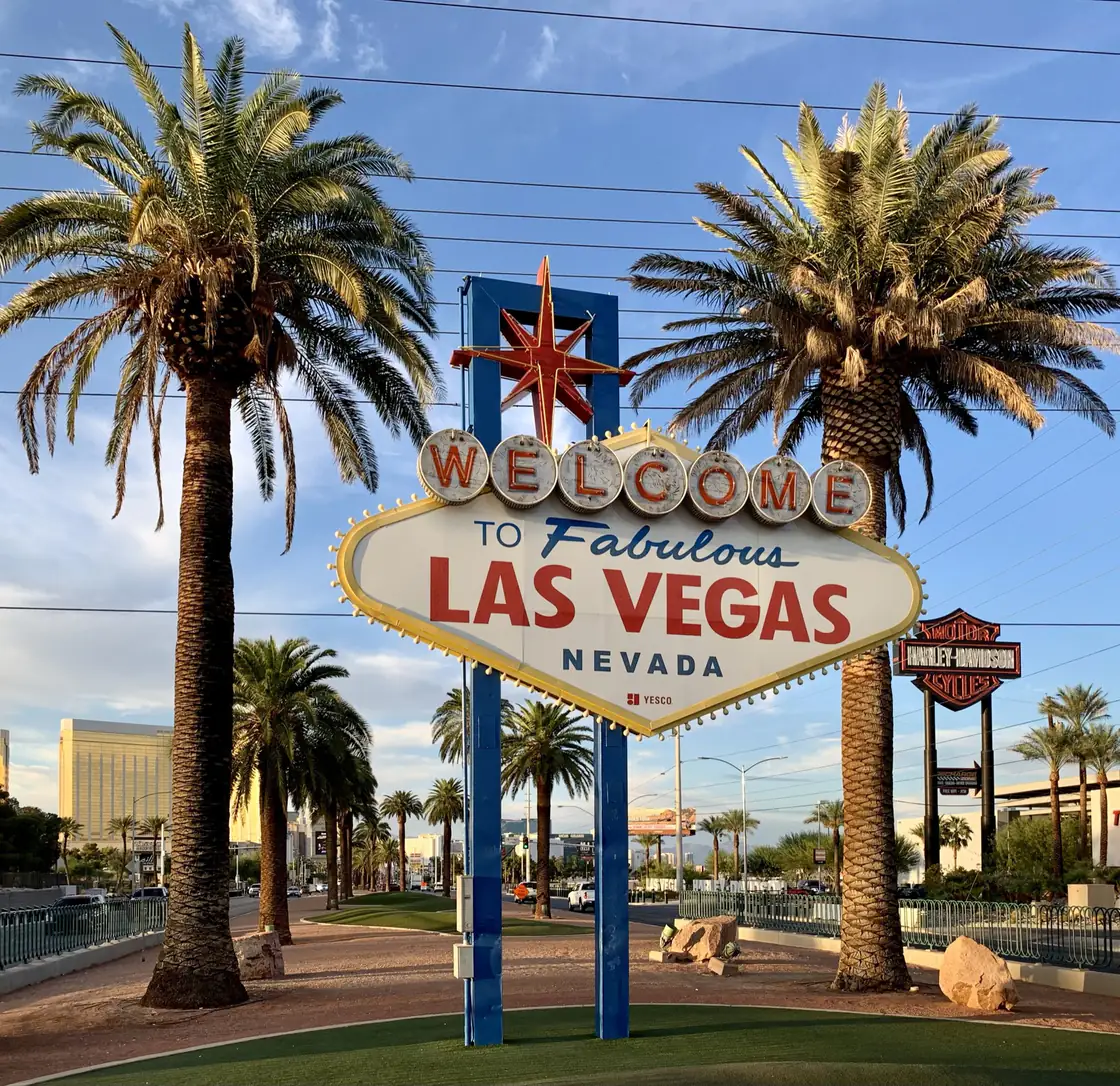
The Welcome to Fabulous Las Vegas sign has its own free parking lot at the south end of the boulevard, past Mandalay Bay. Go early; by mid-morning there’s a line for photos.
Downtown and Fremont Street
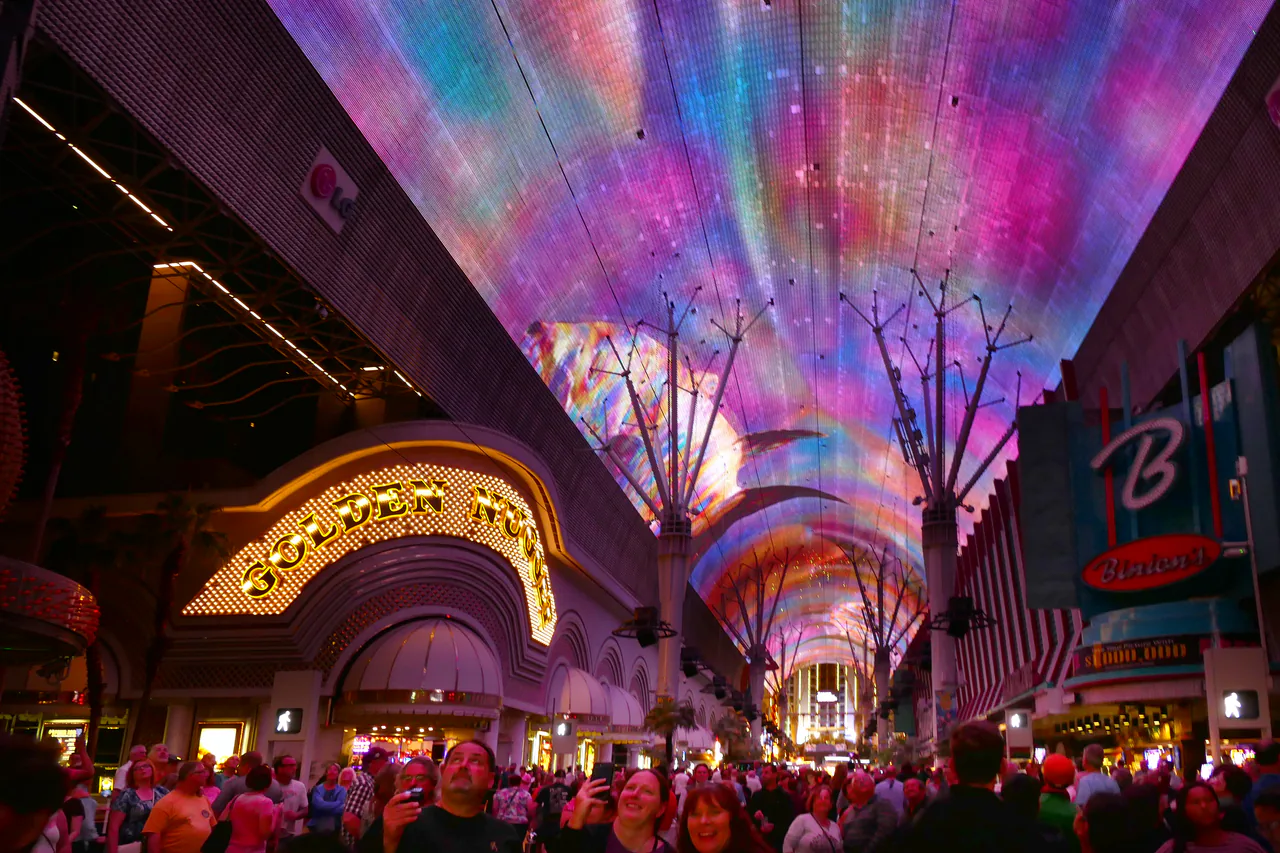
Downtown is about four miles north of the center Strip and feels like a different decade. The Fremont Street Experience is a covered pedestrian mall under a canopy that doubles as a giant screen: the free Viva Vision shows run hourly from 6 p.m. to 2 a.m., each about six to eight minutes, and the operators call it the largest single digital display on the planet. Between shows there are free stages, street performers and a zipline overhead.
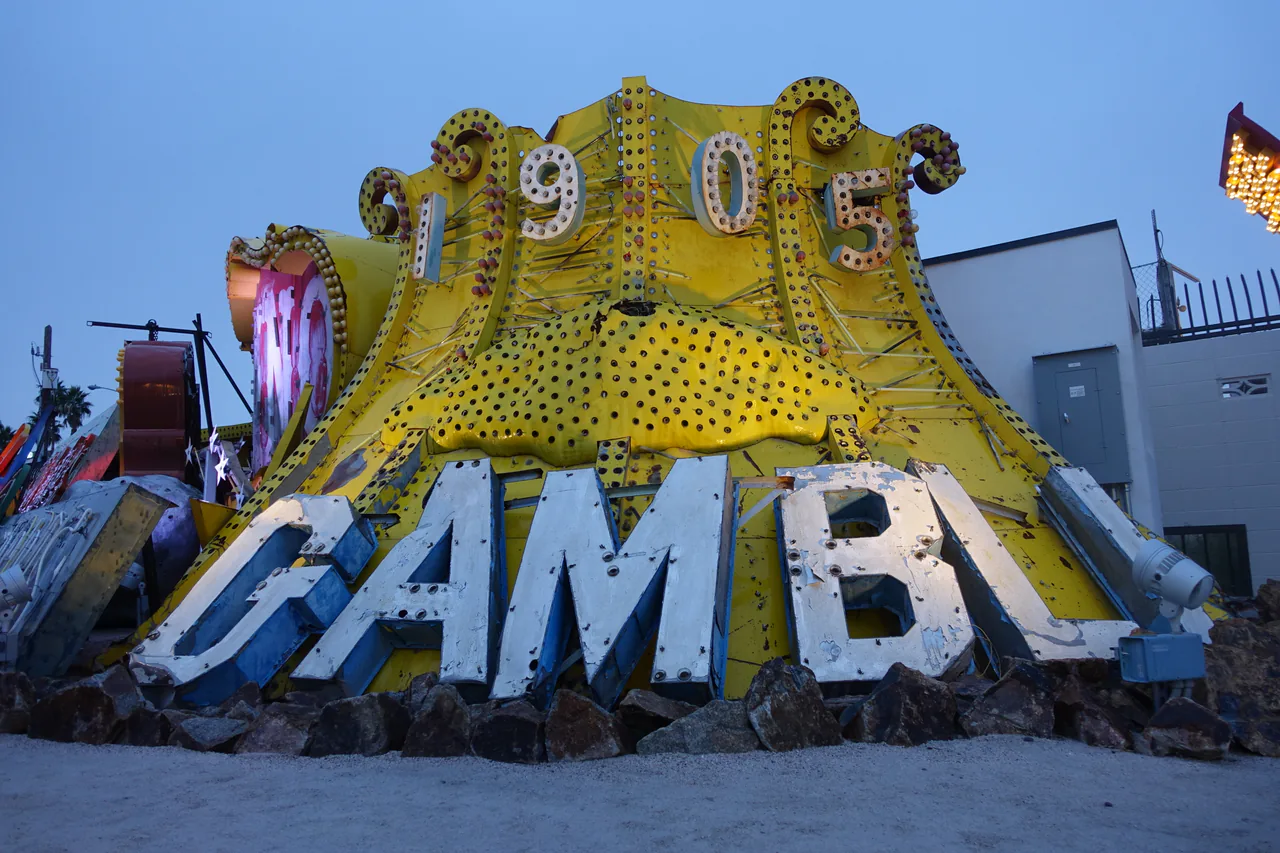
Two blocks off the canopy, the Neon Museum keeps the old signs the resorts threw away, arranged in an outdoor “boneyard”. It’s ticketed, timed and much better after dark. Nearby, the Arts District on South Main Street has the independent bars, breweries and vintage shops that the Strip has no room for, and it’s where locals actually drink.
Shows, and the newest venue
Vegas entertainment splits into resident Cirque du Soleil productions, headliner residencies, magic, comedy and adult revues, and prices swing from about $50 to several hundred. Sphere, the 366-foot LED globe behind the Venetian, is the one genuinely new thing in the city: it runs an immersive film program plus concert residencies, and it’s the only venue here where the room is the attraction. Our guide to Las Vegas shows covers what to book, where to buy and what to skip.

Eating: skip the buffet, drive to Chinatown
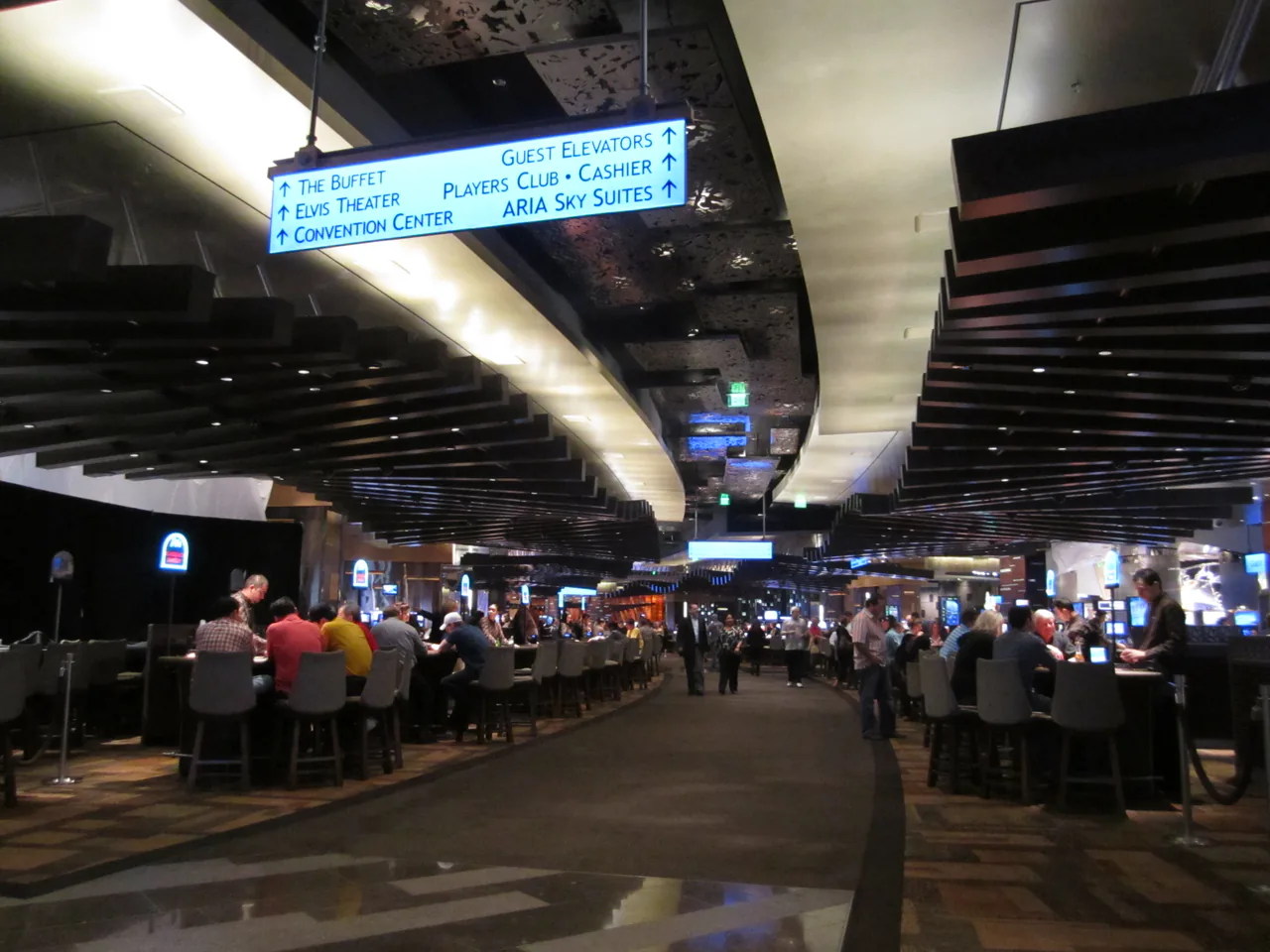
The buffet is no longer the story. The interesting food in Las Vegas is on Spring Mountain Road, the corridor known as Chinatown that runs west from the Strip past Valley View. It’s several miles of Chinese, Korean, Japanese, Thai, Vietnamese and Taiwanese restaurants serving the people who work in the resorts, often late into the night, at a third of Strip prices. A ten-minute rideshare gets you there.
On the Strip itself, the celebrity-chef rooms are real restaurants rather than gimmicks, but reserve them; walk-up tables at the good ones evaporate on weekends. And keep an eye on the check: an 18-20% service charge is often added automatically to larger parties.
Pools, and when they’re worth it
From roughly March to October the pool scene is a genuine attraction rather than an amenity. Most Strip resorts run a large pool complex included with your stay (it’s one of the few things your resort fee buys), plus a separate ticketed dayclub with a DJ and cabanas. In November through February, many pools close or reduce hours entirely, which catches winter visitors by surprise.
Day trips worth the car
Red Rock Canyon is 20 minutes west: a 13-mile scenic loop through sandstone cliffs, $20 per vehicle. From 1 October to 31 May you need a timed entry reservation to drive in between 8 a.m. and 5 p.m., booked on recreation.gov, so either book it or arrive before 8.
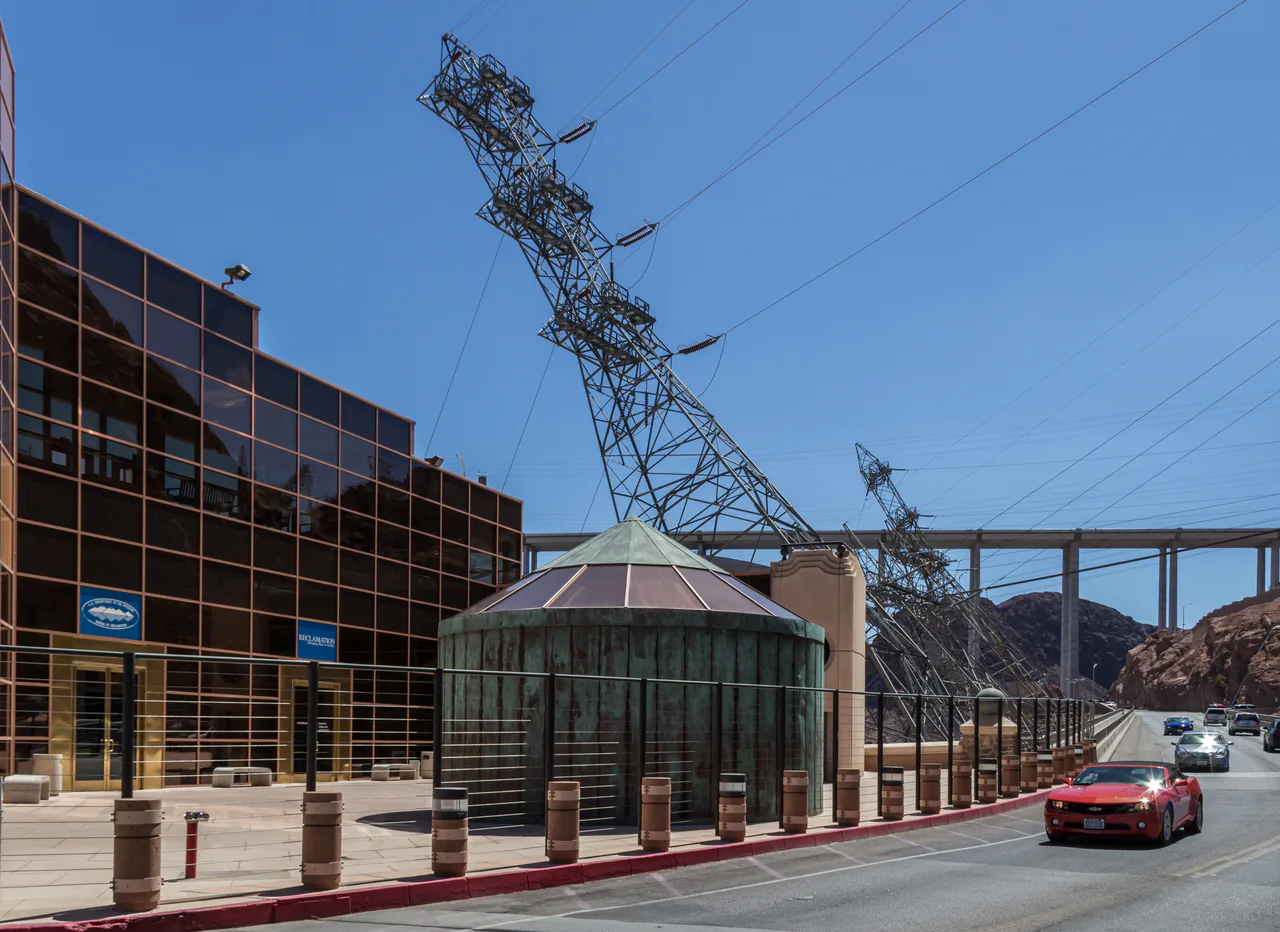
Hoover Dam is 45 minutes southeast. The visitor center and observation deck cost $15, the guided Powerplant Tour $25 for adults, and the full Dam Tour $40 - that one is sold on site only, first come first served, so arrive near the 9 a.m. opening. Tickets, getting there from the Strip and tour options are in our Hoover Dam tour from Las Vegas guide.
Valley of Fire is about an hour northeast and, honestly, more spectacular than Red Rock: $15 per vehicle, open sunrise to sunset. Note that four of its best short trails close from 15 May to 30 September because of the heat.
The Grand Canyon needs a decision. Grand Canyon West, with the Skywalk, is on Hualapai tribal land about 2 to 2.5 hours away and is the one most bus tours sell. The national park’s South Rim is around four and a half hours each way, which makes a day trip a very long day; our Grand Canyon National Park guide explains the difference, and the Arizona travel guide covers doing it properly with an overnight. For what the bus, helicopter and Skywalk options actually cost from a Strip hotel, see Grand Canyon tours from Las Vegas.
Death Valley is about two hours west by the park’s own shortest route, and it’s more of an overnight than a quick day trip once you factor in the drive both ways plus any real time on the ground in the heat - our Death Valley National Park guide covers current road closures and why summer visits need real planning.
Getting around
Walking covers each cluster. Between them, the Deuce bus runs the length of the boulevard and out to Fremont Street: $6 for a 2-hour pass, $8 for 24 hours, and it is slow in traffic. The Monorail runs behind the east-side resorts from the Sahara to MGM Grand: $6 a ride at the station or $5.50 online, $15 for a day pass ($13.45 online). It’s quicker than the bus but it doesn’t reach downtown or the airport. Rideshare is everywhere and often the sensible choice for three or four people. The airport run itself - taxi zones, shuttle and RTC - is in LAS to the Strip.
Skip the rental car unless you’re doing day trips. Most Strip resorts charge for self-parking (Resorts World, for example, is $21 for 24 hours, free for Nevada plates), and you’ll pay to store a car you use twice.
When to go
March to May and October to November are the good months: warm, walkable, everything open. Summer is brutal - the city hit an all-time record 120F on 7 July 2024 and an average early-July afternoon is around 104F, which turns the Strip into a series of dashes between air-conditioned buildings. Winter is cheap and pleasant by day but cold at night, and many pools shut.
One pricing quirk to plan around: Las Vegas hosted nearly six million convention delegates in 2025, and the big shows move room rates violently. Check the convention calendar before you fix dates, and see where to stay in Las Vegas for how resort fees change what you actually pay.
Read also
- Pick your base: where to stay in Las Vegas
- Book the evening: Las Vegas shows
- Get out of town: Nevada travel guide and Arizona travel guide
- The canyon, properly: Grand Canyon National Park
- Browse more US cities and US states
On the map
The map loads on click - to keep the page lightweight.
The map didn’t load. Check your connection and refresh the page.
Read also

Cities · 13 min read
Salt Lake City: Ski Base, Temple Square and the Salt Flats
Verified · August 29, 2026Four ski resorts inside 36 miles of the airport, a temple you cannot enter until 2027, and a salt flat that closes for racing. What to plan around.

Cities · 9 min read
Atlanta: Civil Rights Trail, Aquarium and Southern Food
Verified · August 28, 2026Free MLK park on Auburn Avenue, Civil Rights Center from $26, Georgia Aquarium tickets from $54.99, BeltLine walks and where Southern food still holds up.

Cities · 9 min read
Minneapolis Guide: River, Lakes & the Blue Line
Verified · August 26, 2026A $2 train from MSP, Stone Arch and Minnehaha Falls, Walker on free Thursday nights, and when Mall of America is worth the ride south.

Cities · 12 min read
Savannah Travel Guide: Squares and the Historic District
Verified · August 22, 2026Walk the 22 squares, tour Owens-Thomas honestly, ride the free river ferry, then Bonaventure and Tybee - checked August 2026.