
Savannah Travel Guide: Squares and the Historic District
Walk the 22 squares, tour Owens-Thomas honestly, ride the free river ferry, then Bonaventure and Tybee - checked August 2026.
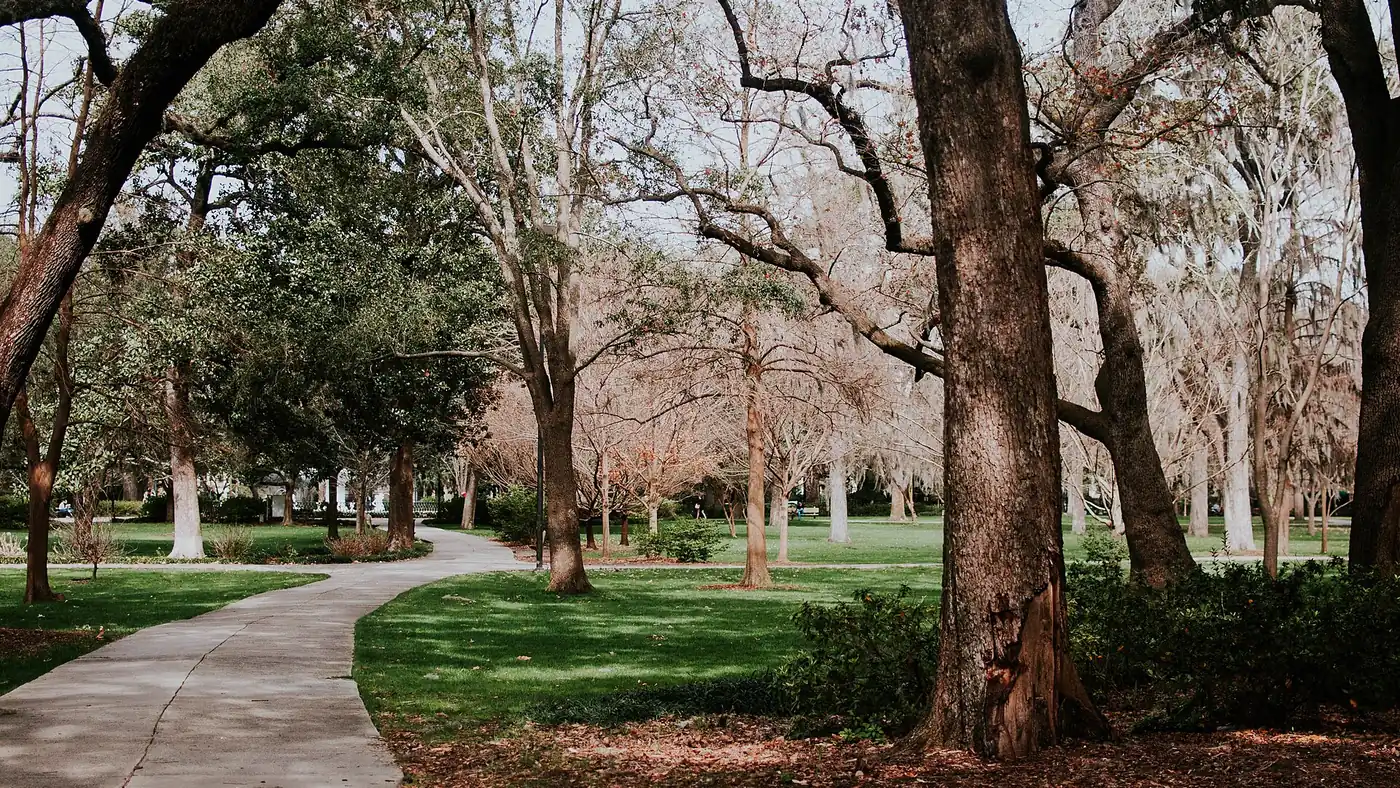
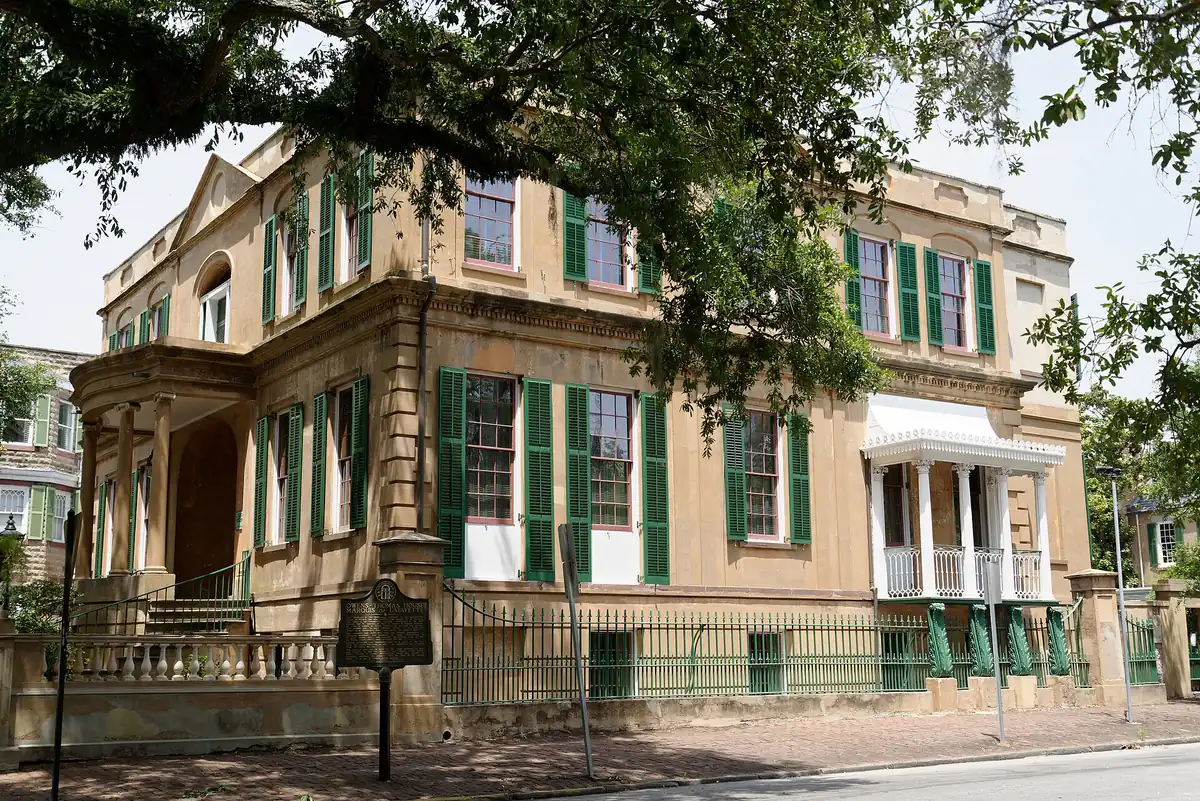
Put the Owens-Thomas House at the front of the trip and build the days backward from it. The squares cost nothing, never close and can absorb any hour you hand them; the ticket that reframes them runs on a desk that hands out its last guided tour at 3:30 p.m. and gives you headphones after that. Stand in the slave quarters behind that Regency mansion first, and the moss, the porch lines and the night stories stop floating free of the labor that paid for them.
After that the city is just geography you can walk. The grid is flat, shaded and roughly a mile across, which is why two days downtown work with the car parked and forgotten. Day three is the one that needs wheels: Bonaventure Cemetery out along the Wilmington River, then Tybee Island and the horizon.
The square grid is the city
General James Oglethorpe laid out the first wards in 1733, and the city kept extending his grid south for more than a century - 24 squares in all. Twenty-two survive: Ellis came back in 2010 after half a century under a parking garage, Liberty and Elbert never did. What’s left is among the largest urban historic districts in the United States, and it needs no perfect route. Pick Bull Street or Abercorn, walk south from the river toward Forsyth Park, and cut east or west whenever a square looks quieter than the last one.
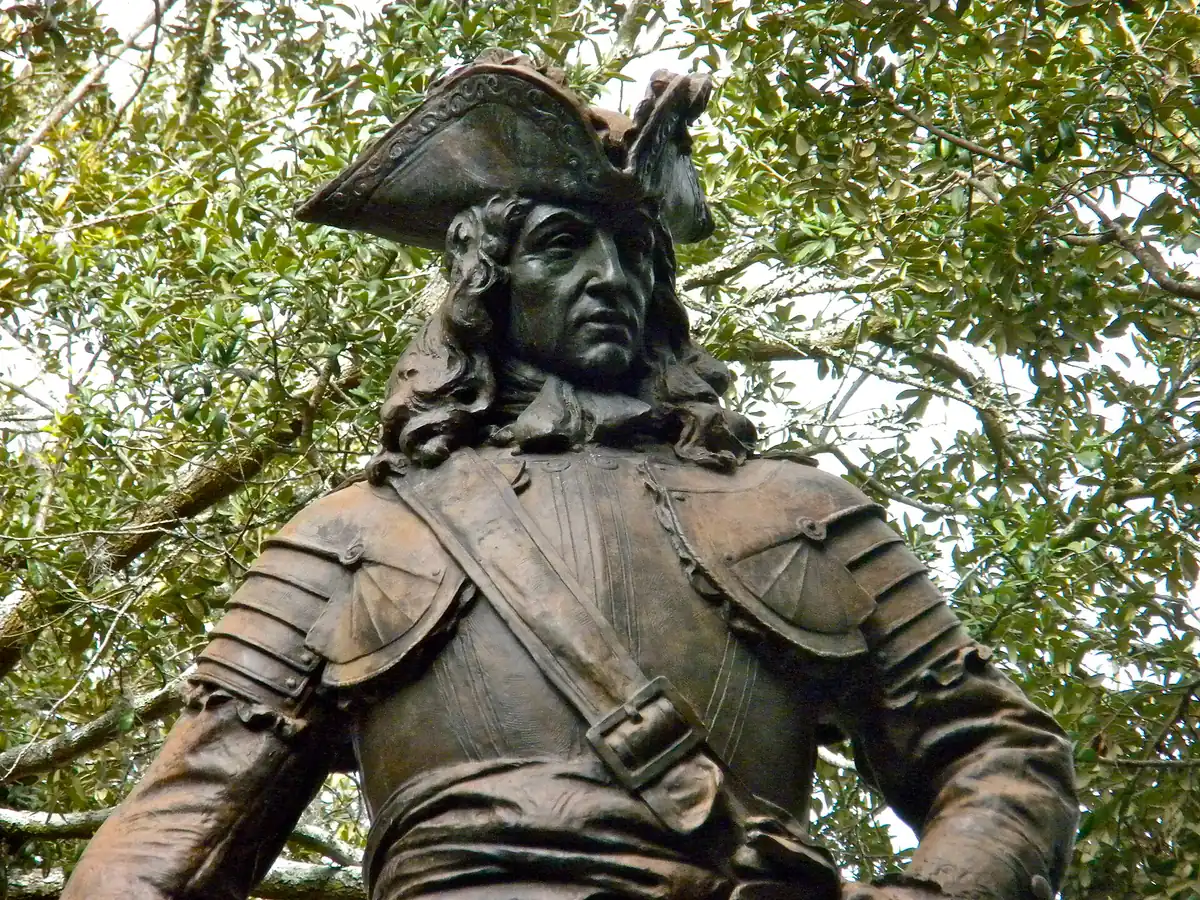
Chippewa Square is the one most visitors recognize - Oglethorpe’s statue faces south down Bull Street, and the Forrest Gump bench fans still hunt a prop that isn’t there anymore. Monterey, Madison and Lafayette hold some of the densest house architecture. Ellis Square, rebuilt over the old City Market site, is louder and more commercial. None of them charge admission. The point is the rhythm: shade, monument, porch line, next shade.
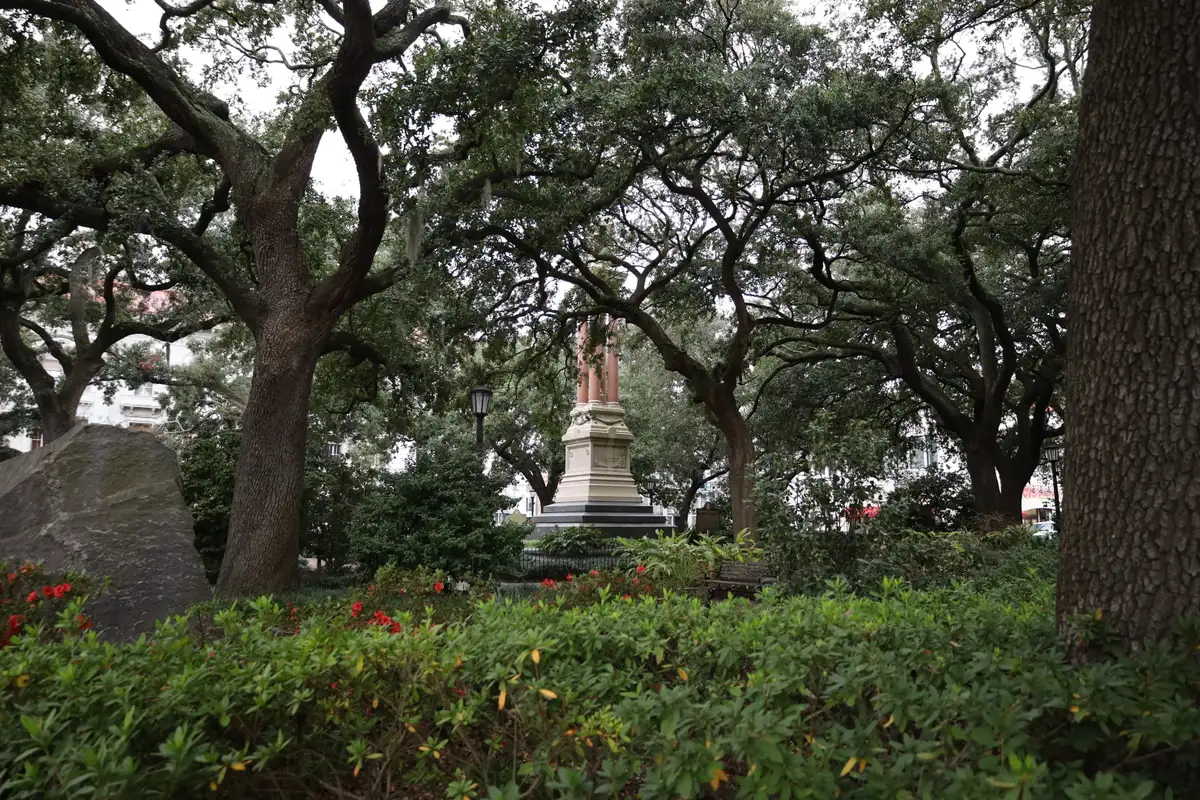
The reason all of this looks maintained rather than embalmed is a college. The Savannah College of Art and Design opened here in 1978 and spent the decades since buying up derelict downtown property and putting it back to work: close to 70 restored buildings now hold classrooms, galleries and dorms scattered through the district instead of behind a campus gate. That’s why a block of 19th-century facades often turns out to be a design school, and why the sidewalks have students on them at nine on a Tuesday morning.
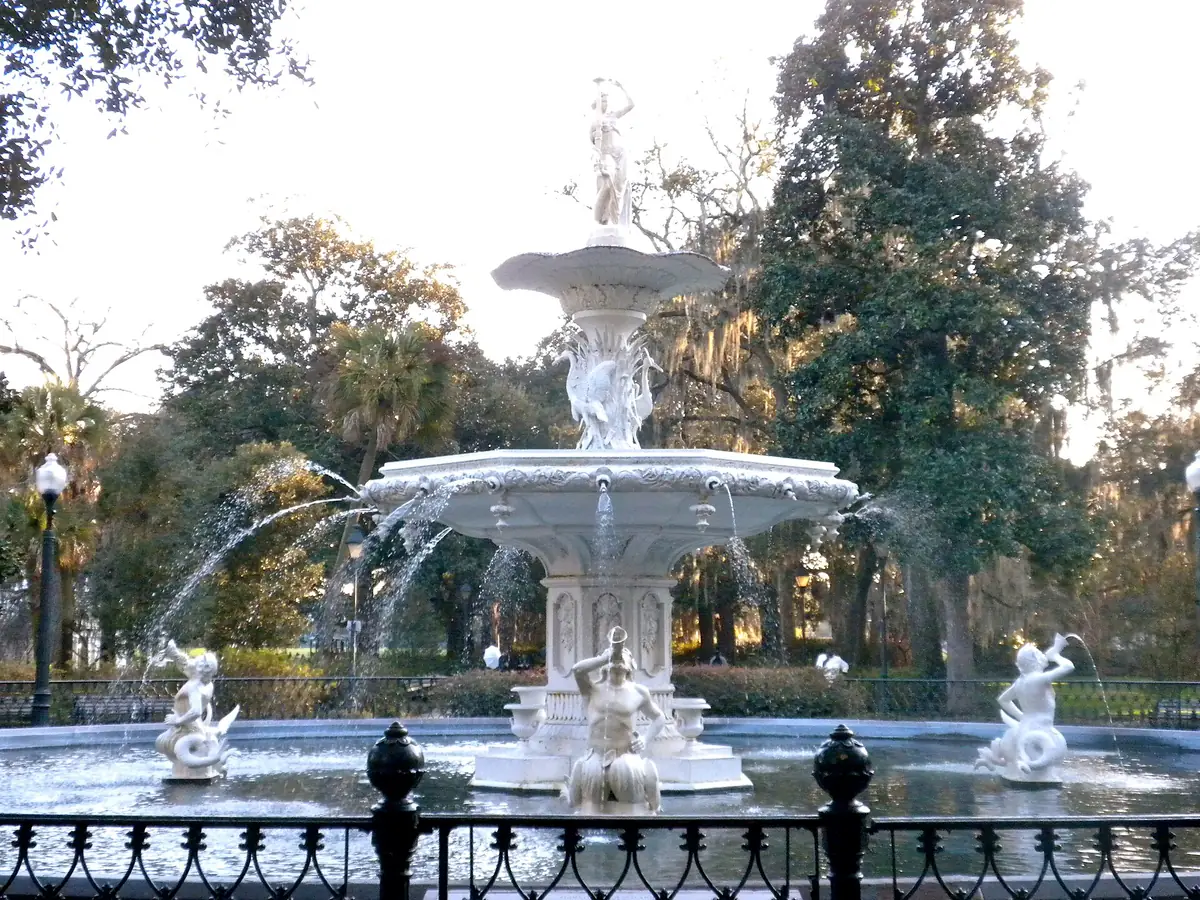
Forsyth Park sits just south of the square grid and works as the city’s big outdoor living room. The fountain is the postcard; the live-oak allée is the reason to linger. Bring water in summer - Savannah’s humidity doesn’t care how pretty the moss looks.
The house museum that makes the rest honest
If you only buy one ticket downtown, make it Telfair Museums’ three-site pass. It covers the Owens-Thomas House & Slave Quarters, the Telfair Academy and the Jepson Center for seven days from purchase. In August 2026 adults pay $30, seniors 65+ and active military $27, students 13-25 $20, kids 6-12 $10, and ages 5 and under are free. Sites run Sunday and Tuesday through Saturday, 10 a.m. to 5 p.m., and close Mondays.
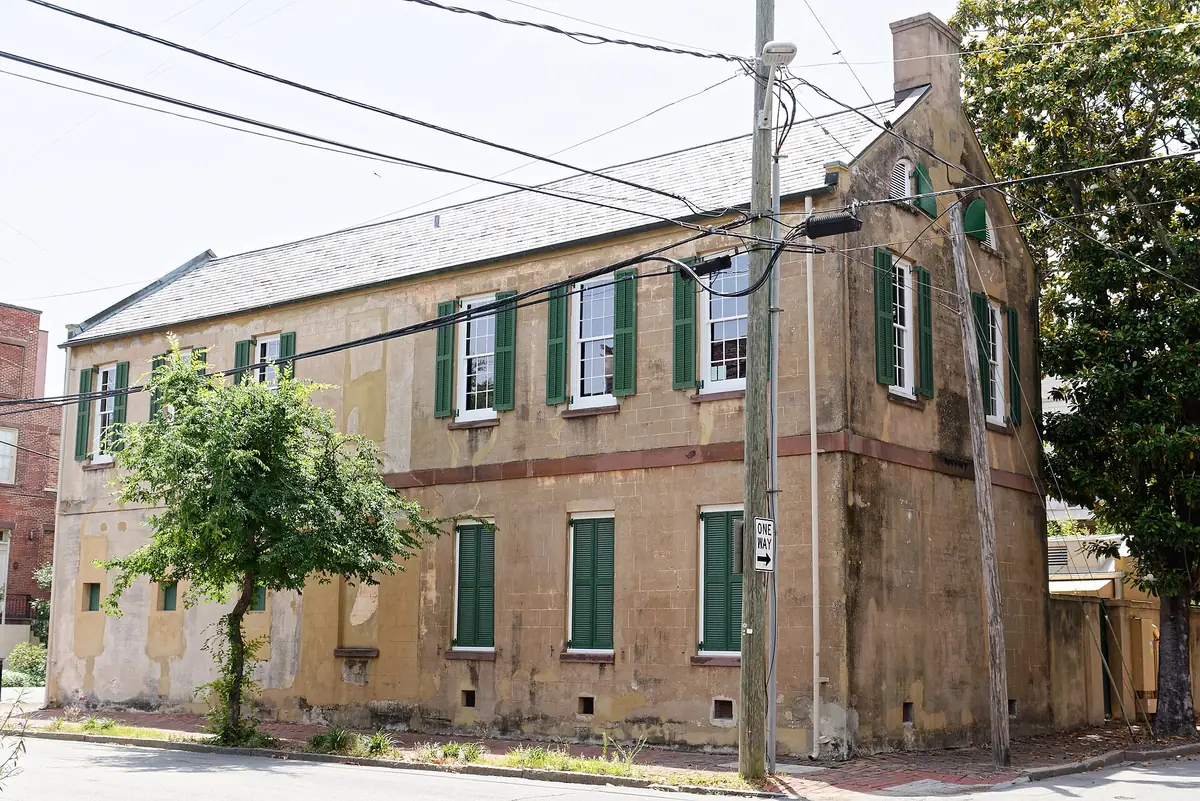
The Owens-Thomas House is the one that earns the pass, and its clock has a split in it that catches people out. Tours leave at 15-minute intervals in groups capped at 12, but guided tours only run 10 a.m. to 3:30 p.m. From 3:30 to 4:00 p.m. the museum switches to a self-guided audio tour, and 4:00 p.m. is the last start either way. Slots are first-come, first-served at the on-site desk, so a 3:50 arrival buys headphones, not a guide - and you check in on site for a time even if you bought the pass at another Telfair building. The tour walks both the formal rooms and the intact urban slave quarters in the courtyard, which is why this stop belongs early in the trip and not as a rainy-day afterthought.
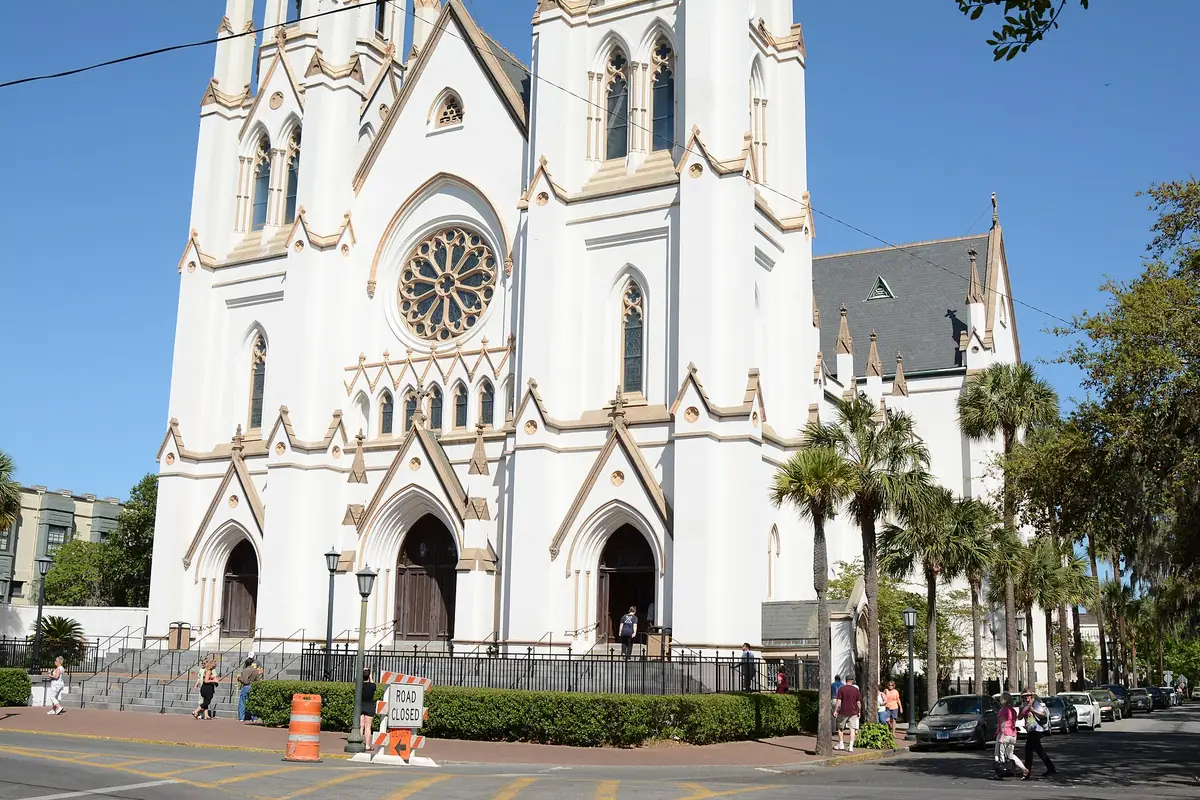
Cathedral Basilica of St. John the Baptist stands on Lafayette Square itself, at 222 East Harris Street - the twin spires are your compass between squares. Touring is free and there are no tickets to buy; a docent is on hand whenever the doors are open. The windows are 9 to 11:30 a.m. and 1 to 4:30 p.m. on weekdays and Saturday, and 1 to 4:30 p.m. on Sunday, with the whole church closed to visitors for funerals, weddings and other services. It’s a working parish, so dress like you’re entering someone’s worship space, not a set.
River Street once, then leave
River Street is the cobbled strip along the Savannah River where cotton warehouses became candy shops and tour-boat docks. Walk it once in daylight for the river view and the ferry landing. Don’t eat your best meal there, and don’t mistake it for the whole city.
The Savannah Belles Ferry is the useful exception on this waterfront. Chatham Area Transit runs it free from about 7 a.m. to 10 p.m. daily (closed Thanksgiving, Christmas and New Year’s Day), roughly every 10 minutes, between River Street / the Riverwalk and Hutchinson Island. There are three landings, not two - City Hall and Waving Girl on the downtown bank, the Westin and Convention Center dock on the island - so check which one your boat is calling at before you settle on a bench. The boats take bicycles and luggage and allow leashed dogs, which quietly makes this a free transfer on a checkout morning rather than only a joyride.
If you’re stitching a longer Georgia loop, the state overview on this site - Georgia travel - covers how Savannah sits against Atlanta and the Golden Isles. Charleston is the Lowcountry twin about two and a half hours up the coast; the Charleston guide is the honest comparison when you’re choosing which historic port gets the longer stay.
Eat inland from the river
Lowcountry cooking is rice cooking, and the same history sits under the plate as under the squares. Rice, okra and benne seed crossed the Atlantic with enslaved West Africans along with the knowledge of how to grow and cook them, and Savannah red rice, shrimp and grits, oyster roasts and a low-country boil are what came out the other end. Order those and you’re eating the regional plate, not a generic Southern menu.
The practical rule is a compass, not a price bracket. River Street sells pralines, fudge and a river view; the kitchens people argue about sit up the bluff inside the grid, along Broughton Street and south toward Forsyth. Weekend tables at the well-known dining rooms go weeks ahead, and some of the older institutions keep hours that don’t include dinner at all - read the restaurant’s own page for the day and the hour before you build an evening around it. For where the boil and the grits sit next to other regional American plates, see what to eat across the USA.
Ghost tours versus the places they talk about
Savannah sells night walks hard, and some of them are genuinely fun. Treat them as theater with a local guide. Prices move by operator and season, so this page won’t invent a “standard” ticket - compare inclusions (cemetery stop or not, group size, walking distance) before you buy.
Most of that trade traces back to a single book. John Berendt’s “Midnight in the Garden of Good and Evil” came out in 1994, told the story of a Savannah killing and the people around it, and sold well enough for long enough that the city it described became a destination. Bonaventure Cemetery in particular went from a quiet municipal burial ground to a stop on a script because of it. Reading it before the trip is more use than any guide’s flashlight, and it will tell you which of tonight’s anecdotes are borrowed.
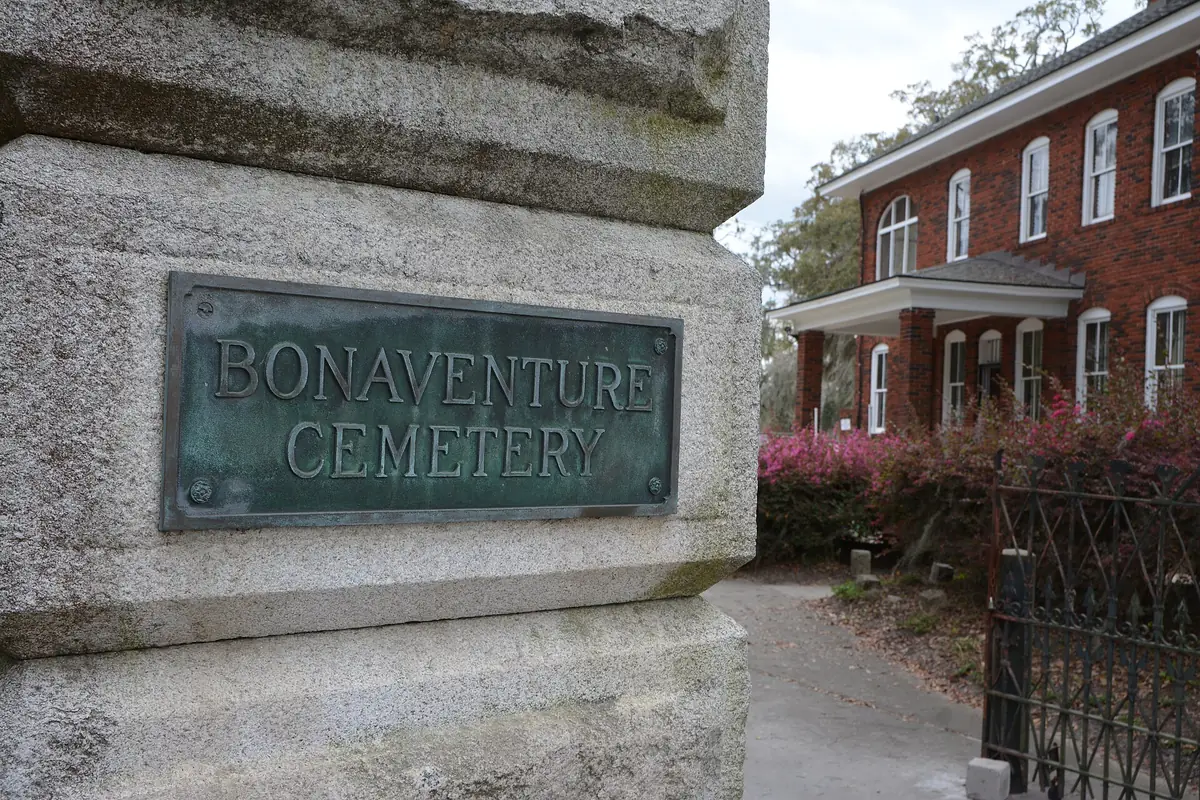
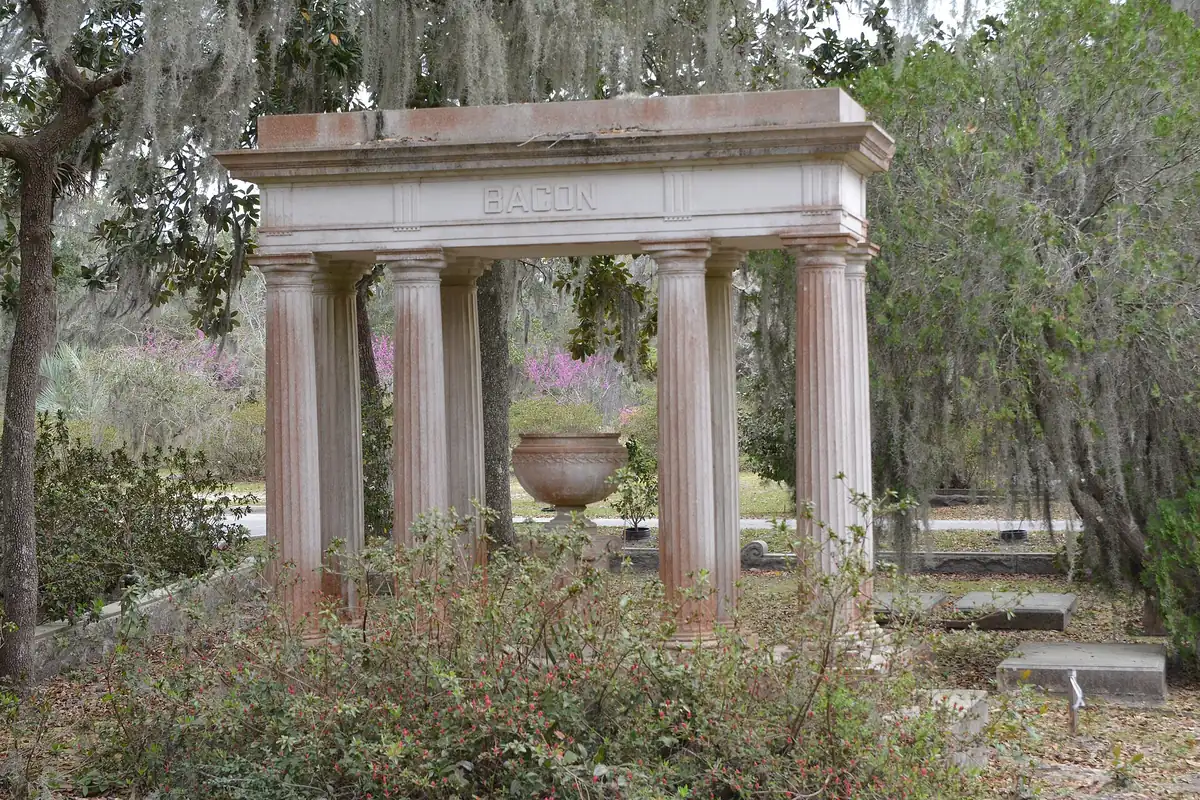
For the places those scripts name-check, go in daylight on your own time. Bonaventure Cemetery is a working City of Savannah cemetery at 330 Bonaventure Road, more than 100 acres under live oaks on a bluff above the Wilmington River. Gates run 8 a.m. to 5 p.m. daily, admission is free, and it is still an active burial ground - stay on paths, keep voices down, and leave the props at the hotel.
Where to sleep without wasting the walk
Stay inside or on the edge of the Historic District if your trip is mostly squares, food and museums. You’ll walk more and Uber less. South of Forsyth and out toward Midtown is quieter and often cheaper, but every downtown dinner then becomes a rideshare decision. Riverfront hotels buy you the view and the ferry dock; they also put you next to the loudest evening strip.
Parking is the hidden tax. If your hotel includes a garage, that perk can beat a “$20 cheaper” rate that forces street hunting every night. Summer weekends and St. Patrick’s Day fill rooms weeks out - book the stay before the dinner reservations.
Tybee when you need the horizon
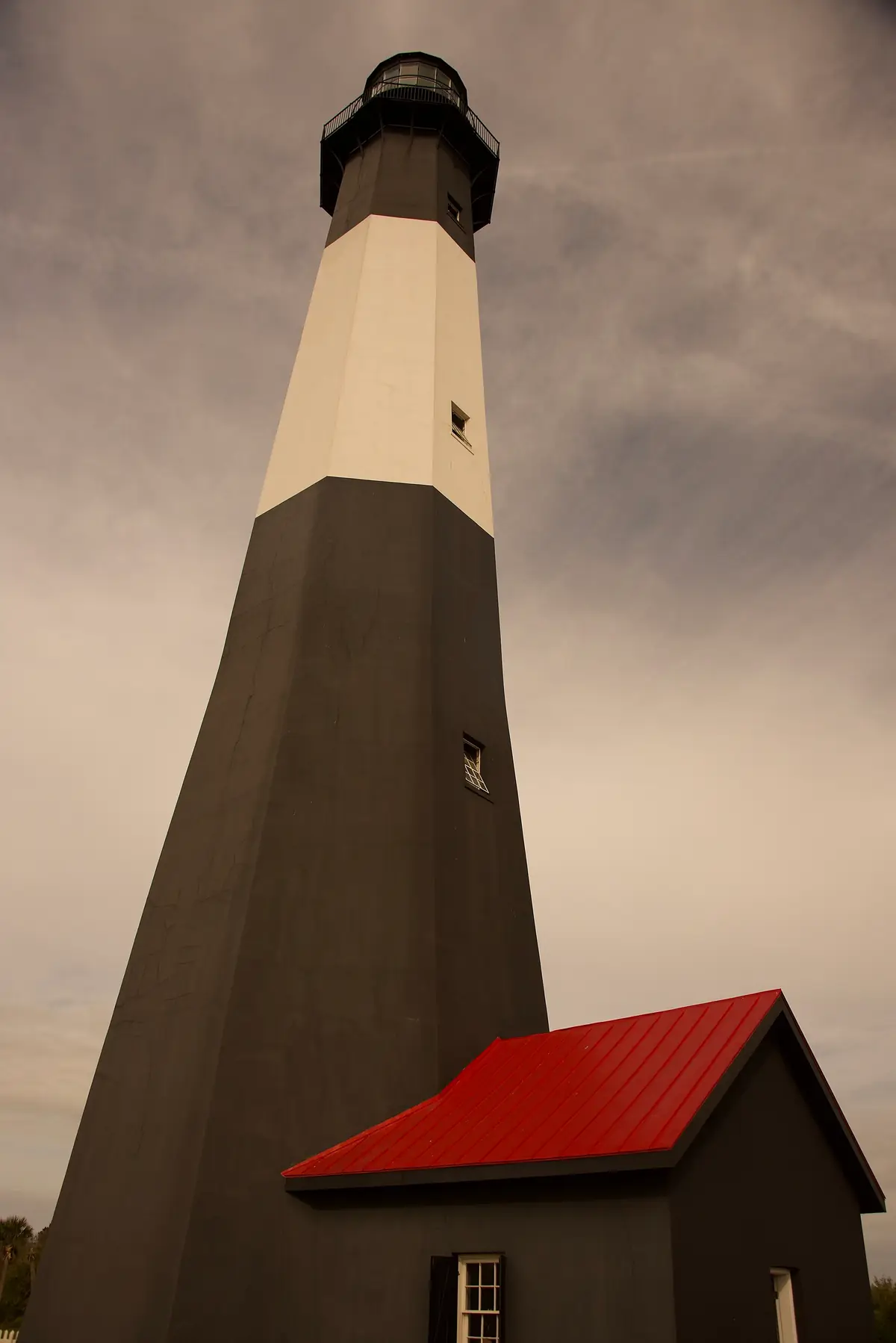
Tybee Island sits about 18 miles east and resets the trip with beach and wind. The Tybee Island Light Station & Museum is the structured stop: adults $14; seniors 62+, ages 6-17 and military $12; ages 5 and under free. It’s open Monday and Wednesday through Sunday with last tickets at 4:30 p.m., closed Tuesdays, and tickets are sold on site only. Two details save an argument at the gate: admission includes two hours in the lighthouse lot, and after the tour you move the car to the public lot across the street to stay on the north end - and no backpacks of any size are allowed on the grounds, so leave the day bag in the trunk. Climb if your knees allow it; the view is the Gulf Stream haze and the curve of the island, not another square.
Getting here and when it feels good
Savannah/Hilton Head International (SAV) sits about 10 miles from the Historic District - short enough that a taxi or rideshare on arrival is often simpler than an airport rental you’ll park for three days. Keep the car if Tybee, Bonaventure and day trips are locked in; skip it if you’re square-bound and hate garage fees.
Late fall through early spring is the walking season: softer humidity, clearer light in the squares, cemetery oaks without the full summer weight. Summer works if you front-load mornings, nap through mid-afternoon heat, and eat late. St. Patrick’s Day turns downtown into a parade city - either commit to that energy or pick another week.
Three days is the clean shape: squares and Owens-Thomas, river plus a night walk, Bonaventure and Tybee. Stretch to four for a second museum day or a lazy beach afternoon without watching the clock. Pair it with Charleston only when you have a week and enjoy driving the Lowcountry; trying to crush both historic cores in a long weekend usually cheats one of them.
On the map
The map loads on click - to keep the page lightweight.
The map didn’t load. Check your connection and refresh the page.
Admission and opening hours
- Admission price
- Telfair Museums 3-site pass (7 days): adult $30, senior 65+ $27, active military $27, student 13-25 $20, child 6-12 $10, ages 5 and under free. Savannah Belles Ferry free. Bonaventure Cemetery free. Cathedral Basilica of St. John the Baptist free, no tickets sold. Tybee Island Light Station adult $14; seniors 62+, ages 6-17 and military $12; ages 5 and under free, and admission includes two hours in the lighthouse lot.
- Opening hours
- Telfair sites Sunday and Tuesday-Saturday 10 a.m.-5 p.m., closed Monday; Owens-Thomas guided tours 10 a.m.-3:30 p.m., self-guided audio 3:30-4:00 p.m., last start 4:00 p.m. Belles Ferry 7 a.m.-10 p.m. daily except Thanksgiving, Christmas and New Year's Day. Bonaventure Cemetery daily 8 a.m.-5 p.m. Cathedral Basilica touring 9-11:30 a.m. and 1-4:30 p.m. weekdays and Saturday, 1-4:30 p.m. Sunday. Tybee Light Station Monday and Wednesday-Sunday 9:00 a.m.-4:30 p.m. last ticket, closed Tuesday.
Museum, ferry and lighthouse hours shift for holidays and St. Patrick's Day. Confirm on operator sites before you book a timed tour.
Details checked: August 22, 2026
Read also

Cities · 13 min read
Salt Lake City: Ski Base, Temple Square and the Salt Flats
Verified · August 29, 2026Four ski resorts inside 36 miles of the airport, a temple you cannot enter until 2027, and a salt flat that closes for racing. What to plan around.

Cities · 9 min read
Atlanta: Civil Rights Trail, Aquarium and Southern Food
Verified · August 28, 2026Free MLK park on Auburn Avenue, Civil Rights Center from $26, Georgia Aquarium tickets from $54.99, BeltLine walks and where Southern food still holds up.

Cities · 9 min read
Minneapolis Guide: River, Lakes & the Blue Line
Verified · August 26, 2026A $2 train from MSP, Stone Arch and Minnehaha Falls, Walker on free Thursday nights, and when Mall of America is worth the ride south.

Cities · 12 min read
Portland, Oregon: Food Carts, Gardens and Day Trips
Verified · August 16, 2026Oregon, not Maine. MAX from PDX is $2.80, Japanese Garden $22.50, the rose garden is free, and Multnomah Falls needs a $2 permit.