
Georgia (US State) Travel Guide
Atlanta, Savannah and the Golden Isles, the Blue Ridge and the Okefenokee: how to plan a Georgia trip, what is free, and when the weather works.

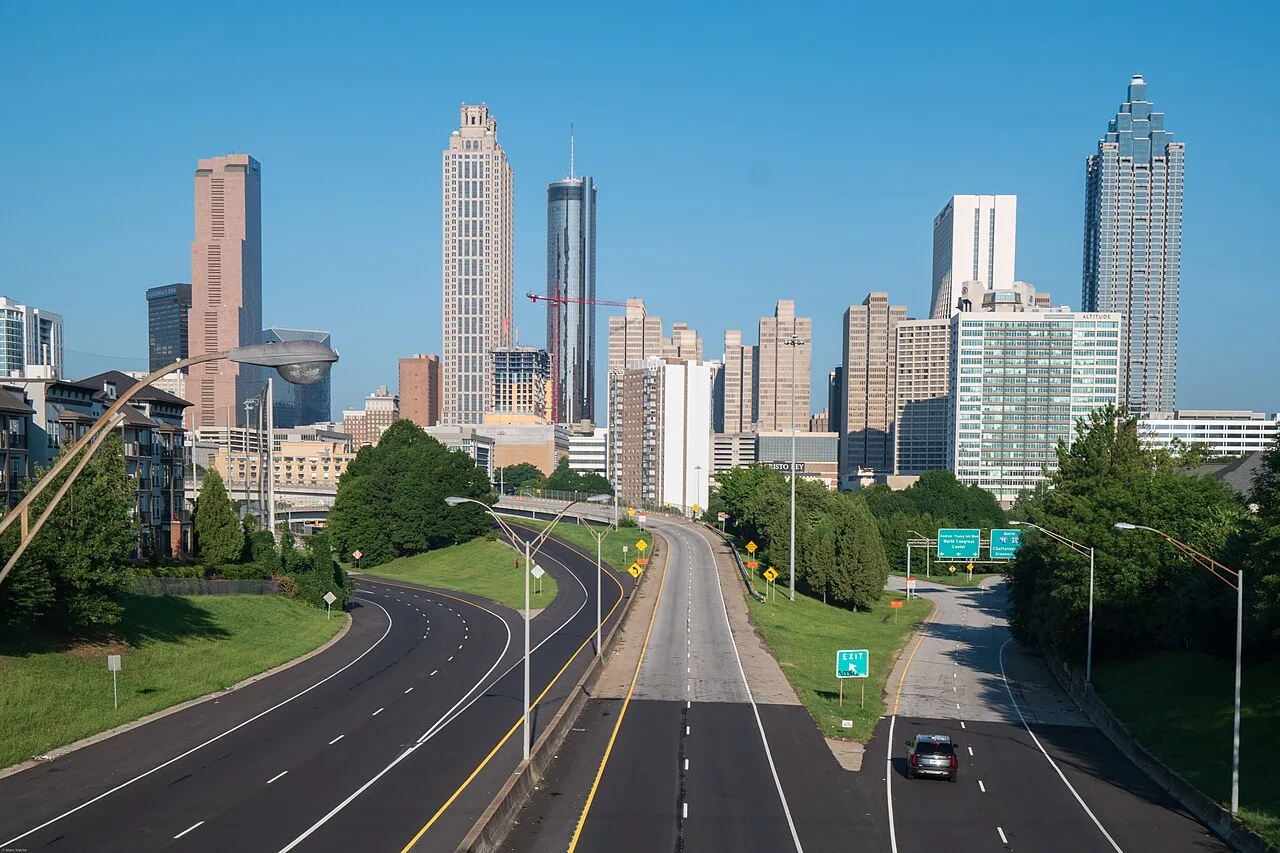
Confusingly for anyone typing a destination into a booking site, there are two Georgias, and this one is in the American South. It offers three completely different trips out of a single airport, and the state is compact enough that you can fit two of them into ten days: Atlanta and the civil rights sites in the middle, Savannah and the barrier islands to the southeast, and the southern tail of the Appalachians to the north.
Atlanta is where everyone lands whether they mean to or not. Hartsfield-Jackson has been the busiest airport on the planet for most of the last thirty years and handled 106.3 million passengers in 2025, which means cheap flights from almost anywhere and a real risk of treating the city as a connection. Give it two days instead - the Atlanta city guide covers Auburn Avenue, the aquarium block and the BeltLine once you’re off the plane, and ATL to downtown is the $2.50 MARTA math from baggage claim. Savannah is four hours southeast by car, the mountains are 90 minutes north, and nothing in the state requires a long drive.
- City depth for the landing pad: Atlanta
- Airport train and taxi flats: ATL to downtown
- Next door on the Gulf and civil rights corridor: Alabama
Atlanta: two days, and the reason to stay
The city that gets called the capital of the New South is also the birthplace of Martin Luther King Jr., and the Martin Luther King, Jr. National Historical Park on Auburn Avenue is free. It covers the neighborhood he grew up in: the birth home, the original Ebenezer Baptist Church where he and his father preached, and his tomb at the King Center next door. Home tours are limited and run on their own schedule, so check the park site the week you arrive.

Downtown, the National Center for Civil and Human Rights ties the American movement to present-day human rights work and doesn’t flinch; an hour there hits harder than most museums manage in three. The Georgia Aquarium and the World of Coca-Cola sit in the same block if you’ve got children to keep happy. Beyond that, spend your time in the neighborhoods: the BeltLine’s Eastside Trail links Old Fourth Ward to Ponce City Market and Inman Park, and it’s the best walk in the city.
Southeast: Savannah and the coast
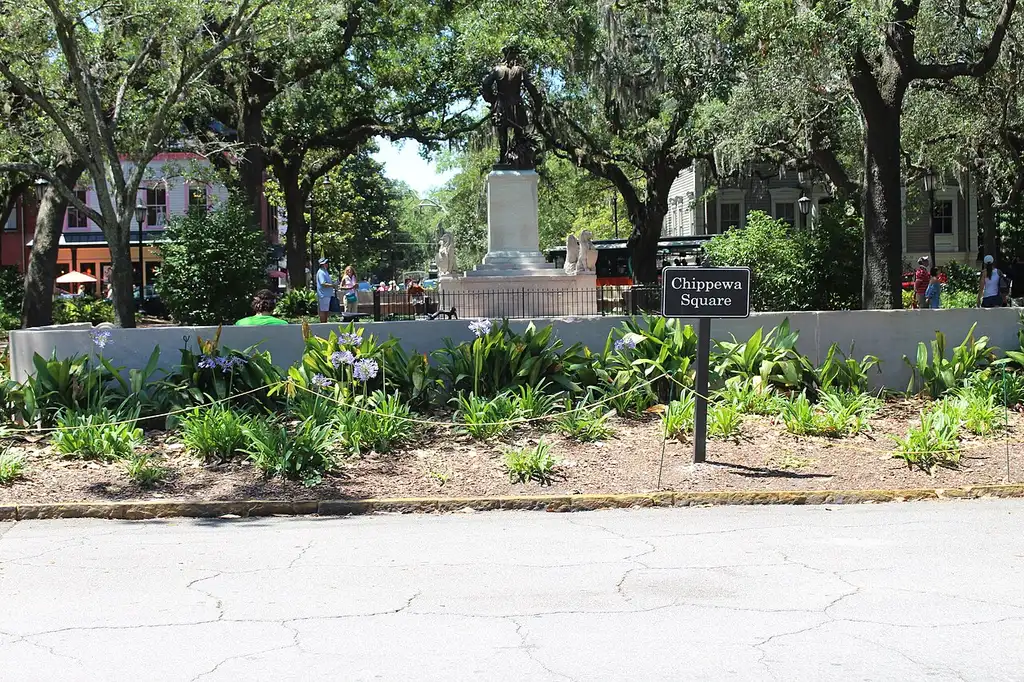
Savannah is the reason most people fly here in the first place, and it earns it. General Oglethorpe laid out the first wards in 1733, and the city kept extending his grid south for more than a century - 24 squares in all. Twenty-two survive: Ellis came back in 2010 after half a century under a parking garage, Liberty and Elbert never did. Each is a shaded green room with live oaks, Spanish moss and a monument in the middle. The historic core is among the largest urban historic districts in the country, and the correct way to see it is to walk from square to square with no fixed route and let the architecture do the work - our Savannah travel guide covers the squares, the Owens-Thomas House ticket and the Tybee day trip in full. That green calm sits on a harder history: Savannah grew wealthy as a cotton port and a center of the slave trade, and the squares and the antebellum houses around them were built on the labor of enslaved people.
River Street below the bluff is where the cruise crowds and the praline shops are; it’s worth one pass and not an evening. Tybee Island, with its black-and-white banded lighthouse and a wide flat beach, is 18 miles east and does duty as Savannah’s seaside.
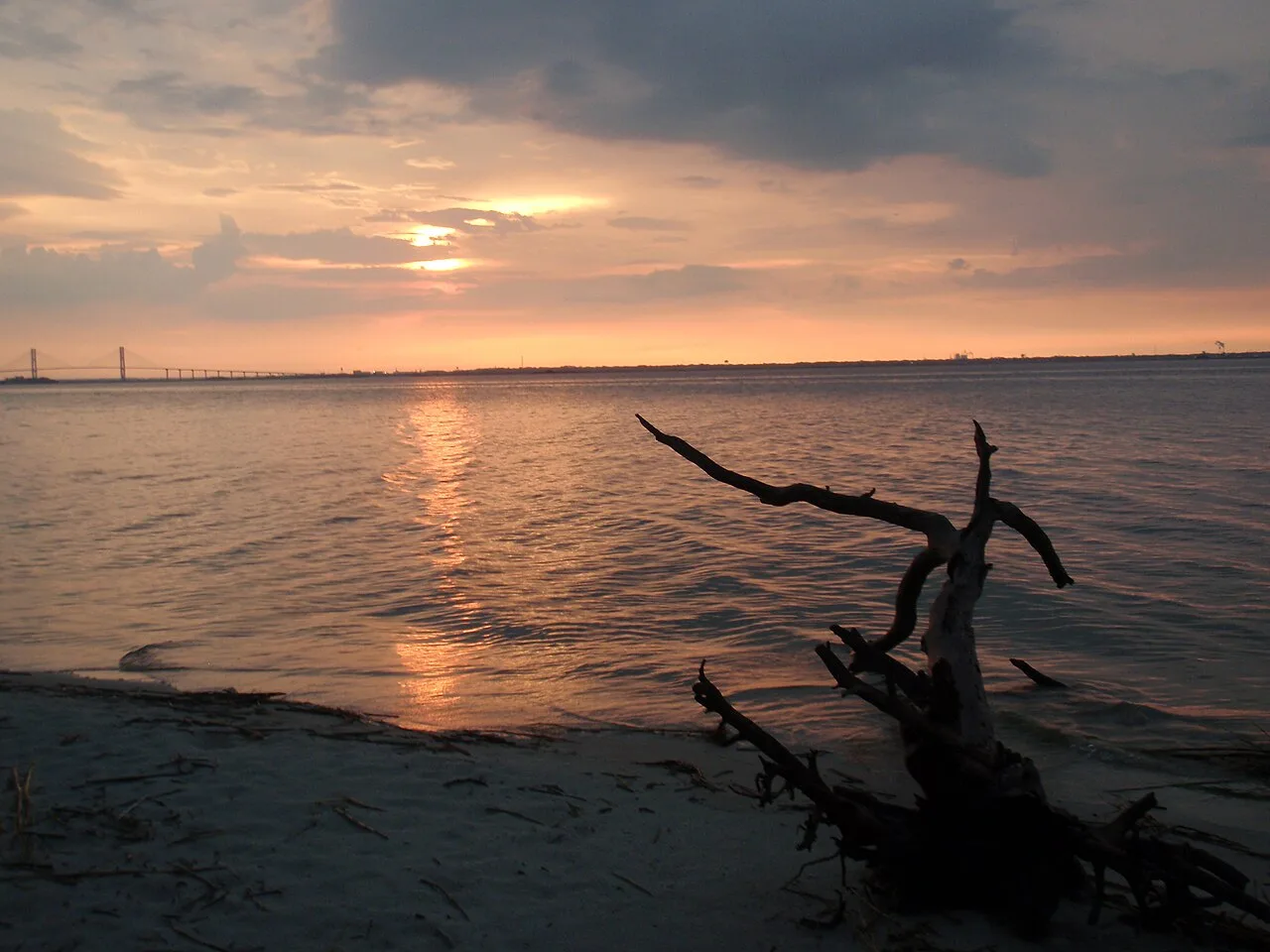
The better coast is further south. Georgia’s barrier islands, marketed as the Golden Isles, are a chain of low islands and salt marsh around Brunswick. St. Simons is the developed one with the shops and the pier. Jekyll Island, formerly a private winter club for the Gilded Age rich, has the state’s most photographed stretch of sand: Driftwood Beach, where erosion has left a graveyard of bleached oak and pine trunks lying on the sand at the north end.
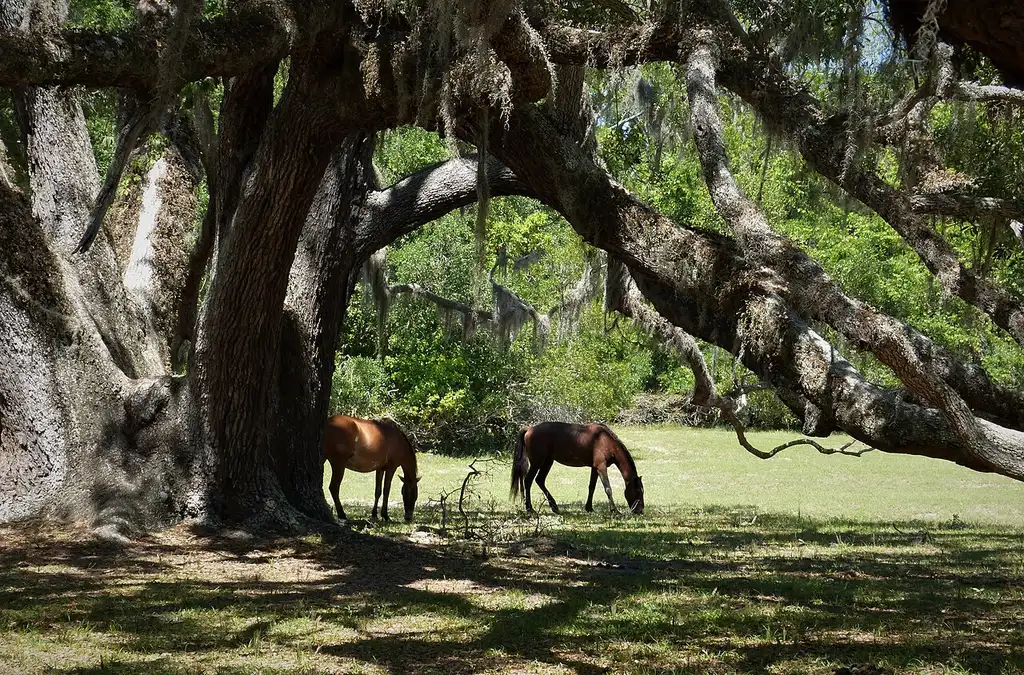
The one that repays real effort is Cumberland Island, the southernmost, reachable only by the concession ferry from St. Marys. There are no shops, no paved roads and a daily visitor cap, and there are wild horses on the dunes and the ruins of a Carnegie mansion in the woods. Budget $15 a head for park entry, valid seven days, plus $44 plus tax for the adult round-trip ferry, and bring everything you plan to eat: the park is cashless and there’s nothing to buy on the island.
North: the tail end of the Appalachians
Ninety minutes north of Atlanta the land folds up into the Blue Ridge, and Georgia’s mountains are gentler, greener and far less crowded than the ones over the state line. Amicalola Falls, near Dawsonville, drops 729 feet in a series of cascades, which makes it the tallest waterfall in Georgia and in the Southeast; a staircase runs up beside it and a lodge sits at the top.
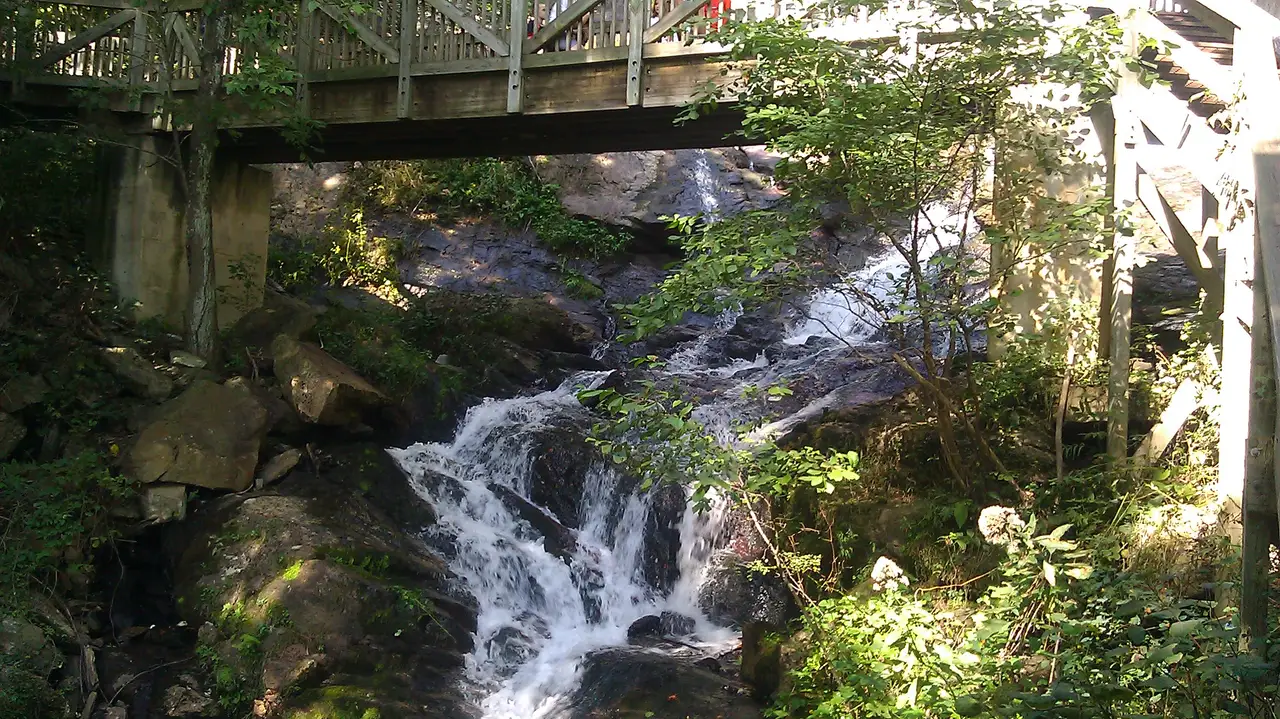
The detail hikers care about: an 8.5-mile approach trail runs from the park to Springer Mountain, the southern terminus of the Appalachian Trail. Every spring a few thousand people start walking north from there toward Maine, and if you’re in the area in March or April you’ll meet them, freshly showered and terrified. For the rest of us the region is small mountain towns (Blue Ridge, the mock-Bavarian Helen, and Dahlonega, site of one of the country’s first gold rushes in the late 1820s), wineries in the hills around Dahlonega, and fall color that peaks in the second half of October. If you want the bigger version of these mountains, Great Smoky Mountains National Park is three hours further north.
South: the swamp almost nobody plans for
The Okefenokee sits in the far south of the state, on the Florida line: over 400,000 acres of federally protected refuge covering about 92% of the swamp, and the largest blackwater wetland in North America. Blackwater means tannin-stained water so still that the cypress reflect perfectly in it, and the paddling here is unlike anything else in the eastern United States. Alligators are everywhere and largely uninterested in you.
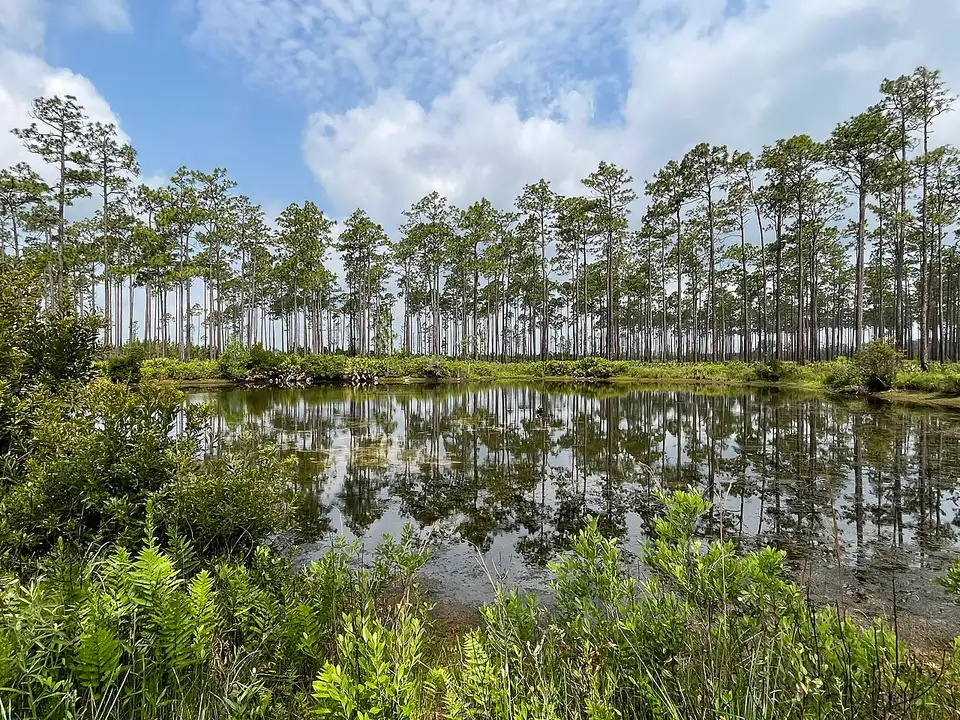
The Okefenokee is about to get much busier. At its July 2026 session in Busan, the UNESCO World Heritage Committee inscribed the refuge on the World Heritage List as a natural property under criteria (ix) and (x), which makes it the first World Heritage site in the state of Georgia; the official listing covers land in southeastern Georgia and northeastern Florida. Don’t assume you’ll have the boardwalks to yourself from here on, and go on a weekday morning either way.
What you should be eating
Southern food in Georgia splits along the same lines as the geography. Inland it is the meat-and-three: a protein and three vegetable sides picked off a board, served at lunch in rooms that close by two. Fried chicken, collard greens cooked with smoked pork, mac and cheese counted as a vegetable, cornbread, and sweet tea so cold it hurts. Do this once at a proper cafeteria-style place and the whole state makes more sense.
On the coast the register changes to Lowcountry: shrimp and grits, crab, oyster roasts in cold months, and Gullah Geechee cooking with West African roots that predates every trend it has been credited with. Savannah does this well and Brunswick does it cheaper.
The souvenirs are worth knowing too. Georgia peaches are only real from roughly late May to early August, which means anything you buy in October came from somewhere else. Vidalia onions, sweet enough to eat like fruit, are legally protected to a specific set of counties. Pecans turn up in everything. And boiled peanuts, sold in paper cups at roadside stands, are the state’s most divisive snack: soft, salty, wet, and either wonderful or awful depending on who you ask. For the rest of the country’s plates, see American food worth trying.
When to go, and how to move
Spring is the peak: late March into April brings azaleas, dogwood and the Masters in Augusta, which is worth knowing about even if you don’t care about golf, because it empties every hotel room within an hour of the course. Fall is the quieter equal, with mountain color in the second half of October and the coast still warm enough to swim. Summer is hot and humid statewide, thunderstorms most afternoons, and the coast carries Atlantic hurricane risk from June through November. Winter is mild on the coast and properly cold in the mountains.
You’ll need a car for everything except central Atlanta and the Savannah historic district, both of which are better on foot. Atlanta to Savannah is about 250 miles and four hours; Savannah to Jacksonville is under two. A sensible ten-day loop lands in Atlanta, drives southeast to Savannah, works down the Golden Isles, and either flies home from Jacksonville or turns back north. And if you’re stitching together a wider southern trip, New Orleans is a long but rewarding day’s drive west, with Texas beyond it.
Read also
- Deeper into the mountains: Great Smoky Mountains National Park
- West along the Gulf: things to do in New Orleans
- The other big southern road trip: Texas travel guide
- Browse more US states and US cities
On the map
The map loads on click - to keep the page lightweight.
The map didn’t load. Check your connection and refresh the page.
Good to know
Ferry fares, park fees and festival dates change by season. Everything here was checked on the dates listed in sources - confirm with the operator before booking.
Details checked: July 24, 2026
Read also

States · 11 min read
Connecticut: Mystic, New Haven and the Shoreline
Verified · September 12, 2026Mystic Seaport at $35 adult, free Yale galleries in New Haven, and Gillette Castle on the river - how a Connecticut weekend actually fits.

States · 9 min read
North Dakota: Medora and Theodore Roosevelt NP
Verified · September 5, 2026The 36-mile South Unit loop starts in Medora, entrance $30 per vehicle, cashless from May 2026 - how to plan Theodore Roosevelt National Park.

States · 9 min read
Arkansas Travel Guide: Hot Springs & Ozarks
Verified · September 4, 2026Fee-free Hot Springs NP downtown, free Crystal Bridges in Bentonville, and the 135-mile Buffalo - how to string an Arkansas road trip.

States · 10 min read
Indiana Travel Guide: Indy, Speedway, Shore
Verified · September 5, 2026IMS Museum at $25, Kiss the Bricks at $15, Brown County hills and Lake Michigan shore - an Indiana trip beyond a Chicago beach day.