
North Dakota: Medora and Theodore Roosevelt NP
The 36-mile South Unit loop starts in Medora, entrance $30 per vehicle, cashless from May 2026 - how to plan Theodore Roosevelt National Park.
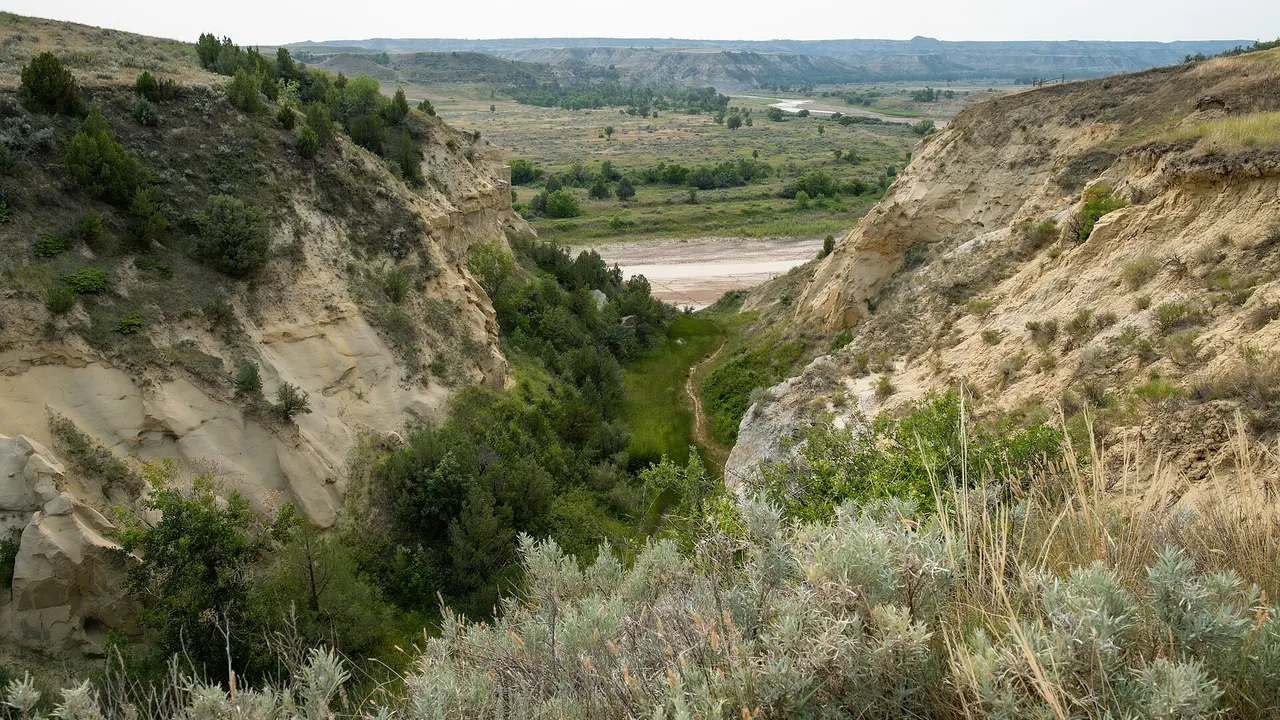
Most people who “do North Dakota” are really doing one town and one national park. Medora sits on I-94 with the South Unit entrance in its backyard. Theodore Roosevelt National Park is the reason the exit exists: badlands, bison, prairie dog towns and a scenic loop you can finish in an afternoon if you don’t stop for every overlook. The North Unit is a different day on a different highway clock - not a quick add-on before lunch.
This park fits naturally into a South Dakota Badlands week or a push west toward Montana and Yellowstone. Give it its own night on the itinerary: the empty miles between units punish anyone who tries to stack them like urban museums.
Medora is the gate - Painted Canyon is only a preview
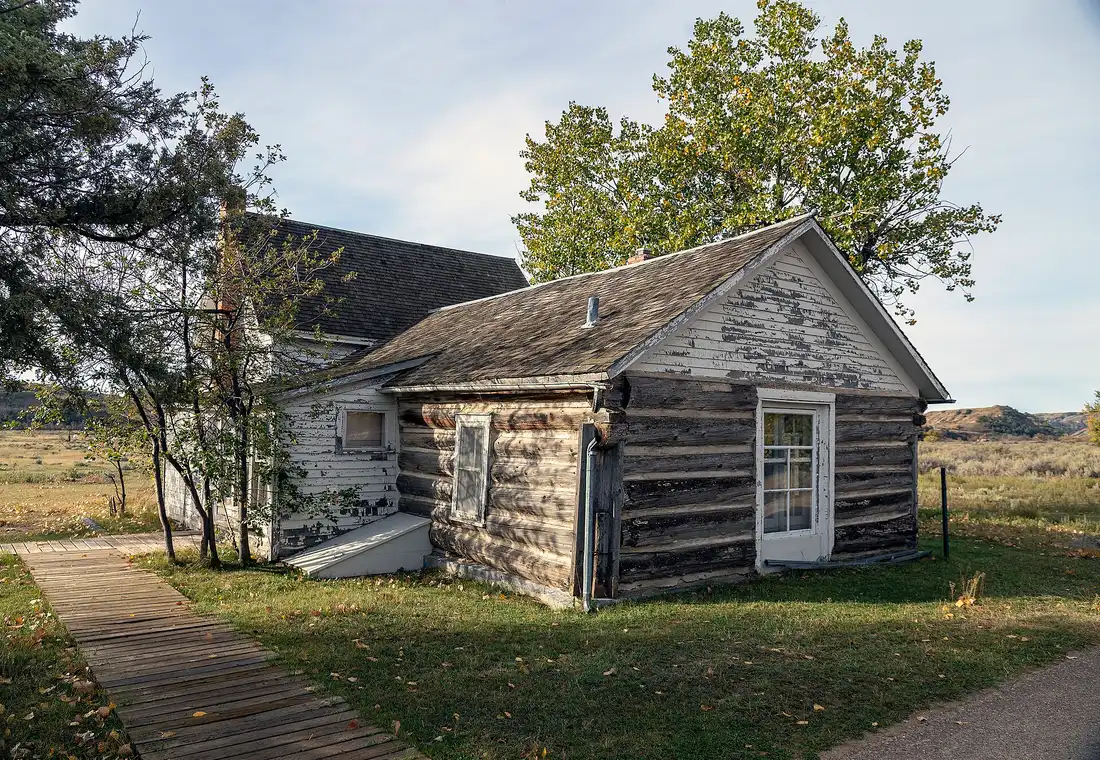
Enter the South Unit from Medora (I-94 exits 24 and 27). The visitor center, Roosevelt’s Maltese Cross Cabin display and the start of the scenic loop all live here. Painted Canyon Visitor Center at I-94 exit 32 is a seasonal rest-area overlook with a rim walk and bookstore energy - NPS is explicit that it is not a park entrance. The Scenic Drive begins about 7 miles west in Medora. Stopping at Painted Canyon for photos is fine. Treating it as the park entrance means missing the fee station and the loop entirely - both actually start seven miles later, in Medora.
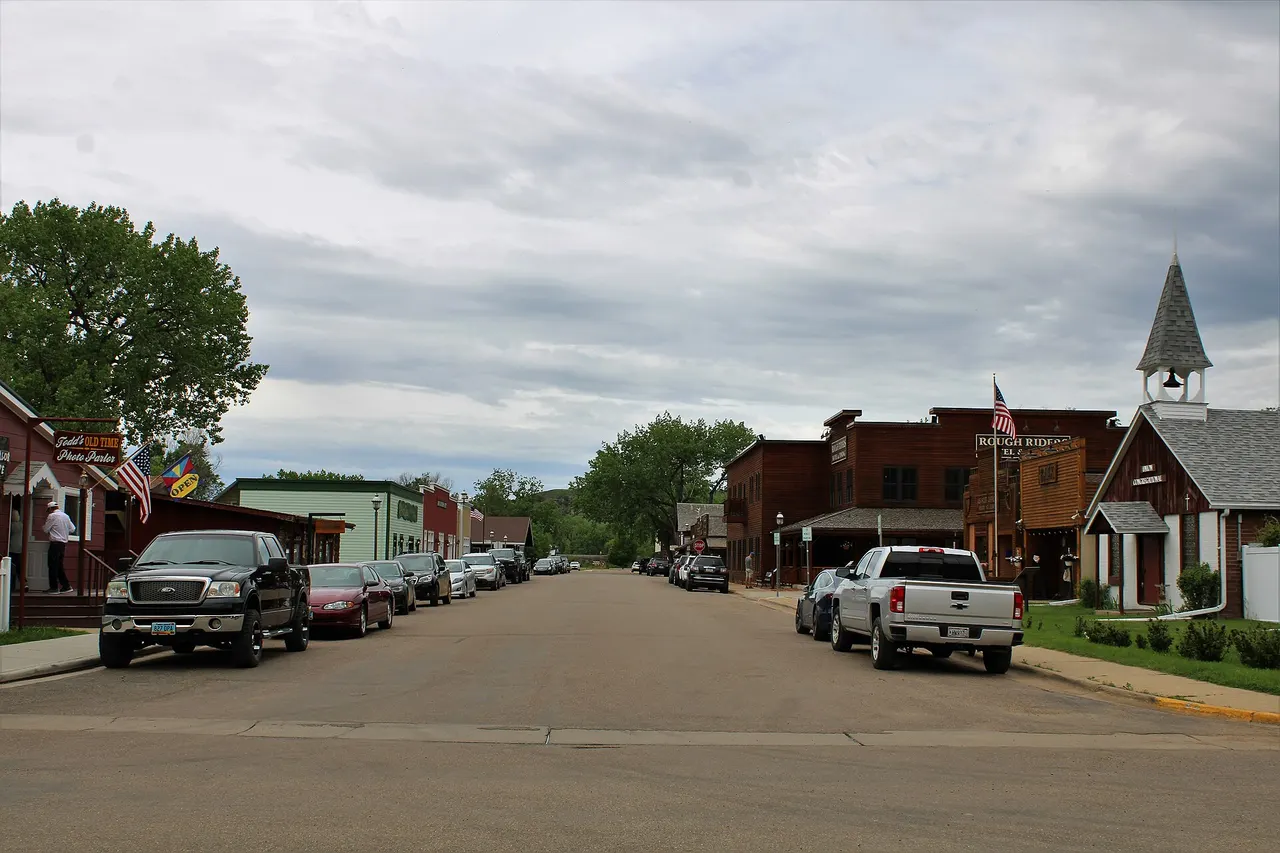
Town evenings fill with Western-show energy in summer. Medora Musical tickets and the pitchfork-dinner menus both change with the season, so buy straight from the operator when you’re ready to commit rather than build the park day around a curtain time or a price you haven’t confirmed this year.
The Elkhorn Ranch Unit - Roosevelt’s second ranch site between the South and North Units - is a separate dirt-road destination with limited facilities. It’s meaningful if you’re deep into the Roosevelt story. It’s a detour, not a substitute for either scenic drive, and you should confirm access conditions on nps.gov/thro before promising anyone a cabin ruin afternoon.
The South Unit loop: 36 miles, about 90 minutes without stops
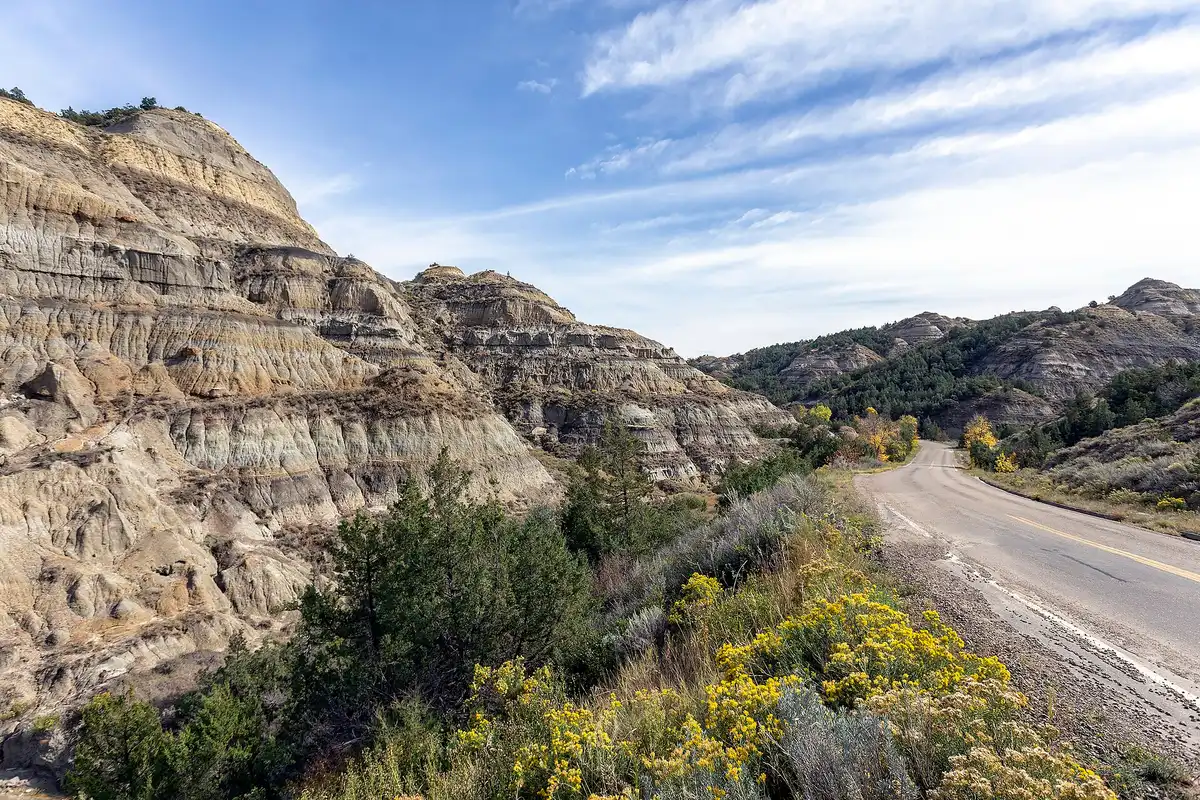
NPS lists the South Unit Scenic Loop Drive as 36 miles round-trip, about 90 minutes of driving if you barely stop. Older park pages still say “48 mile” in places - use the cars/private-vehicles figure and the South Unit page when you’re timing the day. The road is paved, two-way on the loop, open to cars and bikes, and full of pullouts. Plan at least two hours when you want overlooks and a short walk; half a day when bison are blocking the lane and you’re smart enough to wait.
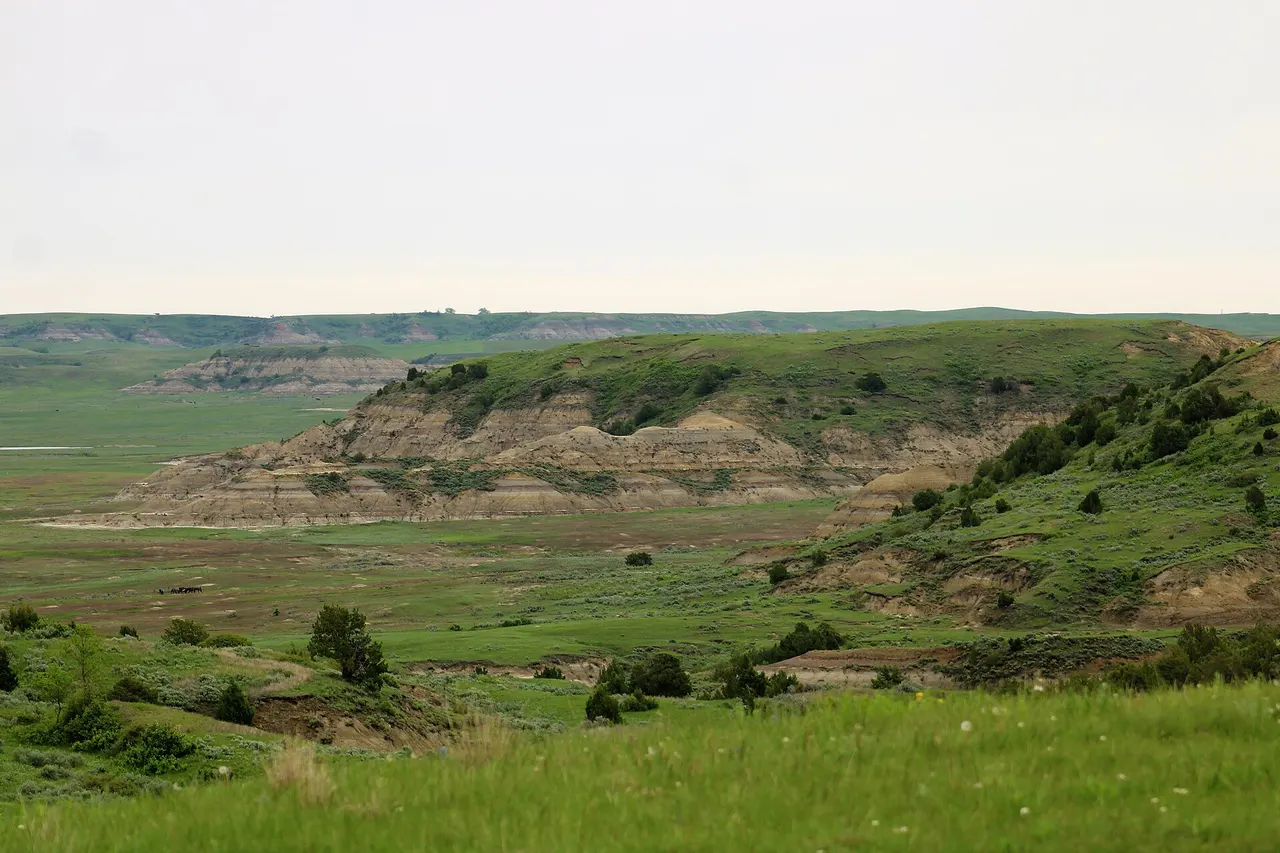
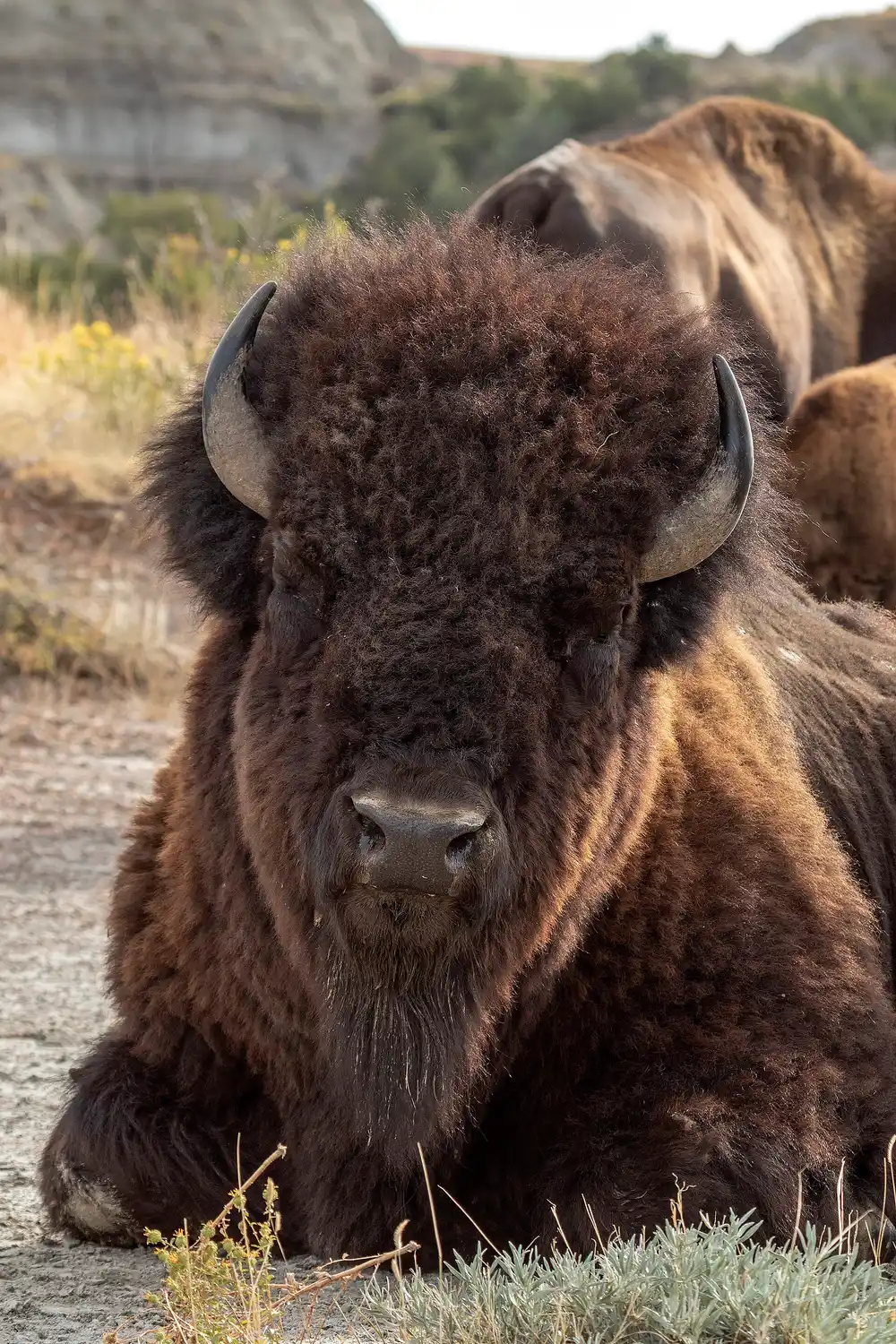
The posted speed limit is 25 mph unless signs say otherwise. That is not a suggestion. Wildlife owns the right-of-way; prairie dog towns look cute until a bison decides the asphalt is a trail. Stay in the car for close wildlife. Short trails and overlooks (Wind Canyon, Buck Hill and others along the markers) are the reason to slow down - not a license to invent your own off-road spur.
What the entrance fee buys after May 2026
An entrance fee is required year-round. Standard rates (NPS fees page, checked 5 September 2026):
| Entry | Price | Valid |
|---|---|---|
| Private vehicle | $30 | 7 days |
| Motorcycle | $25 | 7 days |
| Per person, age 16+ (walk/bike/horse) | $15 | 7 days |
| Park annual (US citizens/residents) | $55 | 1 year |
Kids under 16 don’t need their own entrance pass at all - NPS waives it entirely for anyone that age arriving on foot, bike or horseback.
America the Beautiful passes work here too, but check who they’re actually sold to. The $80 annual, plus the senior, military and access categories, are all sold to US citizens and residents only. Non-US visitors instead buy the separate $250 non-resident annual - and here’s the part worth knowing before you pay for it: that pass exists to waive a $100-per-person surcharge charged at eleven of the most-visited parks (Acadia, Bryce Canyon, Everglades, Glacier, Grand Canyon, Grand Teton, Rocky Mountain, Sequoia & Kings Canyon, Yellowstone, Yosemite and Zion), and Theodore Roosevelt isn’t one of them. Everyone pays the same $30 vehicle fee here regardless of passport, so a UK or Australian visitor doesn’t need the $250 pass just for this park - it only earns its keep if Yellowstone or Grand Teton are also on the trip. Full math is on our America the Beautiful Pass guide. The park does not use timed entry.
From 1 May 2026 the park moved to a fully cashless fee system - credit, debit or mobile pay at park outlets. If you only carry cash, NPS says you can buy a park pass from local third-party vendors in the surrounding communities. Same date: Cottonwood, Juniper and Roundup Group Horse Camp require reservations through Recreation.gov (or 877-444-6777); cash and checks are out for those campsites. Same-day reservations are allowed; individual sites book up to six months ahead.
Fees collect at entrance stations May through September and in visitor centers from roughly October through May. When stations are closed, use the self-pay / Recreation.gov options NPS describes - don’t assume a ranger will appear with a cash drawer after dark.
The North Unit is worth the day when you have the day
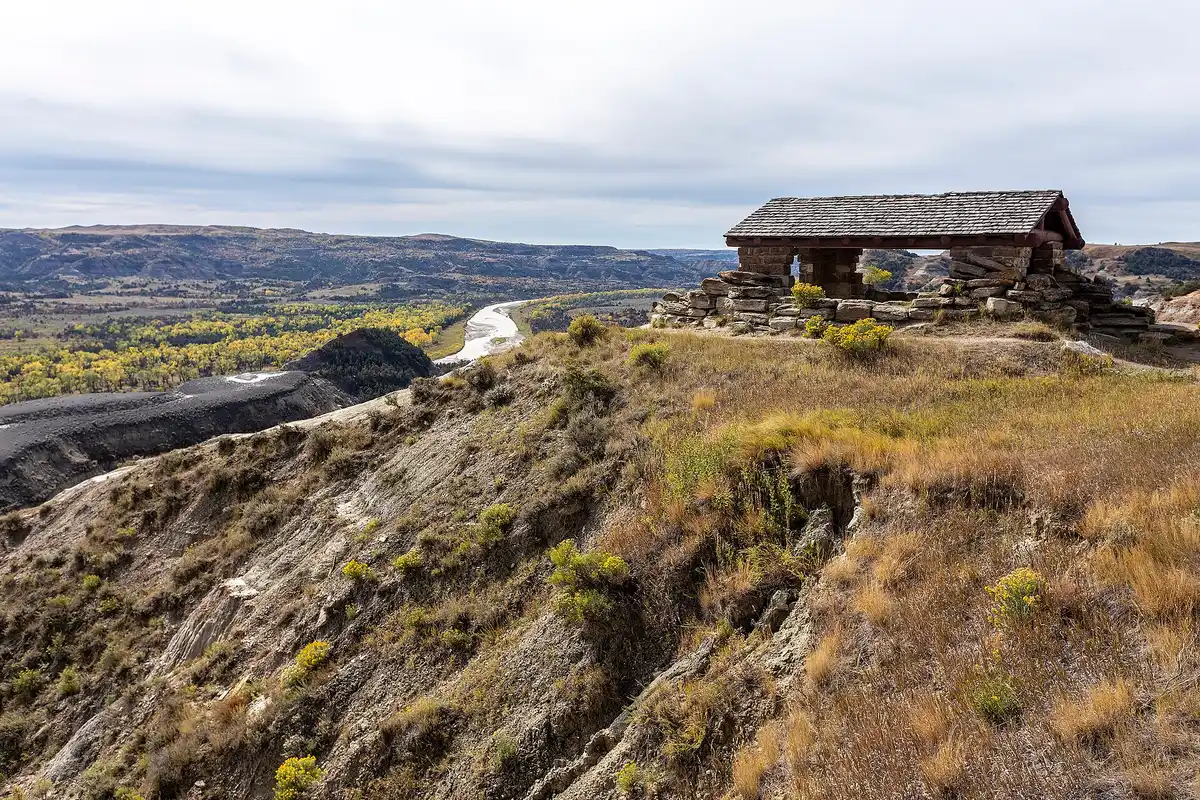
The North Unit entrance sits on US 85, about 15 miles south of Watford City and 52 miles north of Belfield. The scenic road is 14 miles one way along the north rim of the Little Missouri valley - figure just over an hour entrance to the end and back without long hikes. Oxbow Overlook is the postcard stop at the far end.
One entrance fee covers the park units for the validity window on your pass - you’re not buying a second park. You’re buying a second drive and a second night of logistics. Watford City is the service town for the North Unit, and it earns that job by distance: Medora sits about 18 miles from Belfield, and the North Unit entrance is another 52 miles up US 85 from there - call it 70 route miles from Medora to the gate you’d actually be driving to. Medora doesn’t supply lunch that far away.
The empty miles between the units
There is no shuttle. Gas and groceries exist in Medora for the South Unit and in Watford City for the North Unit; NPS says no services inside the park. Belfield and Beach cover I-94 gaps. Fill the tank before you commit to either scenic road.
Flying in usually means Bismarck (BIS), about 138 miles and 2.5 hours east on I-94 - the bigger airport with the wider flight schedule. Dickinson (DIK), about 35 miles from Medora, is the closer option on paper: United runs two round-trip flights a day to Denver, useful if your connections route that way. Weigh the shorter drive against the thinner schedule before you book DIK over Bismarck. Winter closes portions of both scenic roads for snow and ice; the park stays open 24 hours, but “open” and “drivable loop” are different sentences. Check road status on nps.gov/thro the morning you roll out. You’ll also want layers even in July - wind on the rim overlooks cuts harder than the Medora sidewalk suggests, and shade is scarce once you leave the visitor center.
One more clock trap: the South Unit runs on Mountain time and the North Unit on Central time. Cross the gap and your phone may jump an hour while your picnic plan does not. Set alarms in local park time, not in whatever zone your hotel app assumed when you booked from Chicago.
What to pack for a park that sells empty
Bring more water and fuel margin than the Medora gift shop implies. Summer thunderstorms and winter wind both arrive without urban cover. A paper map still helps when cell service drops in the draws. Binoculars beat a phone zoom for bison and wild horses at a safe distance.
Season shorthand:
- May-September: entrance stations staffed; longest daylight; campground reservation rules fully in force after 1 May 2026.
- Shoulder months: quieter loops, shorter visitor-center hours, more self-pay reality.
- Winter: park open, scenic roads may partially close - verify before you promise anyone a full 36-mile loop.
If you only get one unit, take the South Unit from Medora. If you get two days, sleep once in Medora and once toward Watford City rather than thrashing the connector twice. Hand the bigger Wyoming/Montana mountain parks to their own pages - this state guide is the badlands exit, not a substitute for Yellowstone.
On the map
The map loads on click - to keep the page lightweight.
The map didn’t load. Check your connection and refresh the page.
Admission and opening hours
- Admission price
- Checked 5 September 2026 (NPS): private vehicle $30 / 7 days; motorcycle $25 / 7 days; per person on foot, bike or horseback $15 / 7 days (under 16 free, no pass needed); park annual $55 (US citizens/residents). America the Beautiful annual: $80 for US citizens/residents (also the senior/military/access categories), $250 non-resident annual for everyone else. THRO is not on the 11-park $100 nonresident-surcharge list, so the $250 pass buys nothing extra here - everyone pays the same $30 vehicle fee regardless of passport. From 1 May 2026 the park is cashless at fee outlets.
- Opening hours
- Park open 24 hours year-round. South Unit on Mountain time; North Unit on Central time. Painted Canyon Visitor Center seasonal (generally May-October). Fee collection: entrance stations May-September, visitor centers roughly October-May. Confirm visitor center hours on nps.gov/thro before you go.
Painted Canyon rest area on I-94 is not a park entrance - the South Unit Scenic Loop starts in Medora. Campgrounds require Recreation.gov reservations from 1 May 2026.
Details checked: September 5, 2026
Read also

States · 11 min read
Connecticut: Mystic, New Haven and the Shoreline
Verified · September 12, 2026Mystic Seaport at $35 adult, free Yale galleries in New Haven, and Gillette Castle on the river - how a Connecticut weekend actually fits.

States · 9 min read
Arkansas Travel Guide: Hot Springs & Ozarks
Verified · September 4, 2026Fee-free Hot Springs NP downtown, free Crystal Bridges in Bentonville, and the 135-mile Buffalo - how to string an Arkansas road trip.

States · 10 min read
Indiana Travel Guide: Indy, Speedway, Shore
Verified · September 5, 2026IMS Museum at $25, Kiss the Bricks at $15, Brown County hills and Lake Michigan shore - an Indiana trip beyond a Chicago beach day.

States · 10 min read
Delaware: Rehoboth, Lewes, Tax-Free Shopping
Verified · September 3, 2026No sales tax, Rehoboth meters at $4 an hour, Cape Henlopen at $20 for out-of-state cars, and Lewes without rewriting the ferry page.