
Yellowstone National Park Guide: Geysers, Wildlife
Old Faithful timings, Grand Prismatic, where to actually see bison and bears, the wildlife distance rules, road opening dates and where to stay.
Yellowstone is bigger than most people plan for. The Grand Loop road is a long figure of eight, the geyser basins and the wildlife valleys sit at opposite ends of it, and in 2026 most of the park was shut to ordinary cars until April 17 and closes again at the end of October. Entry is $35 per vehicle for seven days, and since 2026 non-US residents pay $100 per person on top unless they carry an annual pass.
Pick the base that matches what you came for, and accept that geysers and wildlife run on opposite clocks - one is scheduled, the other happens at dawn and dusk while the geyser crowds are still at breakfast.
Geysers: what to see and how the timing works
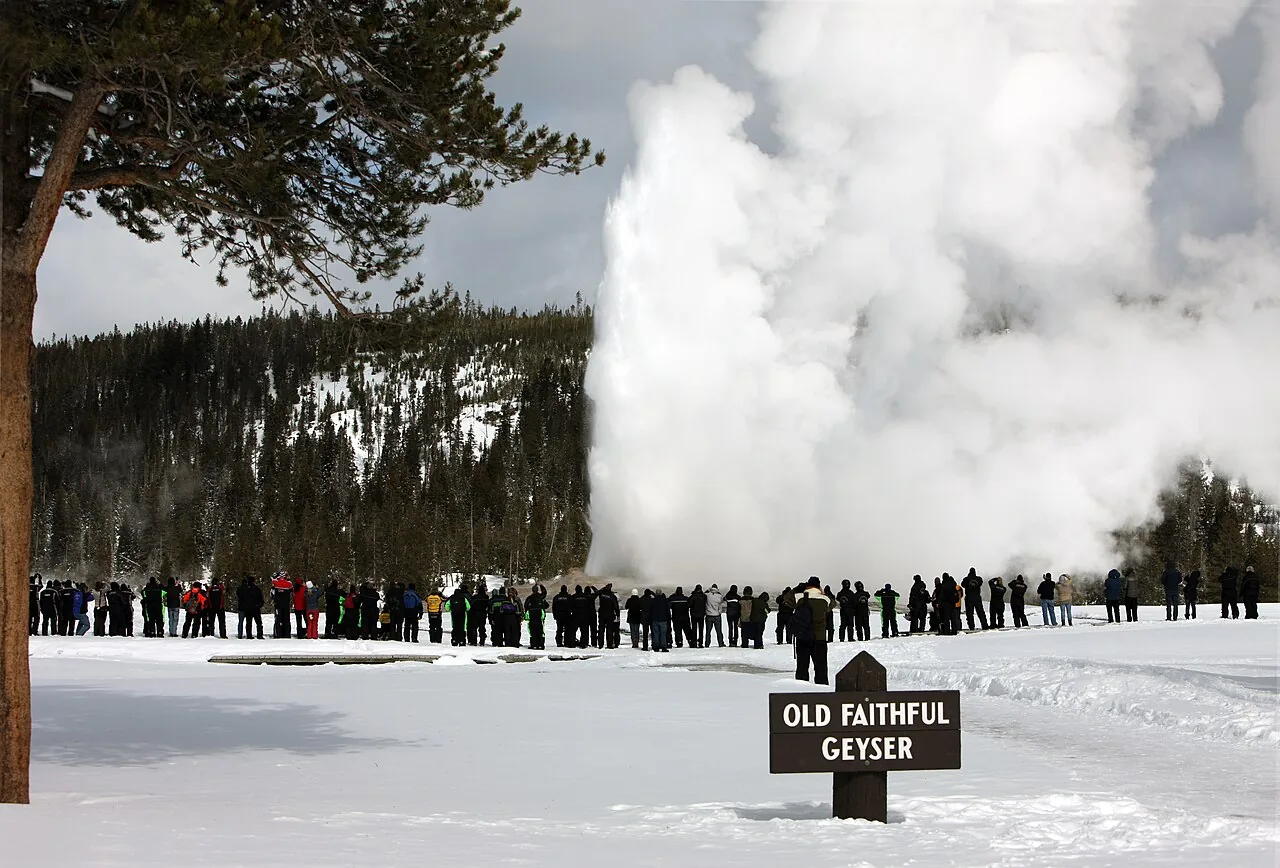
Old Faithful is predictable rather than punctual. The median interval is 102 minutes, plus or minus 10, with a real-world range of 54 to 118 minutes. Eruptions run 1.5 to 5 minutes, throw between 3,700 and 8,400 gallons of 203F (95.6C) water, and reach 130 feet on average - occasionally past 180. Predicted times are posted at the Old Faithful Visitor Education Center, in the lodges and in the NPS app, and the forecast method is simple: a long eruption means a long recharge, so the duration you just watched tells the rangers when the next one is due. Predictions aren’t issued in the shoulder weeks, typically early November to mid-December and mid-March to mid-April.
The part visitors miss is that Old Faithful is one geyser in a basin of at least 150 of them packed into a single square mile. Five majors get ranger predictions. Walk the Upper Geyser Basin boardwalk loop past Castle, Grand and Riverside instead of watching the one geyser from the benches and leaving - it’s the difference between a photo and an afternoon.
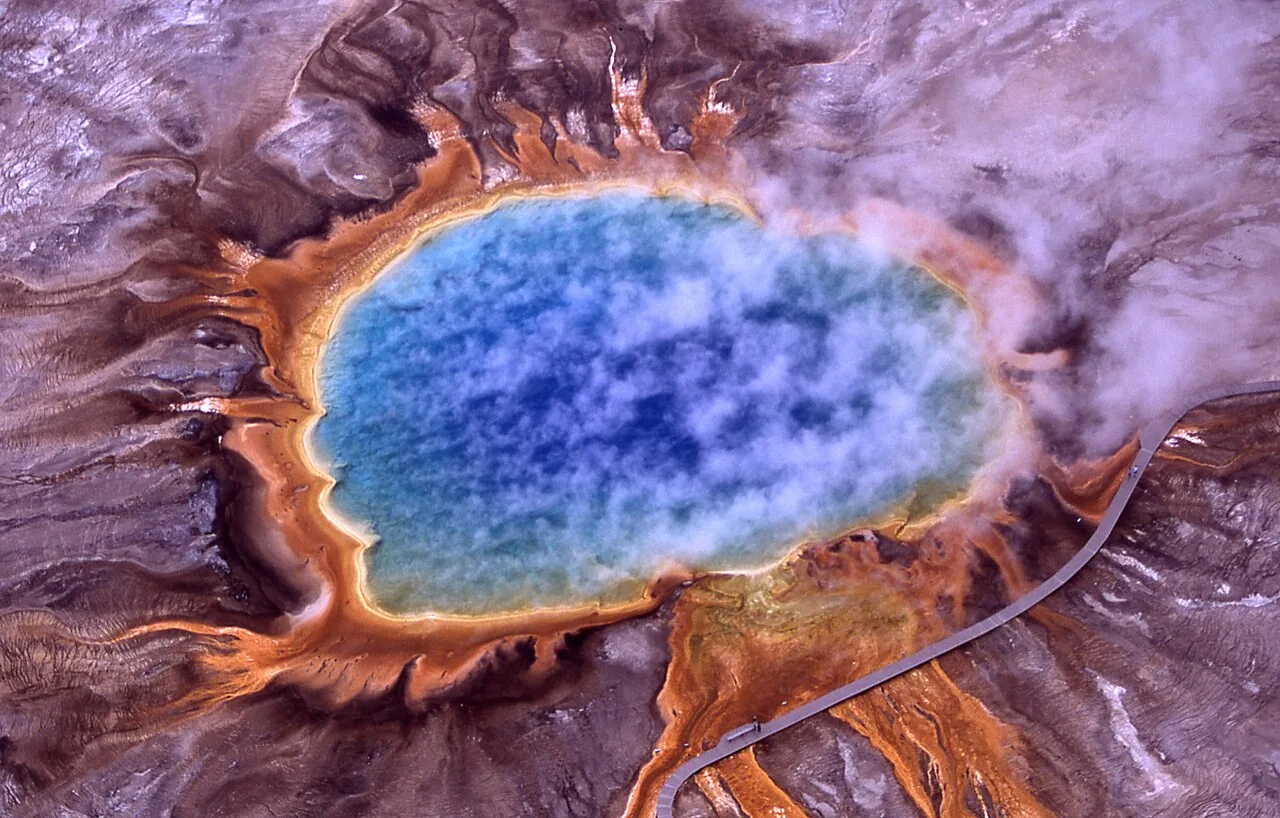
Grand Prismatic Spring sits in Midway Geyser Basin, six miles north. At between 200 and 370 feet across, depending on which NPS figure you take, and more than 121 feet deep, it’s the park’s largest hot spring, and the colors come from heat-loving bacteria ringing the sterile blue center. From the boardwalk you get steam and color at eye level; for the postcard view you want the Grand Prismatic Overlook, reached by a short uphill trail from the Fairy Falls trailhead just south of the basin. Midday sun and a light breeze give the best odds of seeing anything at all - on a cold morning the whole basin is a wall of steam.
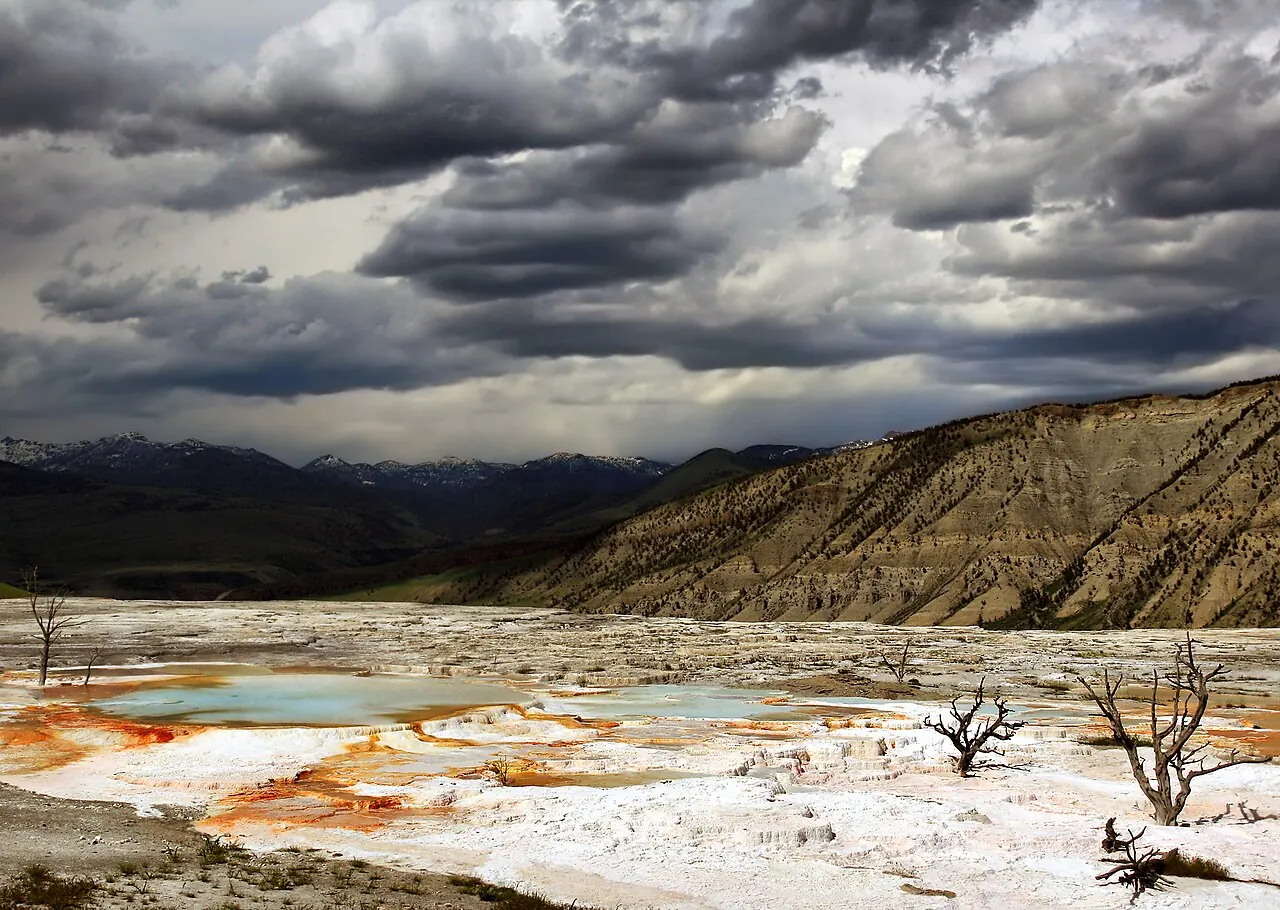
Stay on the boardwalk, and mean it. The ground beside it “may look solid, but it can be just a thin crust with super-heated water below”, and more than 20 people have died from burns after going into hot springs here. And in a few hydrothermal areas toxic gases build up in still air, which is another reason the marked route exists.
Where do you actually see bison, wolves and bears?
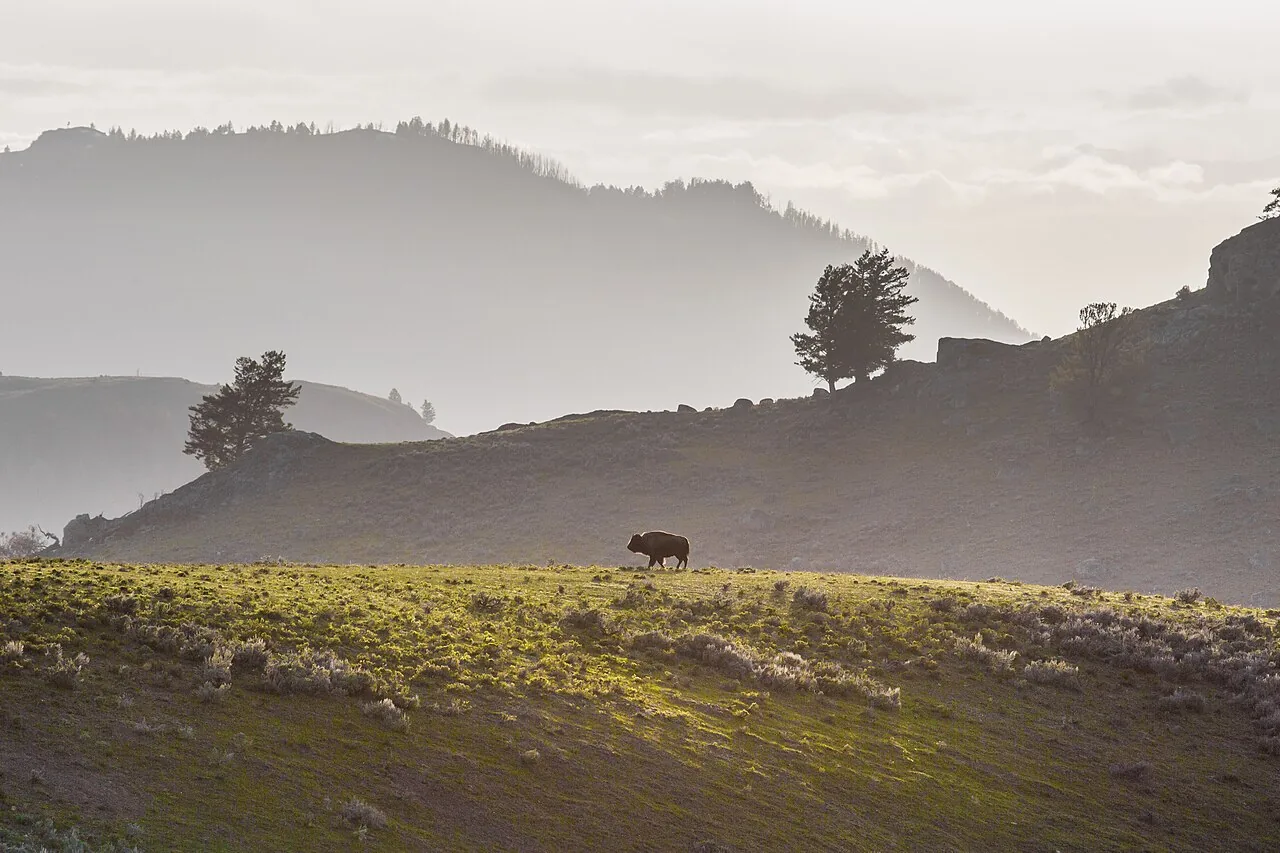
The two reliable places are Lamar Valley in the northeast and Hayden Valley in the center. Both are open, rolling grassland with a river through it, and both work the same way: be parked at a pullout in the first hour of light or the last hour before dark, with binoculars. Midday in either valley usually means bison and not much else.
Lamar is the wolf valley and is reachable all year, because the road from Gardiner through Mammoth to the Northeast Entrance is the one stretch open to regular vehicles year-round. Hayden sits between Canyon and Lake, is on the summer loop, and is excellent for bison, elk and grizzlies on the far slopes.
The legal distances are the ones that matter most, and people misjudge them constantly:
- 100 yards (91 m) from bears, wolves and cougars.
- 25 yards (23 m) from bison, elk and everything else.
Bison have injured more people in Yellowstone than any other animal. They look docile, they stand next to boardwalks, and they can run three times faster than you. A parked car isn’t a blind - if an animal walks toward the road, the correct response is to get in and shut the door.
One piece of park data is worth carrying into the backcountry: since 1970, 91% of people injured by bears were hiking alone or with a single partner, and only 9% were in groups of three or more. Hike in threes, make noise, carry bear spray and know how to use it.
Road seasons: the thing that breaks itineraries
Yellowstone is open all year, but that phrase is misleading. Most park roads are closed to regular vehicles from early November to late April. Snow, not opening hours, decides your trip.
The 2026 pattern:
| Road / entrance | 2026 opening | Notes |
|---|---|---|
| North to Northeast Entrance | year-round | Gardiner to Cooke City, the only all-year car route |
| West Entrance and the Madison / Norris / Canyon corridors | April 17 | first of the seasonal openings |
| East Entrance (Sylvan Pass) | May 1 | from Cody |
| South Entrance | May 8 | from Jackson and Grand Teton |
| Dunraven Pass, Beartooth Highway | May 22 | highest ground, opens last |
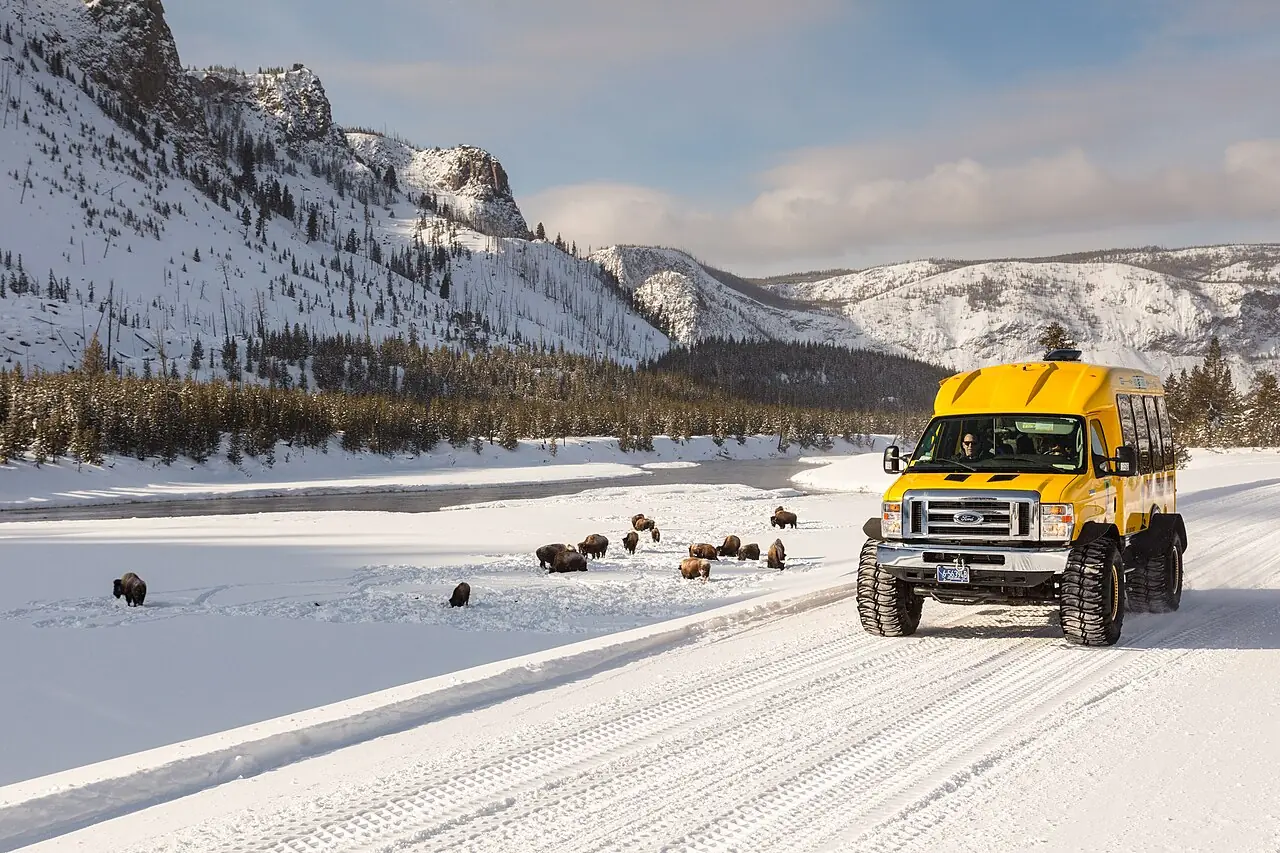
Closing runs the other way: the highest passes shut around October 12 and most other routes by October 31. Between mid-December and mid-March the interior is reachable only by snowmobile or snowcoach, which is a superb way to see the geyser basins in steam and near-silence, but it’s a booked, guided trip rather than a drive.
The practical takeaway: a trip in late May or September gets you nearly full road access with a fraction of the July traffic. Early June often still has snow on Dunraven; early October can close a pass overnight.
Fees and the non-resident surcharge
A private vehicle costs $35 for seven days; motorcycles $30, and $20 per person arriving on foot, by bicycle or on skis. The Yellowstone annual pass is $70, sold to US citizens and permanent residents only.
Since 2026 each non-US resident aged 16 and over pays an additional $100 per visit, unless admitted on an annual or America the Beautiful pass. The non-resident America the Beautiful pass is $250, against $80 for residents.
The surcharge lands hardest on families, since the $100 is per person: four overseas adults pay $400 at a single gate. The angle specific to Yellowstone is Grand Teton - it sits directly below the South Entrance, it’s on the same list of 11 parks that levy the surcharge, and most Yellowstone trips drive through it anyway, so one $250 America the Beautiful Non-Resident pass (which covers the holder plus three other adults) can cover both parks at once. Glacier is on that same eleven-park list - useful if a Montana loop is next on the itinerary. Run the multi-park math before the booth: America the Beautiful Pass walks through when that $250 ticket pays off and when a single-park fee is still the better buy. Worth checking at the booth: NPS’s own pages don’t agree on whether the park-only $70 annual pass lifts the surcharge, and the single pass they name as covering it’s that same $250 one, so ask before you pay. Children under 16 are exempt. If your route runs wider, Zion, the Grand Canyon, Yosemite and Rocky Mountain charge the same surcharge.
Where to stay
West Yellowstone, Montana sits at the West Entrance and is the most convenient all-round base: closest to Old Faithful and the geyser basins, plenty of motels and restaurants, and a small airport served from Salt Lake City between early May and mid-October.
Gardiner, Montana covers the North Entrance and is the winter answer, because the road from here stays open all year and puts you an hour from Lamar Valley. It’s smaller and quieter than West Yellowstone.
Cooke City, Montana is tiny and remote, at the Northeast Entrance, and is where serious wolf-watchers stay for early-morning Lamar access.
Cody, Wyoming (East Entrance) and Jackson, Wyoming (South Entrance, via Grand Teton) both work if you’re arriving from those directions. Jackson is the most expensive town in the region by a wide margin - a resort town where peak-summer rooms run far above the motels at West Yellowstone or Gardiner - and the best-served by air.
Inside the park, Old Faithful Inn, Lake Yellowstone Hotel and the Canyon and Mammoth lodges save hours of driving each day and are booked roughly a year ahead. Campgrounds go on recreation.gov and fill the moment they release.
Year-round airports are Bozeman and Billings in Montana, Jackson and Cody in Wyoming, and Idaho Falls in Idaho. Bozeman has the most flights and is the usual choice for a fly-drive. The Montana side of that map - BZN vs Glacier Park International, plus Big Sky on Highway 191 - is the Montana travel guide. The Wyoming side, including how far Cody and Jackson actually are from each other once you factor in the season, is the Wyoming travel guide.
Practical notes
- Fuel up before you enter. Distances between services inside the park are long, and the interior has no cell service worth relying on.
- Budget driving time honestly. Old Faithful to Lamar Valley is a half-day each way once you allow for bison jams.
- A bison jam isn’t optional. Animals on the road stop traffic completely; leave slack in the schedule.
- Layer up. The park sits around 7,000-8,000 feet; summer mornings near freezing and afternoon thunderstorms are normal.
- Roads close at short notice. Snow and thermal-ground damage can shut a section overnight, so check the park’s live road report before you set out each morning.
Read also
- All our national park guides
- Jenny Lake, wildlife and timing next door: Grand Teton National Park
- When the annual pass pays: America the Beautiful Pass
- Shuttle-only canyon and permit lotteries: Zion National Park
- South Rim, North Rim and the heat rule: Grand Canyon National Park
- Waterfalls, Tioga Road and Half Dome: Yosemite National Park
- The busiest park in the country, and free to enter: Great Smoky Mountains National Park
On the map
The map loads on click - to keep the page lightweight.
The map didn’t load. Check your connection and refresh the page.
Admission and opening hours
- Admission price
- $35 per private vehicle, $30 per motorcycle, $20 per person on foot, bicycle or ski, valid 7 days. Yellowstone annual pass $70. Non-US residents aged 16+ pay an extra $100 unless admitted on an annual or America the Beautiful pass.
- Opening hours
- Open year-round, but most roads are closed to regular vehicles from early November to late April. The North Entrance at Gardiner through to the Northeast Entrance stays open to cars all year.
Stay 100 yards from bears and wolves and 25 yards from bison, elk and everything else. Road dates shift with snow - check nps.gov before you drive.
Details checked: July 24, 2026
Read also

National Parks · 12 min read
Canyonlands and Capitol Reef: Utah's Two Quiet Parks
Verified · August 29, 2026Canyonlands $30, Capitol Reef $20 for the Scenic Drive - what each park costs, which district to skip, and which one wins if you only have a day.

National Parks · 8 min read
Indiana Dunes from Chicago: Beaches & the $25 Gate
Verified · August 26, 2026Leave Chicago early for West Beach, the Dune Succession Trail and the South Shore Line to Dune Park. National and state park fees do not cross.

National Parks · 8 min read
Carlsbad Caverns: Natural Entrance and Bat Flight
Verified · August 25, 2026$15 entry plus $1 timed reservation, Natural Entrance vs elevator, Big Room loop, and free bat flights April-Oct.

National Parks · 8 min read
White Sands: Dunes, Sledding and Closures
Verified · August 25, 2026Gypsum dunes, $25 entry, sledding tips, and why missile-range tests can close Dunes Drive for hours - check NPS the morning you go.