
Rocky Mountain National Park: Trail Ridge, Hikes & Permits
Which timed entry permit you need, what the gate costs an overseas visitor, and how Trail Ridge Road and the Bear Lake shuttles actually work.
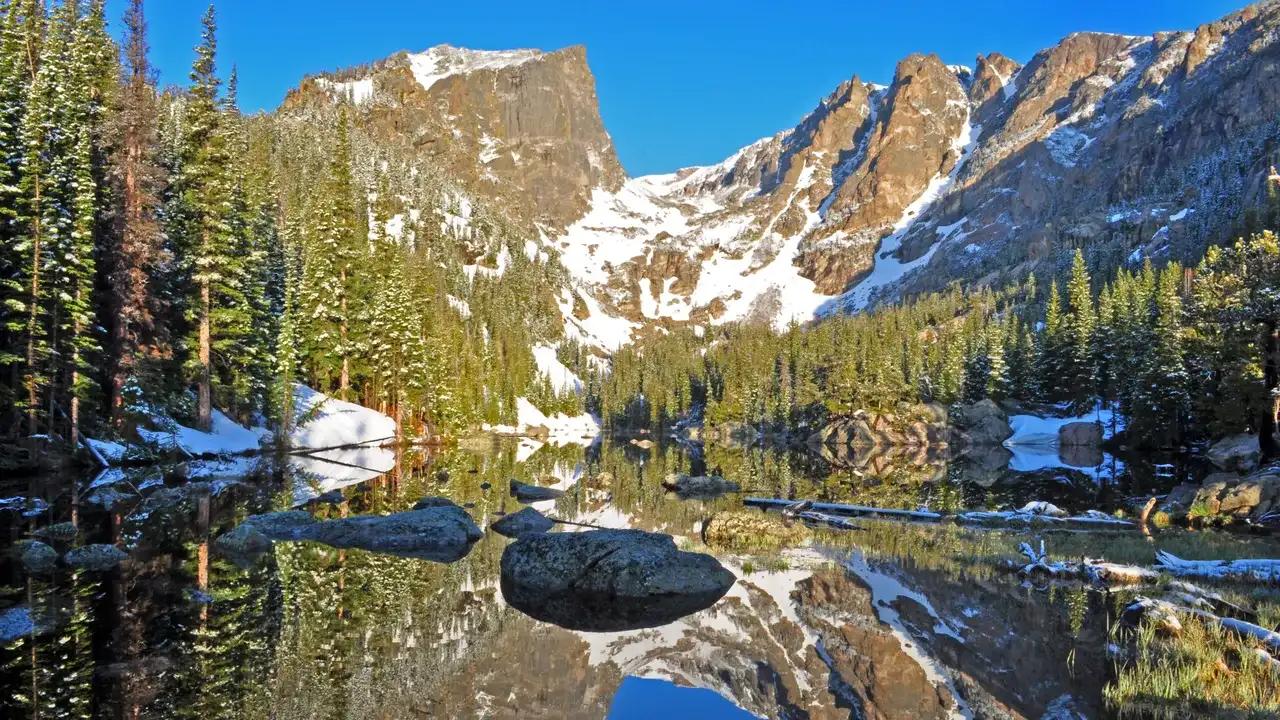
You can’t just drive into Rocky Mountain National Park in summer. From May 22, 2026 you need a timed entry reservation booked on recreation.gov, and there are two different ones, ending on two different dates. Pick the wrong type and you’ll be turned around at a gate you already paid to pass through.
The distinction is worth ten seconds of attention. Plain Timed Entry covers the whole park except the Bear Lake Road corridor. Timed Entry + Bear Lake Road covers Bear Lake as well as everything else. If your plan involves the postcard lakes, and for most first-time visitors it does, you need the second one.
Which permit do you actually need?
The two permits don’t just cover different areas, they cover different hours, and that’s the detail that ruins mornings.
Timed Entry applies from 9 a.m. to 2 p.m., and it runs through October 12, 2026. Outside those five hours you can drive in without one.
Timed Entry + Bear Lake Road applies from 5 a.m. to 6 p.m. - a thirteen-hour window - and it runs six days longer, to October 18. Someone who reads “you don’t need a permit before 9” and sets an alarm for a 6 a.m. start at the Bear Lake trailhead has misread which rule they’re under, and they’ll find out at the checkpoint. The same six-day gap catches people in October, when the corridor still needs a permit and the rest of the park doesn’t.
Now the part that turns people around at the gate. Your reservation isn’t for a day, it’s for a designated two-hour window, and it’s one reservation per vehicle per day, not per person. Miss your window and the park’s own wording is that “you will be asked to turn around and come back” after 2 p.m. Once you’re in, though, there’s no clock on you: “stay as long as you like. There is no set time for departure.” On Bear Lake Road there’s a sting in that - leave the corridor and re-entry is only allowed after 2 p.m., so plan the morning as one trip in, not three.
Reservations cost a $2 Recreation.gov processing fee, which is all the reservation itself costs. They release in monthly blocks at 8 a.m. MDT on the first of the preceding month: May 1 opened May 22 to June 30, June 1 opened July, and so on through September 1 for the final stretch in October.
The second release is the useful one and almost nobody outside Colorado knows about it: a further batch drops at 7 p.m. MDT the evening before your arrival date. If you’re already in Estes Park without a permit for tomorrow, sit down at 6:55 p.m. with the page loaded. That’s the realistic path in for anyone who booked their trip six weeks out rather than six months.
Some bookings carry you past the system without a permit of your own. A campground reservation at Aspenglen, Glacier Basin, Moraine Park or Timber Creek includes entry from 1 p.m. on your check-in day. An overnight wilderness permit covers you. And a guided tour handles it for you, which is the quiet argument for booking one if your dates are already sold out.
$30 a car, plus $100 a head for overseas visitors
Entry is $30 per vehicle for one day or $35 for seven, on top of the reservation fee. Motorcycles are $25 or $30, and walking or cycling in costs $15 or $20 per person. Children under 16 are free.
Then there’s the change that landed in January 2026. Every non-US resident aged 16 or over pays an additional $100 per person, unless admitted on an annual or America the Beautiful pass. It’s charged per person while the standard fee is per vehicle, so the bill scales with the number of adults in your car rather than with the car. Two visiting adults pay $35 plus $200. Four pay $35 plus $400.
The America the Beautiful Non-Resident Annual Pass costs $250 and covers the holder plus three other non-resident adults, then every federal site for a year. Do the arithmetic before you buy it: two adults visiting only Rocky Mountain pay $35 plus $200, which is $235 - fifteen dollars less than the pass. It pays from three adults up ($335 against $250), or for any couple whose route takes in a second surcharge park. Rocky Mountain is one of eleven parks charging the surcharge, so if your route also takes in Zion or Yellowstone the math stops being close. One caution repeated across the park system: NPS pages don’t agree on whether the park-only $70 annual pass lifts the surcharge, and the only pass they name explicitly is the $250 one. Ask at the booth before you hand over a card.
Trail Ridge Road, and how long it really takes
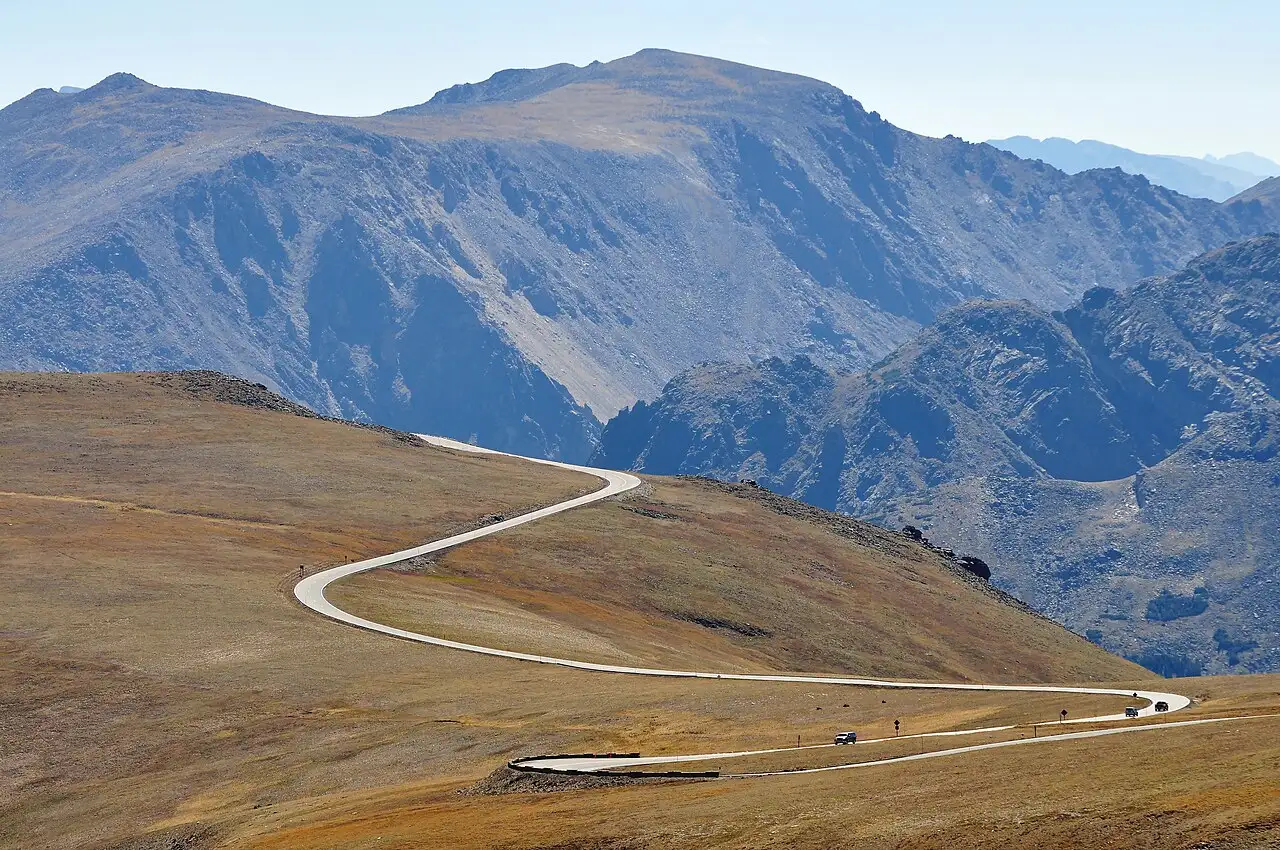
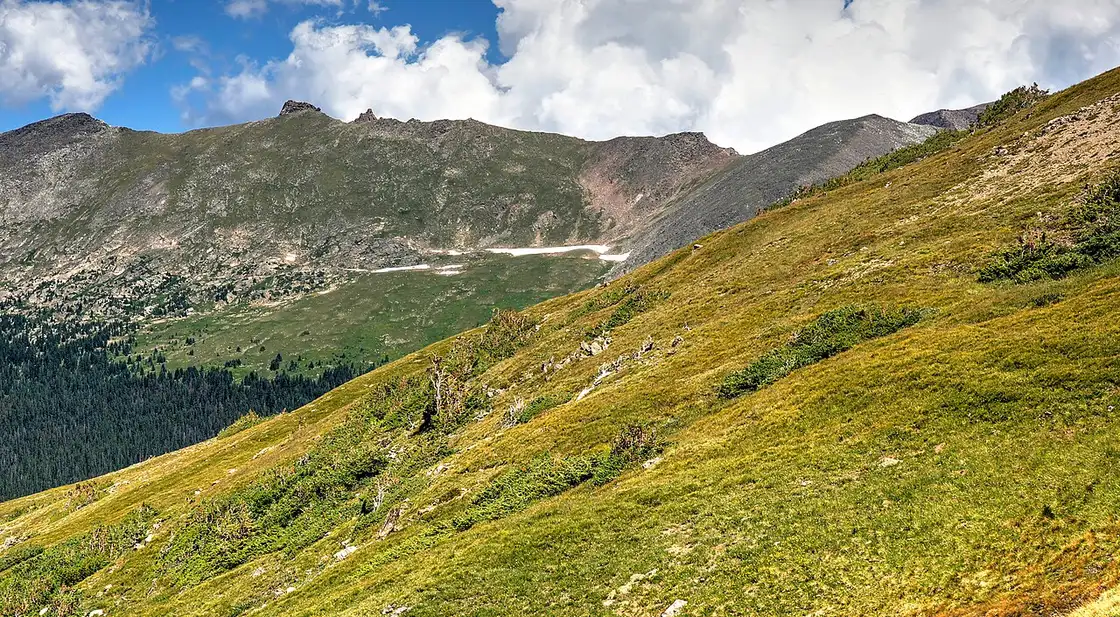
This is the reason the park takes more than four million recreation visits a year. Trail Ridge runs 48 miles between Estes Park and Grand Lake, crests at 12,183 feet and is the highest continuous paved road in the United States. Eleven of those miles are above treeline, on open tundra where the horizon is nothing but mountains.
Budget properly for it. The park’s own estimate is 1.5 to 2 hours one way in steady traffic, and that’s driving, not stopping. Add the pullouts you’ll actually use and it’s most of a day. There are restrooms at Rainbow Curve, Rock Cut, the Alpine Visitor Center, Milner Pass and Hidden Valley - worth knowing, because once you’re up on the tundra you’re committed to the road for a long time.
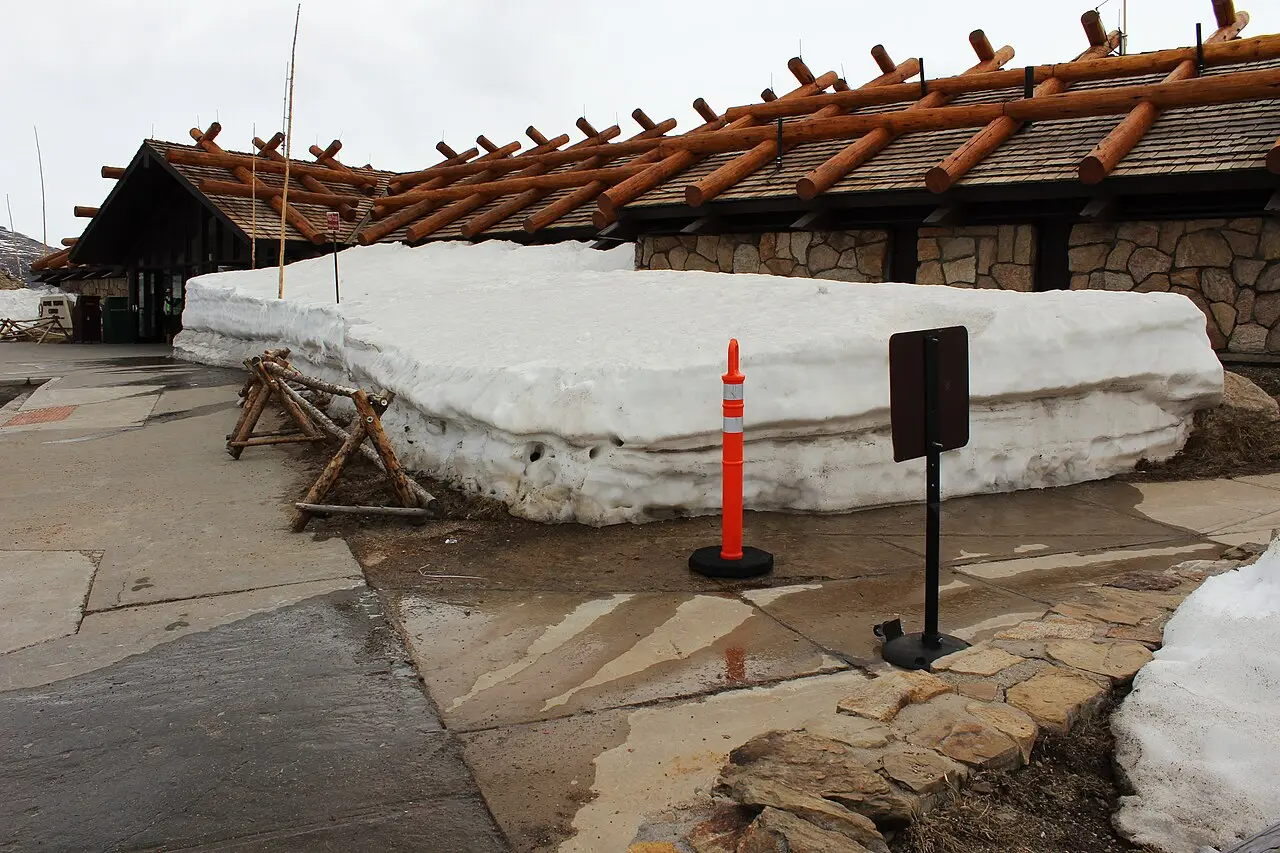
The road is also the most weather-dependent thing in Colorado. In 2026 it stayed closed through Memorial Day weekend after May snowstorms and only opened to through travel on May 29. The park averages 42 days of plowing to get it open; the earliest it ever opened was May 7, 2002, the latest June 26, 1943. Call the recorded status line, 970-586-1222, on the morning you plan to drive it. Wind at 12,000 feet is a different substance from wind at sea level, and the road closes on short notice.
How to hike Emerald Lake without the parking fight
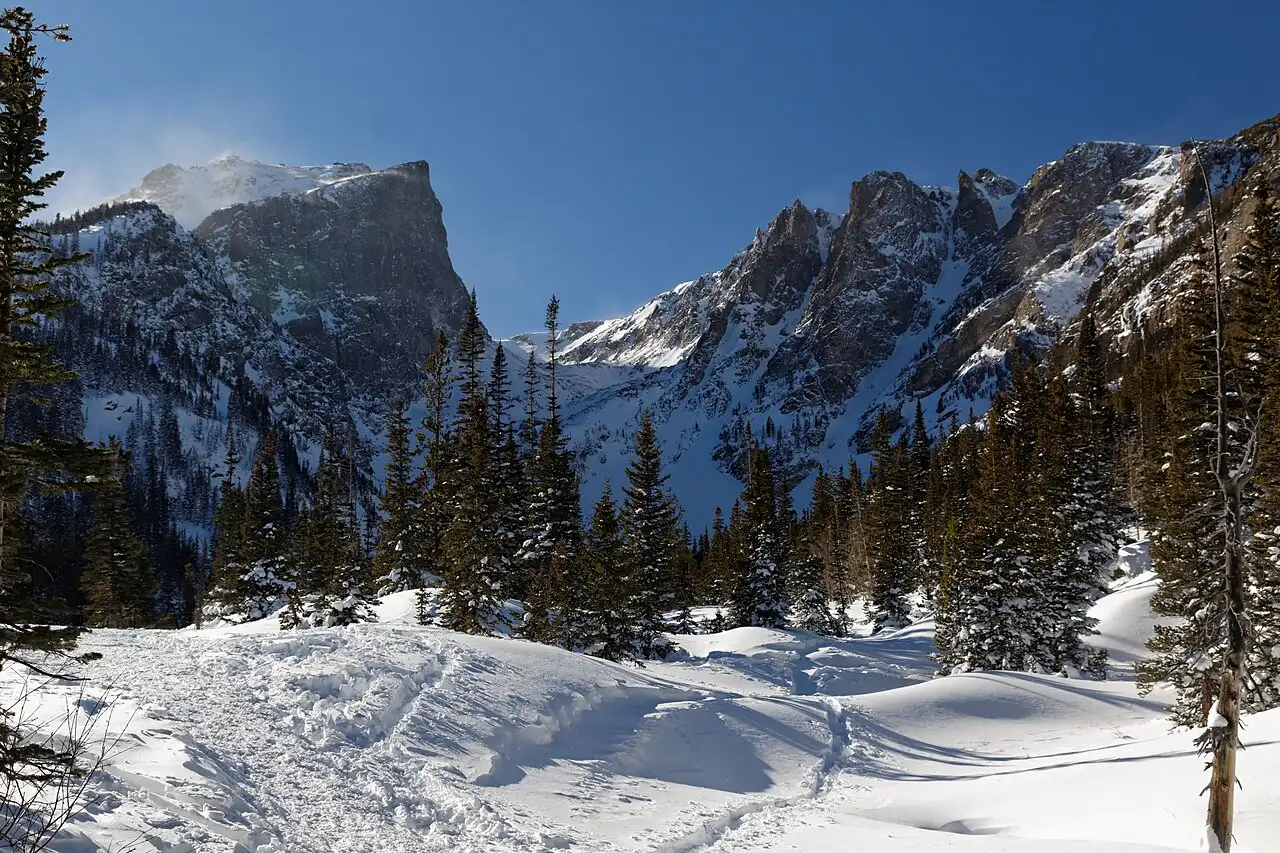
The classic walk is Emerald Lake: 3.6 miles round trip with 771 feet of climb from Bear Lake, taking in Nymph Lake just over half a mile in and Dream Lake at about a mile. Three alpine lakes and a granite wall for under four miles of trail is an unusually good return, which is exactly why the parking lot fills before most people have had breakfast.
The answer is the shuttle, and it’s free. Two routes run from the Park & Ride on Bear Lake Road: the Bear Lake route every 10 to 15 minutes from 6:30 a.m. to 7:30 p.m., and the Moraine Park route hourly from 7 a.m. Between them they reach Sprague Lake, Glacier Gorge, Cub Lake and the Fern Lake stop. They run from late May to mid-October, roughly matching the timed entry season, but the published schedule dates shift year to year, so check before you rely on a last bus.
Don’t mistake the shuttle for a permit, though. You still need timed entry to bring the car through the gate, and the Estes Park Hiker Shuttle from town wants its own recreation.gov ticket for every passenger, regardless of age. Nor does the shuttle run at dawn, so a sunrise start still means driving and parking yourself.
Old Fall River Road: the quiet way up
There’s a second way up to the Alpine Visitor Center, and it’s the older one. Old Fall River Road is one-way uphill, mostly gravel, posted at 15 miles per hour, and it climbs to Fall River Pass at 11,796 feet where it meets Trail Ridge. Vehicles over 25 feet are banned, and so is anything towing a trailer.
It opens late - July 4 in 2026 - because it needs more melt than the paved road, and it’s usually the first thing to close in fall. Drive up it and come back down Trail Ridge and you’ve made a loop out of what most visitors do as an out-and-back, on a road with a fraction of the traffic. A regular rental car handles it fine in dry conditions; go slowly and use the pullouts.
Longs Peak is not a hike
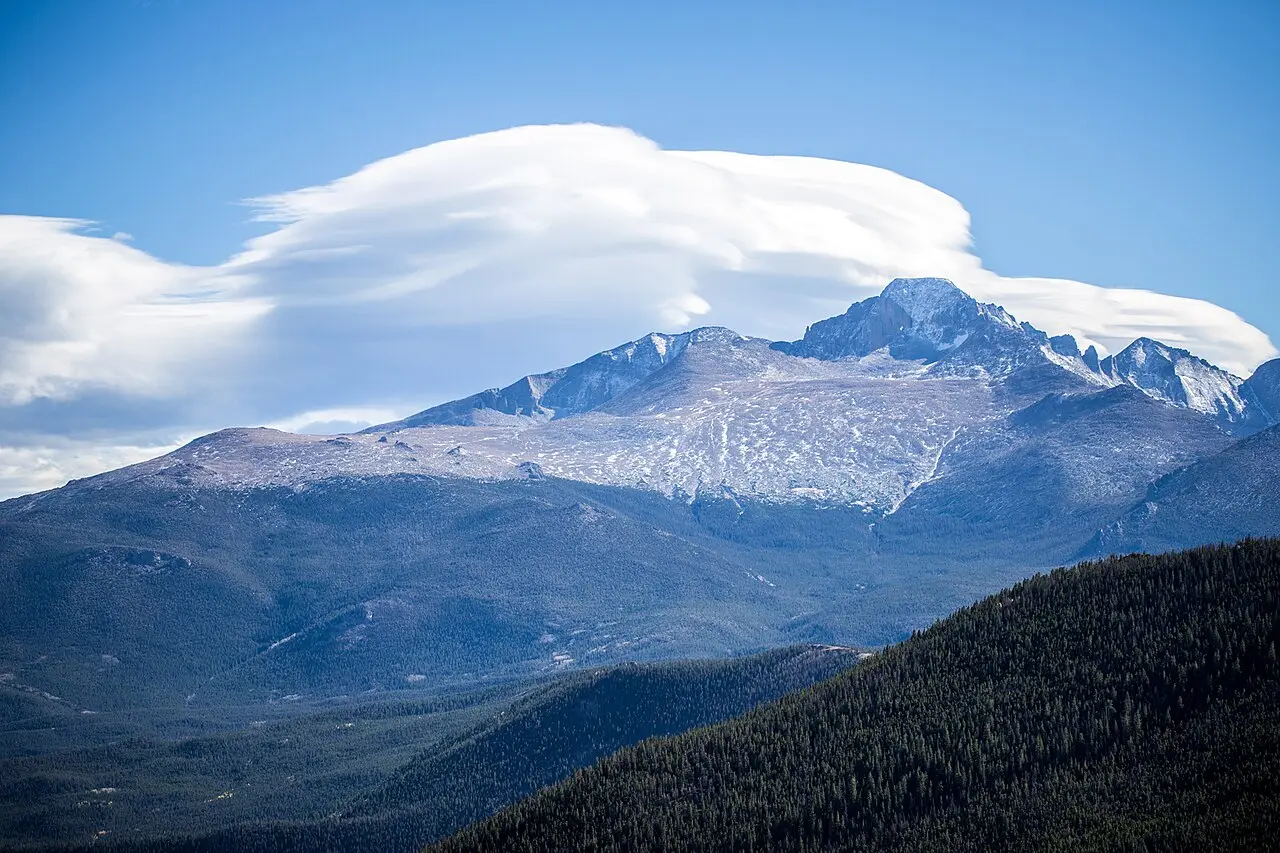
Longs Peak is 14,259 feet, visible from half of northern Colorado, and it kills people most years. The park’s own language about the standard Keyhole Route is unusually blunt: “The Keyhole Route is not a hike. This is a climb that crosses enormous sheer vertical rock faces, often with falling rocks, requiring scrambling, where an unroped fall would likely be fatal.” For most of the year the mountain is in winter conditions requiring mountaineering experience.
If you want the summit, that’s a project with its own preparation, not something to slot into a park day. If you want the view of it, walk the Bear Lake trails at sunrise or drive Trail Ridge in the late afternoon.
The wider rule that applies to everything up here: afternoon thunderstorms build fast over the high country in July and August, and there’s nothing to shelter under above treeline. Start early, be heading down by early afternoon, and treat a change in the sky as instruction rather than scenery. Altitude does the rest of the damage - if you flew into Denver yesterday, your first day here will feel harder than the numbers suggest, and the city sits at only 5,280 feet.
Estes Park or Grand Lake
Estes Park, on the east side, has the hotels, the restaurants, the crowds and the shortest drive to Bear Lake. It’s where nearly everyone stays and where you’ll pay peak-season rates for it. Grand Lake, at the western end of Trail Ridge, is smaller and quieter, sits on an actual lake, and puts you next to the emptier half of the park.
The move most people miss is doing one night at each end. You drive Trail Ridge once as a through-route rather than twice as a round trip, you see the west side in the evening light when the day traffic has gone home, and you halve the time you spend backtracking. Wilderness campers have a different calculus: overnight permits open on recreation.gov on March 1 at 8 a.m. Mountain time, carry a $36 administrative fee for dates between May 1 and October 31, and must be picked up in person at Beaver Meadows or Kawuneeche.
When to come
Late June and July give you the wildflowers on the tundra and the surest chance Trail Ridge is open end to end. They’re also the busiest weeks and the ones where permits vanish fastest.
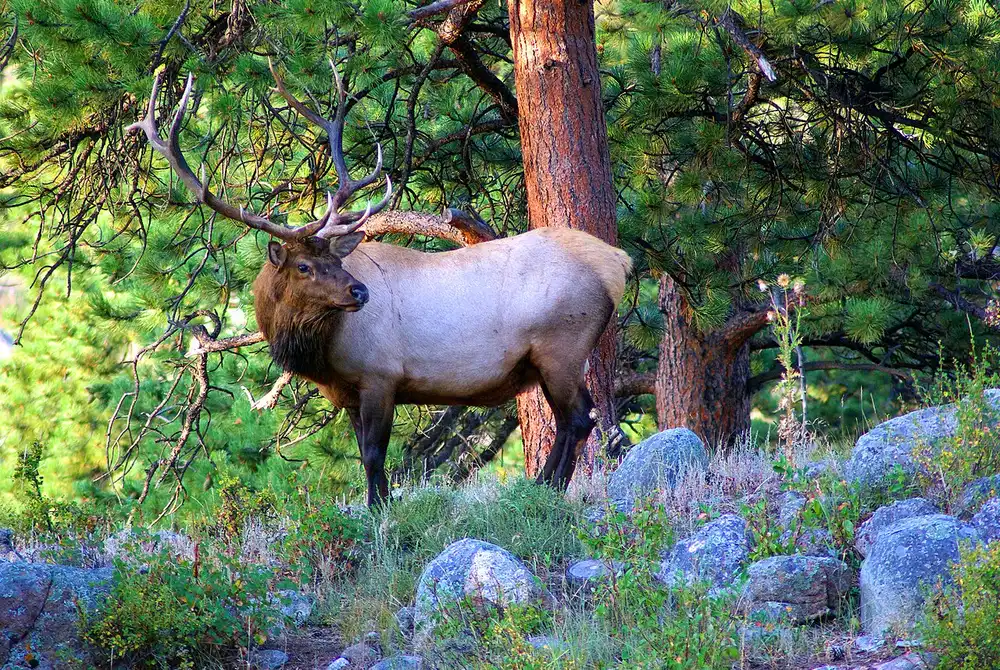
September is the best trade in the calendar. The elk rut fills Moraine Park and Horseshoe Park with bugling bulls, the aspens turn, the crowds thin after Labor Day and Trail Ridge is usually still open. Book accommodation early anyway, because Colorado knows this too.
From mid-October the permits lapse - October 12 for the park at large, October 18 on Bear Lake Road - Trail Ridge closes for the season, and the park becomes a quiet, snowy place you visit on the lower roads. Entry is still charged. Estes Park rates drop hard.
If Rocky Mountain is one stop on a bigger Colorado trip, our Colorado travel guide covers the other three national parks and the mountain towns, and what a USA trip costs sets the park fees against the rest of a budget. For the drive up from the airport, renting a car in the USA covers the insurance questions that come up at every Denver counter. Rocky Mountain keeps its own permit system while some other parks have dropped theirs for 2026 - Yosemite Reservations explains why that split happens and how to check any park’s current status before you drive up.
On the map
The map loads on click - to keep the page lightweight.
The map didn’t load. Check your connection and refresh the page.
Admission and opening hours
- Admission price
- $30 per vehicle for one day or $35 for seven days; motorcycle $25 / $30; per person $15 / $20; park annual pass $70. Timed entry reservations cost a $2 Recreation.gov processing fee on top. Non-US residents aged 16 and over pay an extra $100 per person unless admitted on an annual or America the Beautiful pass.
- Opening hours
- Park open year-round. Timed entry required from May 22, 2026: 9 a.m. to 2 p.m. for most of the park through October 12, and 5 a.m. to 6 p.m. for the Bear Lake Road corridor through October 18. Trail Ridge Road opened to through travel on May 29, 2026 and normally closes for the season in October.
Reservation windows, road status and shuttle dates change season to season. Confirm on nps.gov and recreation.gov, and call the recorded Trail Ridge Road status line on 970-586-1222 the morning you drive it.
Details checked: July 31, 2026
Read also

National Parks · 12 min read
Canyonlands and Capitol Reef: Utah's Two Quiet Parks
Verified · August 29, 2026Canyonlands $30, Capitol Reef $20 for the Scenic Drive - what each park costs, which district to skip, and which one wins if you only have a day.

National Parks · 8 min read
Indiana Dunes from Chicago: Beaches & the $25 Gate
Verified · August 26, 2026Leave Chicago early for West Beach, the Dune Succession Trail and the South Shore Line to Dune Park. National and state park fees do not cross.

National Parks · 8 min read
Carlsbad Caverns: Natural Entrance and Bat Flight
Verified · August 25, 2026$15 entry plus $1 timed reservation, Natural Entrance vs elevator, Big Room loop, and free bat flights April-Oct.

National Parks · 8 min read
White Sands: Dunes, Sledding and Closures
Verified · August 25, 2026Gypsum dunes, $25 entry, sledding tips, and why missile-range tests can close Dunes Drive for hours - check NPS the morning you go.