
North Carolina Travel Guide: Asheville, Outer Banks, Smokies
Mountains and barrier islands 440 miles apart, which Blue Ridge Parkway sections are still shut after Helene, and what the coast actually charges.
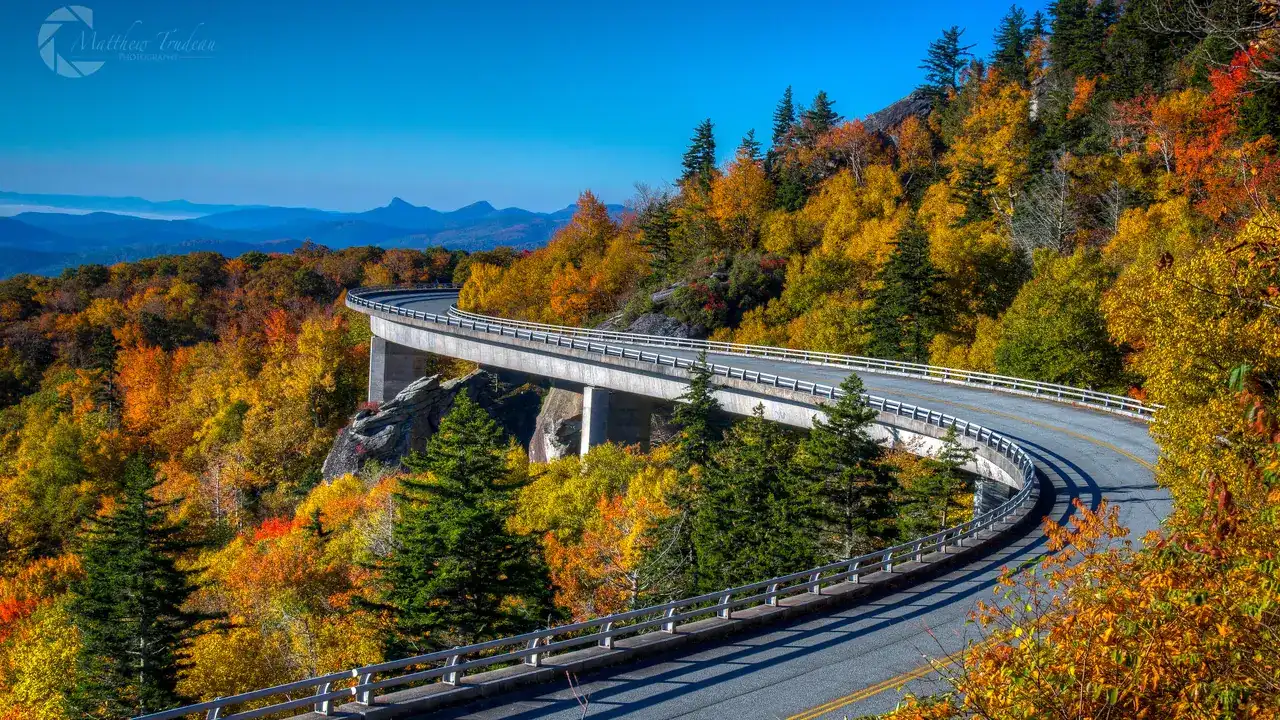
North Carolina is two vacations that happen to share a license plate. Asheville and the mountains sit at one end, the Outer Banks at the other, and the drive between them is about 440 miles - the best part of nine hours by the routing engines, before you stop for anything. Book both into one week and you’ll spend a day and a half of it looking at I-40.
Pick an end. The mountains are the stronger trip if you want scenery, cool air in August and a genuinely good small city to come back to at night. The coast is the stronger trip if you want a beach house, a car you barely use and a lighthouse or two. The middle of the state, Charlotte and the Research Triangle, is where you’ll fly in and out of, and where a rain day goes.
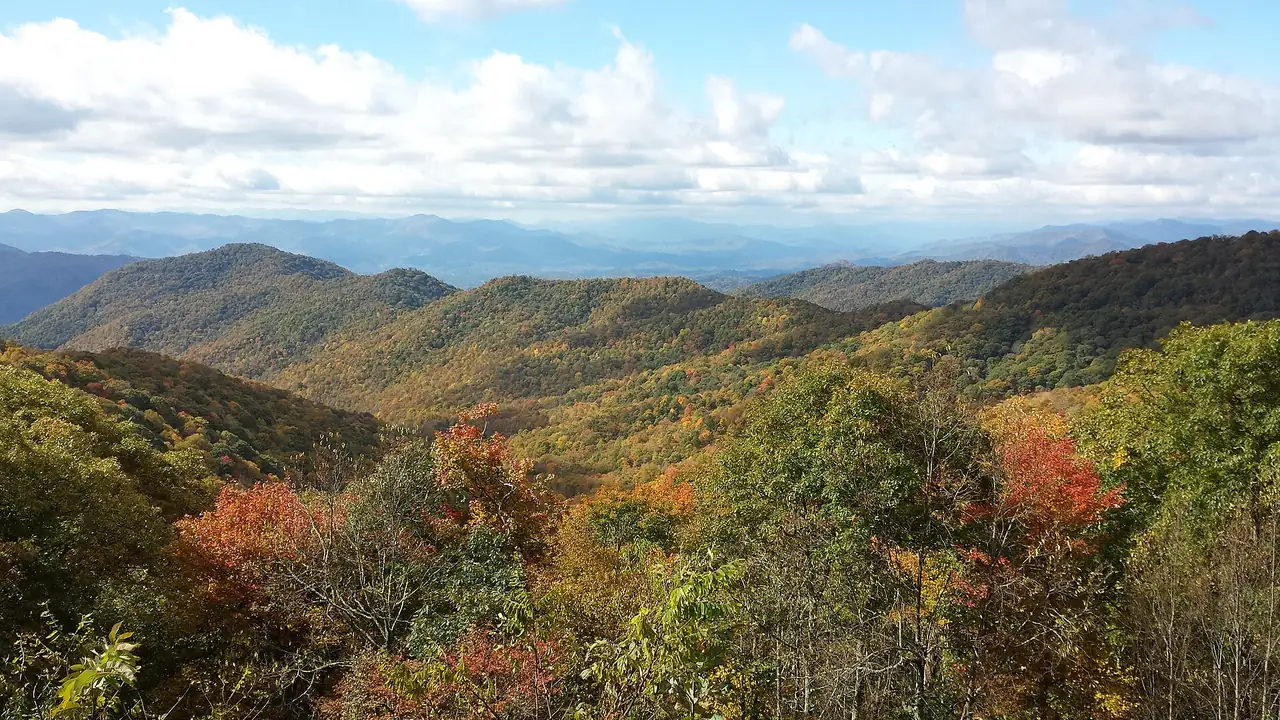
Asheville or the Outer Banks, pick one
If you’ve got a week, spend it on one side. A realistic mountain week bases in Asheville, gives two days to the Parkway and Mount Mitchell, one to Biltmore, one to the North Carolina side of the Smokies and a couple to breweries, Pisgah and doing nothing. A realistic coast week takes a house on Hatteras Island or in Nags Head and treats the whole thing as one long beach with detours.
Ten days or more and the crossing becomes defensible, but don’t do it in one go. Wilmington or Raleigh in the middle turns one brutal day into two easy ones.
The Blue Ridge Parkway is still not all open
Old travel writing will tell you to drive this end to end. Right now you can’t. Hurricane Helene tore up the North Carolina stretch of the 469-mile Blue Ridge Parkway, and as of the park’s road-closure page on August 1, 2026 several sections are still shut with recreation of any kind prohibited inside them: MP 317.5 to 324.7, MP 333.9 to 342.1, MP 342.1 to 344.2 and MP 344.2 to 355.3. MP 324.7 to 330.9 is partly open. Separately, Deep Gap bridge work closes MP 274.3 to 276.5 with a signed detour, a construction project closes MP 294 to 296.9 between Cone Manor House and Price Lake, and there’s a partial closure around MP 304.4 to 305.1 - which is the Linn Cove Viaduct end of things.
The park’s stated target is to have the North Carolina parkway fully open again by late 2026, with the landslide repairs between Mount Mitchell and Little Switzerland finishing last. Treat that as a target, not a booking guarantee, and pull up the closure page the week you travel.
What this means in practice: the Asheville-to-Blowing Rock run that guidebooks describe as one continuous drive currently isn’t one. You’ll be dropping to US 221 or I-40 and rejoining, which works fine, just not scenically. Mount Mitchell, at 6,684 feet the highest point east of the Mississippi, is reachable from the Asheville side only, and the state park says plainly that north of it the Parkway is closed. Day use there is free, and at that elevation it makes its own weather - winter closures are frequent and long.
One more thing about the Parkway that nobody budgets for. There’s no entrance fee, but the speed limit maxes out at 45 mph and NPS reckons on 30 miles per hour of driving. A “short” 90-mile parkway leg is three hours plus overlooks. Plan it as the day, not as the transfer.
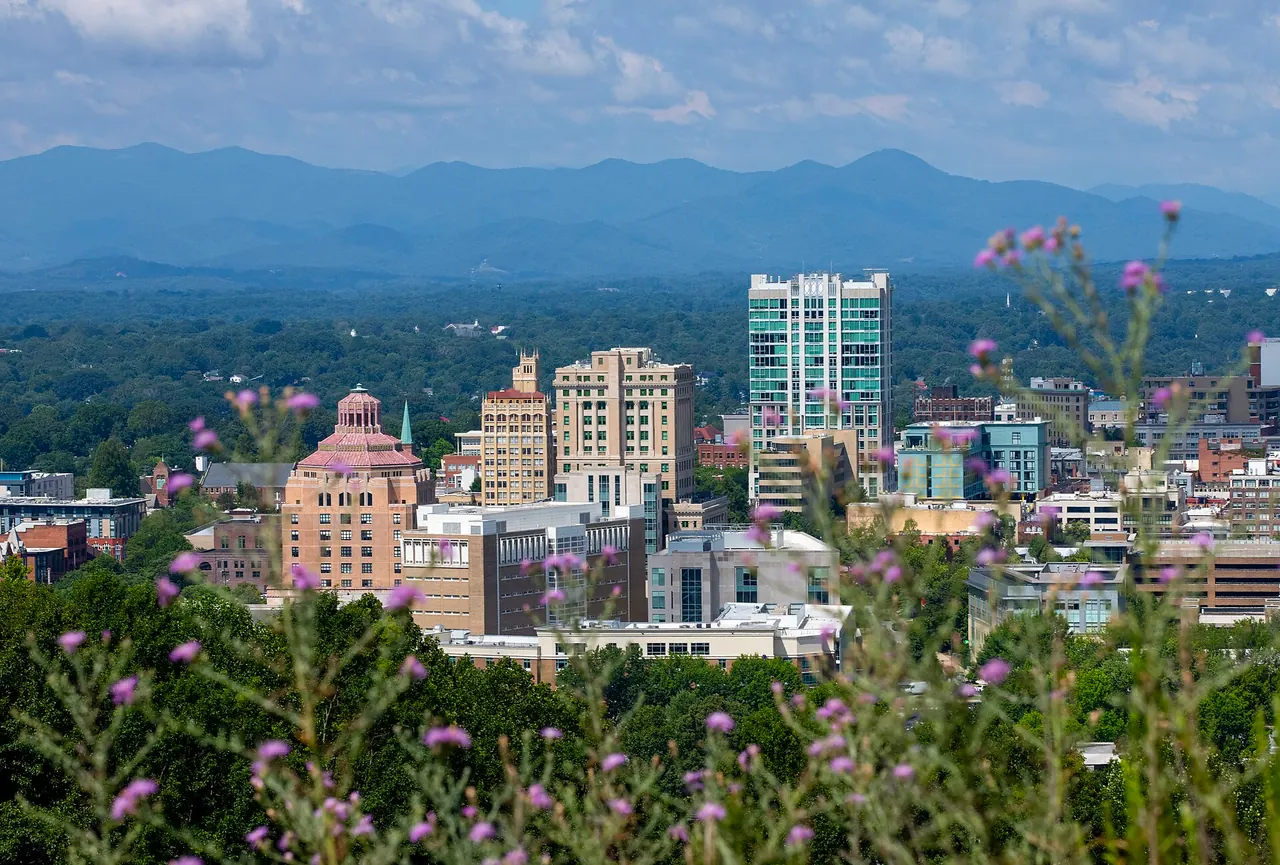
Asheville and Biltmore
Asheville is the reason people fly to this half of the state. It’s small, walkable in the center, heavy on breweries and independent kitchens, and it sits 124 miles from Charlotte - about two and a half hours if the interstate behaves.
Biltmore is the paid headline, and it’s priced accordingly: house admission starts at $80 in summer and moves with the date, parking is included, and buying online rather than at the gate saves $10 a ticket. The time printed on your ticket is your entry time for the house itself, not for the estate, so arrive early and use the gardens first. Higher tiers add the audio guide, evening entry or unlimited daytime visits, which is worth checking if you’re staying more than a night.
Whether it’s worth $80 depends entirely on what you like. It’s a Vanderbilt house that markets itself as America’s largest home, with grounds laid out by Frederick Law Olmsted, and it’s Gilded Age excess on a scale nothing else in the South tries to match. If house tours bore you, though, the same money buys two days of gas and every overlook on the Parkway.
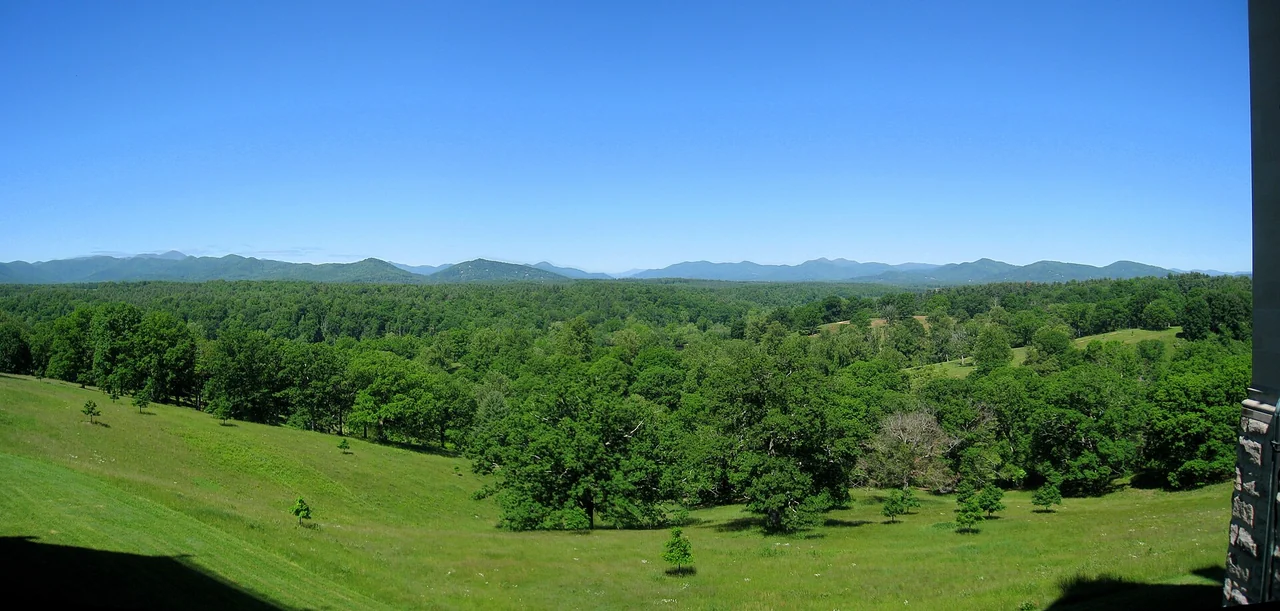
The North Carolina side of the Smokies
Most coverage of the Smokies is written from Tennessee, out of Gatlinburg, and it misses what’s on this side of the ridge. Our full Great Smoky Mountains guide covers the parking tag, the road seasons and Cades Cove; here’s what changes when you come at it from North Carolina.
You enter at Oconaluftee, next to Cherokee and the Qualla Boundary, home of the Eastern Band of Cherokee Indians. There’s a visitor center, the Mountain Farm Museum with a self-guiding walk through relocated 19th-century farm buildings, and the Museum of the Cherokee People just outside the park boundary. It’s a substantially different entrance experience from the Tennessee side, and quieter.
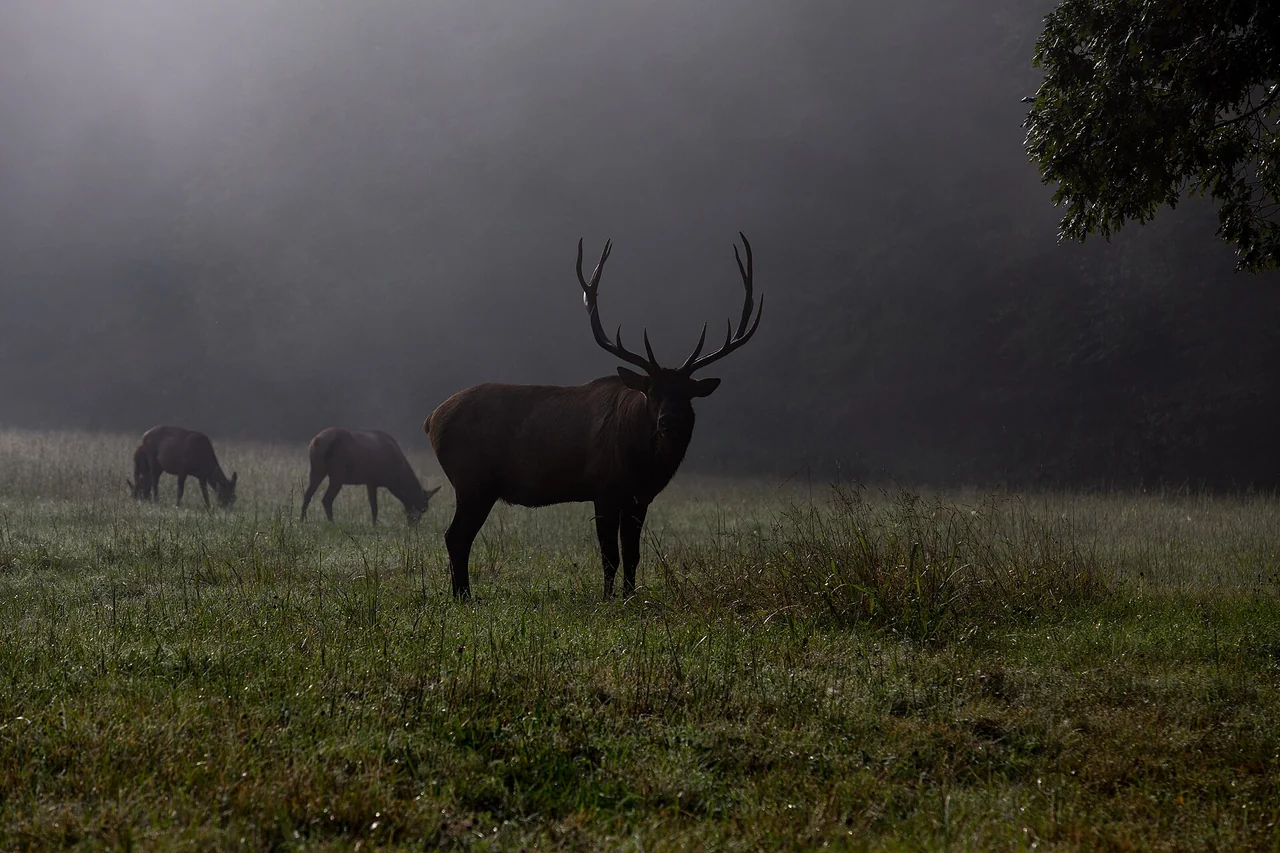
The elk are the real North Carolina asset. NPS puts one of the park’s two main herds in the Oconaluftee valley, where they graze the meadows by the visitor center at dawn and dusk, and the other is over in Cataloochee, where elk were reintroduced in 2001. Cataloochee is the better sighting and the harder drive: the road in from Cove Creek is narrow gravel with steep drop-offs and no guardrails, and NPS warns you may have to stop or reverse to let oncoming cars past. The valley was closed for a long stretch after Helene and has partly reopened, so check the park’s road status before you commit to it.
Practical carryover from the park guide: there’s no entrance fee, but you need a parking tag for any stop over 15 minutes, at $5 a day, $15 a week or $40 a year. This is the most visited national park in the country, with over 11.5 million recreation visits in 2025, and the tag machines take cards only.
The Outer Banks: what costs money out there
Almost nothing, is the short answer, and that’s the appeal. Cape Hatteras National Seashore charges no entrance fee for a barrier island chain most of a hundred miles long. The costs are specific and small:
- Wright Brothers National Memorial: $10 per person aged 16 and over, under-16s free, or $35 for an annual pass covering you plus three adults. The pay machines are card only - the park doesn’t take cash.
- Bodie Island Lighthouse climb: $10 adults, $5 for seniors and for children under 12 who are over 42 inches.
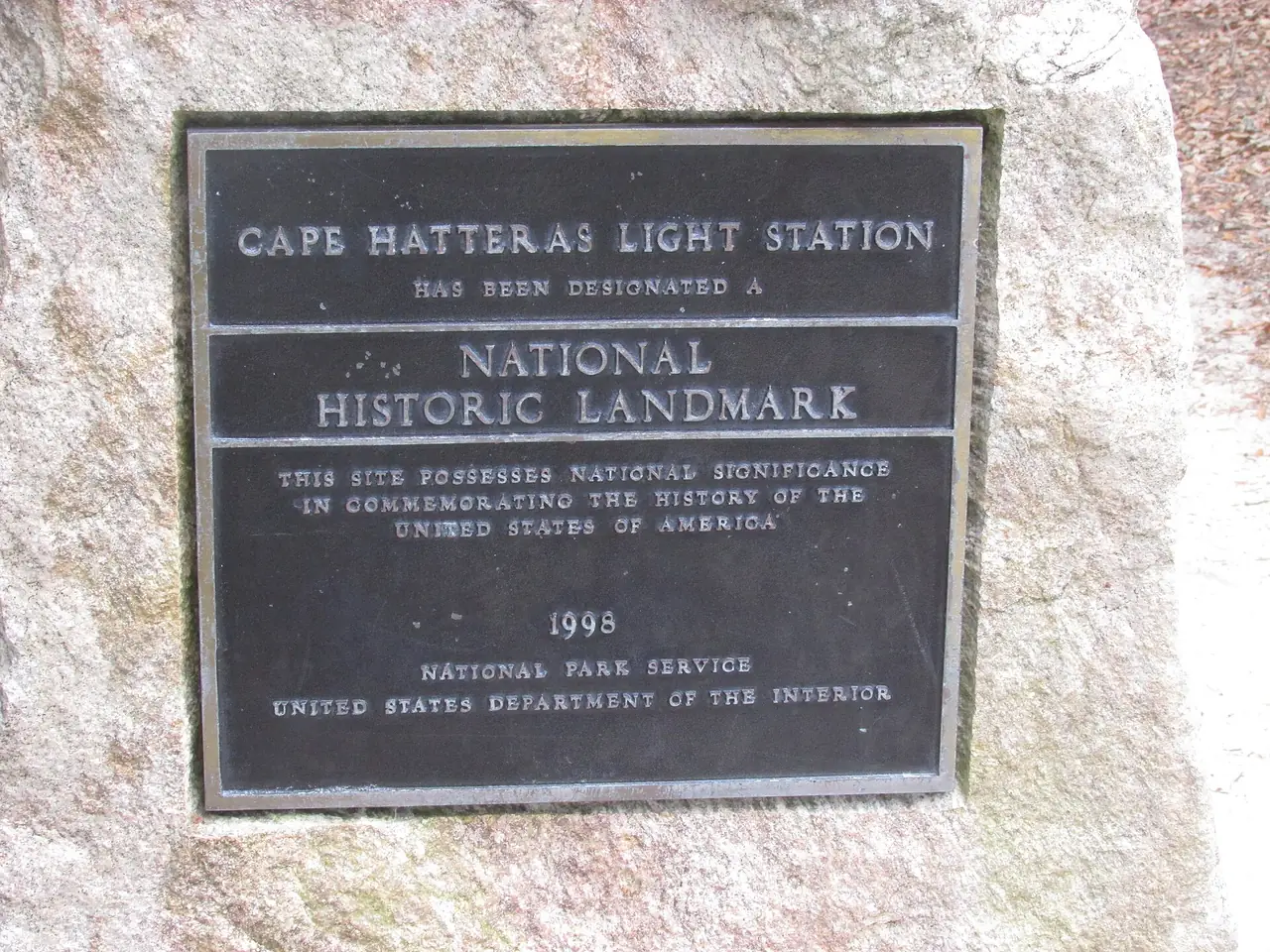
- Cape Hatteras Lighthouse: closed for climbing, and NPS says it “will likely not open in 2026” while restoration continues. It’s still worth the stop for the photograph, but don’t build a day around going up it.
- Driving on the beach: an off-road vehicle permit is $50 for 10 consecutive days or $120 for the year, and you need one for the sand.
- Camping: $28 a night at Oregon Inlet, Frisco and Ocracoke without utilities, $35 with utilities at Oregon Inlet, $20 at Cape Point.
Getting there is its own decision. The closest airport with real service is Norfolk, Virginia, about 100 miles north, not anywhere in North Carolina; Raleigh-Durham is roughly 200 miles west. NC-12 is the only road down the islands, and it floods and closes in storms. The Hatteras to Ocracoke ferry is free, first come first served, no reservations, and takes about 70 minutes - which makes Ocracoke the easiest island in America to reach and the one people most often skip.
Charlotte, Raleigh and the middle
The Piedmont is where your flights land and where the state’s cities are. Charlotte is banking towers, NASCAR and the connection you’ll most often be routed through; Raleigh, Durham and Chapel Hill make up the Research Triangle, with universities, free museums and a food scene well ahead of the population count.
Nobody comes to North Carolina for the middle, and that’s fine. Treat it as logistics: fly into Charlotte for the mountains, into Raleigh-Durham for the coast, and don’t build a night into either unless the flight times force it. If you’re linking states, Charlotte puts you within striking distance of Charleston and the rest of South Carolina, and Asheville is a short hop from the Tennessee side of the Smokies and everything Nashville-bound beyond it.
The seasons that actually matter here
Spring in the mountains runs late. The high country’s still bare when Charlotte is in blossom, the coast is cool and empty, and rates are low everywhere.
Summer is beach season on the Outer Banks, which means peak prices, booked-out houses and Saturday changeover traffic on NC-12. The mountains are the escape: Asheville sits high enough to be pleasant when the Piedmont is at 95.
Fall is the whole point of western North Carolina, and everyone knows it. Color moves down the elevations through October, the Parkway overlooks fill, and Asheville hotel rates roughly follow the leaves. Book months ahead or come midweek.
Winter shuts a lot of the mountains. Parkway sections close for ice with no notice, Mount Mitchell can be shut for weeks, and the Outer Banks go quiet in a way you’ll either love or find bleak.
Two versions of the trip
The mountain version. Fly into Charlotte, drive to Asheville the same afternoon. Two days on whatever stretch of the Parkway is open, with Mount Mitchell on one of them. A day at Biltmore. Two days over the ridge to Cherokee and Oconaluftee, with a dawn start for the elk and Cataloochee if the road’s open. Back to Asheville for the food, then out the way you came.
The coast version. Fly into Norfolk, in Virginia, not North Carolina, and be on Hatteras Island in two hours. Take the house for the week. Wright Brothers and Bodie Island on the day it rains, the free ferry to Ocracoke on a day it doesn’t, and the rest of it on the sand.
For the wider trip, renting a car in the USA covers the counter questions before you drive off. If the flights land further north first, the East Coast 7-day itinerary handles the New York to Boston run by train before you pick up a car for any of this. And if you’re tempted to do the mountains on wheels, the Parkway’s tunnels and the Cataloochee gravel are reasons to read renting an RV before you book one.
On the map
The map loads on click - to keep the page lightweight.
The map didn’t load. Check your connection and refresh the page.
Admission and opening hours
- Admission price
- Blue Ridge Parkway and Great Smoky Mountains charge no entrance fee; the Smokies require a parking tag at $5 daily, $15 weekly or $40 annual. Cape Hatteras National Seashore is free to enter; Bodie Island Lighthouse climb $10 adult and $5 child or senior; Wright Brothers National Memorial $10 per person aged 16 and over. Biltmore House admission starts at $80 in summer, $10 less booked online. Mount Mitchell State Park day use is free.
- Opening hours
- Blue Ridge Parkway open year-round with weather and repair closures; several North Carolina sections remain shut after Hurricane Helene, with NPS targeting full reopening by late 2026. Cape Hatteras Lighthouse is closed for climbing and NPS says it will likely not open in 2026.
Parkway closures move month to month. Check nps.gov/blri road closures and the Smokies road status page before you commit to a mountain route, and confirm ferry schedules with NCDOT.
Details checked: August 2, 2026
Read also

States · 11 min read
Connecticut: Mystic, New Haven and the Shoreline
Verified · September 12, 2026Mystic Seaport at $35 adult, free Yale galleries in New Haven, and Gillette Castle on the river - how a Connecticut weekend actually fits.

States · 9 min read
North Dakota: Medora and Theodore Roosevelt NP
Verified · September 5, 2026The 36-mile South Unit loop starts in Medora, entrance $30 per vehicle, cashless from May 2026 - how to plan Theodore Roosevelt National Park.

States · 9 min read
Arkansas Travel Guide: Hot Springs & Ozarks
Verified · September 4, 2026Fee-free Hot Springs NP downtown, free Crystal Bridges in Bentonville, and the 135-mile Buffalo - how to string an Arkansas road trip.

States · 10 min read
Indiana Travel Guide: Indy, Speedway, Shore
Verified · September 5, 2026IMS Museum at $25, Kiss the Bricks at $15, Brown County hills and Lake Michigan shore - an Indiana trip beyond a Chicago beach day.