
Renting an RV in the USA: Costs, One-Way Fees & Where to Go
What an RV rental really costs once mileage, generator hours and kits are added, how one-way rentals work, and the park roads that turn big rigs away.
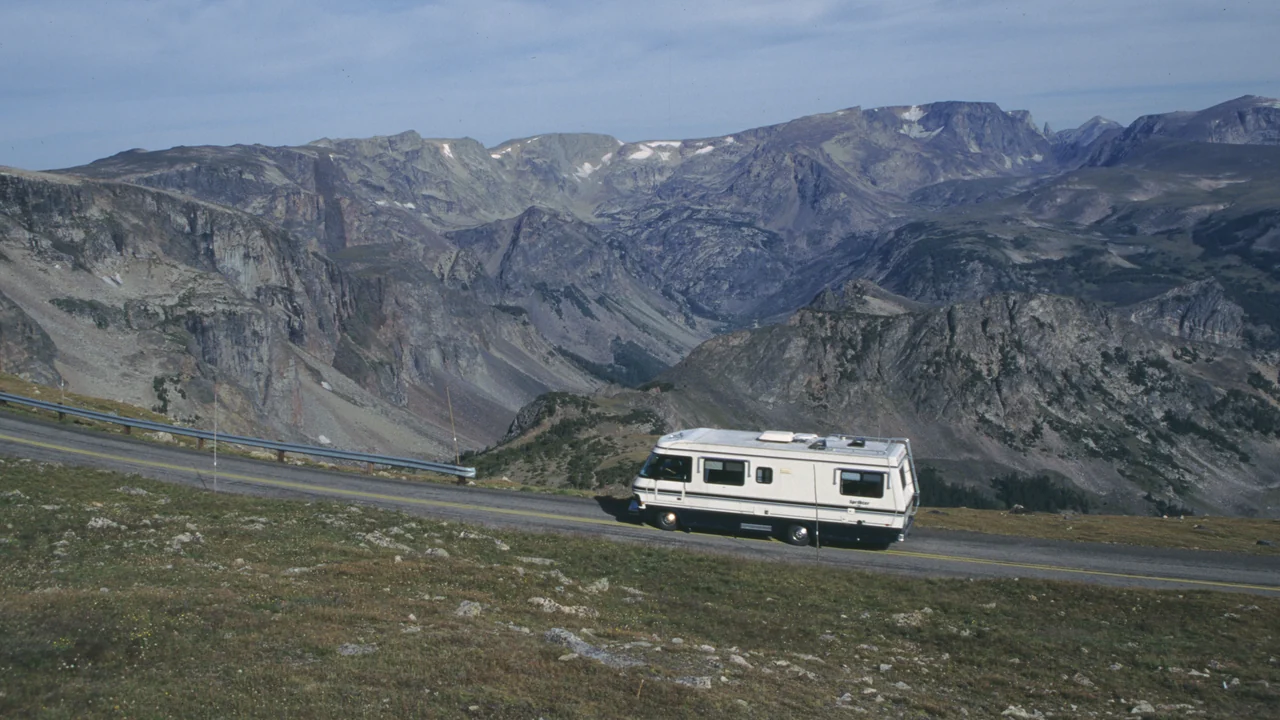
The nightly rate is the smallest number in an American RV rental. Mileage is charged separately at around 39 cents a mile, the generator runs on a meter at $3.50 an hour, bedding and cookware are rented per person and per vehicle, and then you still buy the gas and the campsite. Price the trip on the headline figure and you’ll be out by more than the headline figure.
None of that makes it a bad idea. It makes it a different calculation from renting a car, and one worth doing on paper before you’re standing in a depot in Las Vegas signing for a 25-foot vehicle you’ve never driven.
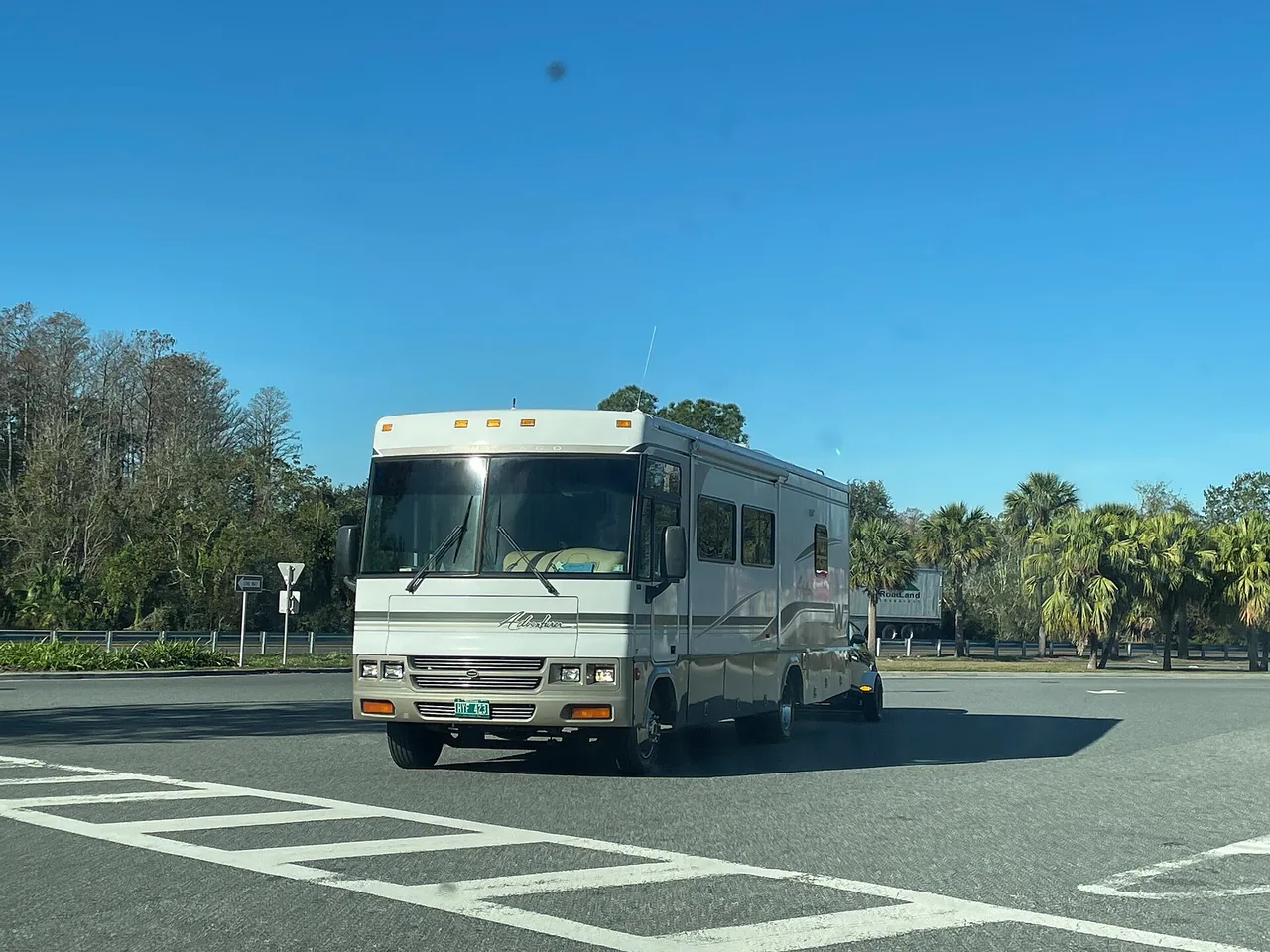
The quoted rate is the smallest number
Take Cruise America, one of the largest nationwide chains and one of the few that publishes its whole fee schedule. Their own range for the nightly rate is “as little as $80 per night to as much as $300+ per night” depending on season and vehicle. Around that sits everything else:
- Mileage: 39 cents a mile. You prepay an estimate, calculated at 100 miles per night on a round trip or 250 miles per night on a one-way, and you’re refunded for miles you don’t use or charged 39 cents for miles you do.
- Generator: $3.50 an hour, read off a running-time meter in the vehicle. Air conditioning off-grid runs on that generator.
- Kits: $75 per person for bedding and towels, $125 per vehicle for pots, pans and plates. An RV arrives empty.
- Deposit: $500 minimum before you leave, refundable depending on how the vehicle comes back.
Other operators structure it differently, and some sell unlimited-mileage packages instead, but a per-mile charge is common enough that it’s the line item people forget to ask about. It’s not a booking fee, it’s a second fuel bill.
What a two-week loop actually adds up to
Assume a Class C for two adults, 14 nights, 2,000 miles. The unit prices below are published; the mileage and generator hours are assumptions you should change to match your own trip.
Mileage at 39 cents comes to $780. Gas is the other half of the same problem: the rental company’s own estimate for a Class C is 10 to 15 miles per gallon, so budget at 10 and you’ll burn 200 gallons. At the national average of $4.096 a gallon in late July 2026, that’s about $820. Run the generator four hours a night and it’s $196. Kits for two people plus the vehicle kit, $275.
That’s roughly $2,070 before you have paid a single night of rental or a single campsite. Add fourteen nights at even $120 and you’re near $3,750, and campgrounds are still to come.
The number to take away isn’t the total, it’s the ratio. On a long, fast, sightseeing-heavy route, the variable costs can rival the rental itself. On a short trip that parks up in one place for a week, they almost vanish. RVs punish mileage, not time, which is the exact opposite of how most people plan a road trip.
The one-way question
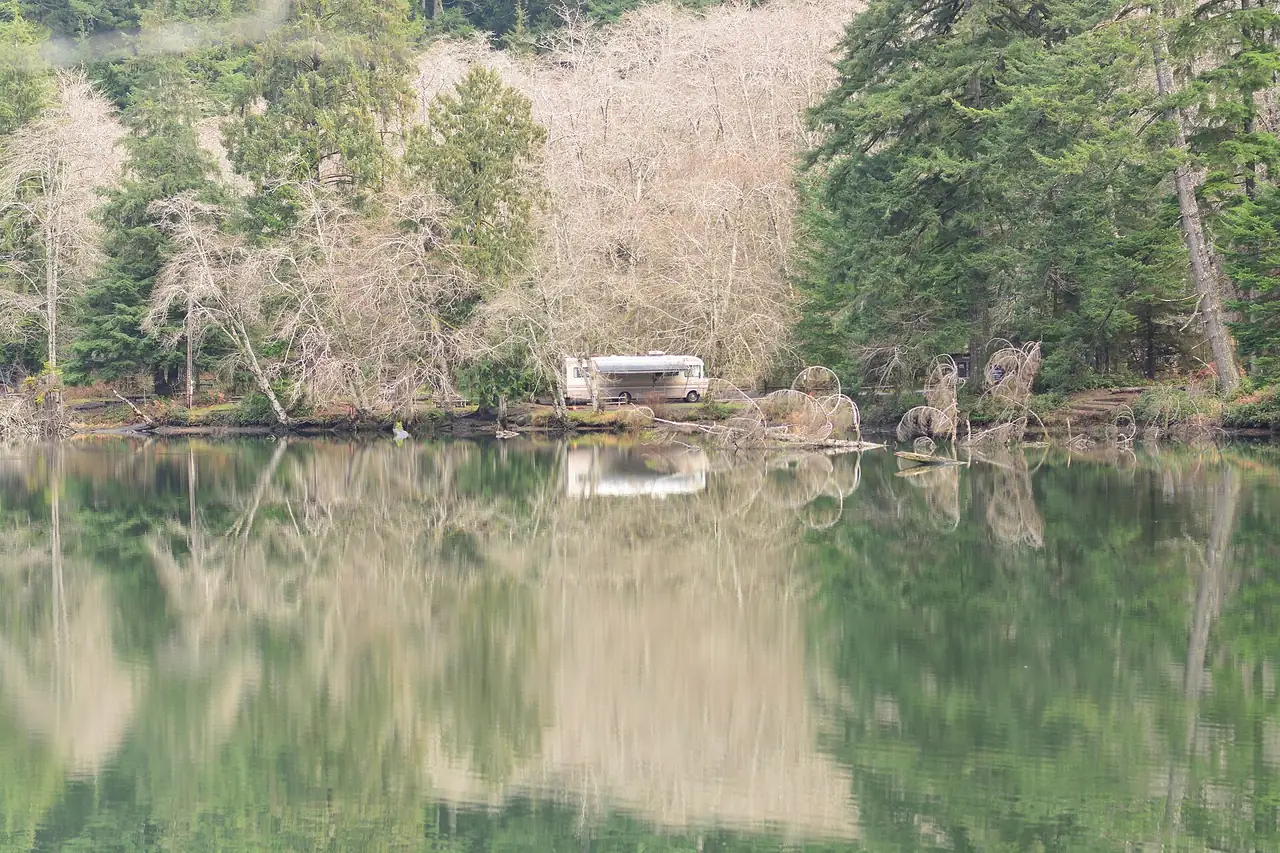
One-way is the whole appeal for a lot of overseas visitors: fly into San Francisco, drive to Las Vegas or Denver, fly home. It’s possible, and it’s the part of the booking most likely to go wrong.
One-ways are by advance reservation only, between most but not all depots, and subject to fleet balancing - companies keep minimum vehicle numbers at each location, so a route can simply be refused. The drop fee is quoted per route rather than published as a flat rate, and it moves with dates, direction and how badly the company wants that vehicle moved. Ask for the number in writing before you get attached to the itinerary.
Two details matter more than the fee. First, one-way bookings at Cruise America carry a $300 reservation down payment that isn’t refundable once confirmed. Second, US to Canada one-ways aren’t allowed at all, which quietly kills a lot of Seattle-to-Vancouver and Montana-to-Banff plans.
There’s an upside buried in the terms: the prepaid mileage allowance on a one-way is 250 miles per night instead of 100. If your route is genuinely long and linear, the one-way structure fits it better than a loop does.
Do you need a special license
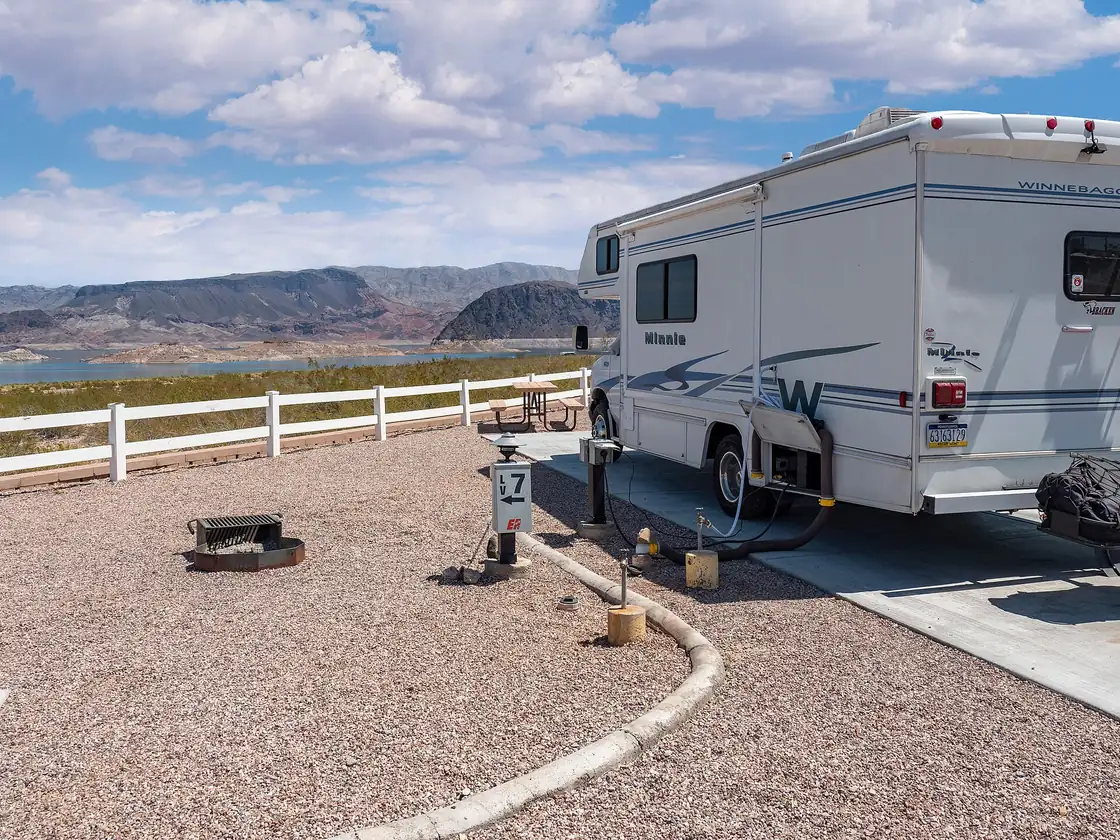
No. Cruise America’s published requirement is that you’re 21 or over with a valid driver’s license - no commercial endorsement, no extra test, and the other big chains work the same way. That surprises people, because the vehicle handles nothing like a car.
New York allows visitors to drive on a valid foreign license and does not require an International Driving Permit, though the DMV recommends one as a translation aid. Other states and rental operators can set different document requirements. Check both for the places and company on your itinerary; our guide to renting a car in the USA explains the distinction.
What nobody tests you on is the part that actually matters: reversing something 25 feet long, judging a 12-foot height under a gas station canopy, and remembering that the back end swings wide. Book the first night somewhere close to the depot. Do not plan 400 miles on day one.
Size decides which roads you get
Bigger is not automatically better, and roads are the reason. Every foot you add closes off another piece of the driving people come here for.
Acadia bans anything over 21 feet from the Cadillac Summit Road outright, including RVs and trailers, and the 21 feet counts bike racks and hitch attachments. Glacier prohibits vehicles and combinations longer than 21 feet or wider than 8 feet including mirrors on the middle section of Going-to-the-Sun Road, between Avalanche Creek and Rising Sun, and warns that anything over 10 feet high will struggle with the rock overhangs west of Logan Pass. Rocky Mountain shuts Old Fall River Road to anything over 25 feet or towing.
Zion is the strictest and the most precise. On the Zion-Mt. Carmel Highway a single vehicle can be no more than 35 feet 9 inches long, 7 feet 10 inches wide, 11 feet 4 inches high or 50,000 pounds; a vehicle plus trailer is capped at 50 feet total. The park spells out that measurements “include mirrors, tires, and attachments such as AC units, bike racks, satellite dishes.” Exceed any one of them and you’re turned around at the entrance station rather than escorted through the tunnel, which is a change the park phased in during 2026. You can still visit Zion from the south, you just can’t drive that road.
Read those numbers together and a pattern falls out: 21 feet is the practical ceiling if you want the scenic mountain roads, and 8 feet wide with mirrors is tighter than it sounds. A van or a small Class C keeps every road open. A 32-foot Class A buys you a shower, and it’ll cost you three of the best drives in the country.
Where you park it at night
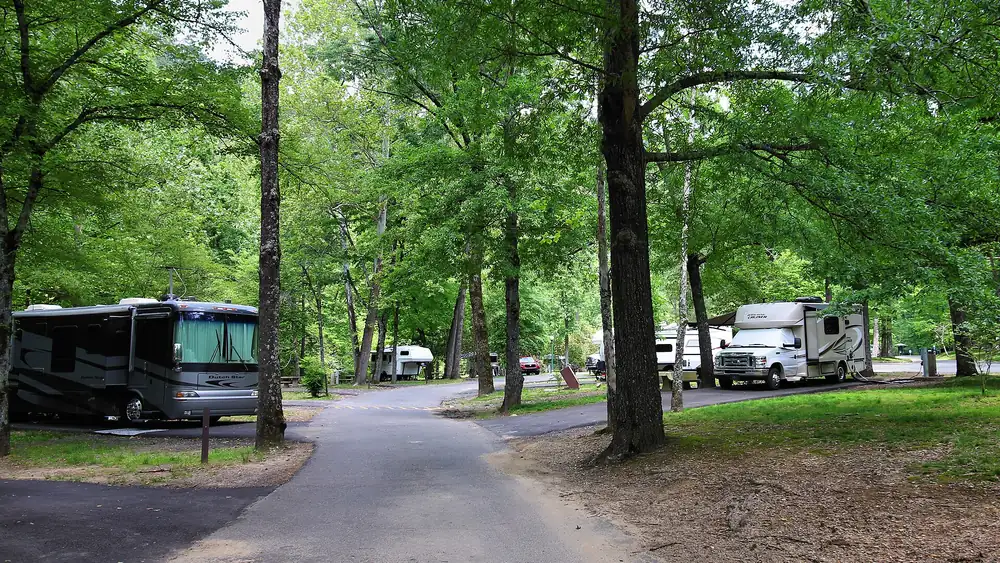
National park campgrounds are the cheap, scenic option, and their length limits are published site by site. Yellowstone is a useful worked example because it runs the full spread: Indian Creek, Lewis Lake, Slough Creek and Tower Fall all charge $20 a night and cap RVs at 25 to 35 feet; Bridge Bay and Madison take 60 feet at $38; Canyon and Grant Village are $45. Full hookups exist at exactly one place in the park, Fishing Bridge RV Park, which takes hard-sided vehicles only and charges $94 a night.
That price gap is the practical argument for going small. A 25-foot rig sleeps in the $20 campgrounds. A 40-foot one gets pushed toward the $94 site, or out of the park entirely, and you’ll be paying that difference every night of the trip.
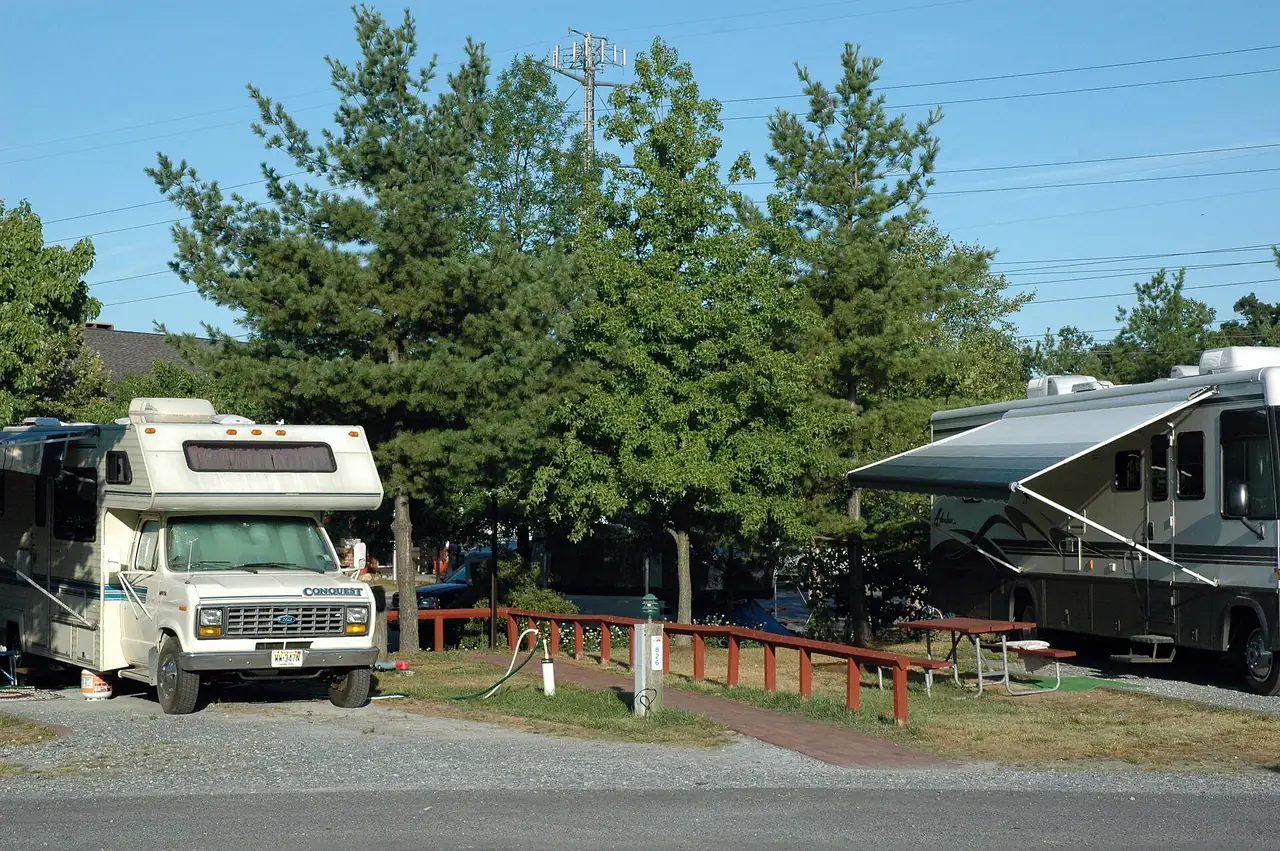
Private RV parks fill the gap with hookups, laundry and wifi at prices between the two, booked directly. Boondocking - parking overnight without hookups - is a real part of American RV culture, and the Walmart lot is its folk symbol. Treat that carefully: the chain’s long-standing line is that permission comes from the individual store manager, subject to space and local ordinance, and plenty of towns have banned it. Ask inside, don’t assume, and never put out chairs.
Where an RV earns its keep
The routes where a motorhome genuinely beats a car and a chain of motels have one thing in common: the beds are the scarce resource, not the road.
The national park loops of the West are the clearest case. Around Yellowstone, Grand Teton, Zion, Bryce and Rocky Mountain, in-park lodges sell out the winter before and gateway-town rooms swing wildly in July. A campsite inside the park at $20 to $45 is both cheaper and better placed than a motel forty minutes outside it, and you can be at a trailhead at sunrise without driving in the dark.
Route 66 works for the opposite reason: the towns are small, the distances between them awkward, and having your bed with you removes the nightly scramble for a room in somewhere like Tucumcari. The Pacific Coast Highway is the split decision - the state park campgrounds along Big Sur are superb and book out months ahead, and the road itself is narrow enough that a big rig turns a pleasure into a job. Go small on that one, or go by car.
And there’s a category where an RV is the wrong tool entirely: any trip built around cities. There’s nowhere to park a motorhome in San Francisco, Boston or New York, and the campgrounds are an hour out with a transit connection you’ll grow to hate.
Who should skip it
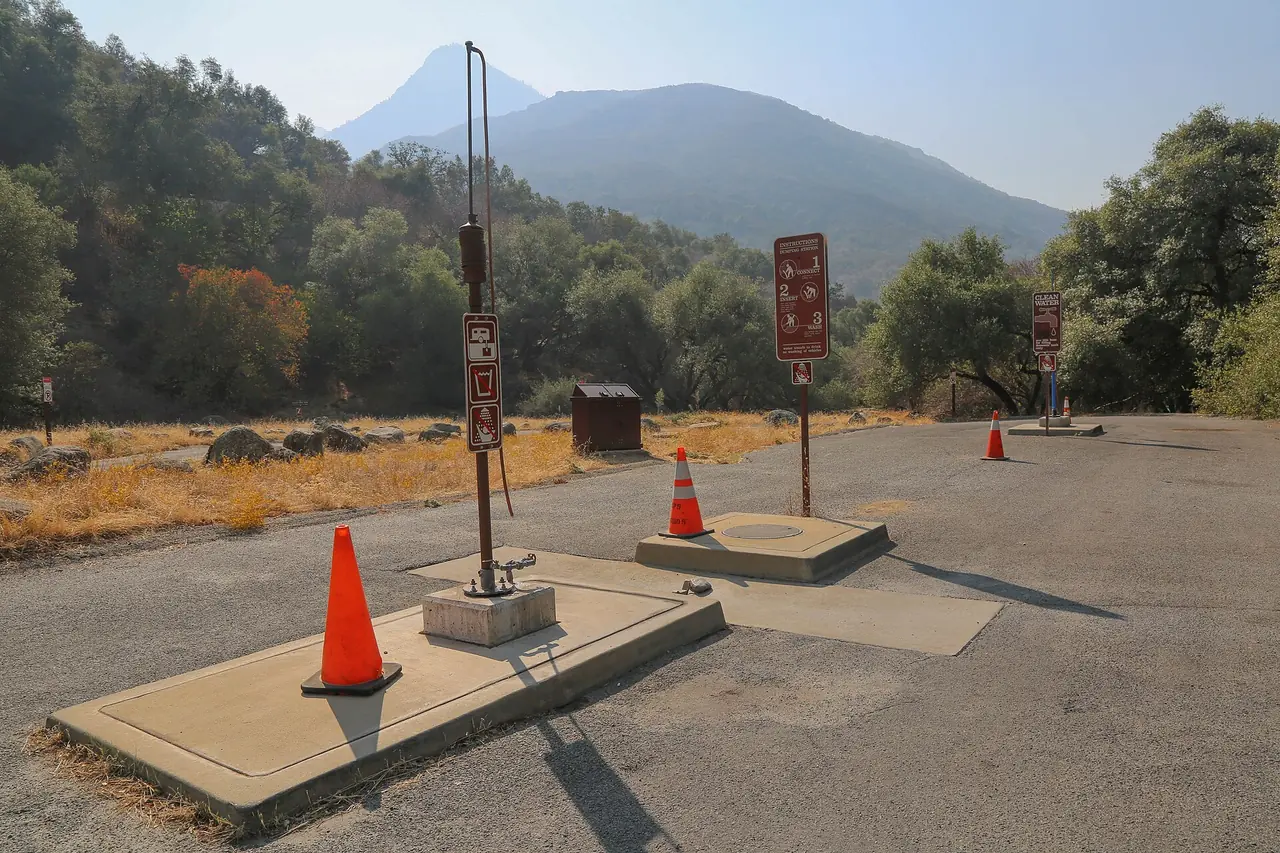
Two adults doing a fast, wide-ranging loop with a lot of miles. At that shape the mileage charge, the fuel penalty and the campground fee stack up against one motel room and a compact car, and you’re doing chores at a dump station on your vacation to break even.
Anyone whose route is more than half cities. Anyone who’s never reversed a long vehicle and has a schedule that doesn’t forgive a slow first day. And anyone whose dream shots are Going-to-the-Sun Road and the Cadillac summit, because a full-size motorhome is banned from both.
Families of four or five, groups splitting one vehicle, and anyone circling the western parks in peak season are the ones who come out ahead - on money, and more often on the actual quality of the trip.
If you’re still weighing it up, what a USA trip costs sets accommodation and car hire side by side across a whole itinerary, and getting around the USA covers the flights-and-trains alternative for long hops. If your route runs up the Northeast, note that Acadia is one of the parks where the headline drive is closed to RVs outright, and worth planning a rental car day around.
Admission and opening hours
- Admission price
- Reference fee schedule published by Cruise America, one of the largest nationwide chains, in August 2026: nightly rate quoted from about $80 to $300+; mileage 39 cents per mile; generator $3.50 per hour on the running-time meter; personal kit $75 per person; vehicle provisioning kit $125; minimum $500 security deposit; one-way rentals carry a non-refundable $300 reservation down payment. Fuel averaged $4.096 a gallon nationally in the week of July 27, 2026.
Nightly rates are dynamic and change daily; the fee structures above are what stay fixed, and they are what catch people out. Confirm the current schedule with whichever operator you book, and confirm park road limits with the park before you drive.
Details checked: August 2, 2026
Read also

Car rental · 7 min read
Rental Car Insurance USA: What Your Card Covers
Verified · August 6, 2026CDW vs LDW, what Chase Sapphire and similar cards actually cover, California liability minima, and why SLI is a separate decision from the damage waiver.

Car rental · 10 min read
Renting a Car in the USA: What Visitors Need to Know
Verified · August 6, 2026US car rental for foreign visitors: license and IDP rules, under-25 fees, CDW versus your credit card, one-way charges, cashless tolls and pumping gas.

Entertainment · 17 min read
Grand Canyon Tours from Las Vegas: Bus, Helicopter & Skywalk
Verified · September 19, 2026Compare Grand Canyon tours from Las Vegas: bus, helicopter and Skywalk prices from the operators, plus when the South Rim is worth the extra hours.

States · 11 min read
Connecticut: Mystic, New Haven and the Shoreline
Verified · September 12, 2026Mystic Seaport at $35 adult, free Yale galleries in New Haven, and Gillette Castle on the river - how a Connecticut weekend actually fits.