
Where to Stay in New York City: Best Areas
Where to stay in New York City by budget: Midtown, the Lower East Side, Williamsburg, the Financial District and more, and what each area costs.
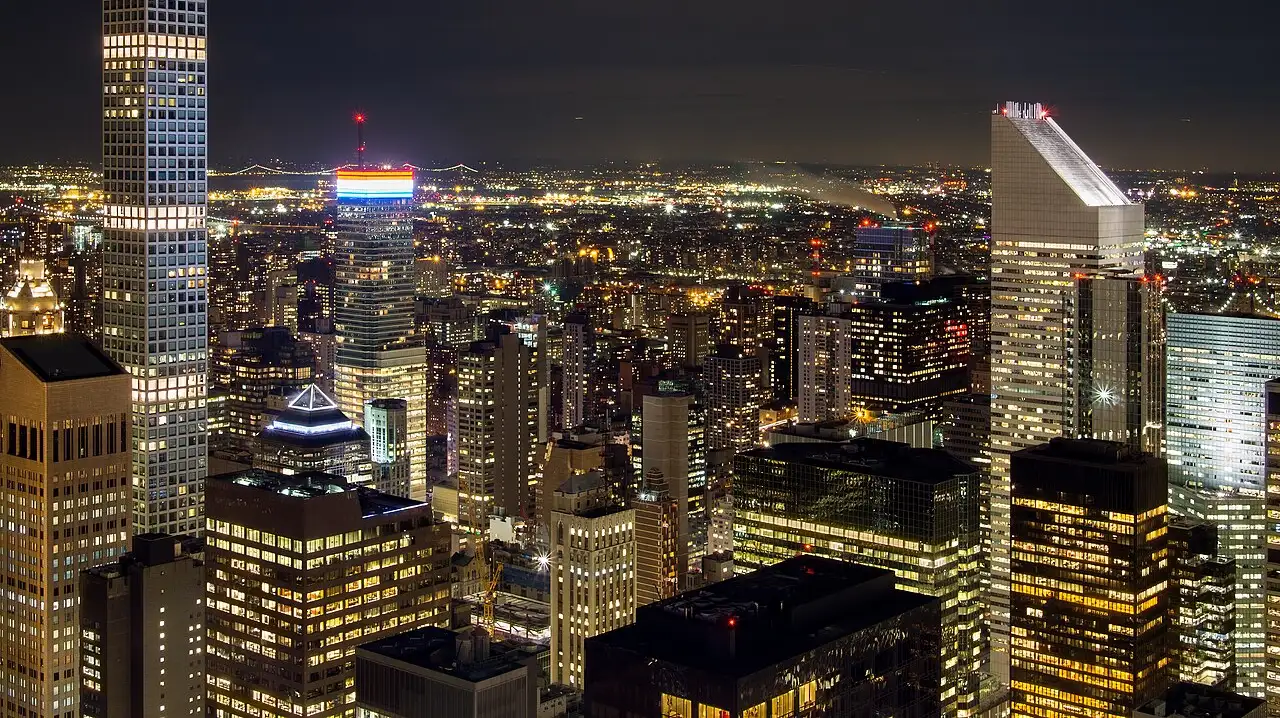
For a first trip, stay in Midtown Manhattan between roughly 34th and 57th Streets and you’ll walk to Broadway, ride any subway line you need and never think about logistics again. That convenience is the most expensive in the city, so the better question is what you’re willing to trade. Move downtown to the Lower East Side and you swap polish for the best eating and drinking. Cross the river to Williamsburg or Long Island City and you get more room for your money plus a skyline view, at the cost of ten or fifteen minutes on a train.
One number should shape your booking before any neighborhood does: New York City hotels ran at 84.1% occupancy in 2025, the highest of any major American city for the third year running. Rooms really do sell out. The habit of waiting for a last-minute deal, which works in plenty of destinations, reliably backfires here - late bookers in New York pay more, not less, and get the leftovers.
The areas at a glance
| Area | Best for | Trade-off |
|---|---|---|
| Midtown / Times Square | First visit, theatre, every subway line | Priciest and busiest; little local life |
| Lower East Side / East Village | Food, bars, downtown character | Fewer big hotels; noisy on weekends |
| Financial District | Weekend value, ferries, harbor views | Quiet after dark on weekdays |
| Upper West Side | Families, Central Park, museums | 20-30 minutes from downtown nightlife |
| Williamsburg (Brooklyn) | Design hotels, bars, better value | One river crossing from the sights |
| Long Island City (Queens) | Value plus skyline views | Functional rather than charming |
| Harlem | Cheapest Manhattan option | Long ride to downtown |
Midtown and Times Square: pay for the convenience
Midtown is where most visitors should sleep on a first trip, and the reason is transit rather than charm. Nearly every subway line converges here, Penn Station and Grand Central both sit inside the district, and the theatres, Rockefeller Center, the Empire State Building and the top of Fifth Avenue are all within a walk. If your days are packed with the sights in things to do in New York City, the minutes you save add up - you won’t get that from a far-flung borough hotel.
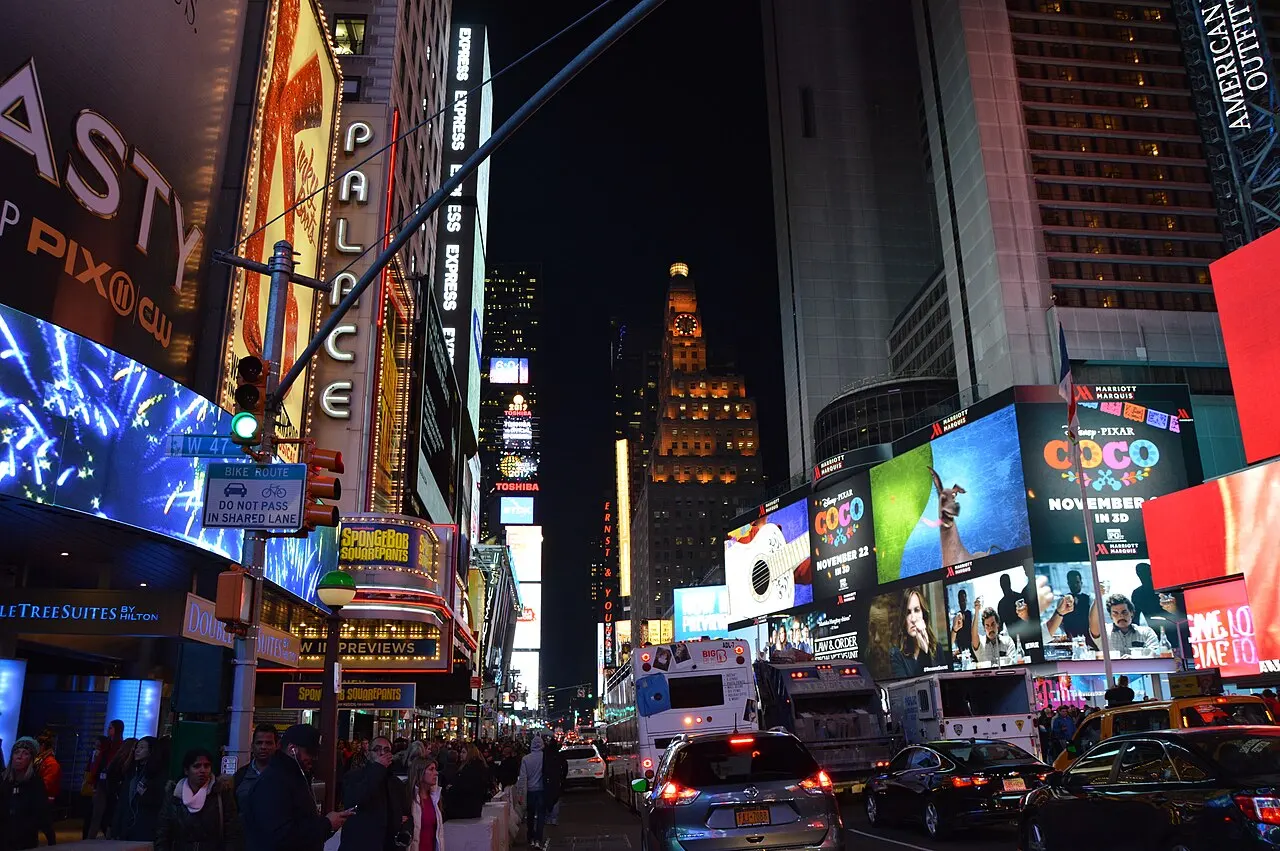
The catch is that Times Square itself is relentless: crowds at midnight, sirens, and rooms that face a wall of advertising. If you want the location without the circus, book east of Sixth Avenue toward Bryant Park or Murray Hill, or north into the low 50s. You get the same subway access and a street you can hear yourself think on. Rooms here sit at the top of the market, commonly $300 and up, more when a big convention is in town. Since you’ll probably book a show, sort your seats at the same time using our guide to Broadway tickets in NYC - don’t leave Broadway to the last night.
Lower East Side and East Village: the food and the night
On a second trip, sleep downtown. The Lower East Side and neighboring East Village hold the densest run of good, affordable restaurants and bars in Manhattan, plus the tenement blocks that tell the city’s immigration story. Boutique hotels here tend to be smaller and a little cheaper than Midtown equivalents, and you’re a short walk from Chinatown, Nolita and SoHo. Our New York eating list leans downtown for the same reason.
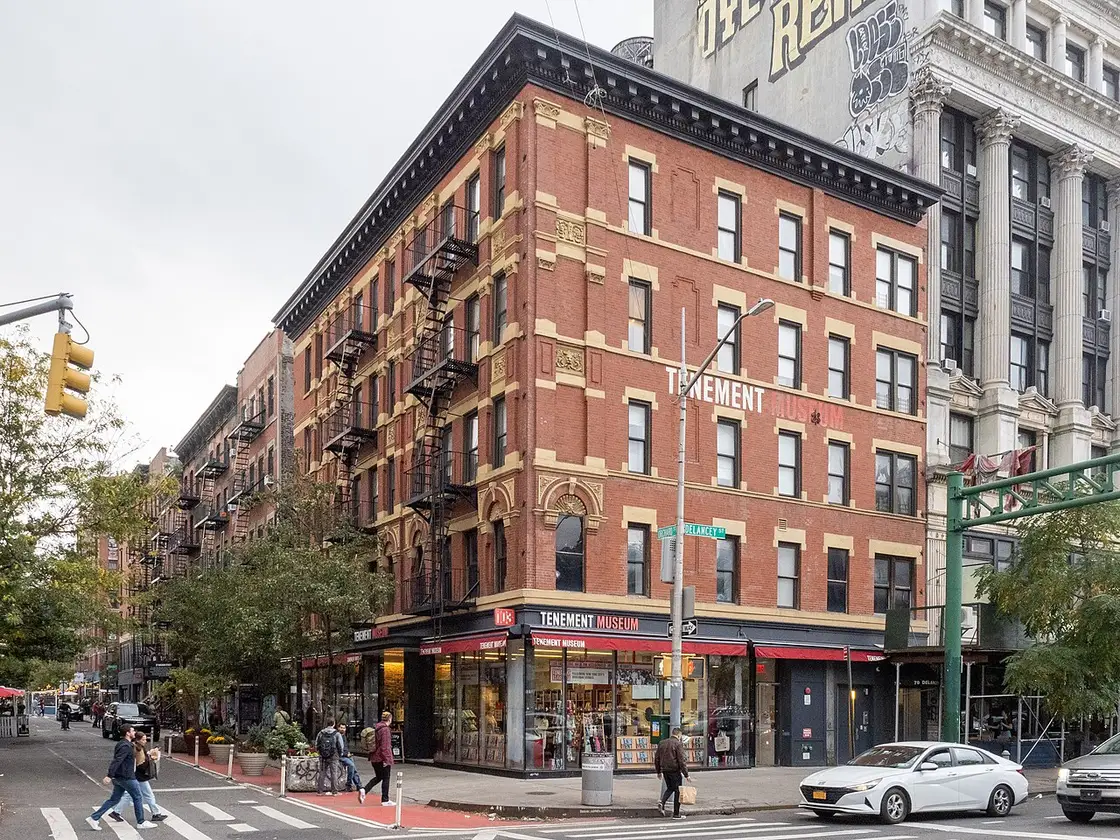
Subway coverage down here’s thinner than in Midtown, so check how far your hotel really is from an F, J or 6 stop before you book - “Lower East Side” in a listing can mean a ten-minute walk to the nearest train. Friday and Saturday nights are also loud until very late, so ask for a room off the street.
Financial District: the weekend trick
The Financial District inverts the usual pricing logic. It’s a business district, so it fills on weekdays with corporate travelers and empties on weekends, which is exactly when leisure visitors want it. Book Friday to Sunday down here and you can find four-star rooms for what a mediocre Midtown hotel charges midweek.
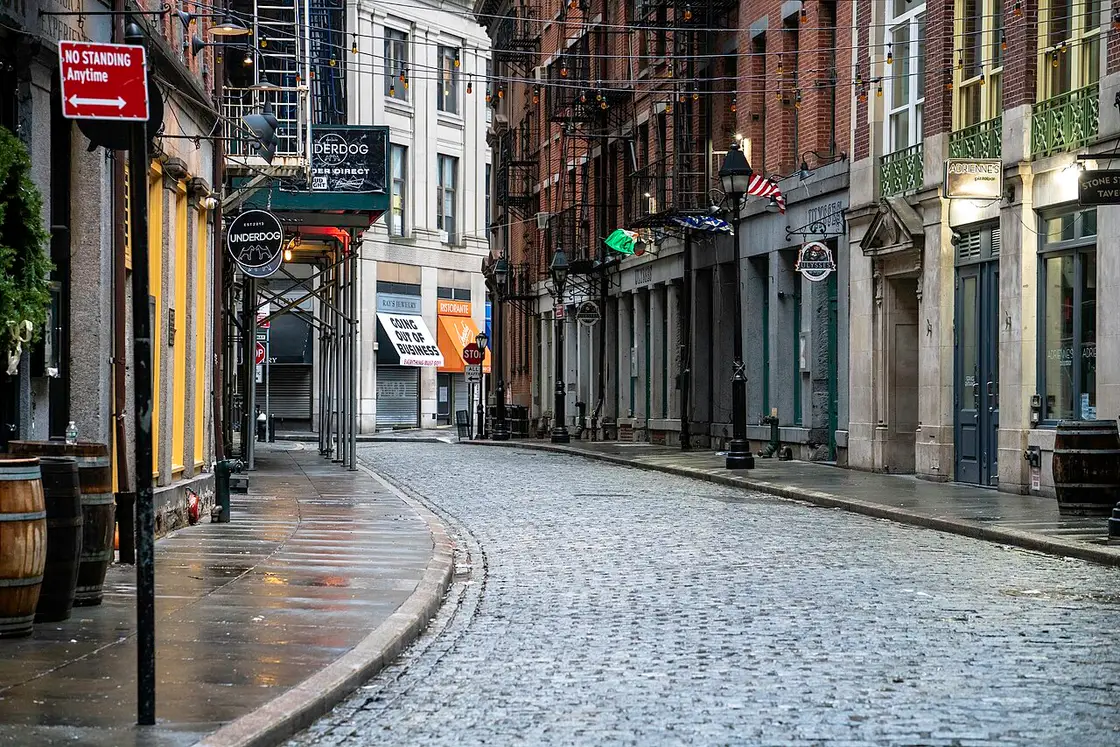
You’re also on top of the 9/11 Memorial, the Statue of Liberty ferry at Battery Park, the free Staten Island Ferry and the Brooklyn Bridge walk. The downside is atmosphere: on a Tuesday evening the streets around Wall Street empty out and dinner options thin considerably.
Upper West Side: the family choice
Families and slower travelers do better on the Upper West Side. Brownstone streets, Central Park at the end of the block, the American Museum of Natural History nearby, proper grocery stores and a neighborhood that behaves like somewhere people actually live. Rooms and apartment rentals here often work out roomier per dollar than Midtown, which matters when there are four of you.
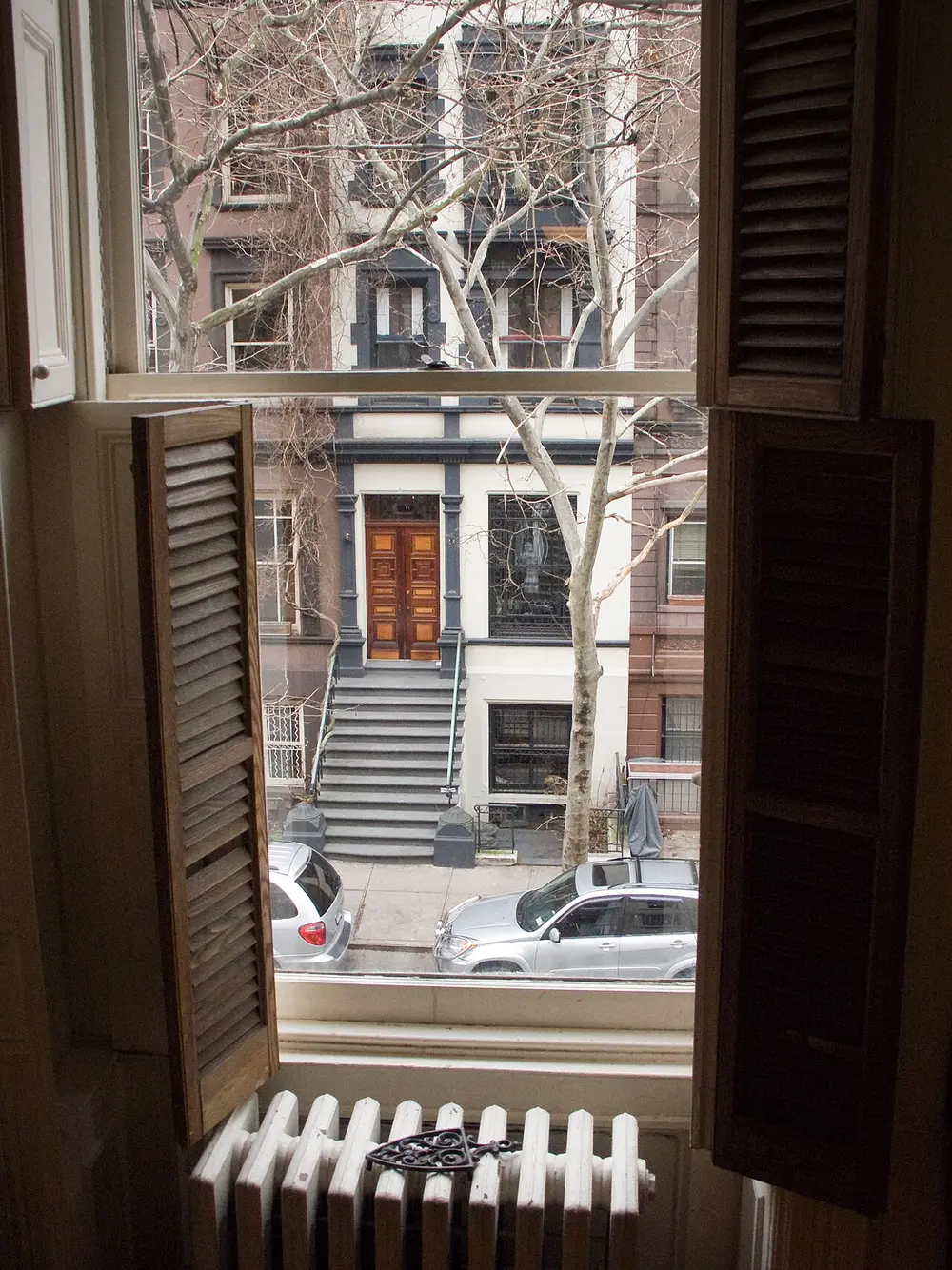
The trade is distance: downtown nightlife is 20 to 30 minutes away on the 1, 2 or 3, and you’ll use the subway daily rather than walking everywhere.
Brooklyn, Queens and Harlem: more room for the money
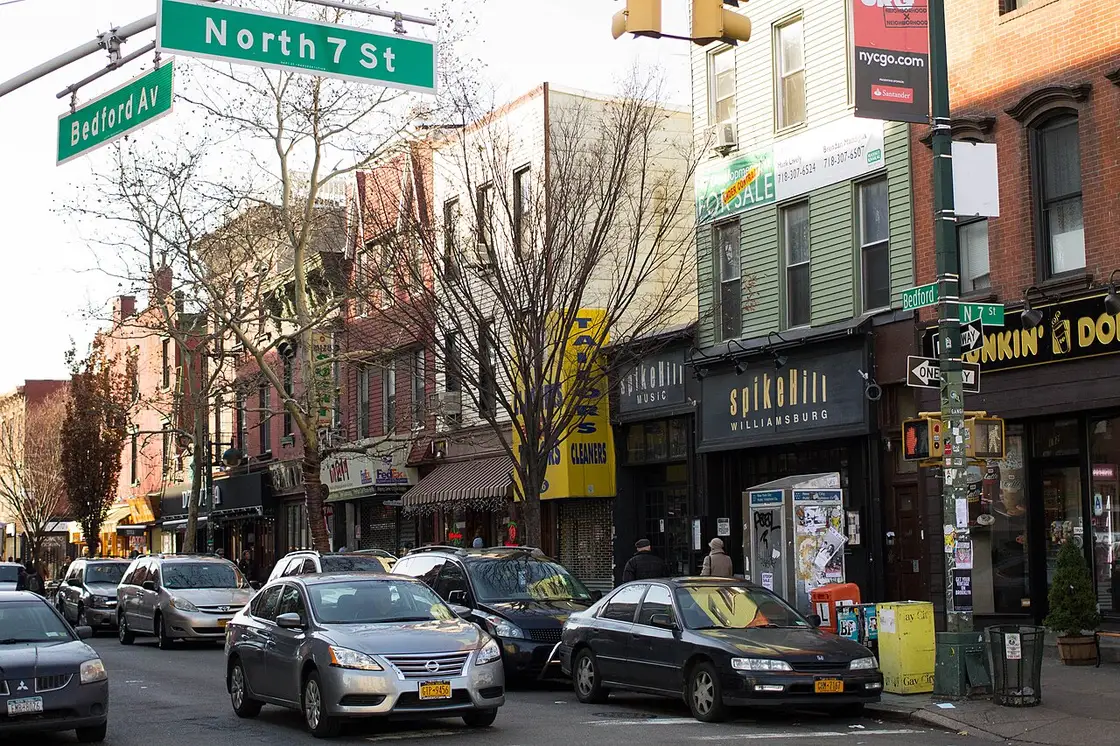
Williamsburg has become a destination in its own right, with design hotels, rooftop bars looking back at the Manhattan skyline, and a Sunday flea market. It’s one stop under the East River from the East Village, so the “commute” is often shorter than crossing Manhattan. Long Island City in Queens is the unromantic value play: modern chain hotels, some of the best skyline views in the city, and a few minutes to Midtown on the 7 or E.
Harlem is the cheapest way to keep a Manhattan address. The A, B, C, D and 2/3 all run through it, so you’re 20 to 25 minutes from Midtown, and the trade is that you’ll ride the subway home late at night rather than walking. Rooms and apartments here sit at the bottom of the Manhattan range, and the neighborhood has the food and the music history to make an evening of it rather than treating it as a dormitory.
Either way the subway makes it work: one $3.00 tap gets you anywhere, and after 12 rides in a seven-day window the rest of the week is free, capped at $35. Staying outside Midtown doesn’t mean spending more on transit.
When you go matters more than where
Before you compare neighborhoods, look at your dates. Manhattan hotels averaged $420.74 a night in the last quarter of 2024, when they were 89.3% full; across the first half of 2025 the same market averaged $310.51 at 82.3% occupancy. That’s around a quarter off the same room just for moving the dates, which is more than you’ll save by crossing a river.
The shape of the year is consistent. Late September to New Year is the expensive stretch: conference season rolls straight into the holiday season, and the days around Christmas are the worst of it. January and February are the trough, when the weather is grim and rooms are actually negotiable. Spring and summer sit in between, and summer is softer than most people expect because the business travelers leave town. If your dates have any give, shifting a trip from early December to late January will do more for the bill than any choice in the table above.
What it actually costs
Treat these as indicative 2026 ranges and check your own dates:
- Budget - a hostel dorm bed from roughly $60-90, or a plain private double in Harlem, Queens or deeper Brooklyn around $130-200.
- Mid-range - a solid 3-star in Manhattan, or a good hotel in Williamsburg or Long Island City, around $250-350.
- Comfort - four-star Midtown or a downtown boutique from about $400, and well beyond that in peak weeks.
The rate you’re quoted isn’t what you pay. New York adds hotel taxes of roughly 14.75% plus about $3.50 a night, and a great many hotels tack on a separate nightly “destination” or “facility” fee that covers things you didn’t ask for. On a five-night stay that gap can run to well over a hundred dollars, so compare the final total across properties rather than the headline nightly rate. Run the search across a few areas at once to see what’s actually free on your dates and what the real total comes to - compare hotels and apartments across New York City before you settle on a neighborhood.
So where should you book?
- First trip, tight schedule, seeing a show? Midtown, ideally east of Sixth Avenue.
- Here to eat and drink well? Lower East Side or East Village.
- Traveling on a weekend and want four-star for three-star money? Financial District.
- With children, or want quiet and Central Park? Upper West Side.
- Want space, bars and a view, and don’t mind a river? Williamsburg or Long Island City.
- Watching every dollar but set on Manhattan? Harlem, and ride the A downtown.
Whichever you choose, book earlier than feels necessary. In a city that ran at 84% occupancy last year, the room you want disappears long before the price drops. Once the bed is sorted, plan the days around it with our things to do in New York City guide, and if the trip stretches beyond the five boroughs, our New York State travel guide covers what else is worth the drive. Riding the corridor north afterwards? Where to stay in Boston does the same job at the other end of the line, where the deciding factor is the last train rather than the subway map.
Read also
- What to see and do: things to do in New York City
- Get tickets right: Broadway tickets in NYC
- Beyond the city: New York State travel guide
- The other end of the corridor: where to stay in Boston
- More trip planning guides and US cities
Admission and opening hours
- Admission price
- Indicative 2026 nightly rates, always check current prices: hostel dorm from roughly $60-90; simple double in Harlem, Queens or outer Brooklyn about $130-200; mid-range 3-star Manhattan or good Brooklyn hotel about $250-350; 4-star Midtown or boutique downtown from about $400. City-wide the average room runs roughly $250-400 a night.
Rates are indicative and move sharply by season, day of week and events - late September to New Year is the expensive stretch, January and February the cheapest. Taxes add roughly 14.75% plus about $3.50 a night, and many hotels charge a separate nightly destination or facility fee - always compare the final total, not the headline rate.
Details checked: July 24, 2026
Read also

Before you go · 9 min read
New England Fall Foliage: When and Where to Go
Verified · August 27, 2026Yankee's 2026 forecast, peak windows by state and how to chase color from Vermont's Northeast Kingdom to the NH coast without betting on one weekend.

Before you go · 9 min read
Which Hawaiian Island: Oahu, Maui, Kauai or Big Island
Verified · August 24, 2026Pick one Hawaiian island for a week: Oahu for city and surf, Maui for beaches and Haleakala, Kauai for scenery, Big Island for volcanoes.

Before you go · 11 min read
Where to Stay in Phoenix: Downtown, Scottsdale or Tempe
Verified · August 18, 2026Free Sky Train, then $2 light rail into downtown. Scottsdale is the resort city; Tempe is ASU next door. Phoenix hotel tax is 13.07%.

Before you go · 11 min read
Global Entry and TSA PreCheck for Visitors
Verified · August 15, 2026Global Entry is $120 for five years and closed to most EU passports. TSA PreCheck is $85 or less, and only US citizens and LPRs can buy it.