
Broadway Tickets in NYC: How to Get Them
How to get Broadway tickets in NYC: TKTS discounts, digital lotteries, rush and standing room, what shows really cost and how to skip booking fees.

There are four reliable ways into a Broadway theatre, and they suit different travelers. Book directly with the theatre weeks ahead if you’ve set your heart on one show; line up at the TKTS booth in Times Square on the day for up to 50% off whatever has seats left; enter the free digital lotteries for roughly $45 seats; or chase rush tickets at 9am on the morning of the performance. Only the first guarantees you get in, and only the first lets you choose where you sit.
Price is what surprises people. Across the 2025-2026 season the average Broadway ticket sold for $131.09 across 14.6 million admissions, and that’s the average, not the good seats. In peak weeks the number climbs sharply: the week ending 4 January 2026 averaged $165.98. Premium orchestra seats for a hit musical go far beyond either figure. So the discount routes below aren’t a fringe hack; for most visitors they’re the difference between seeing one show and seeing two.
Choosing a show
Split the field in two. The long-runners are the safe bets: as of July 2026 around a dozen shows on Broadway have passed a thousand performances, and they sort fairly neatly by who you’re bringing.
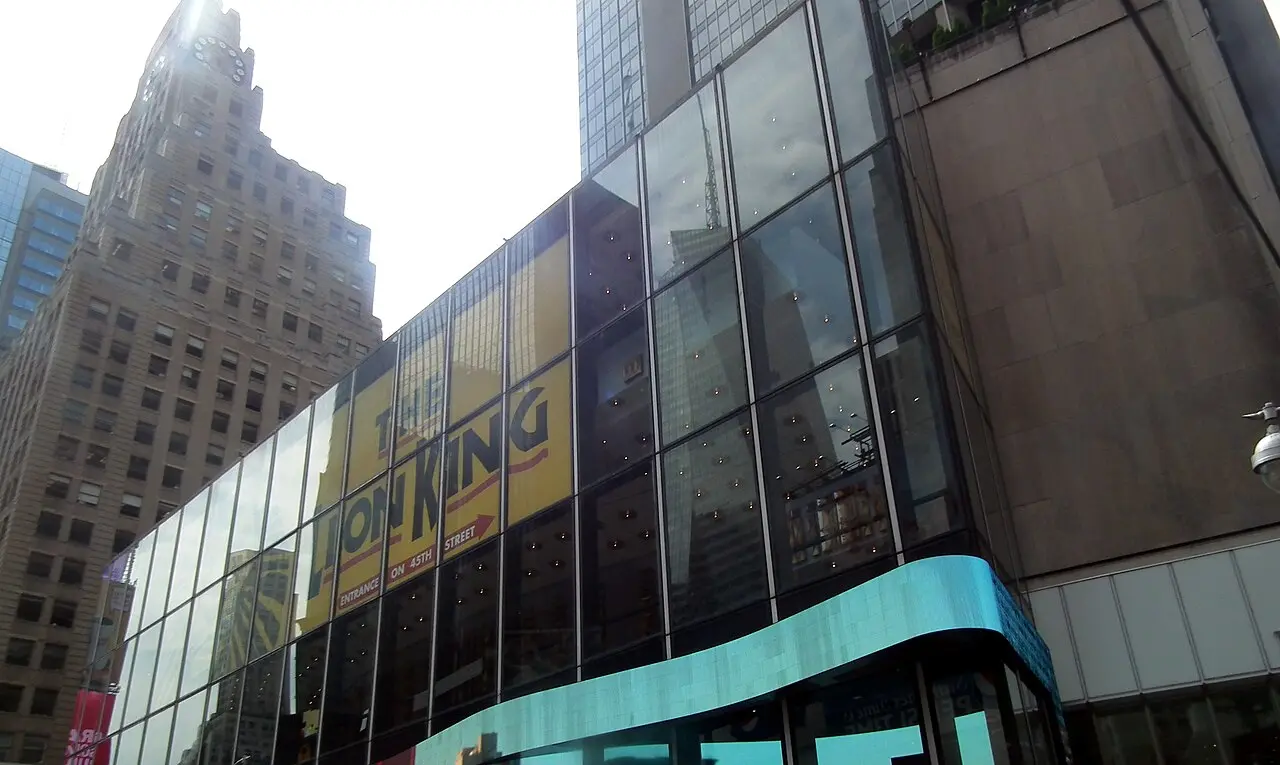
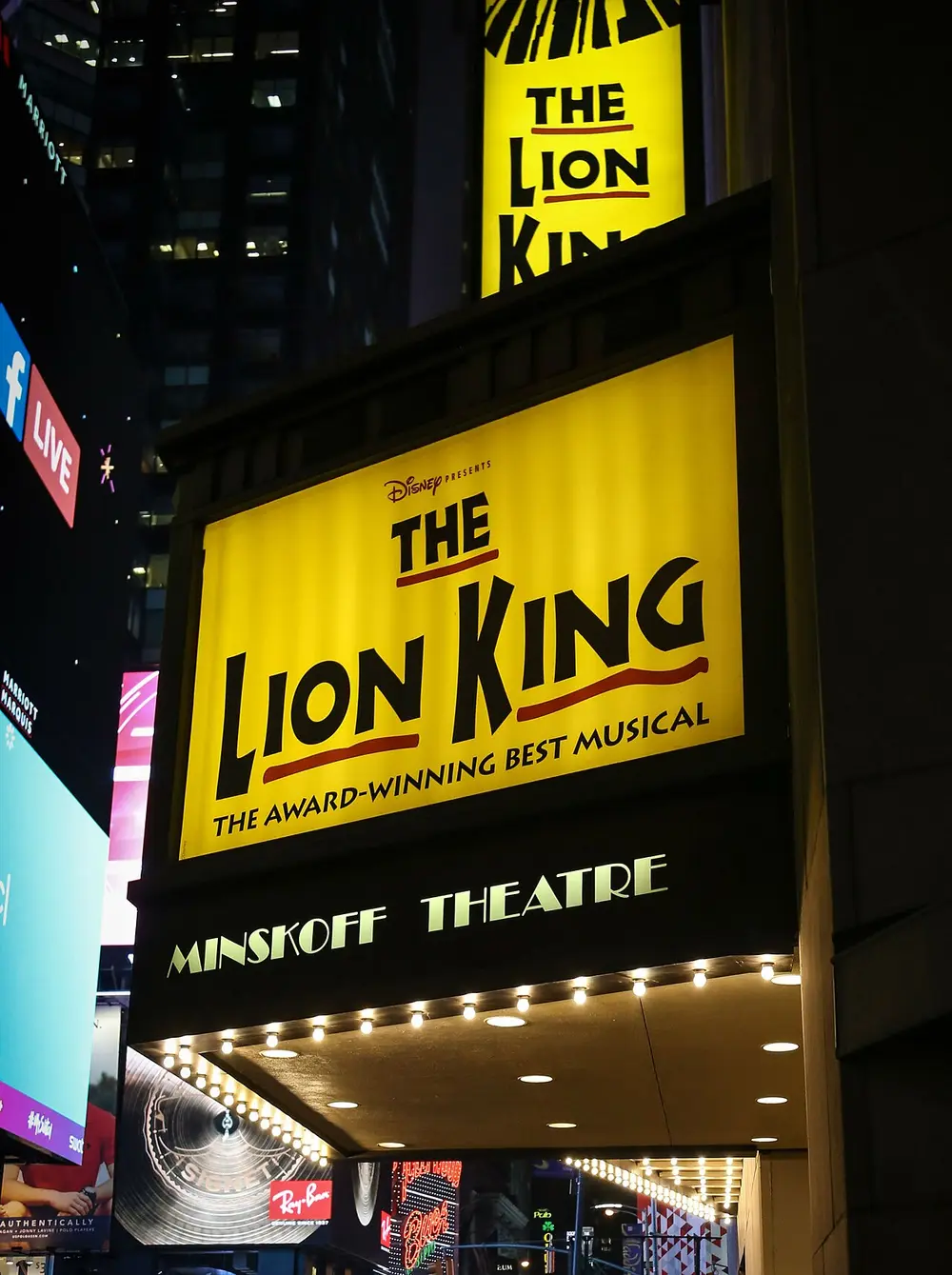
- With children: The Lion King and Aladdin, the two Disney productions, both drilled to within an inch of their lives. Harry Potter and the Cursed Child works too, but it needs older kids and a long evening.
- First Broadway show, and you want spectacle: Wicked, MJ the Musical or Six - all three are built to land with an audience that has never done this before.
- You already know the songs: Hamilton and Hadestown if you have played the cast albums to death, & Juliet if you’d rather have the Max Martin pop songbook.
- Adults out for a laugh: The Book of Mormon, and Chicago, the 1996 revival that is now the longest-running production on Broadway.
Moulin Rouge! sat on that list for seven years and plays its final performance on 30 August 2026, which is the useful lesson here: a long run is not a permanent one. Check the show’s own site for closing notices before you build a trip around a single title.
The other half of Broadway is plays and limited runs, often built around a screen actor doing a twelve-week season. These are where the interesting theatre usually is, and they’re also the hardest and priciest tickets, because a limited run has no time to soften. If a star-led play is the reason you’re going, buy the moment tickets go on sale and skip every discount strategy below.
Before you commit, look up the run time and intermission - some shows are close to three hours, which matters if you have a dinner reservation or a train. Most houses go dark on Mondays, with matinees typically midweek and on weekends. Casts also change constantly, so if you’re booking to see a particular performer, check the theatre’s own site rather than a resale listing; nothing on a resale page is under any obligation to be current.
TKTS: the day-of discount
TKTS is the oldest walk-up discount in the city and still the strongest. It’s run by TDF, a non-profit, which is why the deal is genuine rather than a marketing hook. You get up to 50% off same-day performances plus next-day matinees, and the boards above the windows show exactly what is available that hour.
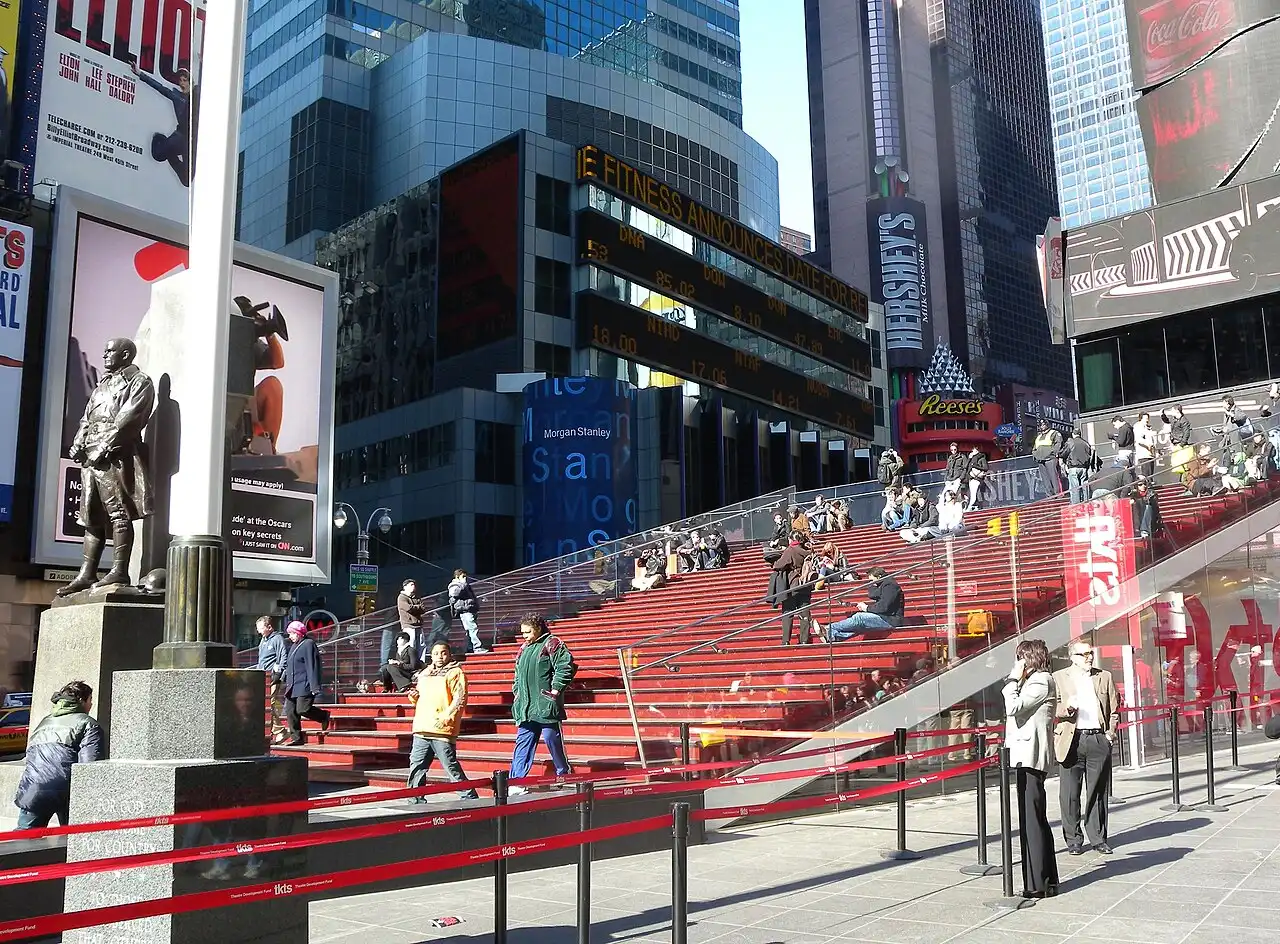
Two booths operate: the famous one under the red steps in Times Square (Broadway and Seventh Avenue at West 47th Street) and a second at Lincoln Center, 61 West 62nd Street. The old South Street Seaport booth has closed, so ignore older guides that send you downtown.
Three things worth knowing. First, you must buy in person - there’s no online or phone option, which is precisely why the discount survives. Second, the Lincoln Center booth typically has a much shorter line than Times Square for the same inventory, so if you’re staying uptown, go there. Third, the Times Square line is longest right at opening; late afternoon usually moves faster and the boards still carry plenty of shows, though the biggest hits rarely appear at all.
Digital lotteries: the cheapest seats going
Nearly every major show runs a digital lottery, and it costs nothing to enter. Seats typically go for about $45 - MJ the Musical prices its seats at $49 with fees included - which against a $131 average is the best value in the theatre. Enter through Broadway Direct (which handles Wicked, The Lion King, Six and others), Lucky Seat, or the TodayTix app, depending on the production.
Hamilton is the exception worth knowing about. It runs its own $10 lottery through the official Hamilton app rather than Broadway Direct, and on a completely different clock: entries open at 10am on Friday and close at noon the following Thursday, with winners notified that afternoon and given two hours to pay. At least 36 seats go into every performance, which is a real number, not a token gesture.
Everywhere else the timings are tighter. For weekday performances, entries generally close at 10:30am ET the day before, with winners drawn from 11am ET; for weekend performances, entries close at 10:30am ET on the Friday. If you win, you have 60 minutes to pay or the seats go back in the pool, so keep notifications on. You can buy a maximum of two tickets, seats may be partial view, and a pair isn’t always seated together.
The practical approach is to enter lotteries for four or five shows every morning of your trip. It costs nothing, and across a five-night stay the odds of winning at least one are decent. Treat anything you win as a bonus rather than the plan.
Rush and standing room
Rush tickets are same-day seats sold cheap to fill the house. Most shows now release them digitally at 9am on the day of the performance through TodayTix; a handful still run traditional in-person rush, where you line up at the box office before it opens. Prices vary by production but cluster around $45-49, with the full spread running roughly $30-50 - a little above lottery money, and still a fraction of face value.
Standing room is the last resort and the cheapest ticket in the building. It’s generally sold only when a performance is otherwise sold out, on the day, at the box office. You stand at the back of the orchestra for the whole show, which is fine for a two-hour musical and a long evening for a three-hour play.
The fee trick, and where you sit
Here is the saving almost nobody uses: buy at the theatre’s own box office, in person, and you avoid the per-ticket service fee that online platforms add. Note the wording - that fee is charged per ticket, not per order, so a family of four pays it four times on the same booking. The Theatre District is compact enough that if you’re staying in Midtown you can walk past the box office on your way to breakfast.
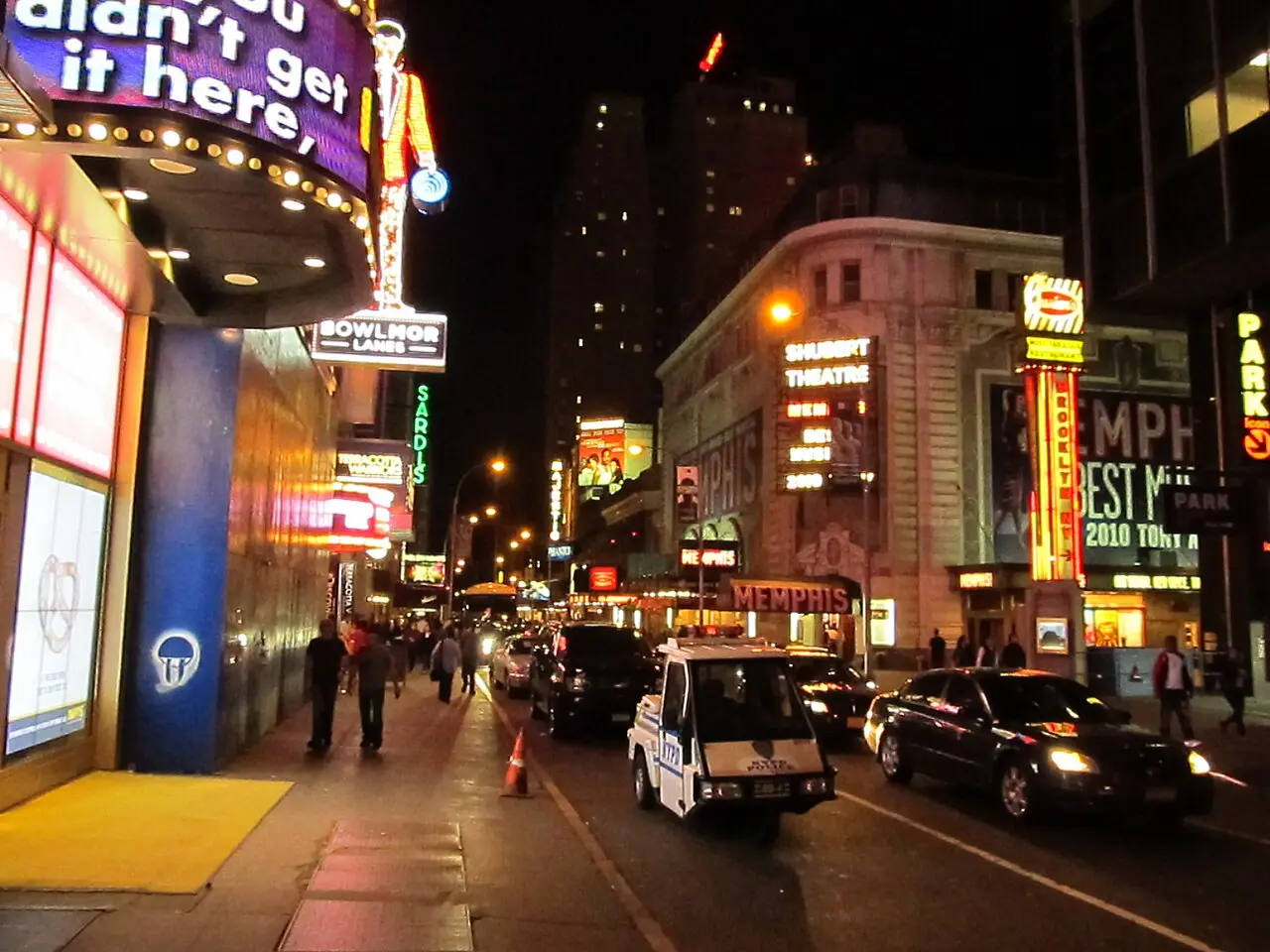
On seating: Broadway theatres are small by modern standards, so the front of the mezzanine is often a better view than the rear orchestra, and usually cheaper. Avoid extreme side seats in the orchestra, where the stage gets cut off. And matinees are generally cheaper than evening performances for the same production, which is the easiest saving of all if your schedule is flexible.
Finally, don’t overlook Off-Broadway. Smaller houses, lower prices, and frequently the more adventurous work; TKTS sells those tickets too.
What to avoid
Resale is where trips go wrong. Tickets bought through secondary marketplaces routinely carry heavy markups over face value, and because seat numbers mean little to a visitor, it’s easy to pay a premium for a restricted-view seat you could have had cheaply at the box office. Check the show’s official site first; every Broadway production names its authorized seller.
Ignore anyone selling tickets on the street around Times Square. There’s no legitimate reason for a stranger to be discounting a show outside a theatre, and TKTS is the only official walk-up discount operation in the district.
Be clear-eyed about “premium” seats too. They’re legitimate, sold by the production itself, and they’re simply the best locations at a much higher price. If the difference between row C and row L matters less to you than seeing a second show, take the cheaper seat twice.
So which route should you take?
Which route you take comes down to how fixed your plans are. If you’re set on one specific show on set dates, book direct and well ahead, and forget the discounts entirely - they cannot be relied on. If you’re flexible about what you see, TKTS on the day is the strongest play, and the Lincoln Center booth will cost you less standing. On a tight budget with time to spare, work the lotteries every morning and try the 9am rush as backup. And if the show you want is sold out, standing room at the box office is the only door left.
Fitting it into the trip
Give a show its own evening and don’t schedule anything demanding afterwards. Curtain is usually 7pm or 8pm, and the streets around Times Square become impassable when forty theatres empty at once. Book somewhere to eat before, not after.
If you’re still building the rest of the itinerary, our guide to things to do in New York City covers the days around your evening, and where to stay in New York City explains why Midtown is worth it when theatre is the point of the trip. Attraction passes do not cover Broadway - keep theatre money separate from the CityPASS vs Go City math. Heading further afield afterwards? The New York State travel guide sets out what lies beyond the boroughs.
Read also
- Plan the days: things to do in New York City
- Sleep near the theatres: where to stay in New York City
- Sightseeing passes (not theatre): NYC city passes
- Go further: New York State travel guide
- More entertainment guides and US cities
On the map
The map loads on click - to keep the page lightweight.
The map didn’t load. Check your connection and refresh the page.
Good to know
Ticket prices, lottery rules and closing dates in this guide change constantly - shows post their own terms, and a production can announce a closing notice at a few weeks' warning. Check the show's official site before you plan a trip around it.
Details checked: July 24, 2026
Read also

Entertainment · 17 min read
Grand Canyon Tours from Las Vegas: Bus, Helicopter & Skywalk
Verified · September 19, 2026Compare Grand Canyon tours from Las Vegas: bus, helicopter and Skywalk prices from the operators, plus when the South Rim is worth the extra hours.

Entertainment · 8 min read
Albuquerque Balloon Fiesta: Tickets and Timing
Verified · August 25, 2026Oct 3-11, 2026: $22.24 per session online, dawn mass ascensions, evening glows, Park & Ride, and why hotels sell out months ahead.

Entertainment · 10 min read
Universal vs Disney in the USA: Which Park for Which Trip
Verified · August 8, 2026Disneyland vs Universal Hollywood, Walt Disney World vs Universal Orlando: 2026 ticket prices, park counts and which coast fits your trip.

Entertainment · 8 min read
Las Vegas Shows: How to Choose and Book
Updated · July 24, 2026Cirque, residencies, magic, comedy and Sphere compared: what each kind of Las Vegas show costs, where to buy tickets safely, and what to skip.