
Olympic National Park: Rainforest, Coast and Ridge
Entry is $30 a car. Hurricane Ridge's lodge burned in 2023 and was never rebuilt. Here's what still works at Olympic in 2026, and what to skip.
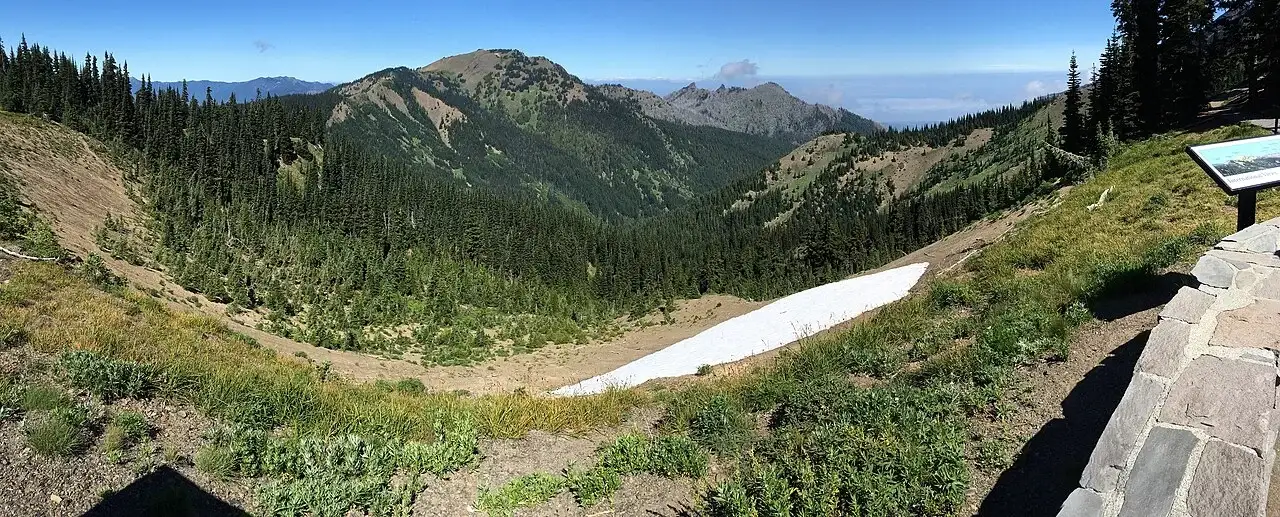
Hurricane Ridge’s day lodge burned down in May 2023, and as of this writing it still hasn’t been rebuilt - no food, no water, no indoor space, just a parking lot and a view. That’s the one thing every 2026 visitor needs to know before planning around it, because Olympic is really three parks sharing one entrance fee: a glaciated mountain core, a temperate rainforest, and about 70 miles of wild Pacific coast, connected by no road at all through the middle. Entry runs $30 a vehicle for a week.
The areas at a glance
| Area | What it is | Plan for |
|---|---|---|
| Hurricane Ridge | Alpine meadows and mountain views, 17 miles from Port Angeles | No food, water or indoor space since the 2023 fire; fill bottles first |
| Hoh Rain Forest | Moss-draped temperate rainforest, dead-end road | Arrive before 8am or after 5pm, or expect a wait |
| Lake Crescent & Sol Duc | A deep glacial lake and a hot springs valley | The park’s quiet middle - most people drive straight past |
| The coast | Ruby Beach, Rialto, Kalaloch and the wilderness beaches | Check a tide table; the road to Rialto is closed for construction to 15 October 2026, reopening after |
Entry, and the $55 pass that only works here
Entry is $30 per vehicle for seven days, $25 for a motorcycle, or $15 per person on foot or bike, with kids under 16 free - those entry prices apply to everyone, resident or not. The park is cashless, so pay online at recreation.gov before you arrive or bring a card. If you’re spending a full week working the peninsula - Hurricane Ridge one day, the Hoh the next, the coast after that - the park’s own $55 annual pass beats paying the day rate more than once, and it’s good for twelve months, not just this trip. The catch: that $55 pass, like the National Park Service’s $80 America the Beautiful annual pass, is sold only to US citizens and residents. Everyone else buys the America the Beautiful Non-Resident Annual Pass at $250 instead - still worth it if Olympic is one stop on a bigger park trip, just not the same headline number.
Hurricane Ridge: the lodge is gone, the view isn’t
Hurricane Ridge is the mountain overlook 17 miles south of Port Angeles, and it’s still worth the drive - it just isn’t what it was. The Hurricane Ridge Day Lodge burned down on May 7, 2023, and the park’s post-fire page gives no rebuild timeline - just a link to the Fire Relief Fund run by Washington’s National Park Fund, the park’s philanthropic partner. What’s there now is a set of temporary trailers with restrooms and trash bins, nothing else: no food, no drinking water, no gift shop, no gear rentals. The park’s own advice is blunt about it - fill your water bottles before you drive up, because you won’t find any once you’re there. Add to that: the park’s 2026 construction plan replaces the aging water system and utilities up at the ridge, with the main parking lot torn up for July and August, some meadow trails rerouted around the trenching, and asphalt patching or road striping that can bring temporary rolling closures without much warning. Victoria Overlook stays open through all of it. The work is dated, the view isn’t - check the park’s conditions page for the current state before you drive up.
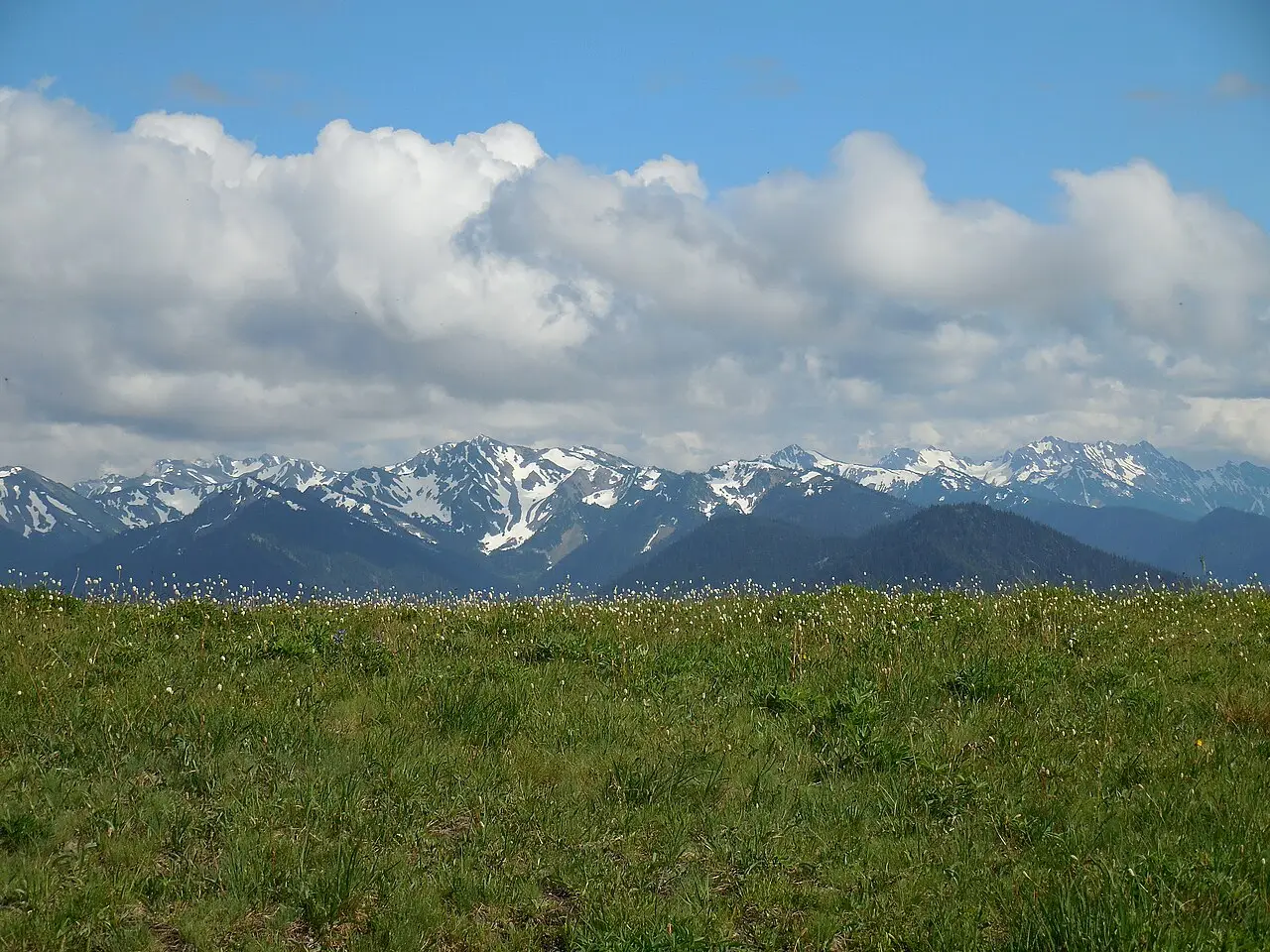
In summer you don’t need your own car for the last leg: the Hurricane Ridge Shuttle runs from Port Angeles’s Gateway Transit Center for $1 a boarding (free at 18 and under), hourly from 8am to 4pm, for a summer season that in 2026 ran May 24 through September 7 - you’ll still need a valid park pass to board, so have one before you get in line. In winter the road itself only opens Friday through Sunday and holiday Mondays, weather permitting, and every vehicle is required to carry tire chains. It can also close outright with no notice for weather at any time of year, so check conditions the morning you’re going, not the week before.
The Hoh Rain Forest: no reservation system, but arrive early anyway
The Hoh is the postcard version of Olympic - bigleaf maples wearing full coats of moss, ferns as tall as a person, 140 inches of rain a year soaking into a valley that never quite dries out. Unlike some other Olympic-region attractions, there’s no timed-entry system on the Upper Hoh Road as of this writing, which sounds like good news until you’re the fifteenth car looking for the same parking space in July.
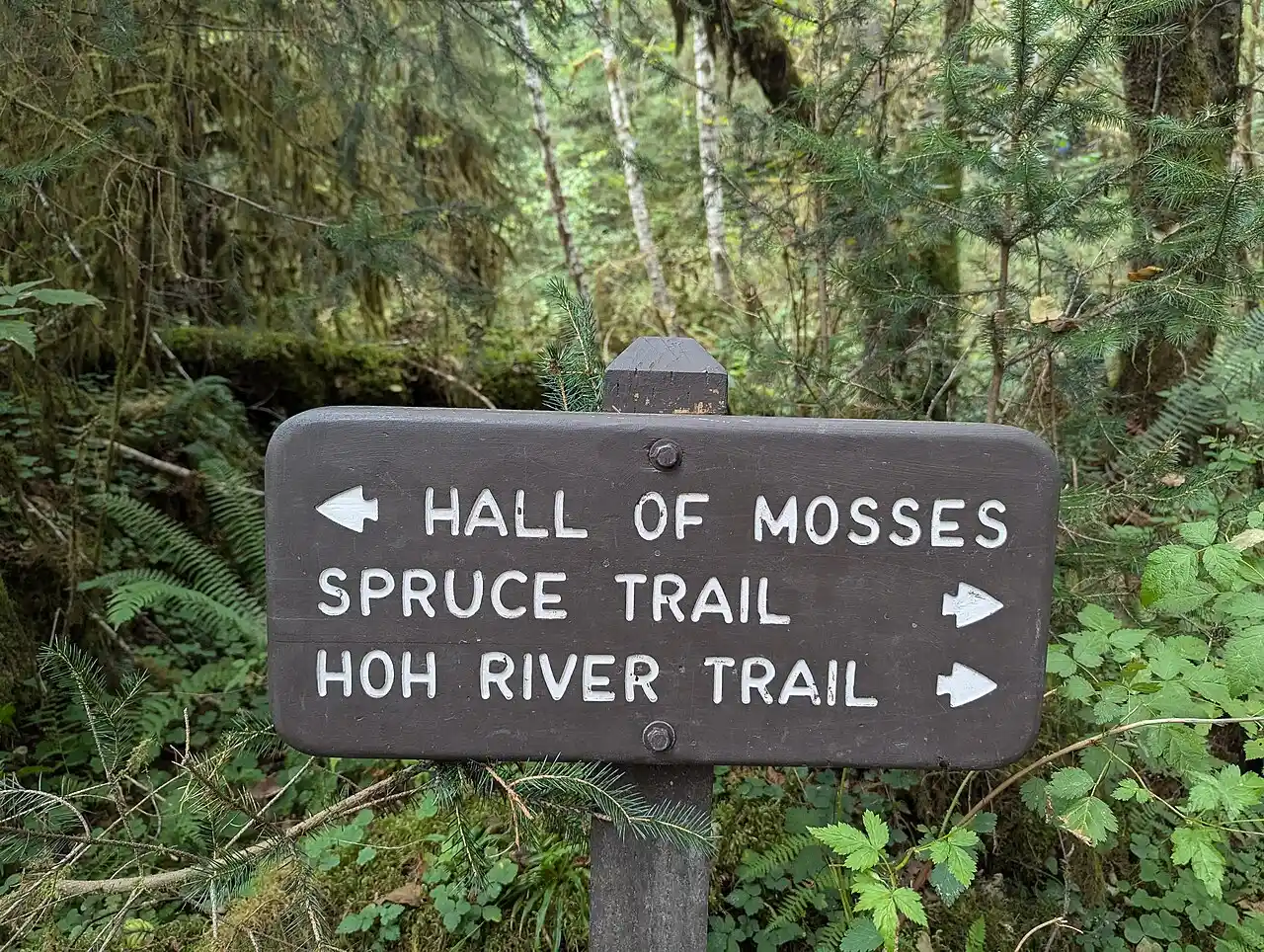
Three trails leave from the same trailhead. Hall of Mosses is a 0.8-mile loop that covers the moss and the maples in under an hour, plenty for a first visit. Spruce Nature Trail runs 1.2 miles through similar terrain with fewer people on it. Hoh River Trail is the real thing - 18.5 miles one way toward Mount Olympus’s Blue Glacier - with sensible turnaround points at 0.9, 2.7, 4.0 and 5.0 miles if you just want a taste. The visitor center runs daily hours in summer, drops to Friday-through-Sunday in spring and fall, and closes outright from January into early March. The campground’s 72 sites are reservable up to six months out on recreation.gov, and given the road dead-ends here with nowhere else to go, that’s worth doing well before your trip rather than gambling on a walk-up site.
Lake Crescent and Sol Duc: the park everyone drives past
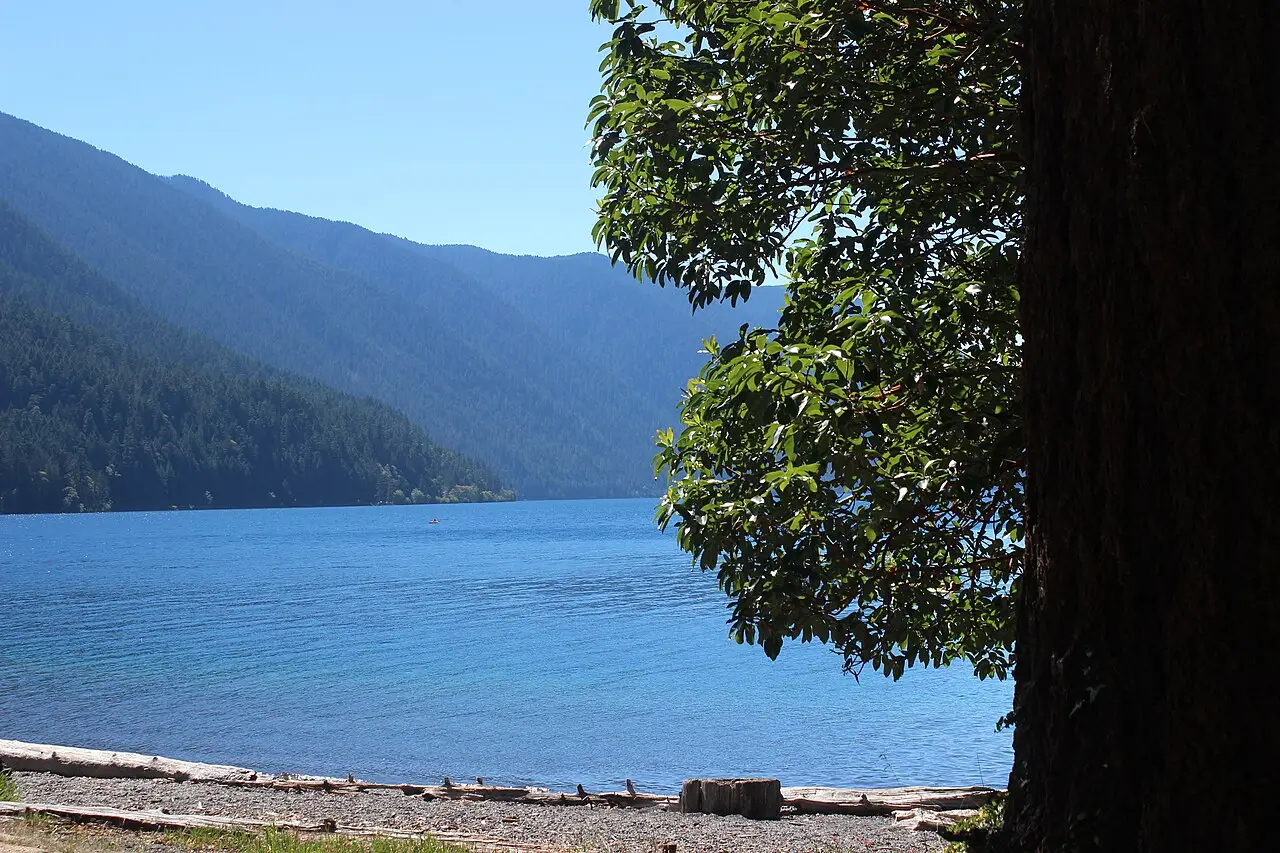
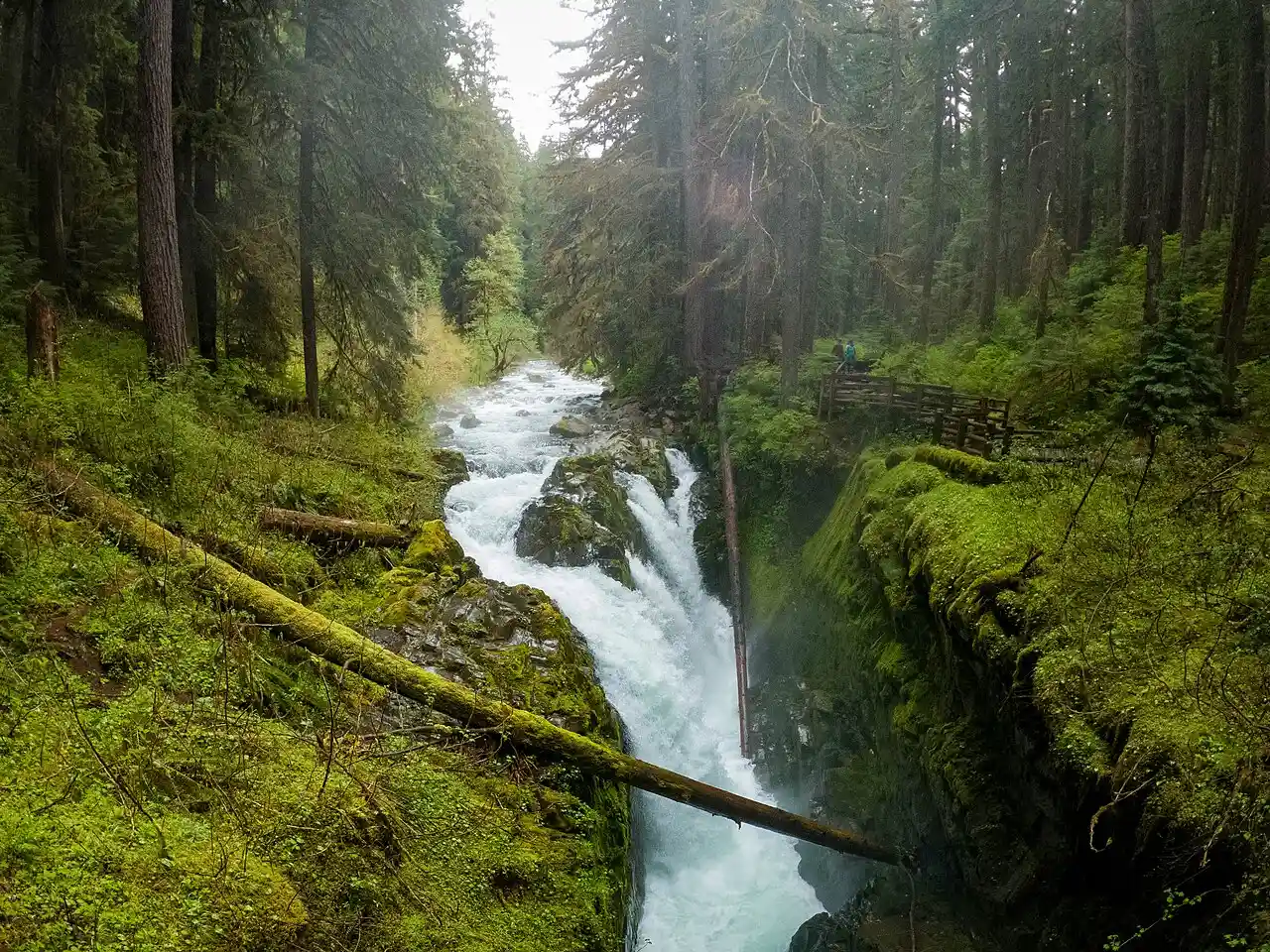
Lake Crescent and Sol Duc sit on the 20-odd miles between Hurricane Ridge and the Hoh that most itineraries drive straight through in an afternoon. Lake Crescent was cut off from a neighboring lake by a landslide roughly 7,000 years ago, and the isolation left it with two trout found nowhere else on earth. The water is startlingly clear and startlingly blue, and the short walk to Marymere Falls - about 0.9 miles one way from the Storm King area, under two miles round trip - is one of the easiest payoffs in the park. Lake Crescent Lodge itself dates to 1915, built by a couple named Singer who ran it as a boat-access-only tavern for six years before the road finally reached it in 1922.
Twenty minutes further on, Sol Duc does hot springs instead of a lake: three mineral pools plus a regular swimming pool, open from late March to the last weekend of October, with a resort, a campground and a mile-long forest walk to Sol Duc Falls that’s an easy add-on even if you skip the pools. It’s about 40 minutes from Port Angeles by road. Neither stop needs a full day, which is exactly why they’re easy to fold into whatever else you’re doing on the peninsula instead of treated as their own destination.
Bring a tide table to the coast, not a beach towel
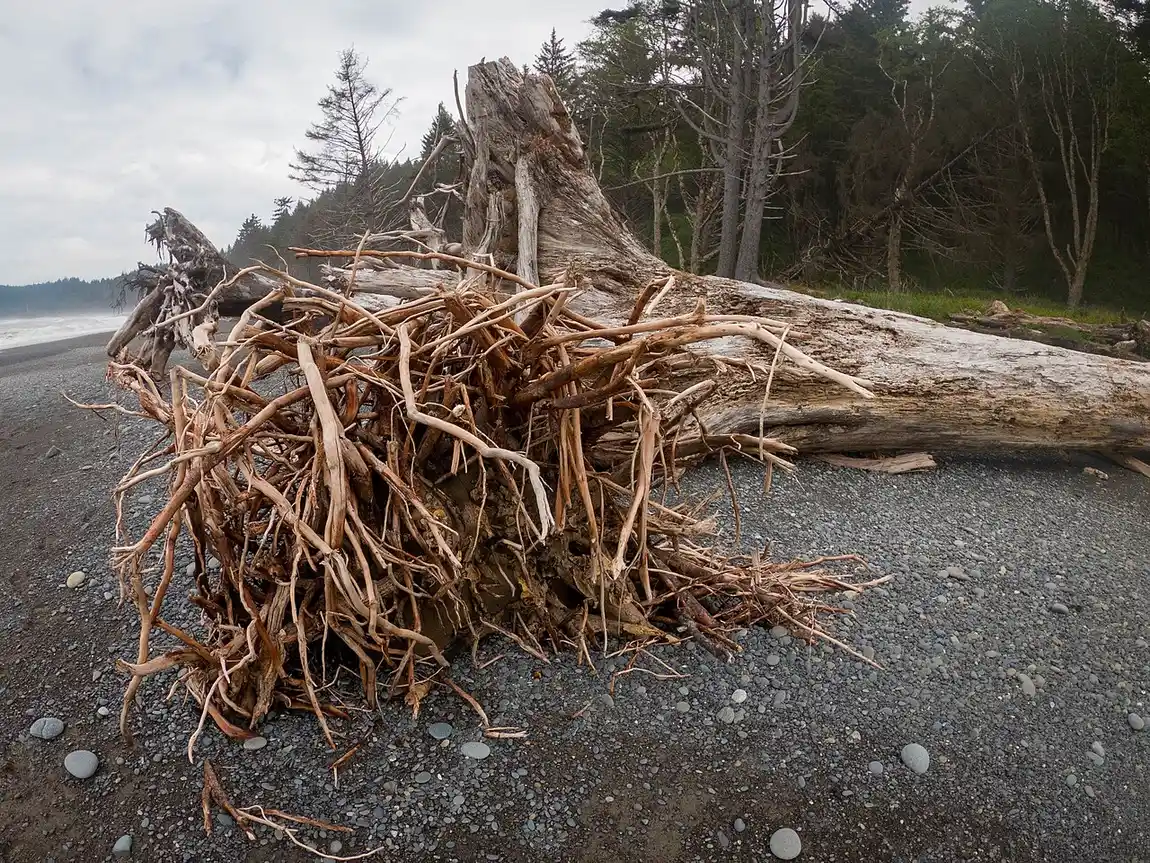
No road connects Olympic’s mountains to its coast - you circle back out to Highway 101 and drive in on a separate spur, which is part of why the coastline still feels wild. Ruby Beach is the easiest stretch to reach, lined with sea stacks and driftwood logs bigger than most cars, and it changes completely with the tide: a receding tide opens up routes around headlands that a rising one swallows again within hours. Rialto Beach, normally the other easy stop, is out of reach for the 2026 construction season - Mora Road beyond Mora Campground is closed to cars, bikes and pedestrians for construction from 8 July to 15 October 2026, reopening after that unless the work runs long, and the park steers visitors toward Ruby Beach until it does. NPS hasn’t announced an extension, so if you’re reading this past mid-October, treat that date as the point where the answer changes and confirm on the park’s conditions page. Check a tide table before you drive out, not after.
Further south, Kalaloch is open year-round with 175 campsites and a lodge that the federal government bought as a private resort back in 1978 - it’s the one coastal spot in the park you can visit comfortably in any season. Beach 4 nearby is the pick for tidepooling: sea stars and anemones show up reliably at low tide. Whichever beach you choose, the coast is the one part of Olympic where checking the tide chart matters as much as checking the weather.
Camping and the backcountry permit system
Car-camping in the park runs on the same recreation.gov reservation system as the trailheads, and it fills early in summer at Hoh, Sol Duc and Kalaloch alike. Backcountry camping is a separate system: permits run $8 per person per night plus a flat $6 booking fee charged once per trip, not per night. Summer-season reservations (mid-May through mid-October) go live on April 15 at 7am Pacific. The coastal Ozette section runs on its own hard quota, but the zone NPS actually names as booking out months ahead is inland instead: the High Divide/Seven Lakes Basin loop - that’s the April 15 date to circle if it’s the whole reason for your trip. Bear canisters are mandatory for every overnight trip, and you can borrow one free from any open Wilderness Information Center - Port Angeles year-round, Quinault and Hoodsport in season - each with a 24-hour bin for returning it.
How much time, and when to come
Olympic drew 3,584,187 visits in 2025, and the park’s own operating calendar shows how much of that traffic bunches up in summer: the Hurricane Ridge Shuttle only runs late May to early September, Sol Duc’s pools close for the season in late October, and the Hoh visitor center cuts back to weekends in the shoulder seasons and shuts entirely from January into early March. Two days gets you Hurricane Ridge and the Hoh. Three lets you add Lake Crescent or Sol Duc without rushing either. A full week, split between the mountains, the rainforest and the coast, is what the park is actually built for - and given how spread out those pieces are, with no road cutting through the center, you’ll spend real time on Highway 101 connecting them no matter how you split it up.
Come in shoulder season - May or October - and you’ll trade the Hurricane Ridge Shuttle and the fully staffed Hoh visitor center for empty parking lots and a coast that feels genuinely wild rather than merely photogenic. Just check road and shuttle status before you build a plan around either, since both run on schedules that change every year. For the rest of the state, our Washington State travel guide weighs Olympic against Mount Rainier and the North Cascades for the rest of the trip, and things to do in Seattle has the city end of the trip if you’re flying in and driving out. Renting the car itself, including the one-way and insurance questions, is in renting a car in the USA.
Read also
- The state around it: Washington State travel guide
- The city most people fly into first: things to do in Seattle
- Before you pick up the car: renting a car in the USA
- Compare it to other parks: Yellowstone and Yosemite, or browse the full national parks index
On the map
The map loads on click - to keep the page lightweight.
The map didn’t load. Check your connection and refresh the page.
Admission and opening hours
- Admission price
- Entry $30 per private vehicle for 7 days, $25 motorcycle, $15 per person on foot or bicycle, under 16 free; park-only annual pass $55, available to US citizens and residents only. Non-residents can buy the America the Beautiful Non-Resident Annual Pass instead, $250 versus $80 for the resident version. Cashless - pay online at recreation.gov or bring a card. Wilderness camping permits are $8 per person per night plus a separate $6 booking fee on recreation.gov.
Hurricane Ridge has no indoor facilities, food or drinking water since the 2023 fire - fill bottles before you drive up. Mora Road beyond Mora Campground, the normal route to Rialto Beach, is closed for construction from 8 July to 15 October 2026 and is due to reopen after that date; no extension has been announced, so confirm on the park conditions page rather than assuming the date held. Road and shuttle schedules are seasonal; check nps.gov/olym and clallamtransit.com before you go.
Details checked: August 9, 2026
Read also

National Parks · 12 min read
Canyonlands and Capitol Reef: Utah's Two Quiet Parks
Verified · August 29, 2026Canyonlands $30, Capitol Reef $20 for the Scenic Drive - what each park costs, which district to skip, and which one wins if you only have a day.

National Parks · 8 min read
Indiana Dunes from Chicago: Beaches & the $25 Gate
Verified · August 26, 2026Leave Chicago early for West Beach, the Dune Succession Trail and the South Shore Line to Dune Park. National and state park fees do not cross.

National Parks · 8 min read
Carlsbad Caverns: Natural Entrance and Bat Flight
Verified · August 25, 2026$15 entry plus $1 timed reservation, Natural Entrance vs elevator, Big Room loop, and free bat flights April-Oct.

National Parks · 8 min read
White Sands: Dunes, Sledding and Closures
Verified · August 25, 2026Gypsum dunes, $25 entry, sledding tips, and why missile-range tests can close Dunes Drive for hours - check NPS the morning you go.