
Things to Do in Santa Fe
Plaza, Palace of the Governors, adobe streets, Canyon Road and the pre-1937 Route 66 alignment: how to spend 2-3 days in Santa Fe.
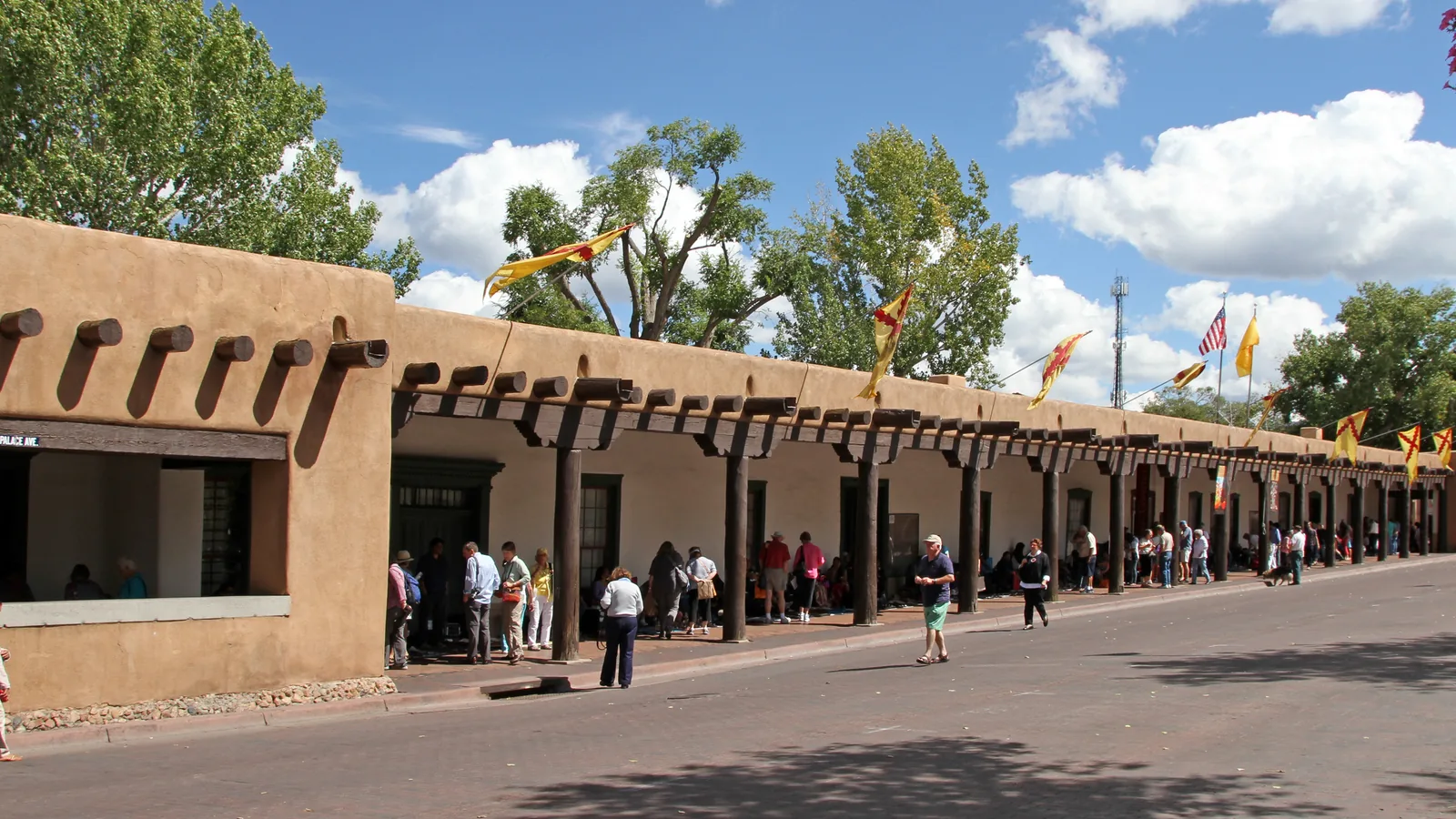
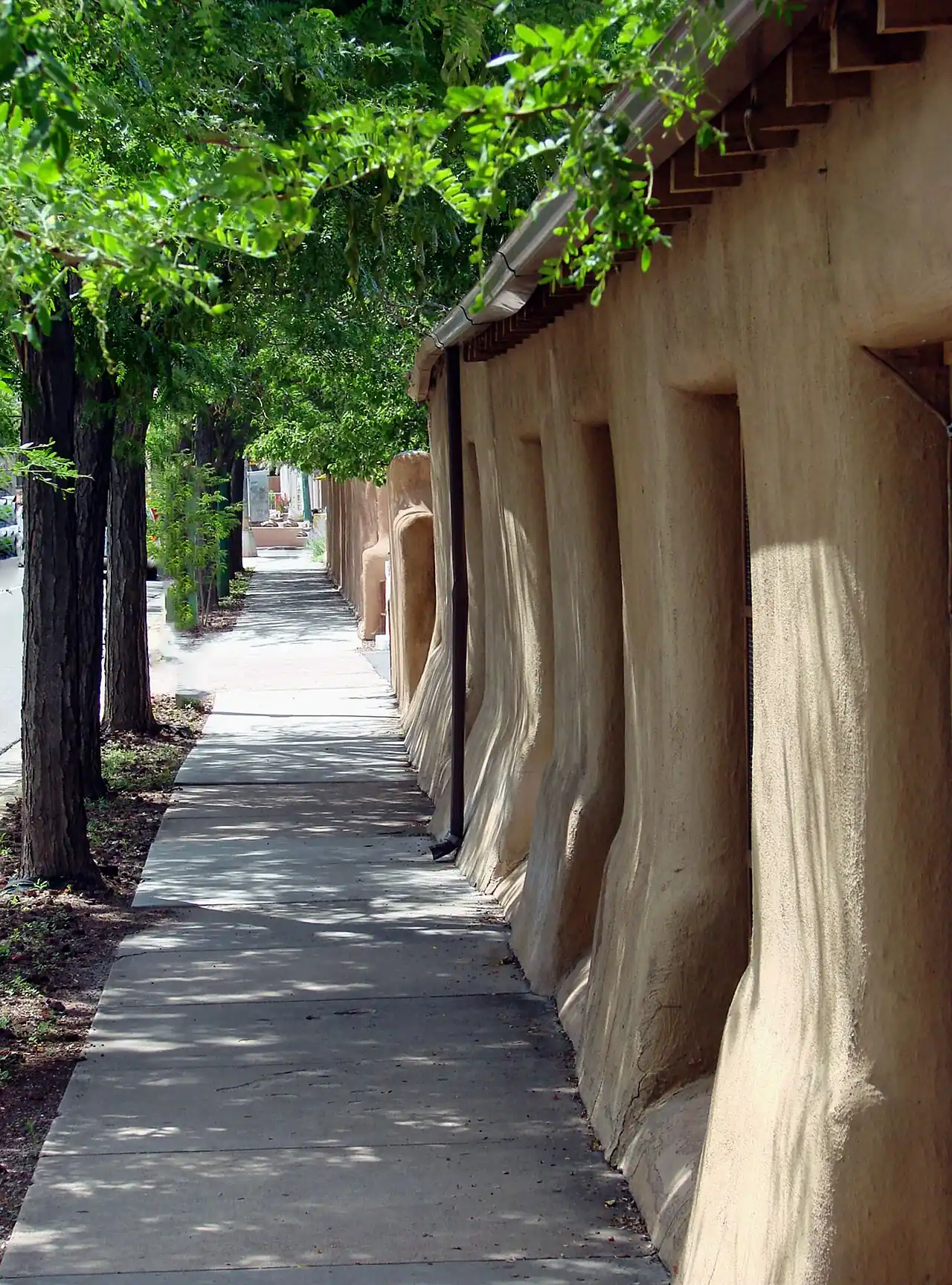
Santa Fe rewards walking more than driving, which is unusual on a Route 66 itinerary built around rental cars and neon strips. The plaza is the center of gravity, adobe walls do most of the sightseeing for you, and two focused days beat four rushed ones. You’re at about 7,000 feet, so the first afternoon may feel slower than your legs expect - drink water and don’t schedule a museum marathon the hour you arrive from sea level.
The city also sits on a historical fork of the Mother Road. Until 1937, Route 66 came through Santa Fe. After the realignment, through-traffic took the straighter east-west cutoff south of the capital, and Santa Fe kept the quieter version of itself. If you’re collecting every mile of 66, this is the intentional detour. If you’re only here for the plaza, you can ignore the highway story and still have a complete trip. Either way, treat Santa Fe as a walking city first and a driving destination second - that single shift saves parking stress and makes the adobe streets readable.
The plaza is the itinerary
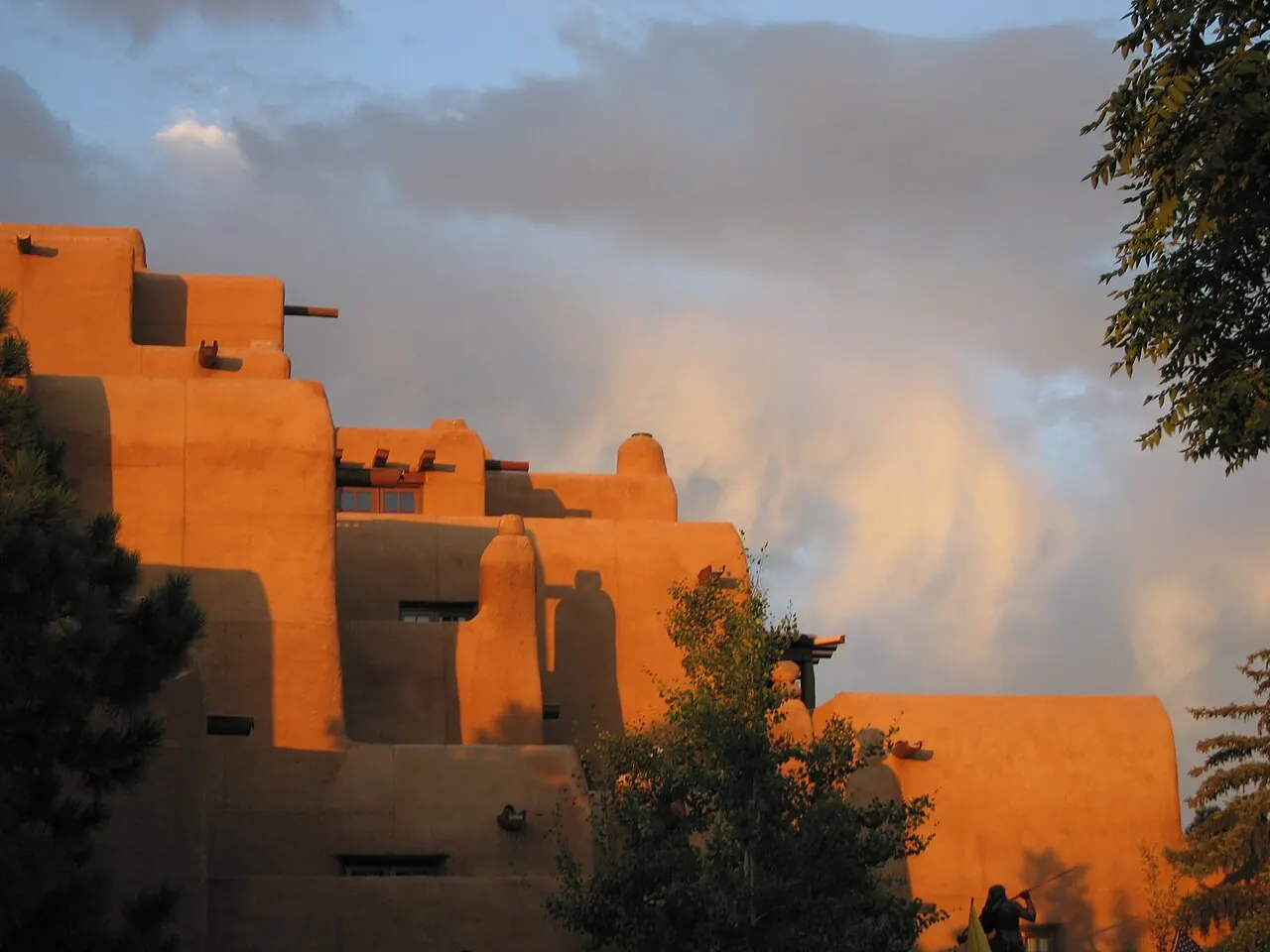
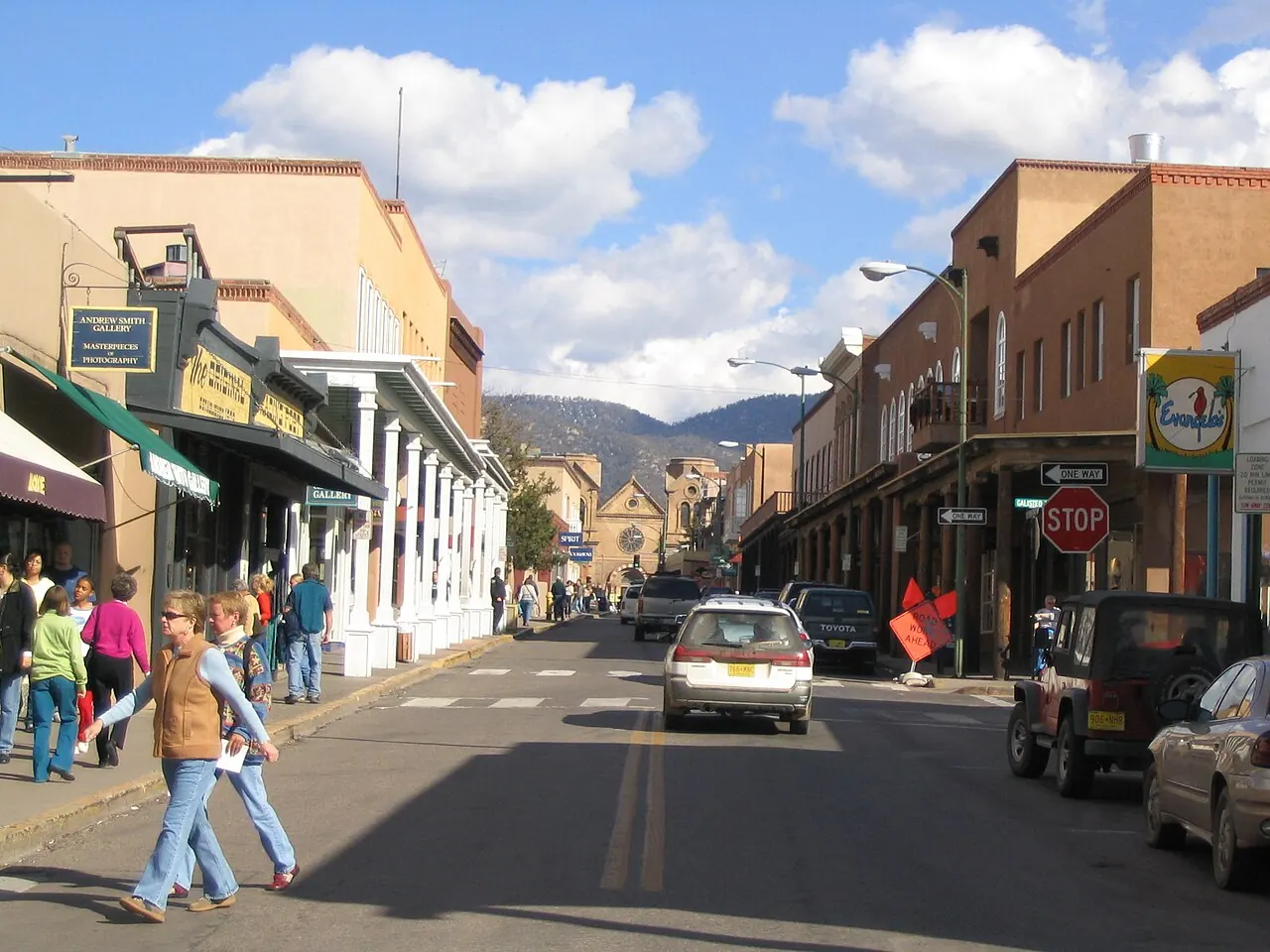
Start on the Santa Fe Plaza and work outward. The square is small enough that you can cross it in a few minutes and dense enough that galleries, cafes and street vendors fill a morning without a plan. Sit once. The light on the adobe changes enough between 9am and noon that the same corner photographs like two different towns. Coffee first, then walk the perimeter clockwise so you don’t double back past the same shop windows.
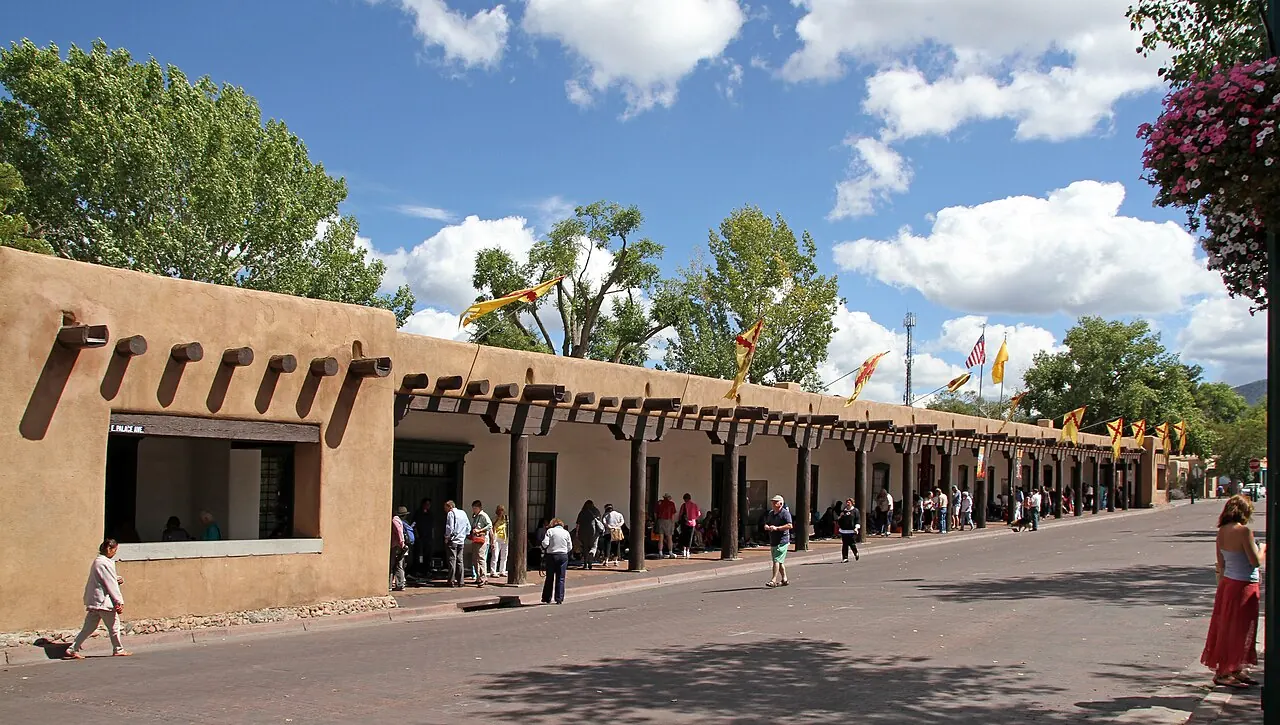
You won’t need a car for the core. Parking near the plaza is scarce and priced accordingly; if your hotel is downtown, leave the rental parked until you day-trip. That alone separates Santa Fe from Albuquerque, where Central Avenue assumes you stay behind the wheel.
Palace of the Governors
The long adobe portal on the north side of the plaza belongs to the Palace of the Governors, part of the New Mexico History Museum campus and a National Historic Landmark. Native artisans sell jewelry under the portal on many days - buy directly, and expect cash or card rules to vary by vendor. Inside, the museum ticket covers the palace exhibits.
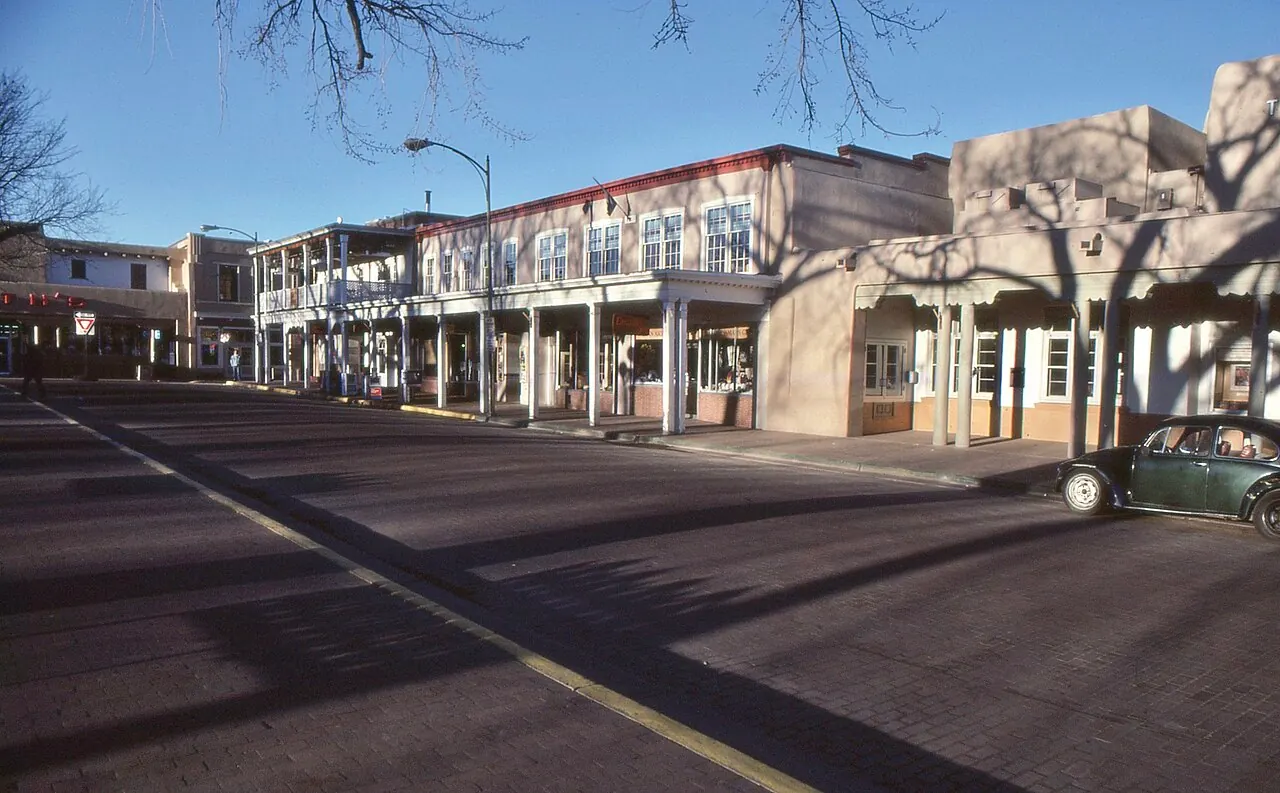
Nonresidents pay $12; New Mexico residents pay $7; children 16 and under are free. The museum is open daily 10am to 5pm year-round (closed January 1, Thanksgiving and Christmas). On the first Friday of each month hours extend to 7pm, with free admission for everyone from 5pm to 7pm May through October - that window is open to all visitors, not residents only; the other free slots on the museum site (first Sunday with ID, Wednesday senior hours) are New Mexico ID only. Confirm the day’s free windows and any temporary gallery closures on nmhistorymuseum.org before you go, and note the same holiday closures apply here as everywhere else on the plaza: Thanksgiving, Christmas and New Year’s Day.
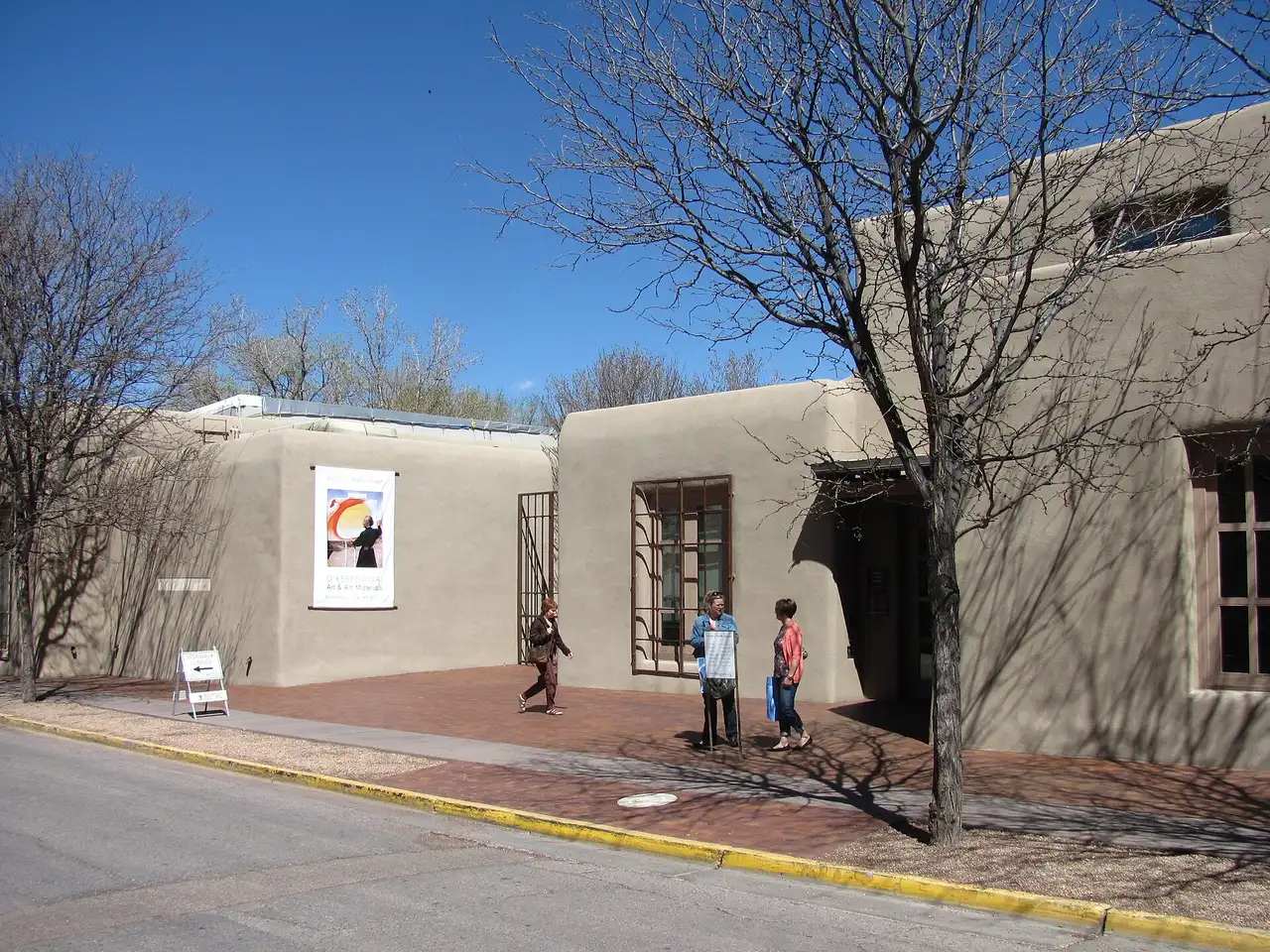
An hour inside is enough for most travelers; history obsessives will want two. Pair it with a slow walk under the portal rather than racing to the next site. A few blocks northwest, the Georgia O’Keeffe Museum holds what is widely documented as the world’s largest collection of her work - a quieter stop than the plaza, and the better one if you care about American art more than adobe history.
Route 66 before 1937
Santa Fe’s Route 66 story is a strip of signs and memory more than a continuous neon corridor. The pre-1937 alignment brought the highway through town; the later cutoff left the capital off the main drag. You’ll still find Historic Route 66 markers and the satisfaction of driving a segment most through-travelers skip.
Read this stop against the state-level choice in our New Mexico travel guide and the full highway narrative in the Route 66 road trip guide. If you’re eastbound later, Oklahoma is where the surviving mileage gets densest; westbound, Arizona is where the driving peaks.
Chapels worth the separate ticket
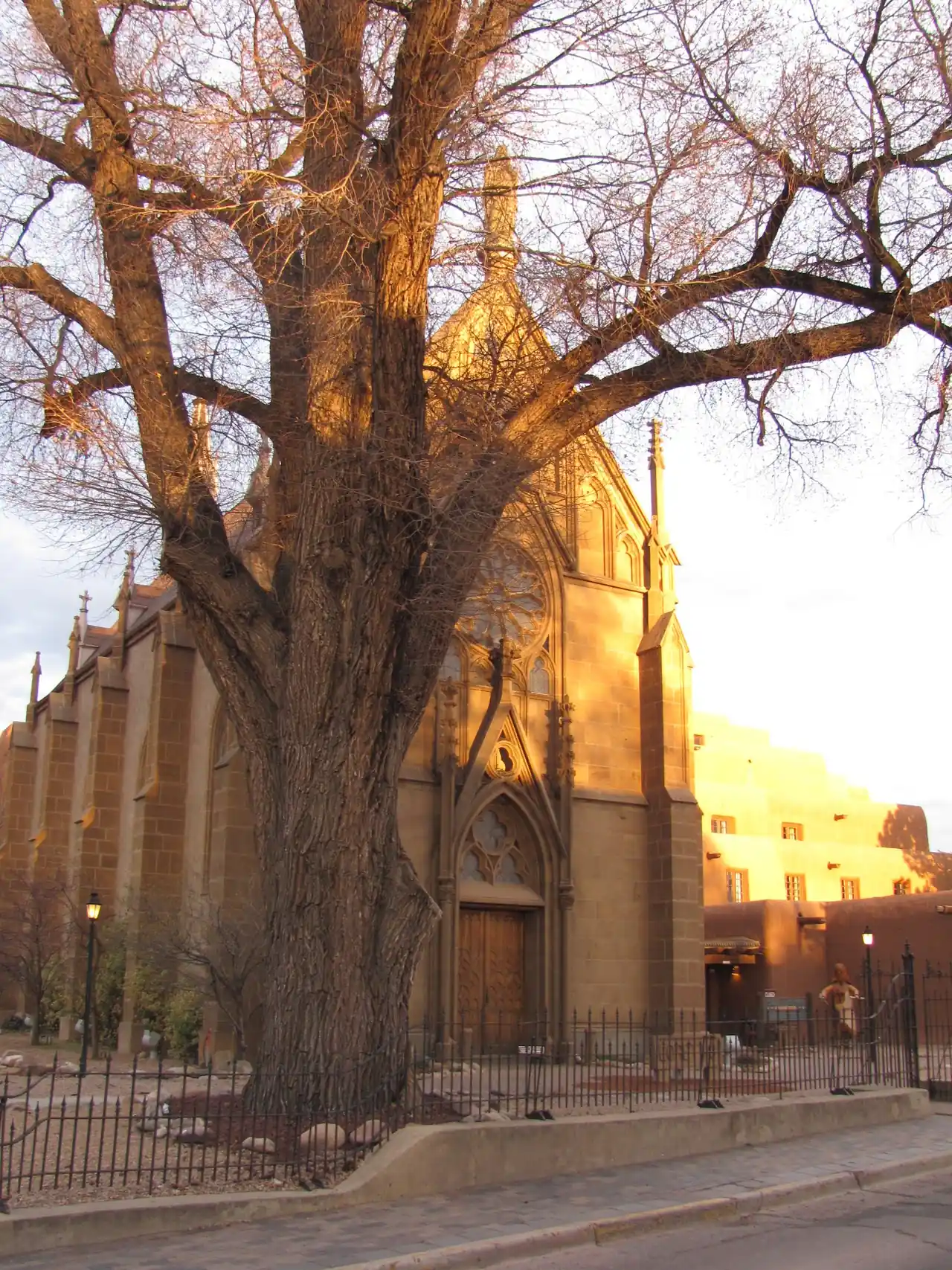
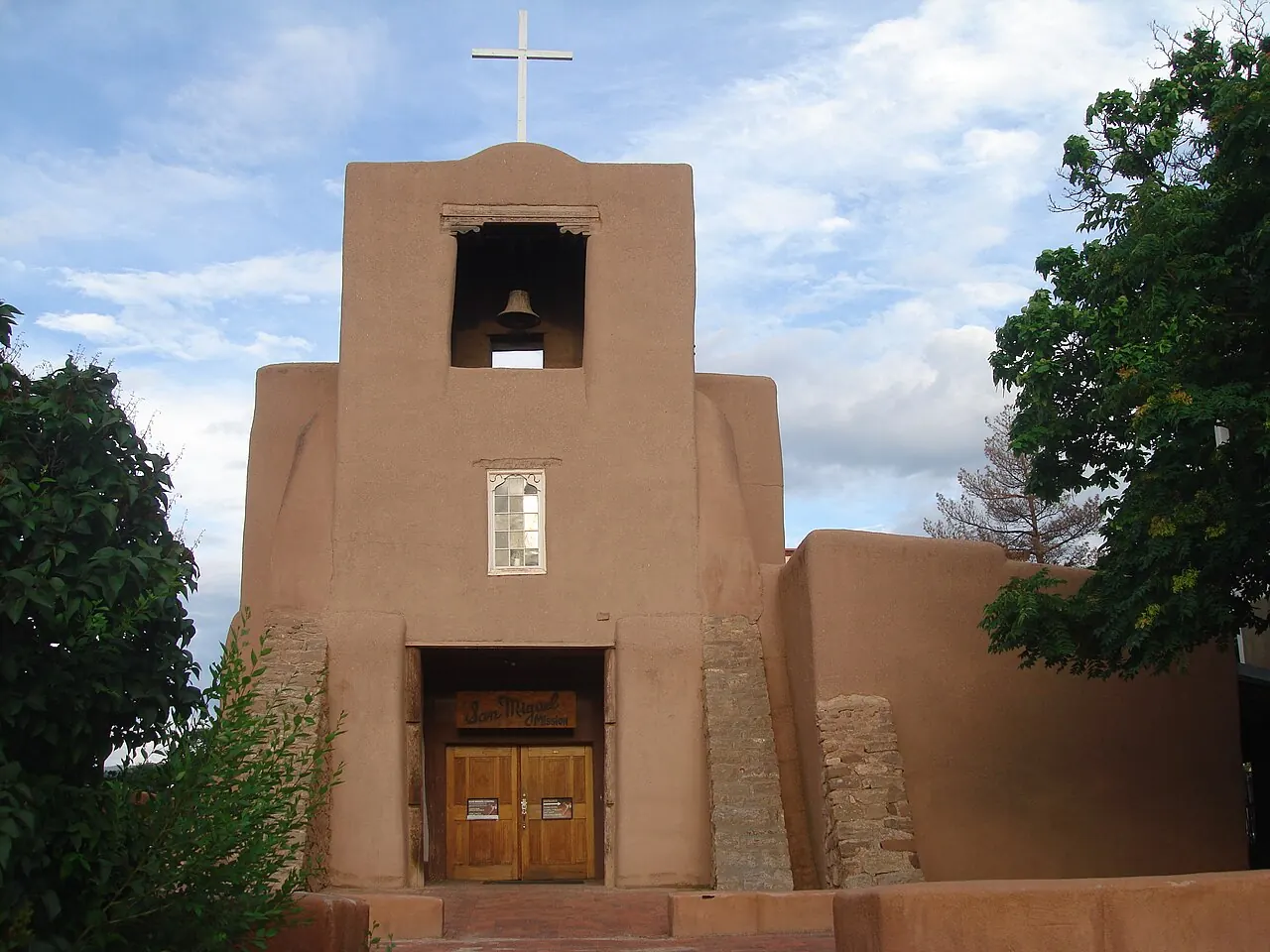
Two small churches sit within walking distance and sell their own tickets - Loretto Chapel charges $5 and opens daily 9:00-17:00, with under-7s free; confirm on the day, but that price has held for years.
Loretto Chapel is famous for the spiral staircase in the choir loft. San Miguel Chapel claims deep colonial roots on the Old Santa Fe Trail. Neither needs more than forty-five minutes unless you’re photographing interiors in detail.
Canyon Road, and the afternoon that fills itself
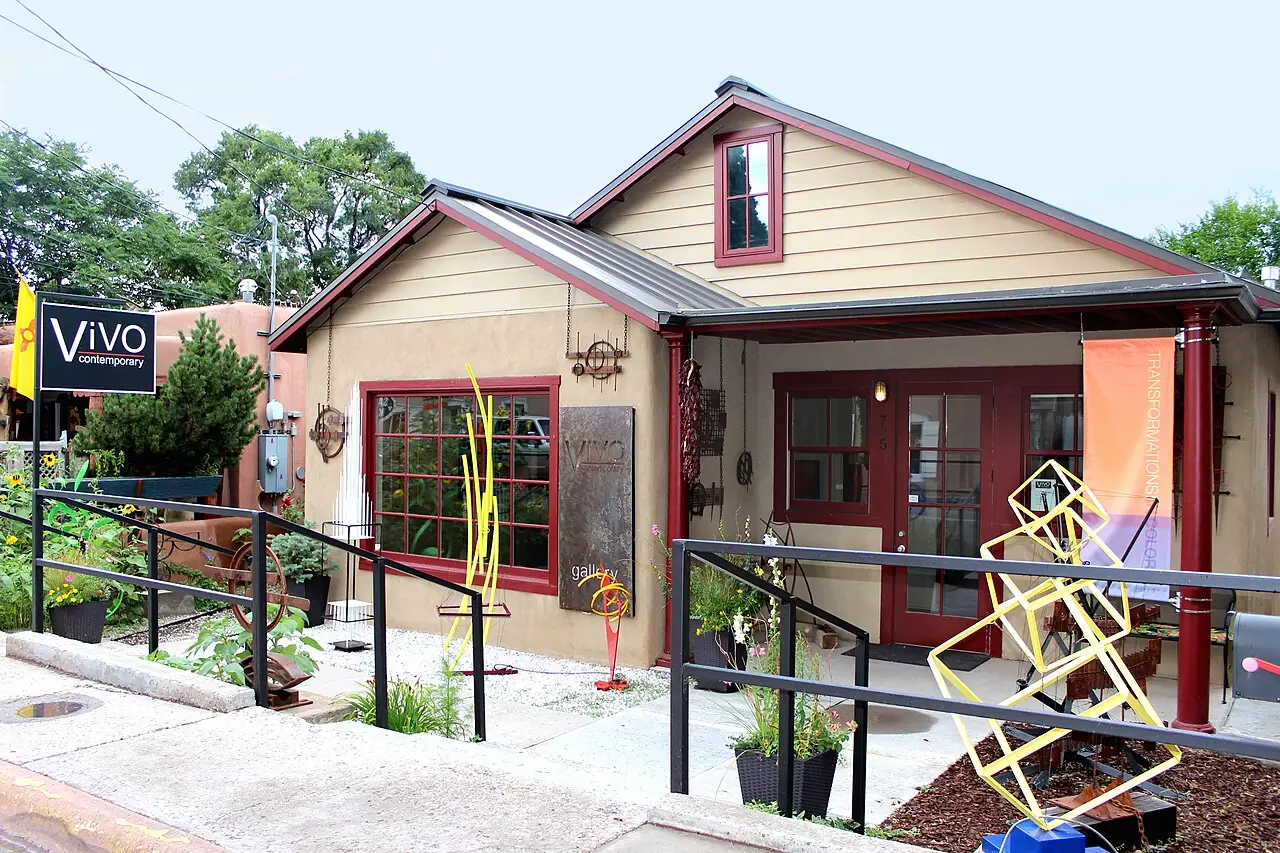
Canyon Road is the gallery mile: adobe compounds, sculpture gardens and enough doorways to kill an afternoon without trying. Go on foot. Drive it only if mobility requires a drop-off at one end. Many galleries close mid-afternoon or keep irregular Monday hours - the street is still worth the architecture even when doors are locked. Don’t try to see every gallery in one pass: pick two or three that look open, go inside, and let the rest stay architecture. If your only full day happens to fall on a Monday, lean on the History Museum and the chapels instead and save Canyon Road for a morning when the doors are actually unlocked.
Food, altitude and how long to stay
Order chile with confidence: red, green or Christmas. Margaritas are fine; the green chile stew is why you came. Dinner reservations help on weekend nights near the plaza. Lunch can stay walk-up.
Two days cover the plaza, palace/museum, one chapel and Canyon Road. Three days add a day trip - Bandelier, a pueblo tour or a slow return via the old 66 alignment toward Albuquerque. One day is a taste, not a visit. If you’re combining Santa Fe with a longer Route 66 run, protect those two nights even when the rest of the itinerary wants to rush west.
Getting there, and a two-day plan that works
Fly into Albuquerque (ABQ) and drive about an hour north, or look for regional flights into Santa Fe’s smaller airport when schedules match. Sleep as close to the plaza as your budget allows; the city’s pleasure is evening walks, not hotel-shuttle logistics. If your ABQ nights land on early October, the Balloon Fiesta owns the metro hotels - plan Santa Fe as the quieter base, or book months ahead. For the wider desert and White Sands, step back to the New Mexico guide. For the highway that once ran through these streets, keep the Route 66 pages open in another tab - Santa Fe makes more sense when you know why the road left.
A plan that works for most first visits: morning on the plaza and inside the History Museum, late morning at one chapel, a long lunch with chile, Canyon Road until galleries start closing, then an unhurried dinner reservation near the center. Day two can repeat the plaza at a different hour - the light is half the attraction - or drive a short loop on the old Route 66 markers before you drop back to Albuquerque. Sunday mornings on the plaza run quieter than Saturdays, so that’s the morning to spend the extra half hour over coffee if your schedule allows it.
Weather and when to come
Winter visits are quieter and colder. Snow on the plaza photographs beautifully and can make sidewalks slick by late afternoon. Summer monsoons build after lunch, so plan outdoor walking for the morning and keep an indoor museum block ready for the afternoon. Shoulder seasons - May and October - are when hotel rates and crowd levels make the most sense for travelers flying in from Europe or the coasts.
Santa Fe is small enough that rushing it feels absurd, and large enough in the details that two focused days still leave things unseen. That’s the trade worth making: protect the two nights, walk more than you drive, and let the plaza set the pace instead of importing one from a bigger city.
On the map
The map loads on click - to keep the page lightweight.
The map didn’t load. Check your connection and refresh the page.
Good to know
Museum admission and chapel tickets change by season. Figures checked August 2026 - confirm on nmhistorymuseum.org and each operator site before you buy.
Details checked: August 10, 2026
Read also

Cities · 13 min read
Salt Lake City: Ski Base, Temple Square and the Salt Flats
Verified · August 29, 2026Four ski resorts inside 36 miles of the airport, a temple you cannot enter until 2027, and a salt flat that closes for racing. What to plan around.

Cities · 9 min read
Atlanta: Civil Rights Trail, Aquarium and Southern Food
Verified · August 28, 2026Free MLK park on Auburn Avenue, Civil Rights Center from $26, Georgia Aquarium tickets from $54.99, BeltLine walks and where Southern food still holds up.

Cities · 9 min read
Minneapolis Guide: River, Lakes & the Blue Line
Verified · August 26, 2026A $2 train from MSP, Stone Arch and Minnehaha Falls, Walker on free Thursday nights, and when Mall of America is worth the ride south.

Cities · 12 min read
Savannah Travel Guide: Squares and the Historic District
Verified · August 22, 2026Walk the 22 squares, tour Owens-Thomas honestly, ride the free river ferry, then Bonaventure and Tybee - checked August 2026.