
Oklahoma Travel Guide
Tulsa, Oklahoma City, the Blue Whale and why Oklahoma keeps more surviving Route 66 mileage than any other state.
Drive Oklahoma’s Route 66 end to end and you can stay on the old road from the Kansas line to the Texas line for almost the whole run - a few brief merges onto the interstate still happen, but far fewer than in states where 66 survives only as disconnected business loops. That’s the claim the Oklahoma Route 66 Association and the state’s own tourism office keep repeating, and it’s why this chapter of the Mother Road feels different. More than 400 drivable miles sit inside the state - more surviving original alignment than any other Route 66 state - and the quirky stops are spaced close enough that a slow day still feels full.
If you just came from Missouri, Oklahoma is where the nostalgia thickens. If you’re headed toward the Texas panhandle next, this is the stretch that teaches you how to leave I-40 and find the business loops again.
Start with the road, not the cities
The temptation is to treat Tulsa and Oklahoma City as the trip and dabble in 66 between them. Flip it. Use the cities as overnight anchors and let the highway set the pace. Quapaw to Texola is the statewide run; most visitors sample the dense middle between Tulsa and Oklahoma City, then keep west if time allows.
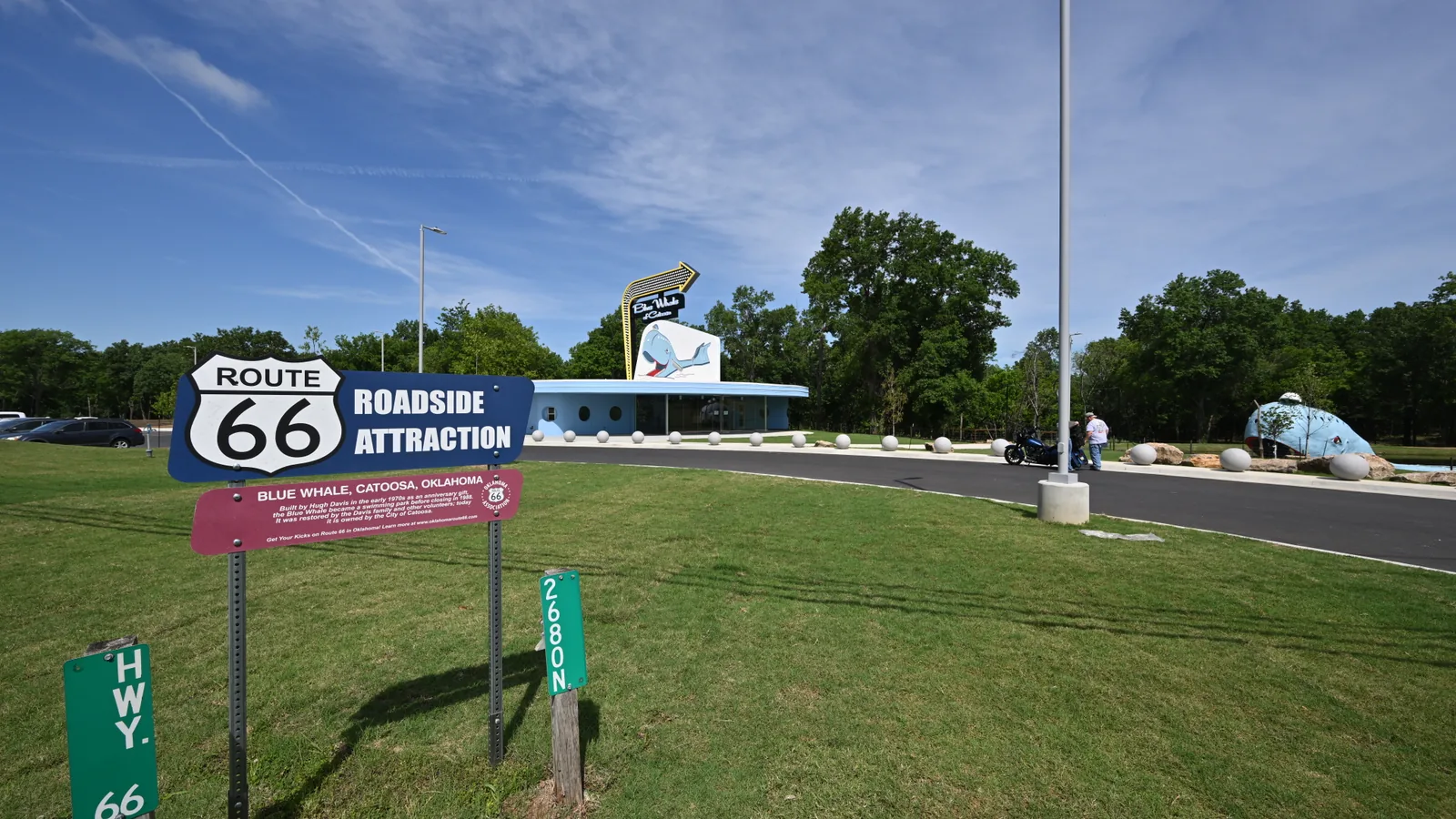
East of Tulsa at Catoosa, the Blue Whale sits in a swimming hole like something a family built for fun and then accidentally made famous. It still costs nothing to walk up and photograph, and since May 2026 there’s a proper visitor center on site - roughly 4,000 square feet with a shop, an exhibit, restrooms and a concession, which on this stretch of highway matters more than it sounds. Half an hour covers it comfortably. Between Tulsa and Oklahoma City, Arcadia’s 1898 Round Barn and the giant soda bottle outside Pops are the standard pair - one is historic wood, the other is pure roadside theater. Confirm cafe hours before you plan lunch around them; small-town kitchens still close mid-afternoon.
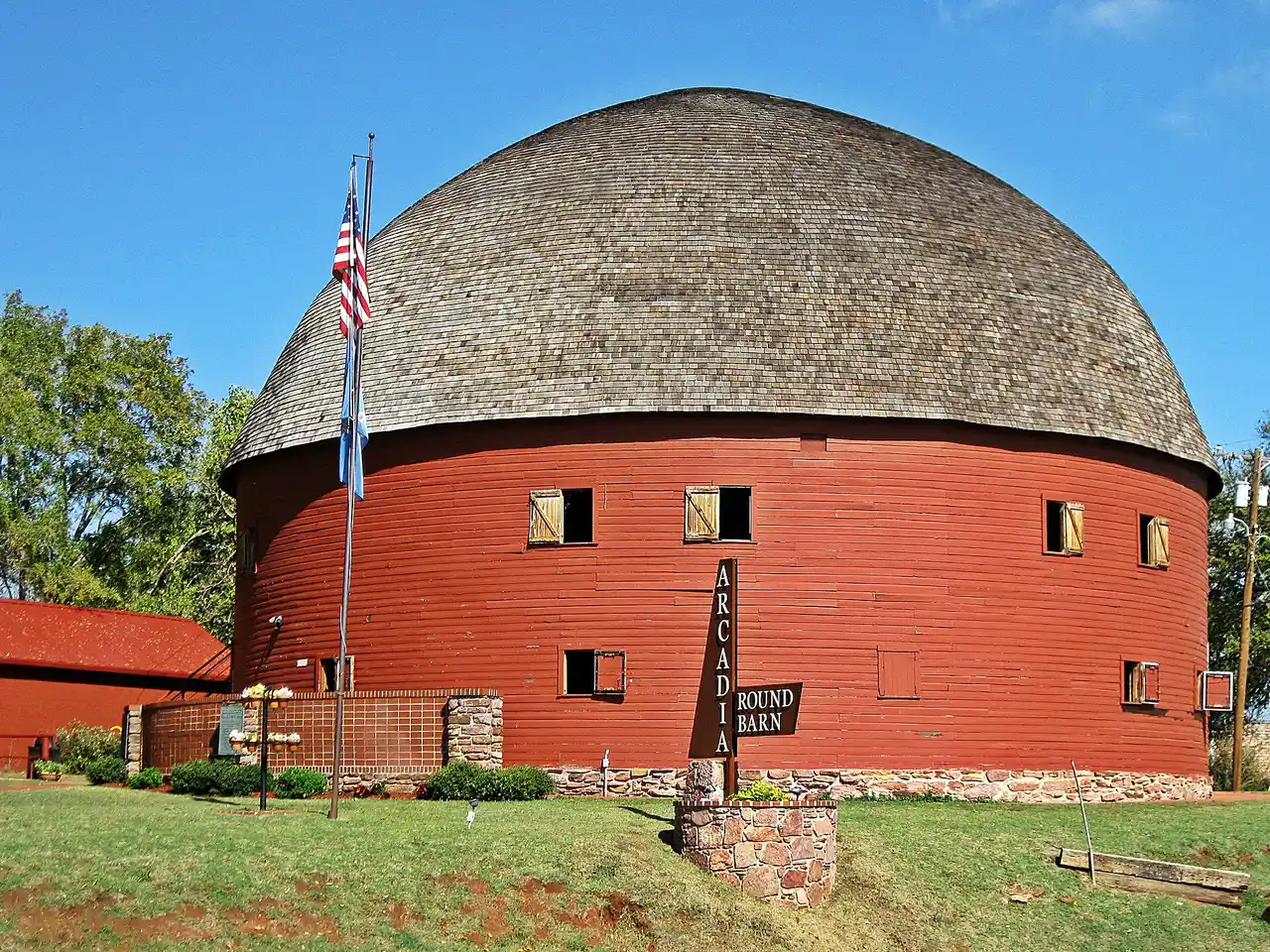
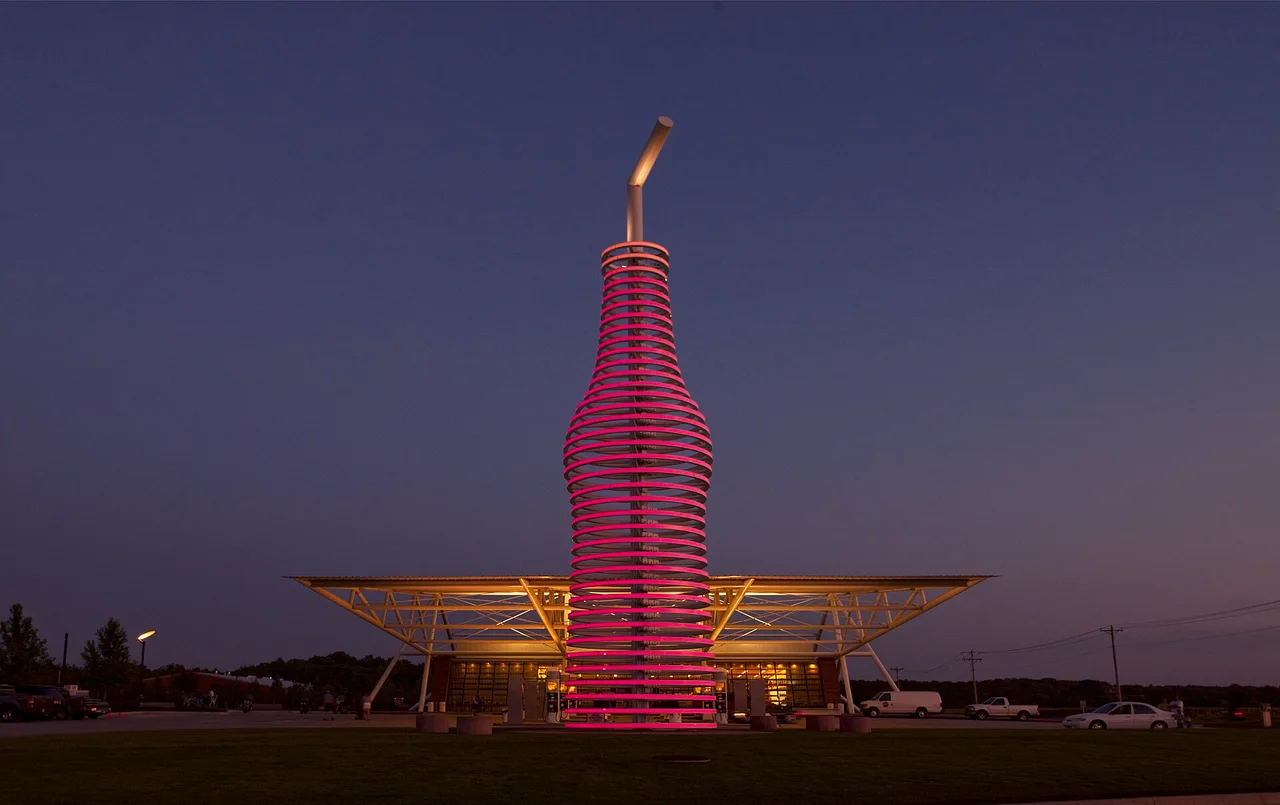
Western Oklahoma keeps longer stretches of original paving from the early 1930s. Follow Business Loop 40 signs through the towns, then watch carefully where the old highway peels away from the interstate when you leave each one. Miss that fork and you’re suddenly on I-40 wondering where the neon went.
The full Chicago-to-California context lives in our Route 66 road trip guide. Oklahoma is the chapter where that guide stops sounding abstract.
Tulsa: Art Deco, Avery and an overnight that works
Tulsa was home to Cyrus Avery, the highway commissioner who routed 66 through his own city and is remembered with a plaza on the old bridge. The skyline still shows oil-boom Art Deco if you look up; the downtown blocks walk well in an evening. One night is enough for most road-trippers. Two nights make sense if you want museums or a slower food day before you push west.
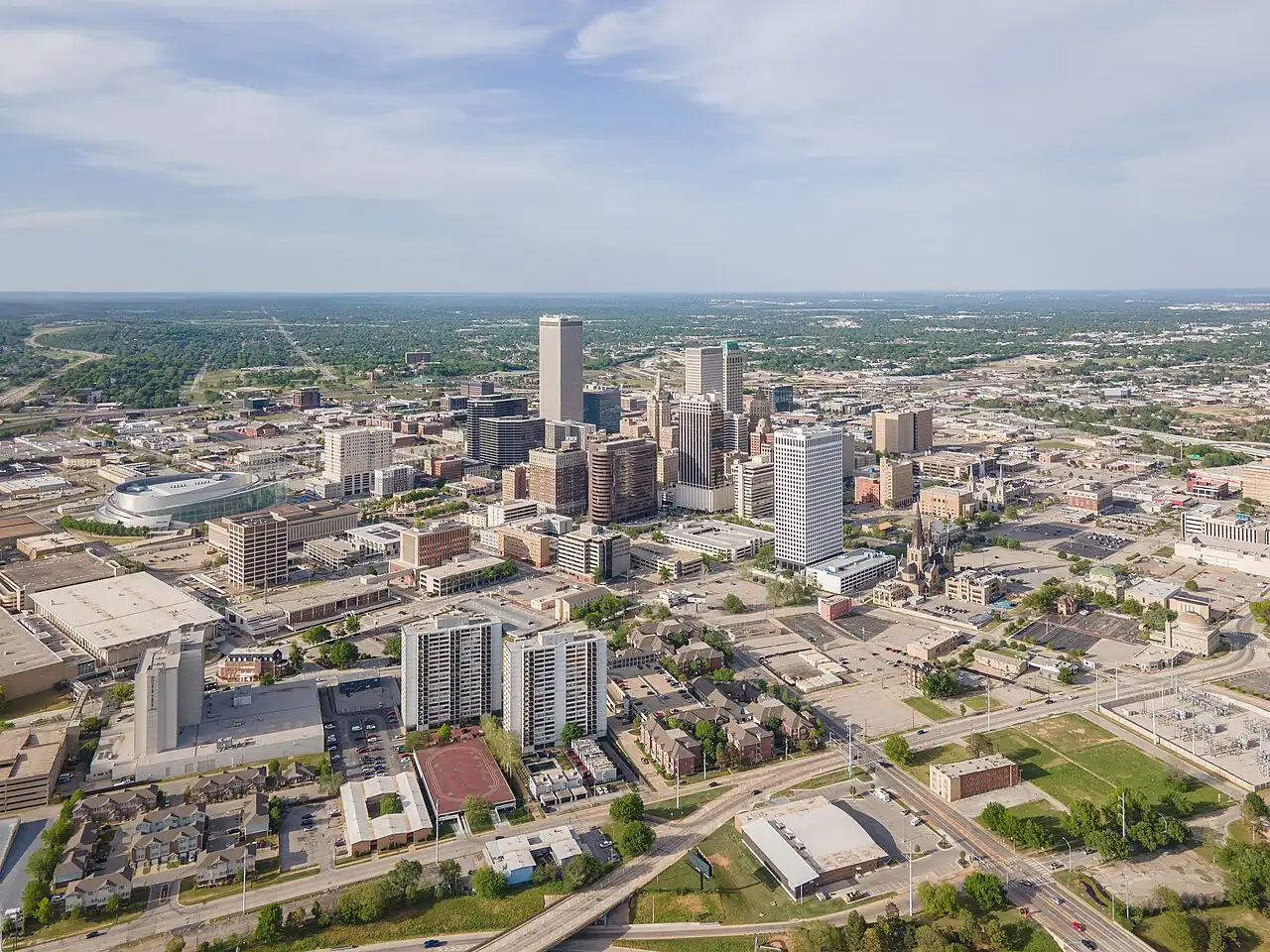
Fly into Tulsa International if the eastern half of the state is your start. Rent the car at the airport, sleep downtown or near the old alignment, and roll west in the morning with a full tank. Gas is cheaper here than on either coast, but the gaps between stations widen once you leave the metro - fill up in town, not after.
Oklahoma City, and the stop that isn’t nostalgia
Oklahoma City interrupts the roadside mood on purpose. The Outdoor Symbolic Memorial on the site of the 1995 Murrah Federal Building bombing is free and open twenty-four hours a day, every day of the year. The Field of Empty Chairs holds 168 seats in nine rows for the nine floors of the building. Give the outdoor site at least half an hour. Expect to be quiet when you leave.
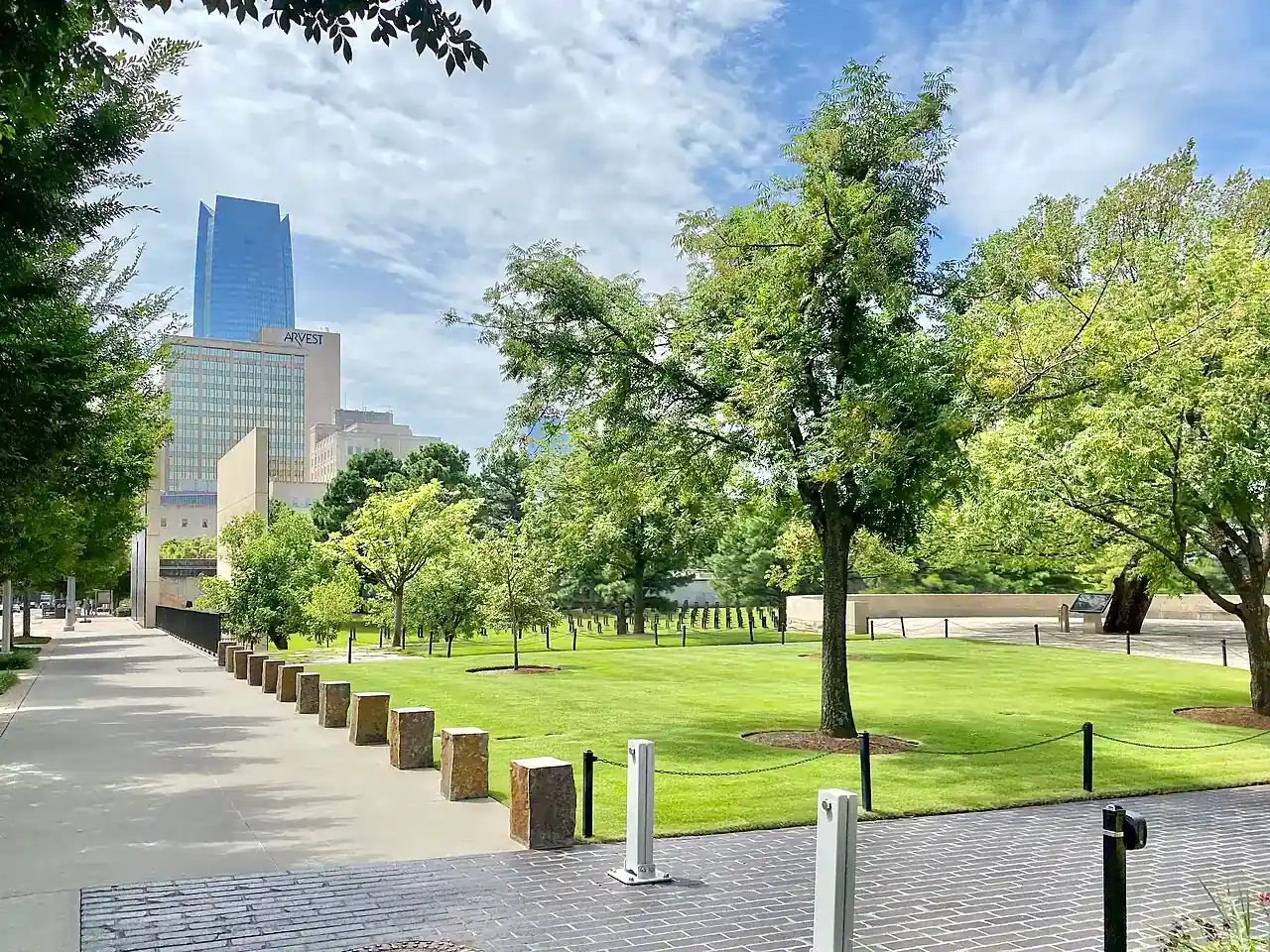
The Memorial Museum next door is ticketed and timed. As of August 2026 adults are $18, seniors 62+ and military with ID $16, students $15, and children 5 and under free. Hours are typically Monday-Saturday 9am-5pm and Sunday noon-5pm, with longer summer windows some years - confirm on memorialmuseum.com before you lock the day. Ticket sales stop one hour before close. The museum is closed Easter, Thanksgiving, Christmas Eve, Christmas Day and New Year’s Day. Average visit runs about ninety minutes. Parking in the Memorial garage is free with museum admission.
Do the memorial before lunch. Trying to sandwich it between neon photo stops misses the point of why the city put it on the route.
Oklahoma City also works as a flight hub (Will Rogers World Airport) if you’re only doing the central stretch of 66 and not the full state. From here the road continues west toward Clinton and Texola, then into the Texas panhandle toward Amarillo - covered in the Texas travel guide if your trip turns south later.
How many days, and when
Two days covers Tulsa, the Arcadia-Pops corridor and Oklahoma City with the memorial. Three to four days lets you drive farther west on original pavement and sleep in smaller towns. A single rushed day on I-40 with two photo exits is possible and also a waste of the best-preserved state on the highway.
Driving conditions and timing it right
Oklahoma summer brings thunderstorm season that catches visitors from milder climates off guard - the sky here does things a Seattle or London forecast never prepares you for. Winter ice on the plains surprises out-of-state drivers more than they expect, so don’t push a dawn start the morning after a freeze warning. The 2026 centennial adds a wrinkle no matter the season: expect busy weekends around commemorative dates, so book the independent motels early or fall back on chain hotels near the interstate exits.
You’ll need a car regardless of when you come. Oklahoma’s cities have local transit, but the Mother Road doesn’t, and a standard sedan handles it fine - the entertainment here is the alignment, not the ground clearance. Compare one-way drop fees if you’re continuing into New Mexico or returning a car in Texas, and keep the Oklahoma Route 66 Association trip guide (paper or PDF) in the door pocket - county road names change faster than phone maps admit.
Food on the road
Food along the Oklahoma stretch is simpler than the neon suggests: diners, chicken fried steak, and whatever the small town still cooks well. Don’t plan every meal around a famous stop - half of them close between lunch and dinner, and the other half run out of pie. Carry water in summer, and in winter assume the wind across open pasture will feel colder than the number on your phone. If you’re traveling with kids, the Blue Whale and the soda bottle are the easy wins; the memorial is for adults who can sit with silence afterward.
Oklahoma is the stretch people remember when they try to explain Route 66 to friends who stayed home - not because it’s prettier than Arizona, but because you can still drive it like a road instead of a museum exhibit behind glass. If your trip continues past Texola, the Texas panhandle is next on the classic alignment, with Cadillac Ranch and Amarillo a half day west. Looping back toward Missouri instead? Sleep in Tulsa, not on the interstate, and leave one open afternoon for whatever odd roadside stop the Association guide flags between the cities. East of the state line, Arkansas is the next inland chapter if the Ozarks are calling louder than the neon. That mix - playful roadside America one hour, a civic scar the next - is why this state earns more than a single overnight on a centennial itinerary.
On the map
The map loads on click - to keep the page lightweight.
The map didn’t load. Check your connection and refresh the page.
Good to know
Memorial Museum tickets and hours change; outdoor memorial is free 24/7. Confirm museum pricing on memorialmuseum.com before you go.
Details checked: August 10, 2026
Read also

States · 11 min read
Connecticut: Mystic, New Haven and the Shoreline
Verified · September 12, 2026Mystic Seaport at $35 adult, free Yale galleries in New Haven, and Gillette Castle on the river - how a Connecticut weekend actually fits.

States · 9 min read
North Dakota: Medora and Theodore Roosevelt NP
Verified · September 5, 2026The 36-mile South Unit loop starts in Medora, entrance $30 per vehicle, cashless from May 2026 - how to plan Theodore Roosevelt National Park.

States · 9 min read
Arkansas Travel Guide: Hot Springs & Ozarks
Verified · September 4, 2026Fee-free Hot Springs NP downtown, free Crystal Bridges in Bentonville, and the 135-mile Buffalo - how to string an Arkansas road trip.

States · 10 min read
Indiana Travel Guide: Indy, Speedway, Shore
Verified · September 5, 2026IMS Museum at $25, Kiss the Bricks at $15, Brown County hills and Lake Michigan shore - an Indiana trip beyond a Chicago beach day.