
LAX to Disneyland: Cheapest & Fastest Ways to Get There
Rideshare, shuttle, Metro for $5 or the train to Anaheim: every way from LAX to Disneyland, with operator prices and honest travel times.
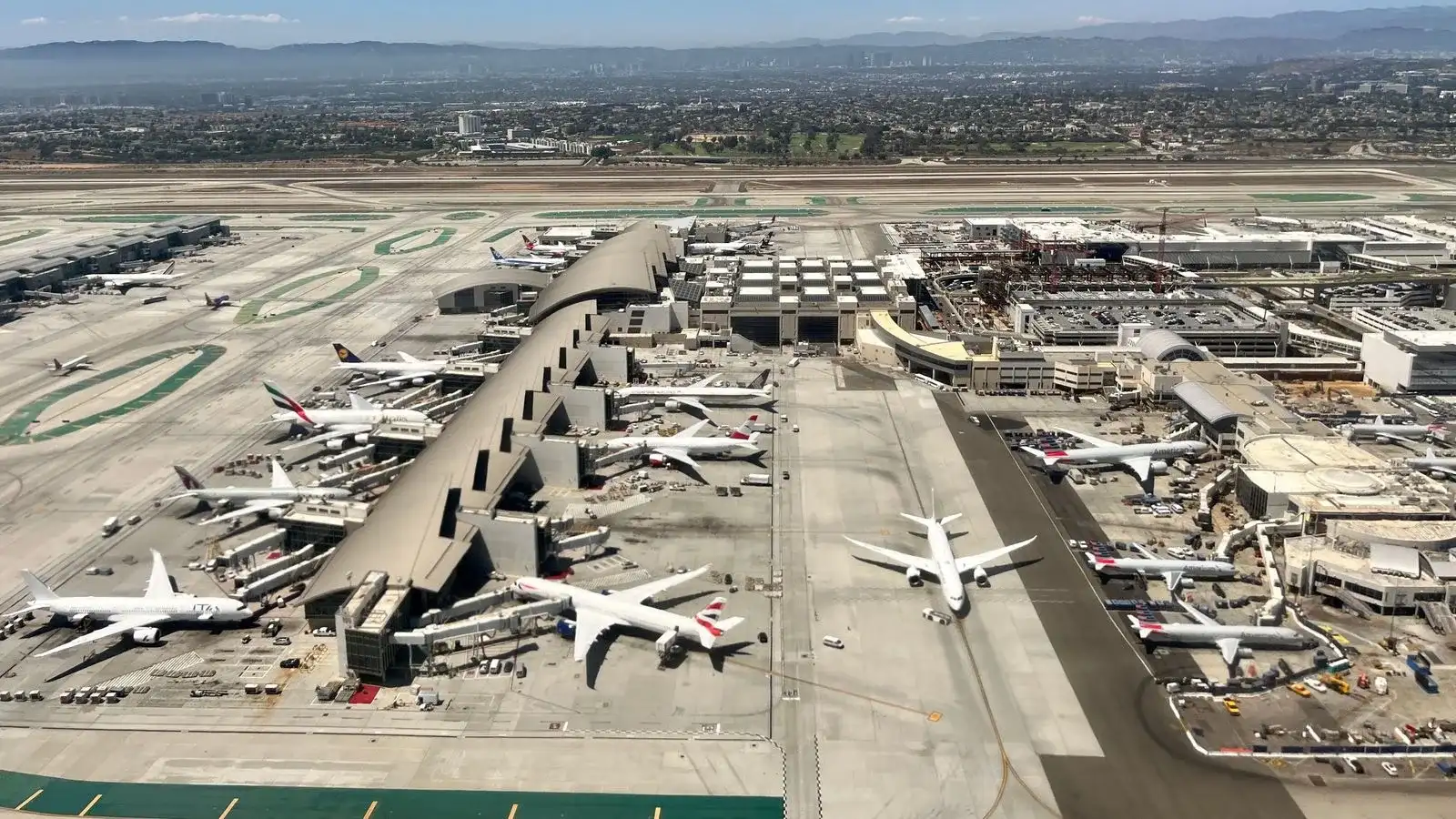
Thirty-three miles separate LAX from the Disneyland gates, and what that costs you swings from $5 to well over a hundred dollars depending on which of four options you pick. Rideshare, taxi or a booked van does it in about 45 minutes on an open road and a lot longer on a weekday afternoon. Metro does it for a maximum of $5 a day per person and takes most of a morning. The FlyAway bus plus a train does it for $12.75 plus a day pass, and takes exactly as long at 5pm as it does at 11am.
The variable that decides for you is usually your landing time, followed closely by how many suitcases are coming off the belt. Prices here come from the company that charges them, one leg at a time, because these journeys are stitched together from two or three operators and the neat single totals quoted elsewhere tend to be somebody’s guess.
How far it is, and why nobody can promise you a time
The Disneyland Resort sits 33 miles southeast of LAX, and the standard run is the 105 east, the 605 south, the 91 east and then the 5. On an empty road that’s about 46 minutes of driving. You will not often get an empty road.
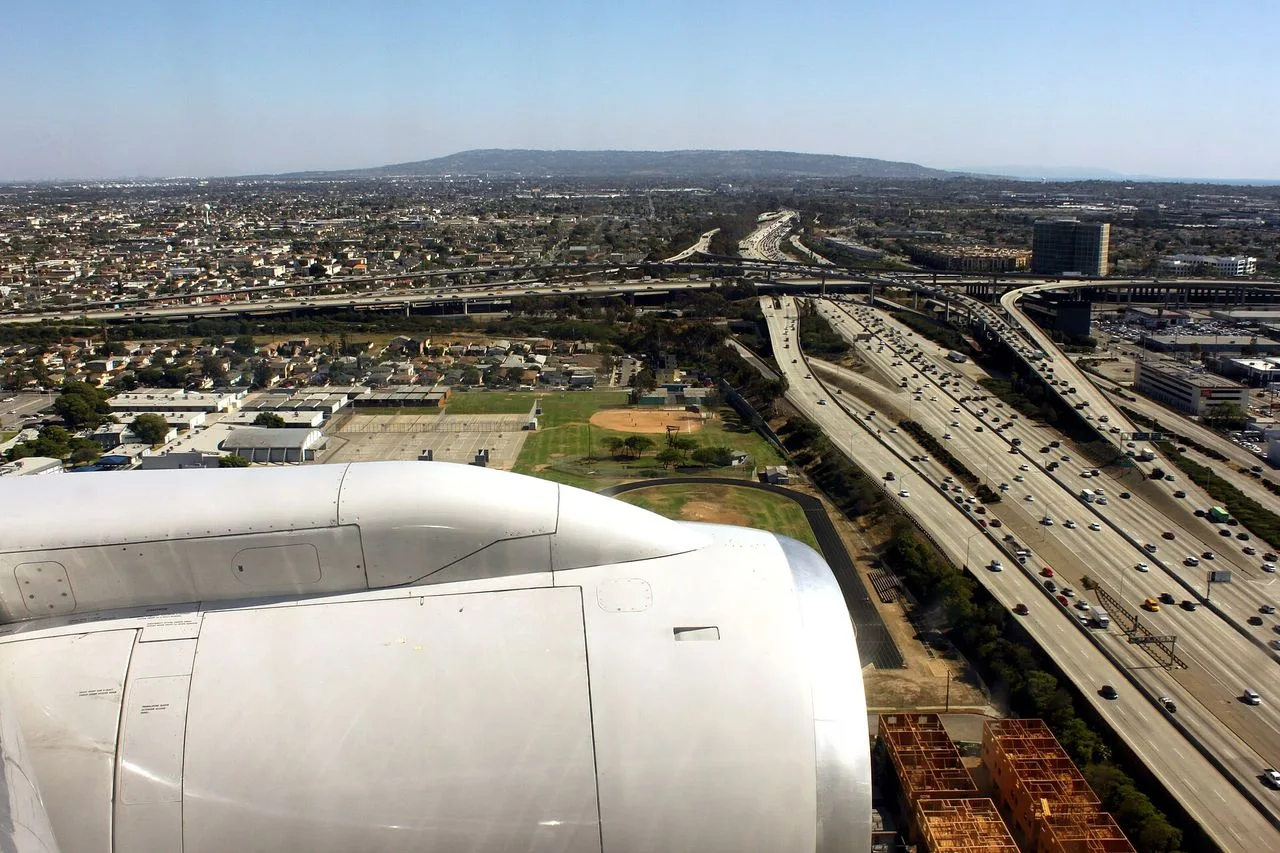
A midday or late-evening arrival usually lands close to that 45 minute figure. A weekday afternoon can push the same drive past 90 minutes, and no agency publishes a peak-hour number for this route because there isn’t a reliable one. If you’re arriving between about 3pm and 7pm on a weekday, plan the evening as though the drive will take twice as long as the map says, and be pleasantly surprised if it doesn’t.
Rideshare and taxi: fastest, and you won’t know the price until you land
This is what most first-timers do, and it’s a reasonable choice. One thing to know before you walk out of baggage claim: Uber, Lyft and taxis don’t collect anyone at the terminal curb at LAX. You take a free LAX-it shuttle from the arrivals level, where the stops are marked with green column wraps, over to the LAX-it lot, and you meet your driver there. It’s free and the buses are accessible, but it’s another twenty minutes of your life with the bags, and at busy hours there’s a line for the shuttle and a line at the lot.
Nobody publishes a fixed price for this. Rideshare fares to Anaheim move with demand, and taxis to Orange County run on the meter rather than the flat rates that apply within LA. That uncertainty is the real cost: on a bad evening the number that appears in the app when you’re standing in the LAX-it lot is not the number you were quoted in your head.
Shuttles: worth a quote when there are four or more of you
Shared and private vans still run this route as a bookable transfer, and they solve the two problems rideshare doesn’t: a fixed price agreed in advance and a vehicle sized for luggage. Karmel is the operator most Anaheim hotels point guests toward, and it runs vans, sedans, SUVs and buses from LAX to the resort hotels.
What none of them publish is a rate card. Pricing is quoted per party when you book, which is exactly why they can beat a rideshare for a family of five and lose to it for a solo traveler. Get a quote for your group size, compare it against what the app shows for the same time of day, and book ahead either way, because arranging a van after an eleven-hour flight is a poor use of your first hour in California.
The $5 route: Metro all the way
Los Angeles has an actual answer here now, and it’s absurdly cheap. Walk out to the arrivals level at your terminal and catch the free Metro shuttle to the LAX/Metro Transit Center, the new station on Aviation Boulevard; the return service to the terminals leaves from Bus Bays 1 and 2 there, which is the number you’ll want on the way home rather than on the way in. At the transit center you pick up the C Line, ride east to Norwalk, and change to Metro’s Line 460, the Downtown LA to Disneyland express, which runs the rest of the way to the resort.
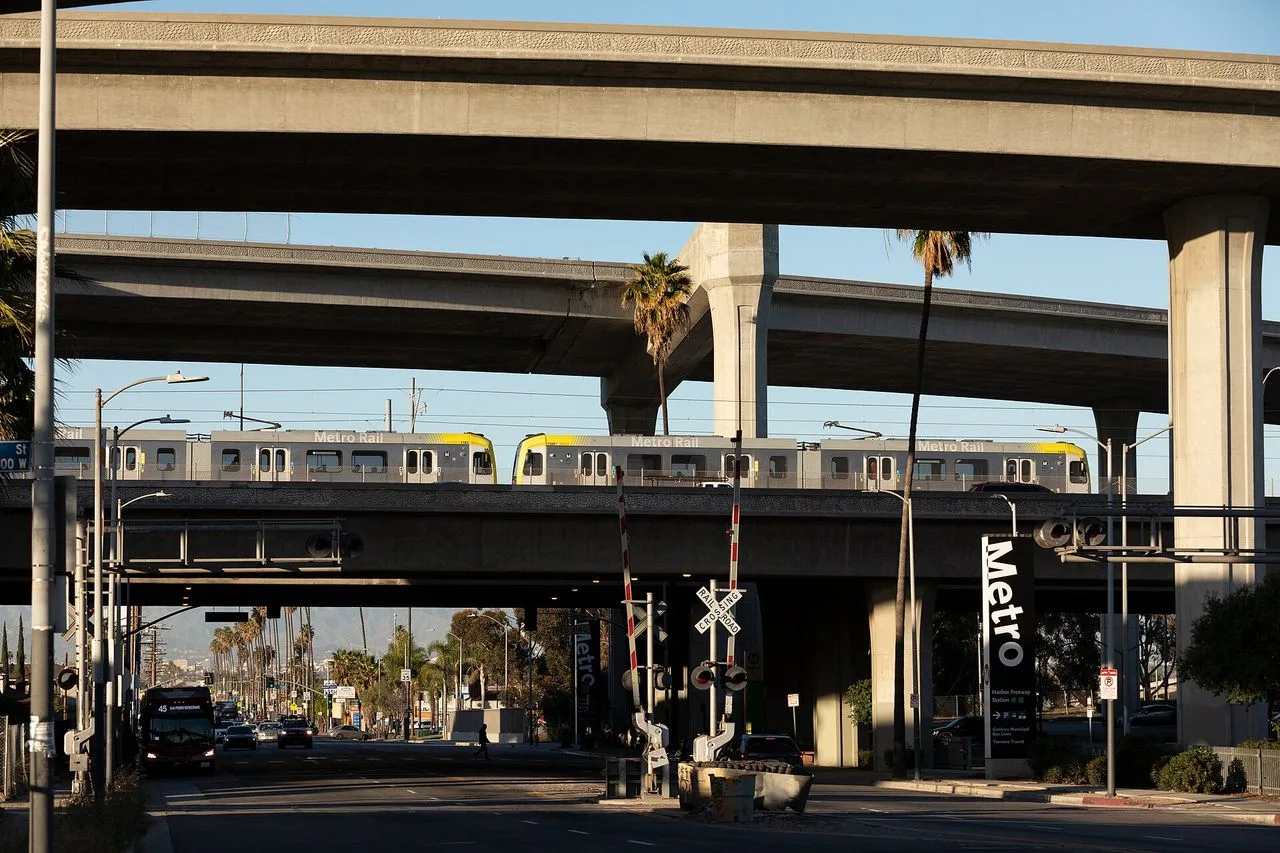
The fare math is the good part. Metro charges $1.75 a ride, transfers are free within two hours of your tap, and the daily cap is $5: pay for three rides in a day and everything after that is free. Luggage rides free too, with no baggage rules beyond keeping the aisles clear. So the entire airport-to-Disneyland journey tops out at five dollars per person.
You don’t need to sort out a transit card before you fly, which is the thing most visitors worry about. Tap the same contactless credit or debit card you’re already carrying, or Apple Pay or Google Pay, on the validator as you board; a TAP card works if you’d rather have one, and buses take cash while the trains don’t. One tap per person, every time you board.
The cost is time and effort. Metro doesn’t publish a door-to-door figure for this, and with waits at two transfers you should treat it as most of a morning rather than an hour. It’s an excellent choice for two adults with carry-ons and a relaxed schedule, and a miserable one for a family of four with four checked bags and a nine-year-old who has been awake since Heathrow. The People Mover, the automated train that will eventually run from the transit center into the terminals and delete that first shuttle ride, was not carrying passengers when this was written in August 2026. Metro still describes it as coming in 2026, and the publicly reported target had slipped to October by late July, which is roughly where every previous target for this project ended up. Check whether it’s running before you plan around it; when it does open, the ride to the terminals is free and the first leg of this route gets a lot easier.
The train: the only option traffic can’t touch
If you land in the afternoon, this is the underrated route. Take the FlyAway bus from your terminal to Union Station for $12.75 one-way, buying with the app or by tapping a contactless card as you board, since cash isn’t accepted. Buses leave LAX every 30 minutes from 5:40am to 1:10am, so it covers almost any arrival.
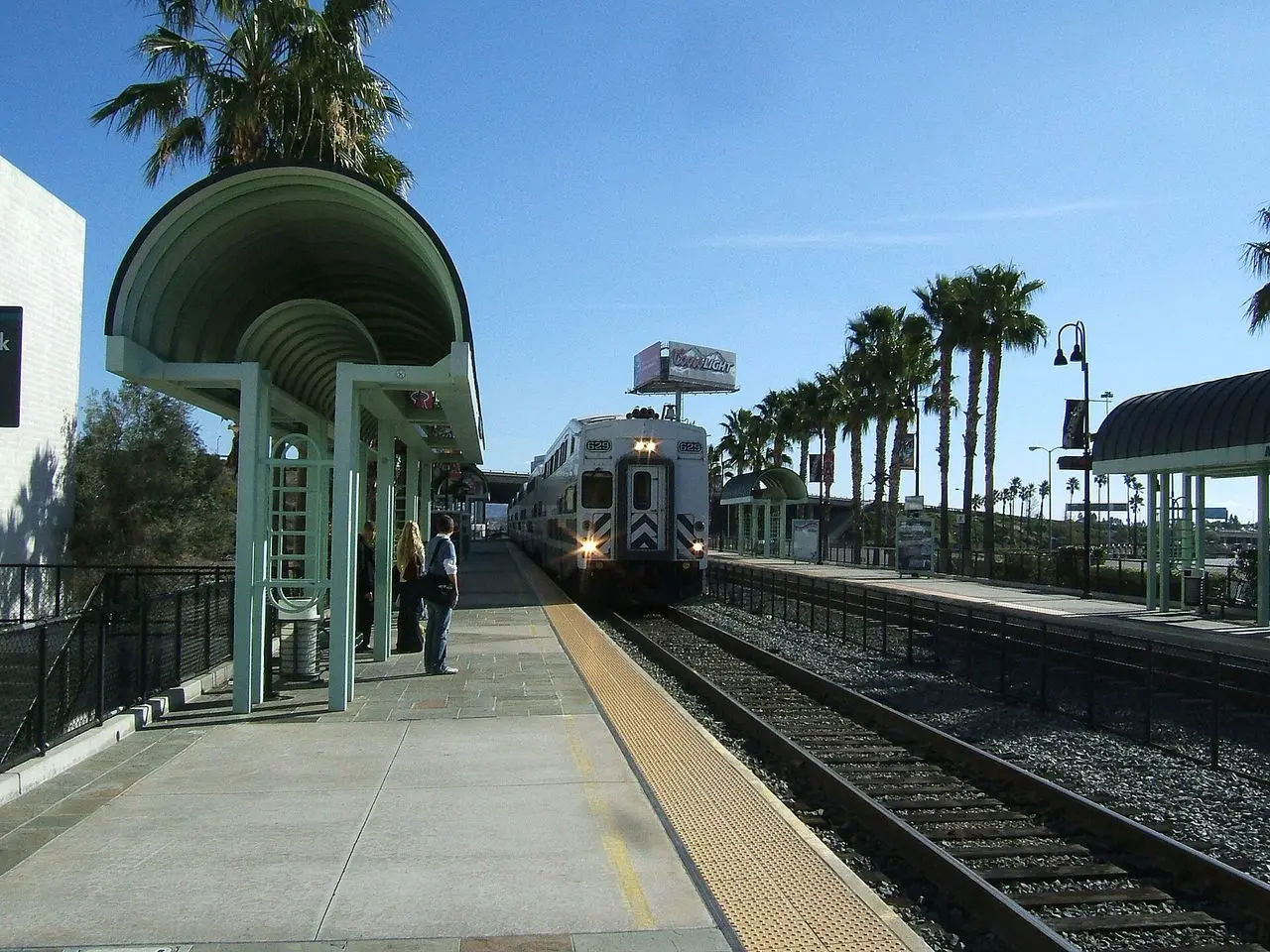
From Union Station, the Orange County Line runs to Anaheim. Buy Metrolink’s SoCal Day Pass rather than a point-to-point ticket: it’s $15 on weekdays and $10 on Saturdays, Sundays and holidays, it covers unlimited travel that day, and it’s valid on codeshare Amtrak Pacific Surfliner trains too, which effectively doubles your departure options out of Union Station.
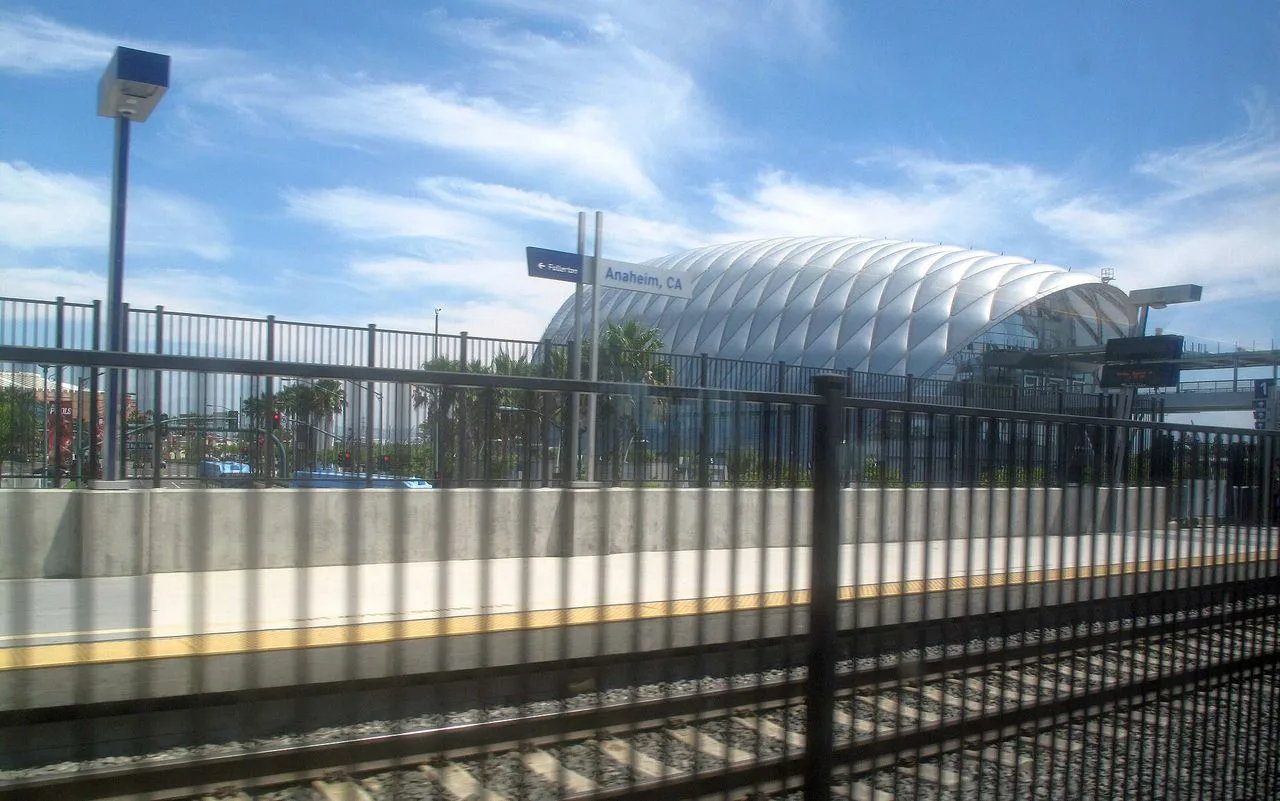
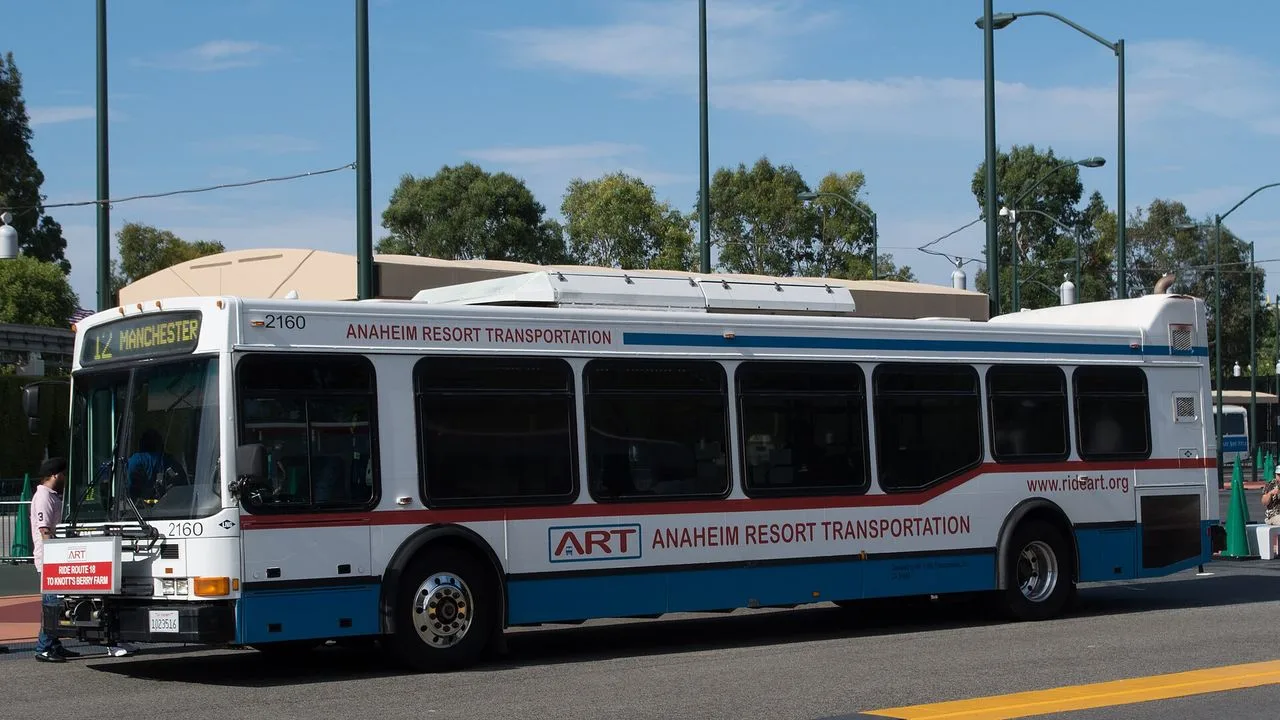
The leg people forget is the last one. Anaheim’s station, ARTIC, is a striking building 3.6 miles from the park gates, which is not a walk with suitcases. Anaheim Resort Transportation runs the shuttle network that closes the gap: $4.00 one-way for an adult, $1.50 for a child aged 3 to 9, free under 3, or a 1-day pass at $6.00. If your hotel is on an ART route, a 3-day pass at $16 or a 5-day at $25 is usually the better buy, because you’ll use the same buses to get to the parks every morning.
Renting a car: only if you’re going somewhere else afterward
A rental makes sense when Disneyland is one stop on a California trip, and it makes very little sense when it’s the whole trip. Here’s the number that catches people out: parking at the theme parks costs $40 a day for a car, and $45 for an oversized vehicle or motor home. Stay at a Disneyland Resort hotel and self-parking is $45 plus tax per night, with valet at $75. Those are Disney’s published rates, and they’re per day, not per trip.
Add that to a week’s rental and the insurance and you’re often paying more to store a car than you’d have spent on transfers and ART passes. The exception is real: if you’re driving on to San Diego, Joshua Tree or up the coast, pick the car up when you leave Anaheim rather than at the airport, and let someone else handle the first 33 miles.
The airport nobody tells you to check
Before you book the flight, price John Wayne Airport in Santa Ana, code SNA. It’s 14 miles from Disneyland against 33 from LAX, which turns a highly variable hour-plus into a reliable half hour, and it’s a far smaller airport to walk out of with a stroller. Long-haul options are limited and fares aren’t always competitive, so it won’t always win, but on a connecting itinerary through a US hub it frequently does, and nobody checks.
So which one
Landing before noon or after 8pm with one or two people and light bags, take Metro and keep the $5. Landing mid-afternoon on a weekday, take the FlyAway and the train, because that’s the window when the freeways make a car the slowest option rather than the fastest. Traveling as a family of four or more, get a shuttle quote and compare it against the app before you fly, then book whichever wins so the decision isn’t made for you at the curb. Continuing on to San Diego or the desert afterward, rent the car in Anaheim on the day you leave, not at LAX on the day you arrive.
Whatever you pick, sort the Anaheim end first. Once you’re through the gate, Disneyland tickets covers the ticket tiers, Park Hopper and Lightning Lane math before you buy. Where you sleep decides whether you’ll be walking to the gates or riding ART every morning, and where to stay in Los Angeles covers the city end if you’re splitting the trip. If downtown LA is the destination rather than Disney, use LAX to downtown instead - same airport, different fare math. For the days around the parks, things to do in Los Angeles has the city, and the 10-day California route shows where Anaheim fits in a longer drive. If you’re renting anyway, renting a car in the USA explains the deposits, tolls and insurance before you sign. And if Universal Studios Hollywood is also on the list, Universal vs Disney across the US weighs the two against each other, and against the Orlando resorts, before you commit to a coast.
Read also
- The city end of the trip: things to do in Los Angeles
- Pick an LA base: where to stay in Los Angeles
- Fit it into a route: California in 10 days
- Before you rent: renting a car in the USA
- Hollywood, Anaheim or Orlando: Universal vs Disney across the US
- Ticket tiers and Lightning Lane once you’re through the gate: Disneyland California tickets
- Browse more US cities and US states
On the map
The map loads on click - to keep the page lightweight.
The map didn’t load. Check your connection and refresh the page.
Good to know
Fares and parking rates here came from Metro, Metrolink, ART, Los Angeles World Airports and the Disneyland Resort in August 2026, each from the operator that charges them. Rates change - reconfirm before you travel, and note that Disney states parking prices are subject to change without notice.
Details checked: August 1, 2026
Read also

Transport · 8 min read
ATL Airport to Downtown: MARTA, Taxi and Rideshare
Verified · August 28, 2026MARTA is $2.50 and about 16 minutes to Five Points. Airport taxis still publish flat fares: $37.50 downtown, $39.50 Midtown, $49.50 Buckhead.

Transport · 8 min read
SEA to Downtown Seattle: Link, Taxi and Rideshare
Verified · August 23, 2026Link light rail is a flat $3 and about 38 minutes to Westlake. Taxis use a meter with a $20 airport minimum - there is no regulated flat fare to downtown.

Transport · 10 min read
SFO to San Francisco: BART, Taxi and Rideshare
Verified · August 20, 2026BART to downtown is $11.80 and takes about 30 minutes, but you don't step straight onto a train. Taxi, rideshare and Caltrain routes, checked 20 Aug 2026.

Transport · 9 min read
Boston Logan to Downtown: Silver Line, Taxi and Ferry
Verified · August 19, 2026Silver Line SL1 is free from Logan. Taxi meters run extra with a $2.75 toll, Uber picks up at the garage, and the ferry is seasonal.