
Where to Stay in Honolulu: Best Areas & Hotels
Waikiki, the Gold Coast, Kakaako or Ko Olina? Best areas to stay in Honolulu, the 18.7% tax line and which rentals are actually legal.
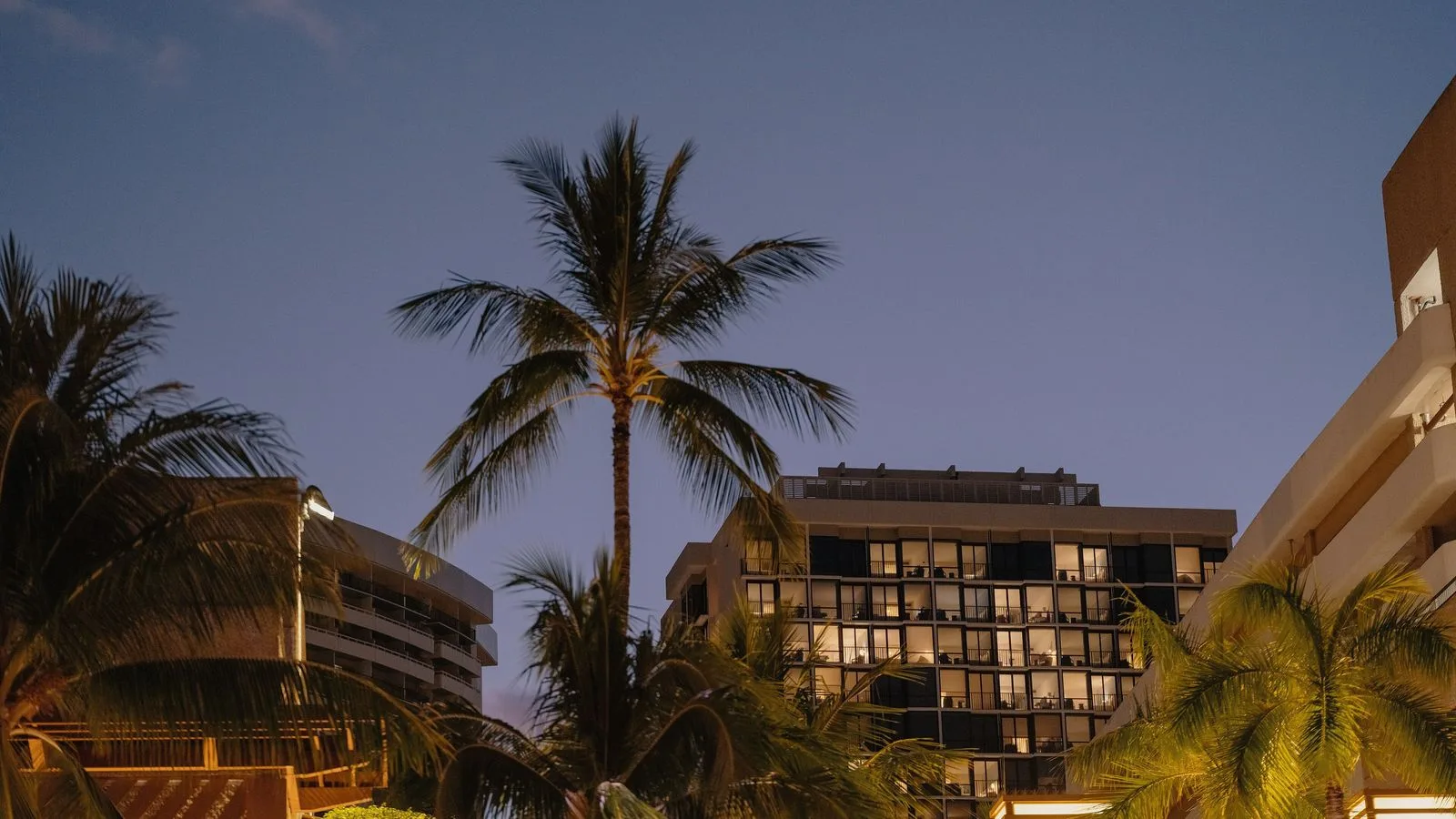
Waikiki is where almost everyone should stay, and the useful question isn’t whether to book there but which end of it. The strip runs a couple of miles, and the western end near Ala Moana, the shopping middle along Kalakaua Avenue and the quiet Diamond Head end are three genuinely different vacations at similar prices. Off the strip, Ala Moana and Kakaako trade the beach for local restaurants, downtown is the cheap and dull option, and Ko Olina or the North Shore are resort island rather than city.
The trap here isn’t the neighborhood, it’s the listing. Oahu only allows stays under 30 days in resort-zoned pockets, and the city dictates the wording owners elsewhere have to put in the ad, so a week in a pretty condo on the windward side is often a booking that shouldn’t exist. Check the address against the city’s map before you pay anyone. Price-wise you’re arguing over a fairly narrow band anyway: Oahu hotels averaged $292 a night in June 2026 at 83.6% occupancy, which is the state’s own survey rather than a booking site’s, and what actually moves your bill is the pile of taxes and fees that gets added to it.
Waikiki is three neighborhoods wearing one name
The Ewa end, the western third nearest Ala Moana, has the widest sand and the biggest resorts, and it’s the part families gravitate to because there’s room to spread out and a lagoon that isn’t open ocean. Central Waikiki, roughly the Kalakaua Avenue blocks around the Royal Hawaiian Center, holds the most rooms and the most shopping, and it’s loud, bright and busy from breakfast until late. First trip, wanting everything within a five-minute walk? Book here and accept the crowds.
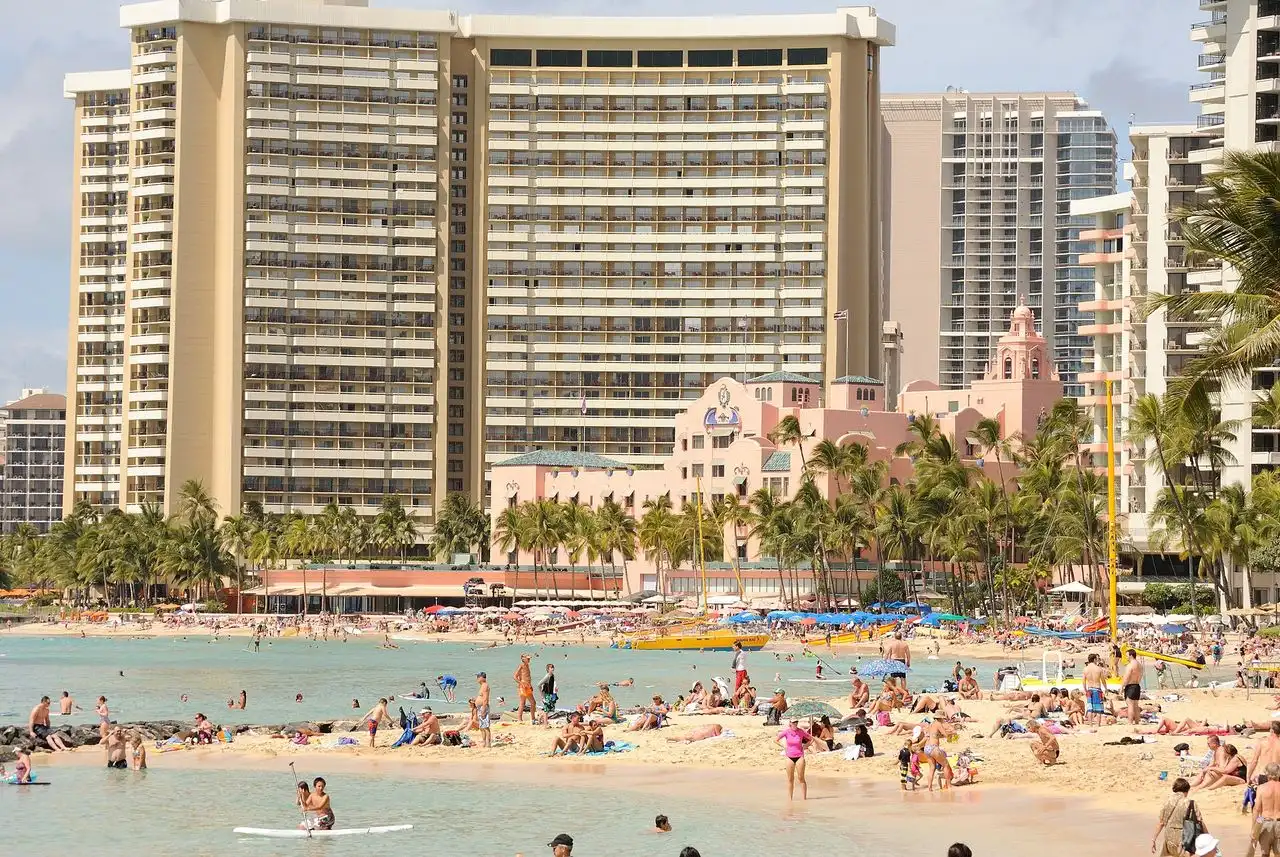
One thing to look up before you commit to a specific tower: how many streets you’ll cross to reach sand. Waikiki hotels describe themselves as beachfront with impressive flexibility, and a block inland with a partial ocean view from the 19th floor is a different daily experience from walking out of the lobby onto the beach path. Read the map, not the room name.
The Diamond Head end and the Gold Coast: quiet, and closer to the crater
East of the zoo, Waikiki calms down fast. Kapiolani Park opens up the space, Kaimana Beach is a swimming spot rather than a scene, and the buildings past it along the Gold Coast are mostly low condos on the water. This is the choice for anyone who wants a morning swim without a crowd and a short walk to dinner rather than a shopping arcade outside the door.
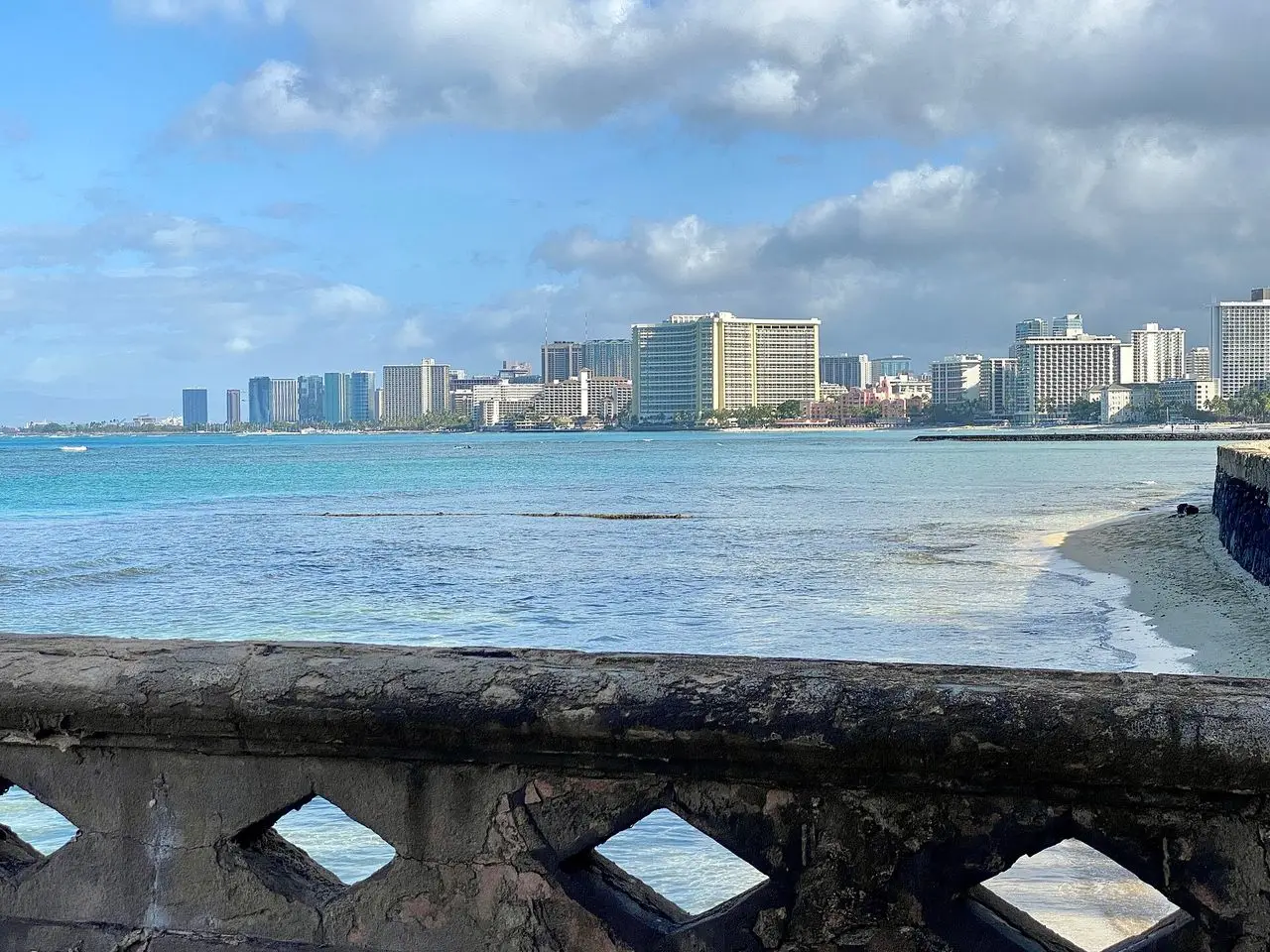
This end also puts you near the Diamond Head trailhead, which runs on a reservation system: non-residents pay $5 each to enter and $10 per vehicle to park, both booked in advance, and the gate is open 6am to 6pm with the last entry at 4:30pm. Walk in from a Gold Coast hotel and you skip the parking charge and the parking lot entirely.
Ala Moana and Kakaako: where you eat when you’re done with the strip
Ala Moana sits just west of Waikiki around the enormous open-air mall of the same name, with a long beach park in front of it that locals use far more than they use Waikiki. Rooms here are a short walk or a single bus stop from the strip, the food is cheaper, and the routes for the rest of the island run from the mall’s transit stops.
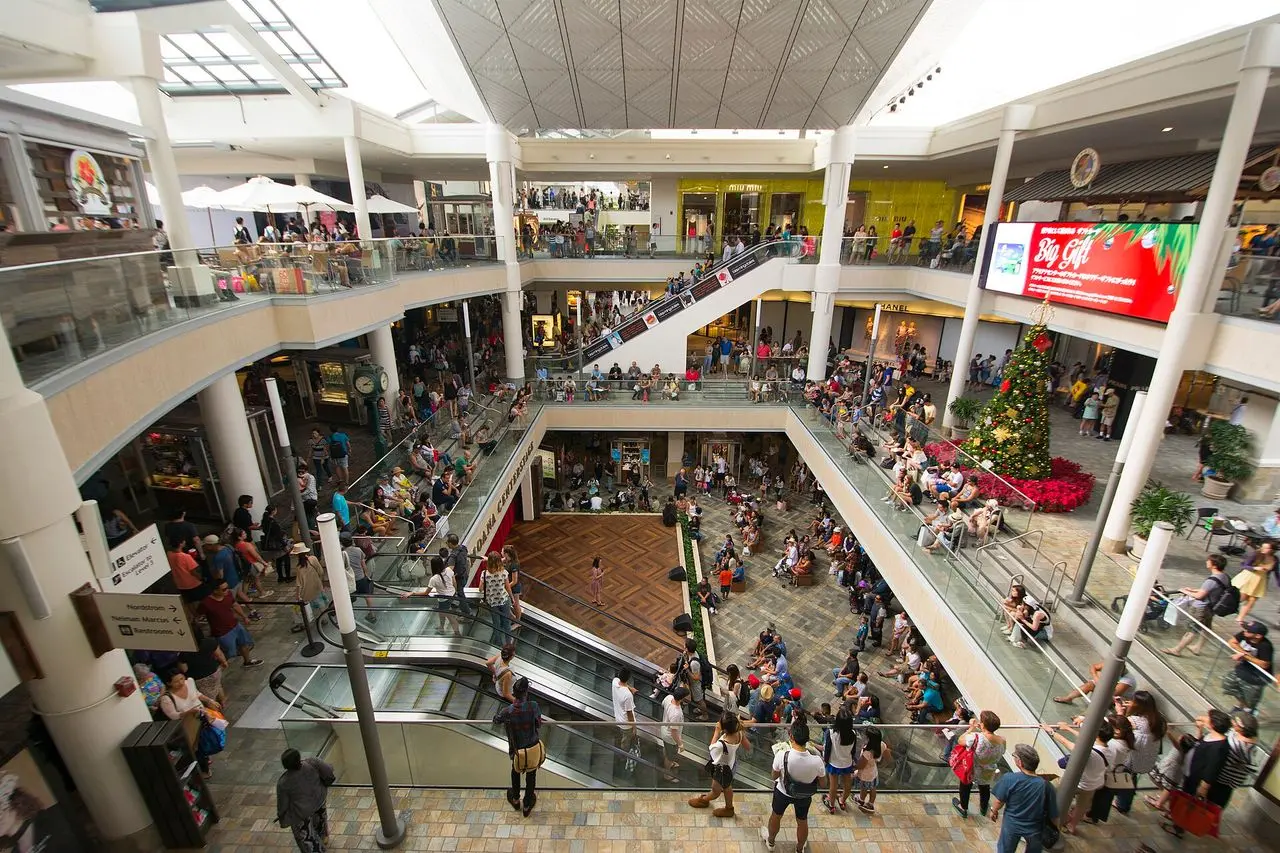
Kakaako, the next district toward downtown, is the newest part of Honolulu: glass towers, murals on the warehouses that survived, breweries and the restaurant openings people in town actually talk about. What it doesn’t have is a beach of its own, so it works best on a second visit, or for anyone who’d rather eat well than swim before breakfast.

Downtown and Chinatown, a little further along, hold the cheapest central rooms on the island and the least reason to sleep in them on vacation. It’s an office district that empties after work, and Chinatown at night is uneven. Consider it for a single night before an early flight, not for a week.
Ko Olina, Turtle Bay and the North Shore: a different island
Ko Olina, on the dry west side, is a gated resort area built around four man-made lagoons with calm, kid-safe water. It’s the answer for people who want a pool, a lagoon and no decisions, and a poor answer for anyone who wants to see Oahu, because everything else on the island is a drive away.
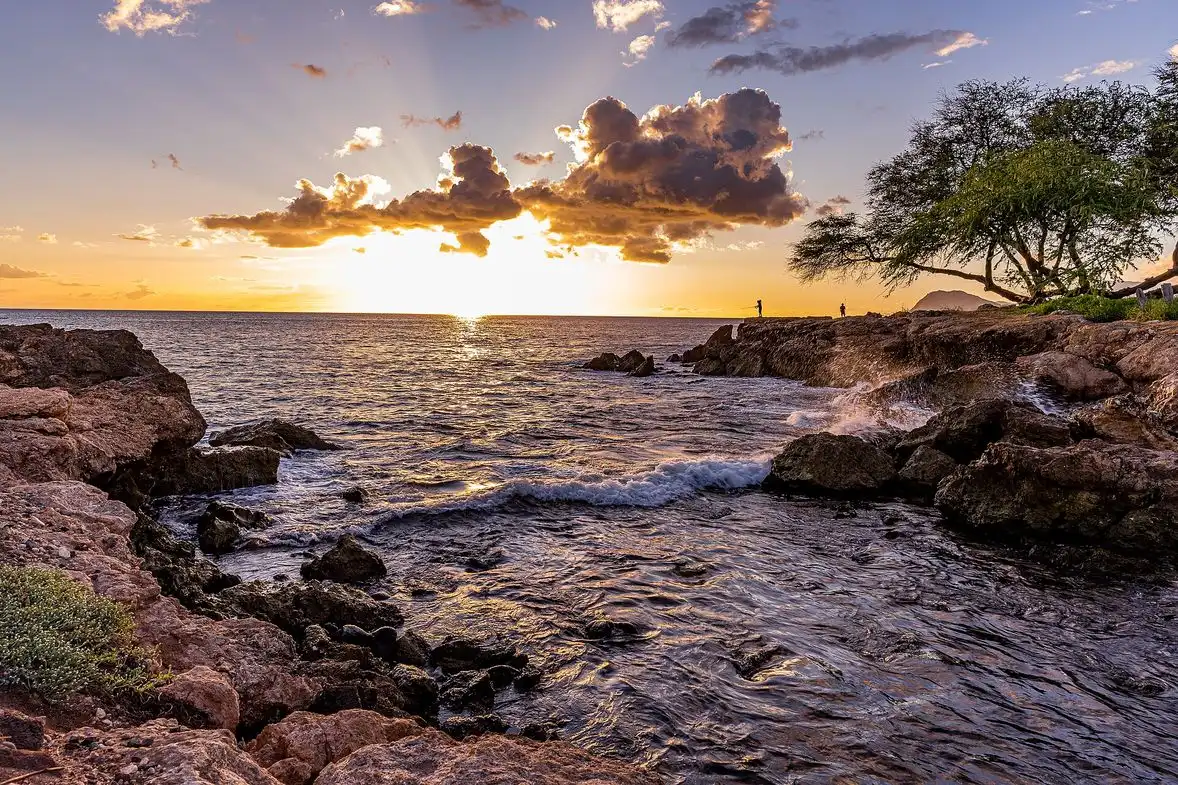
The North Shore is the opposite trade: a small number of legal places to sleep, big winter surf, a slow town in Haleiwa and no city at all. Winter is when the waves and the contests draw crowds; summer flattens the same beaches into calm swimming water. Either way you’re driving into Honolulu for anything urban, so plan it as a second base rather than your only one.
The rental question, and why half of what you see isn’t legal
This is the part that catches visitors who assume Hawaii works like Florida. The city’s own planning department says short-term rentals are permitted only in resort-zoned areas, listed in Ordinance 25-52, and that any unit rented for less than 30 days in an eligible area has to be registered. A handful of older properties operate on legacy Nonconforming Use Certificates, which the owner renews every fall.
Everywhere else, including the residential streets people fall in love with on the windward side, the floor is 30 consecutive days. The city makes owners of those units say so in the listing itself, in words it dictates: “this property may not be rented for less than 30 consecutive days.” A push to raise that floor to 90 days went to federal court and is not what’s being enforced, so read the 30 as the real number.
Two practical consequences. A one-week condo booking outside a resort zone is the listing to be suspicious of, because the owner is either breaking the rule or about to find out; a cancellation two weeks out on Oahu in high season isn’t a problem you can fix from another continent. But a month is legal almost anywhere on the island, which quietly makes Oahu one of the better US destinations for anyone working remotely for four weeks rather than sightseeing for one. Either way, check the address yourself before you pay: the city publishes an STR Eligibility Map, and that map, not the listing’s own description, is what decides whether the booking survives.
What the search screen doesn’t show you
Start with the tax stack, because it’s the biggest hidden number. The state’s transient accommodations tax went from 10.25% to 11% on January 1, 2026 under the green fee law, which also taxes cruise ship stays for the first time. Oahu adds its own 3%. The general excise tax gets passed on at up to 4.712% in Honolulu. That’s 18.712% in total, and the taxes don’t stack on each other: the state’s own rule is that tax visibly passed on to the guest isn’t counted again as the property’s income.
What does get counted is the resort fee. The Department of Taxation states plainly that gross rental proceeds include any mandatory resort fee charged for use of the property, its services or its amenities, so that fee carries the same 18.7% the room does. The percentage is what people brace for; the base it’s applied to is what surprises them.
Both of the charges that vary by property sit outside the headline rate. Most Waikiki towers bill a mandatory daily resort fee for things you may never use, and most charge again for overnight parking, which at a beachfront high-rise is a meaningful nightly number in its own right. Neither is set by any authority and neither is published centrally, so the only honest comparison is to open each property’s own fee disclosure and add the daily total yourself. For scale on the room, the state’s survey put Oahu hotels at an average of $292 a night in June 2026, with the statewide luxury class at $719 and midscale and economy at $232.
Getting in from the airport, and whether you want a car
Skyline, Honolulu’s new rail line, reaches the airport at Lelepaua station, and that’s genuinely useful. It does not reach Waikiki. The line runs from East Kapolei to the Kalihi Transit Center, and the city’s own instruction from the airport is to ride to the airport or Lagoon Drive station and transfer to the W Line bus for Waikiki. The downtown and Chinatown stations aren’t scheduled to open until 2031.

Fares changed on July 1, 2026, and the gap between paying right and paying wrong is real: cash on a bus is $3.25 a boarding with no transfer at all, while a tap of a HOLO card buys a two-hour pass for $3.00 good on both the bus and the rail. The day cap is $7.50, a 3-day pass is $20 and a 7-day pass is $45, and you can buy the card at any Skyline station machine or at an ABC Store in Waikiki. If you’re based in Waikiki and taking a couple of day trips, that beats a rental car with nightly hotel parking. Rent for the specific days you’re leaving town instead, which is also the cheapest way to see the North Shore and the windward coast.
Split the week instead of choosing once
The Oahu weeks that work best don’t pick a single base. Four or five nights in Waikiki covers the city, the beach, Pearl Harbor and the food, and the remaining two or three at Ko Olina or on the North Shore give you the version of Hawaii the brochures sell, without the long round trip you’d otherwise drive for it. Put the second leg at the end of the trip: a quiet lagoon is a better place to be after you’ve adjusted to the time zone than while you’re still waking at 4am. If Pearl Harbor is on the itinerary, lock Arizona Memorial tickets before you fuss over which Waikiki block - morning boat slots vanish faster than hotel rooms.
If you only get one base, take Waikiki and vary the ends. First trip, central; second trip, the Diamond Head end; small kids in tow, the Ewa end near the lagoon. Then compare Honolulu hotels across the areas on your exact dates, add 18.7% to the rate and to the resort fee, and put the nightly parking charge next to both. Two properties advertising the same rate stop being the same price once those three lines are filled in.
With the base sorted, things to do in Honolulu covers the days. If Oahu is still one option among several islands, use which Hawaiian island to pick; the Hawaii travel guide handles the statewide rules once you’ve chosen. If Oahu is part of a longer US trip, best time to visit the USA lines up the seasons, and renting a car in the USA explains the deposit and insurance rules before you book one for the island days.
Read also
- Plan the days: things to do in Honolulu
- Island decision: which Hawaiian island to pick
- The rest of the islands: Hawaii travel guide
- Time the trip: best time to visit the USA
- Before you rent: renting a car in the USA
- Browse more US cities and US states
On the map
The map loads on click - to keep the page lightweight.
The map didn’t load. Check your connection and refresh the page.
Good to know
Tax rates, transit fares, Diamond Head fees and the Oahu hotel averages here came from the Hawaii Department of Taxation, the City and County of Honolulu, TheBus, Hawaii State Parks and the June 2026 state hotel performance report, all read in August 2026. Two things move independently of each other, so check both yourself: rates and fees change without notice, and Oahu short-term rental rules are actively litigated. Before paying for any condo or house, verify the address on the city STR Eligibility Map (honolulu.gov Department of Planning and Permitting) rather than trusting the listing.
Details checked: August 1, 2026
Read also

Before you go · 9 min read
New England Fall Foliage: When and Where to Go
Verified · August 27, 2026Yankee's 2026 forecast, peak windows by state and how to chase color from Vermont's Northeast Kingdom to the NH coast without betting on one weekend.

Before you go · 9 min read
Which Hawaiian Island: Oahu, Maui, Kauai or Big Island
Verified · August 24, 2026Pick one Hawaiian island for a week: Oahu for city and surf, Maui for beaches and Haleakala, Kauai for scenery, Big Island for volcanoes.

Before you go · 11 min read
Where to Stay in Phoenix: Downtown, Scottsdale or Tempe
Verified · August 18, 2026Free Sky Train, then $2 light rail into downtown. Scottsdale is the resort city; Tempe is ASU next door. Phoenix hotel tax is 13.07%.

Before you go · 11 min read
Global Entry and TSA PreCheck for Visitors
Verified · August 15, 2026Global Entry is $120 for five years and closed to most EU passports. TSA PreCheck is $85 or less, and only US citizens and LPRs can buy it.