
Tipping in the USA: How Much and When
How much to tip in the USA: restaurants, bars, cabs, hotels and guides, plus where not to tip and what an automatic service charge really means.
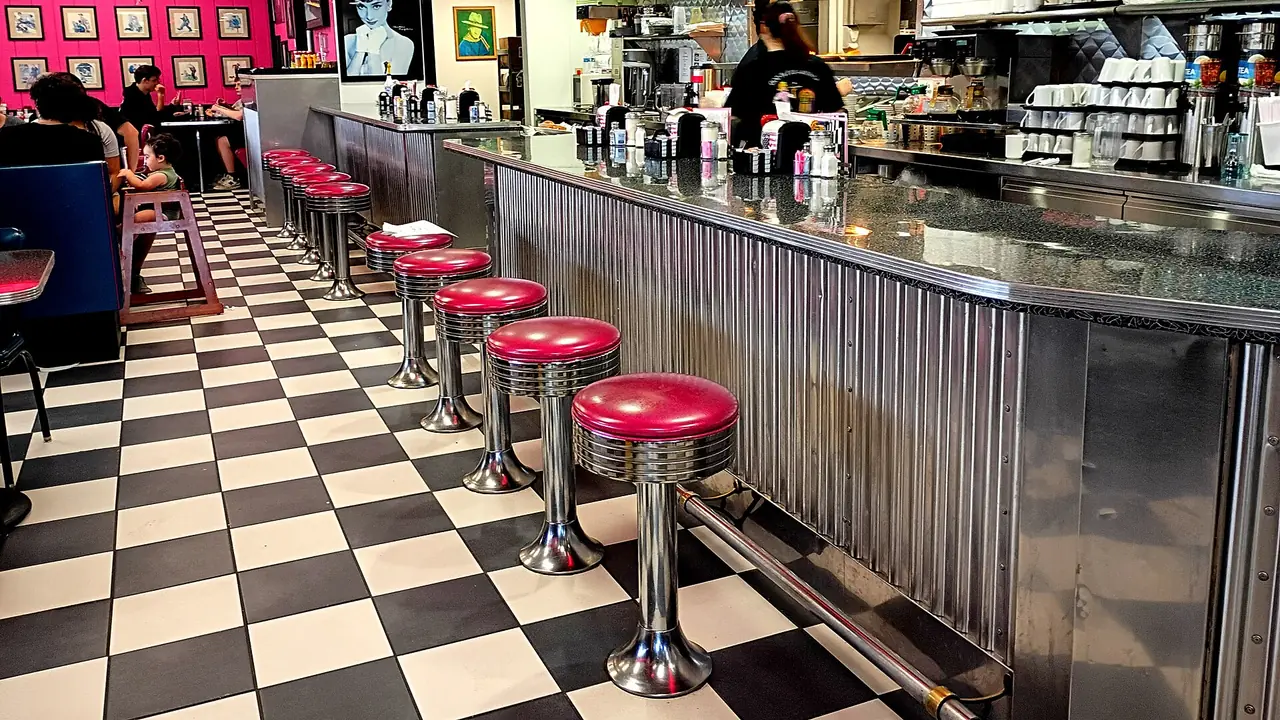
At a sit-down restaurant in the United States, tip 18 to 20 percent of the pre-tax bill. At a bar, a dollar or two per drink. In a cab or a rideshare, 15 to 20 percent. In a hotel, a few dollars a night for housekeeping and a dollar or two a bag for anyone who carries one. At a counter where somebody handed you a coffee and nothing else, you owe nothing, whatever the screen suggests.
That last sentence is the one visitors need most, because the screens now ask everywhere. The reason the restaurant number is so high, and the reason the coffee number is zero, comes down to who is actually paying the wage.
Why 20 percent, and why it isn’t optional
Federal law lets a restaurant pay a tipped worker a cash wage of as little as $2.13 an hour and count tips toward the rest of the minimum wage. The rule dates from 1996 and it hasn’t moved since. If tips fall short, the employer has to make up the difference, but the design assumption is that customers cover most of a server’s income.
That single rule explains the number. A server at a diner isn’t being rewarded for exceptional work when you leave 20 percent; they are being paid. Which is why the American reaction to a 10 percent tip isn’t “that was a little mean” but something closer to alarm.
State law complicates this in one direction only. Some states require employers to pay the full state minimum before tips, and the social expectation at the table hasn’t dropped an inch in those places, so being a visitor who read about it somewhere isn’t a defense. Federal rules also bar an employer, manager or supervisor from keeping any part of an employee’s tips, so what you leave does reach the staff, though it may be shared through a tip pool with bussers and bartenders.
The going rates
None of these are laws. They are what Americans do, which is the standard you’ll be measured against.
| Situation | Customary tip |
|---|---|
| Restaurant, table service | 18-20% of the pre-tax total |
| Bad service you’d still return from | 15%, and say something |
| Bar, per drink | $1-2, or 20% on a tab |
| Coffee counter, takeout, food truck | Nothing required; $1 if they made something |
| Delivery driver | 15-20%, minimum $5 |
| Taxi or rideshare | 15-20% |
| Airport shuttle or hotel van | $1-2 per bag |
| Hotel housekeeping | $2-5 per night, left daily |
| Bellhop | $1-2 per bag |
| Valet parking | $2-5 when the car comes back |
| Barber or hair salon | 15-20% |
| Day tour guide | 10-20%, or $10-20 per person |
| Free walking tour | $10-20 per person; it’s the entire fee |
The mental math is easier than it looks. Move the decimal one place left for 10 percent, then double it for 20. On a $67 check that’s $6.70 doubled, so $13. Nobody expects precision, and rounding up is normal.
Restaurants, in detail
Tip on the pre-tax subtotal. Tipping on the tax-inclusive total is common and nobody will correct you, but the base is the food and drink.
If the group splits the check across several cards, each person tips on their own share. If one person pays, they tip on the whole thing and settle up privately. If you sit for three hours over two coffees at a busy brunch place, tip closer to what the table would have earned, not what you spent - occupying a table is the cost you imposed.
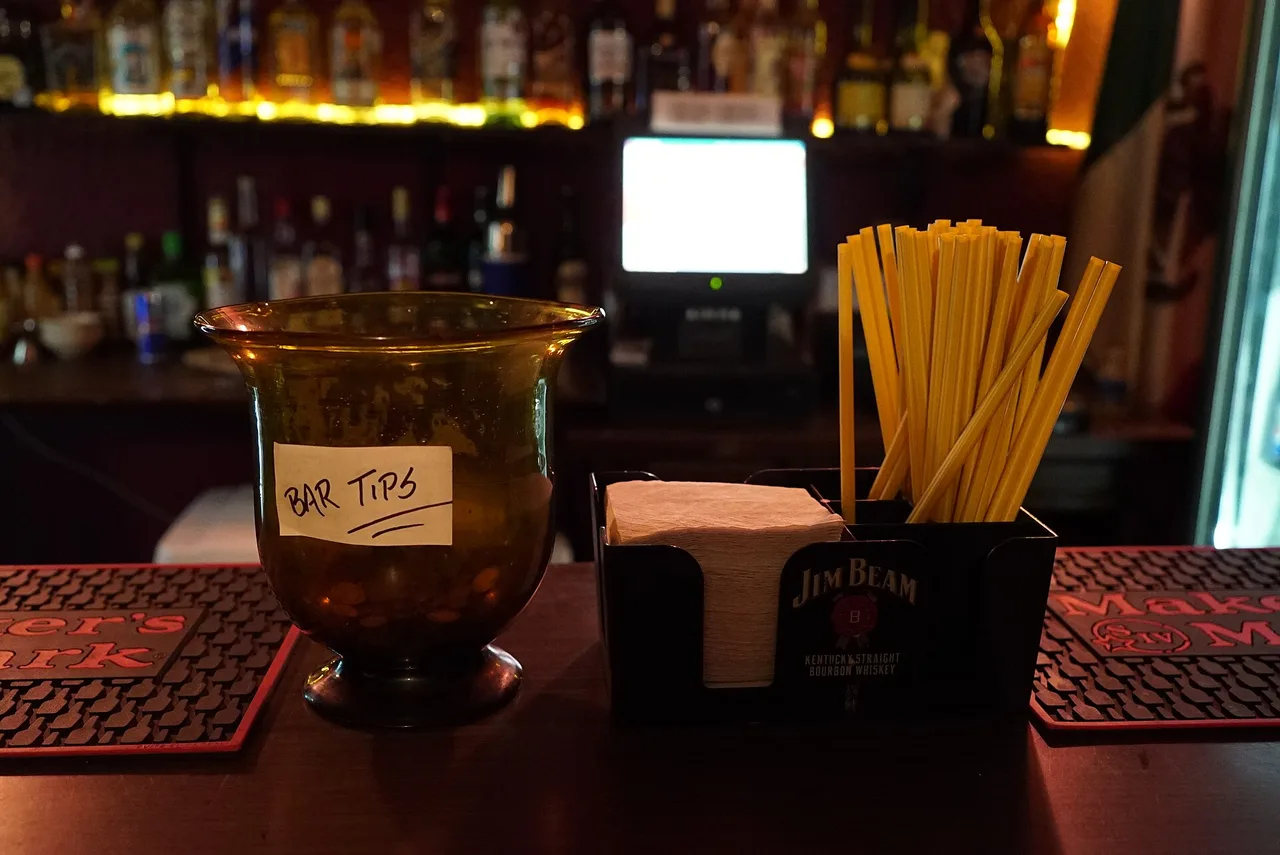
At a bar, a dollar a drink for beer or a simple pour, two for cocktails that took real work. Running a tab and tipping 20 percent at the end works out about the same and is less fiddly.
The tablet, and the thing nobody tells you
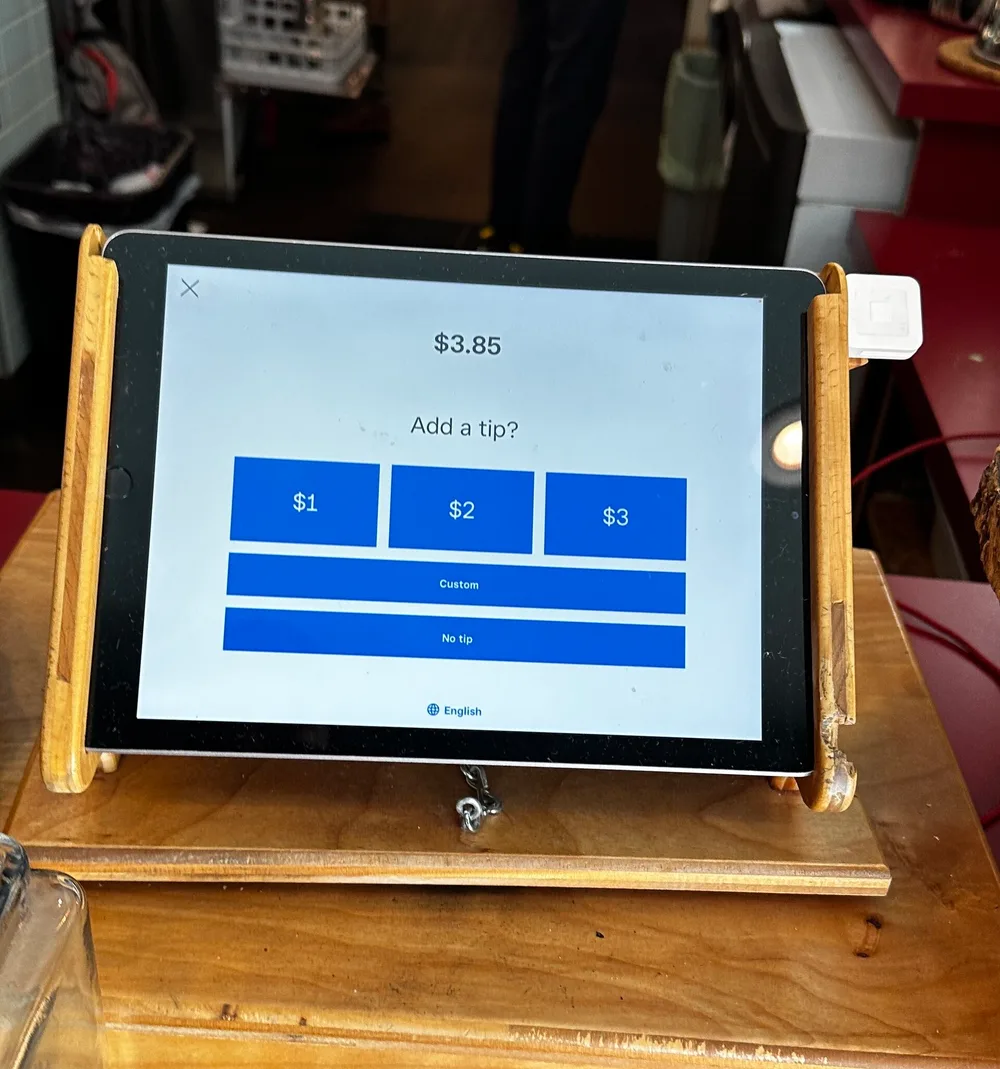
Somewhere in the last few years the payment terminal at the counter started spinning around to face the customer with three buttons on it: 18%, 20%, 25%. Sometimes 30%. On a $3.85 coffee. Americans complain about this constantly and have a name for it, tipflation, which should tell you how obligatory it is.
Here is the honest guidance. Counter service, where you order at a register, take a number and collect your own food, carries no expectation. A dollar in the jar for a barista who actually built something is a kind gesture. Twenty-five percent on a bagel isn’t a norm, and the person behind the counter doesn’t think it is either. There is a “no tip” or “custom” option on every one of those screens, sometimes buried, and using it isn’t a social failure.
The distinction that holds up: did someone serve you over a period of time, or did someone hand you a thing? Table service, a bartender keeping a tab, a driver on a 40-minute run, a guide for a day - those are service. A transaction across a counter isn’t.
Automatic gratuity and service charges
Large parties, typically six or more, often get an automatic gratuity added to the check, usually 18 or 20 percent. Read the bill. Adding another 20 percent on top of an included service charge is one of the most common ways visitors overpay in America, and no server is going to stop you.
A legal wrinkle sits underneath this. Under federal wage rules a compulsory service charge is not a tip: it becomes part of the restaurant’s gross receipts, and the business decides how much of it, if any, reaches the staff. A voluntary tip is legally the employee’s. So an automatic 20 percent on a party of eight satisfies the social obligation, but it doesn’t guarantee the money lands where a tip would. If the service was good and you want to be sure, a small cash tip on top does that job.
The same logic applies to hotel resort fees and destination fees. Those are the hotel’s revenue, not a tip, and they do nothing for the housekeeper.
Cabs, rideshare and hotels
Taxis and rideshare run on the same rate, 15 to 20 percent of the fare. Rideshare apps ask after the ride and give you up to a day or so to decide, which is useful when a driver did something helpful.
Hotels are where visitors underspend most. Housekeeping is the one to get right: $2 to $5 per night, left daily rather than in a lump at the end, because the person cleaning your room on Tuesday may not be the person there on Friday. Leave it somewhere obvious with a note if you can. A dollar or two per bag for the bellhop, a few dollars to the valet when the car is returned rather than when you hand it over, and nothing at all at the front desk unless the clerk has rescued your trip.
Where you don’t tip at all
Retail shops. Fast food chains. Movie theaters, museums and ticket counters. Doctors, dentists, nurses and anyone in a clinical setting. Government employees of any kind, including park rangers and TSA officers, who are not permitted to accept them. Flight attendants on US carriers. Gas stations, where you pump your own anyway in nearly every state.
Tour operators’ office staff, hotel managers and business owners working their own counter are all optional; a small independent owner who spent twenty minutes helping you is a nice tip, but nobody expects it.
Paying the tip
On a card, the receipt has a tip line and a total line. Write the tip, write the new total, sign. The total line is what gets charged, so if the two disagree, the total wins - a genuine source of accidental overpayment.
Cash tips reach staff faster and are common even when the meal goes on a card. If your card is foreign and you’re worried about how the tip posts, cash removes the question entirely. Some restaurants now list a small “kitchen appreciation” or “employee benefits” line on the bill; that’s a service charge by another name, so factor it in before you decide what to add.
A last thought for anyone finding all this uncomfortable. The system is genuinely strange, plenty of Americans dislike it, and there’s a real argument about whether it should exist. None of that helps the person who just brought you dinner. Tip the American rate while you are here, budget for it as part of the meal rather than a surprise on top, and read our guide to what a US trip actually costs so the arithmetic doesn’t ambush you.
Read also
- The full budget picture: how much does a USA trip cost
- Where the bills are highest: things to do in New York City
- Hotel taxes and fees explained: where to stay in New York City
- Entering the country: US entry and customs: what you can bring
Good to know
Percentages here are customary rates, not law. The wage rules they rest on were checked against the current eCFR text of 29 CFR part 531 on 24 July 2026. State and city rules can be more generous than the federal floor.
Details checked: July 24, 2026
Read also

Before you go · 9 min read
New England Fall Foliage: When and Where to Go
Verified · August 27, 2026Yankee's 2026 forecast, peak windows by state and how to chase color from Vermont's Northeast Kingdom to the NH coast without betting on one weekend.

Before you go · 9 min read
Which Hawaiian Island: Oahu, Maui, Kauai or Big Island
Verified · August 24, 2026Pick one Hawaiian island for a week: Oahu for city and surf, Maui for beaches and Haleakala, Kauai for scenery, Big Island for volcanoes.

Before you go · 11 min read
Where to Stay in Phoenix: Downtown, Scottsdale or Tempe
Verified · August 18, 2026Free Sky Train, then $2 light rail into downtown. Scottsdale is the resort city; Tempe is ASU next door. Phoenix hotel tax is 13.07%.

Before you go · 11 min read
Global Entry and TSA PreCheck for Visitors
Verified · August 15, 2026Global Entry is $120 for five years and closed to most EU passports. TSA PreCheck is $85 or less, and only US citizens and LPRs can buy it.