
New Jersey Travel Guide
The Jersey Shore town by town, Cape May and Atlantic City, beach tag rules, the Pine Barrens and how to drive a state that bans self-service gas.
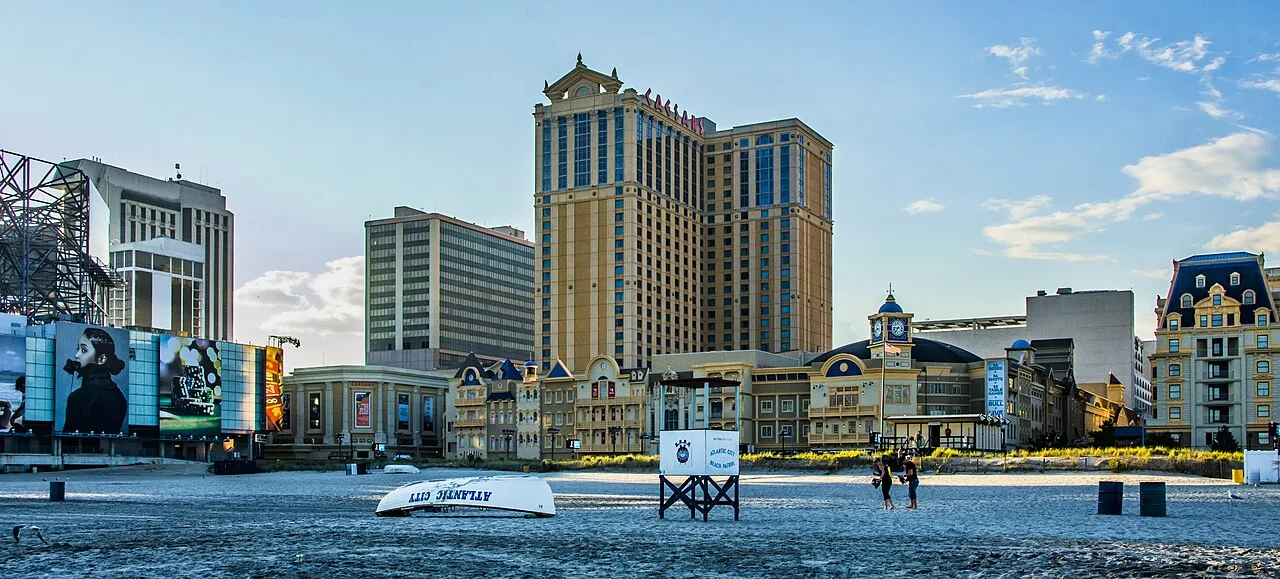
New Jersey’s case for itself is about 130 miles of Atlantic coast, and the towns strung along it are far less interchangeable than a map suggests. One is a casino strip, one is a Victorian landmark, one is a music town that came back from the dead, and two of them ban alcohol outright. Pick the wrong one for your trip and you’ll spend a week wondering what the fuss is about; pick the right one and you’ll understand why half of Philadelphia and New York empties out here every summer weekend.
The shore runs top to bottom in a rough order that locals know by heart. Sandy Hook and the beaches nearest New York start it, then Asbury Park and Long Branch, then the family towns of Point Pleasant and Seaside, then Long Beach Island, then Atlantic City, and finally the Cape May County towns: Ocean City, the Wildwoods, Cape May itself. Inland, the state does something completely different, with a million acres of pine forest in the south and a mountain gap on the Delaware in the northwest.
Which shore town is yours
Three variables decide the answer, and they’re not the ones travel sites lead with.
Alcohol. Ocean City has been dry since it was founded as a Methodist camp meeting town, and Cape May is a wet town where the rules still vary block to block. If your idea of a beach day ends with a drink, check before you book, because bringing your own to a dry town’s restaurant is normal here (many places are happily BYO) but buying one isn’t.
Boardwalk or no boardwalk. Wildwood and Point Pleasant run the loud, ride-heavy version. Cape May has no amusement boardwalk at all, and that’s exactly why people choose it. Asbury Park sits in the middle, with a boardwalk full of bars and record stores rather than log flumes.
Money. Cape May, Avalon and Stone Harbor are the expensive end. The Wildwoods are the cheap end, with motels that still have 1960s neon and free beaches. Atlantic City is its own economy, where a casino room in midweek can undercut a shore motel by half.
The beach tag rule that catches everyone out
Most Jersey Shore towns charge for the beach itself. Tags are checked from Memorial Day weekend to Labor Day, usually for anyone 12 and older, and each town sets its own price: Cape May charges $10 a day, $25 for a week, or $30 for the season if you buy before 1 May and $40 after. Ocean City’s season tag is $30 by the end of May, Avalon and Stone Harbor $35.
Then there are the free ones, and this is the money-saving detail nobody puts on a postcard. Wildwood, North Wildwood, Wildwood Crest, Strathmere and Atlantic City charge nothing at all. A family of four staying in the Wildwoods saves well over $100 a week against the same trip in Avalon, on beaches that are, if anything, wider.
Cape May
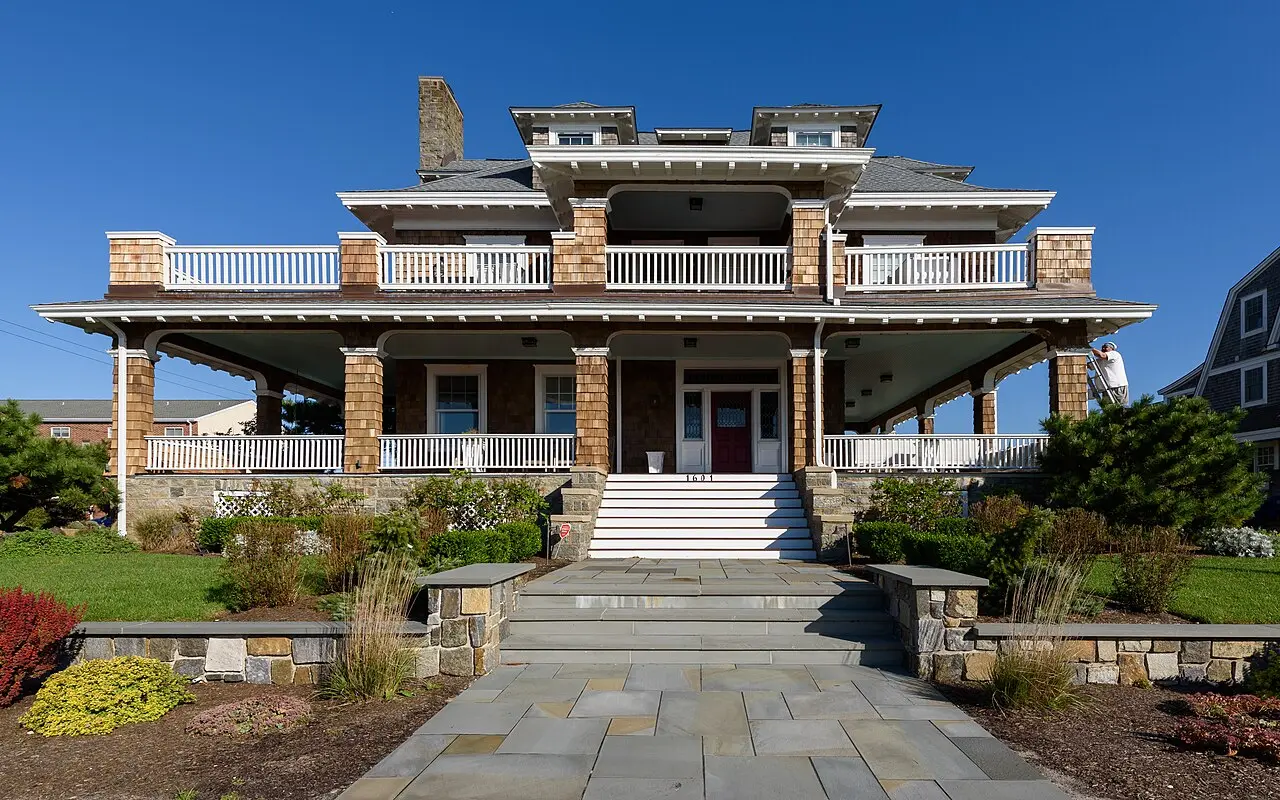
Cape May is the reason to come off-season. The Historic District was designated a National Historic Landmark in 1976 and holds one of the largest concentrations of 19th-century frame houses anywhere in the country, painted in the colors that launched a thousand jigsaw puzzles. The town works in October and even in December, when it does Christmas trolley tours and the inns are half the summer rate.
The birding and the ferry are what make the town genuinely distinctive rather than merely pretty. Cape May Point sits on a major migration flyway, and in fall the birding is world class, with hawk and songbird counts that draw people from across the country. And the Cape May-Lewes Ferry crosses 17 miles of Delaware Bay to Lewes in 85 minutes, running year round with vehicle space that must be reserved. If you’re heading south toward Delaware, Maryland or Virginia, that ferry replaces four hours of driving around the head of the bay.
Atlantic City
Atlantic City invented the boardwalk. The first one opened in June 1870 to stop guests tracking sand into hotel lobbies and railcars, and the idea was copied around the world. What survives today is a strange, honest mix: a strip of casino towers, a beach that costs nothing, and blocks of the old city that never recovered from the industry’s decline. It works best as a one- or two-night stop rather than a base, and midweek casino room rates are the cheapest sleep on the shore.
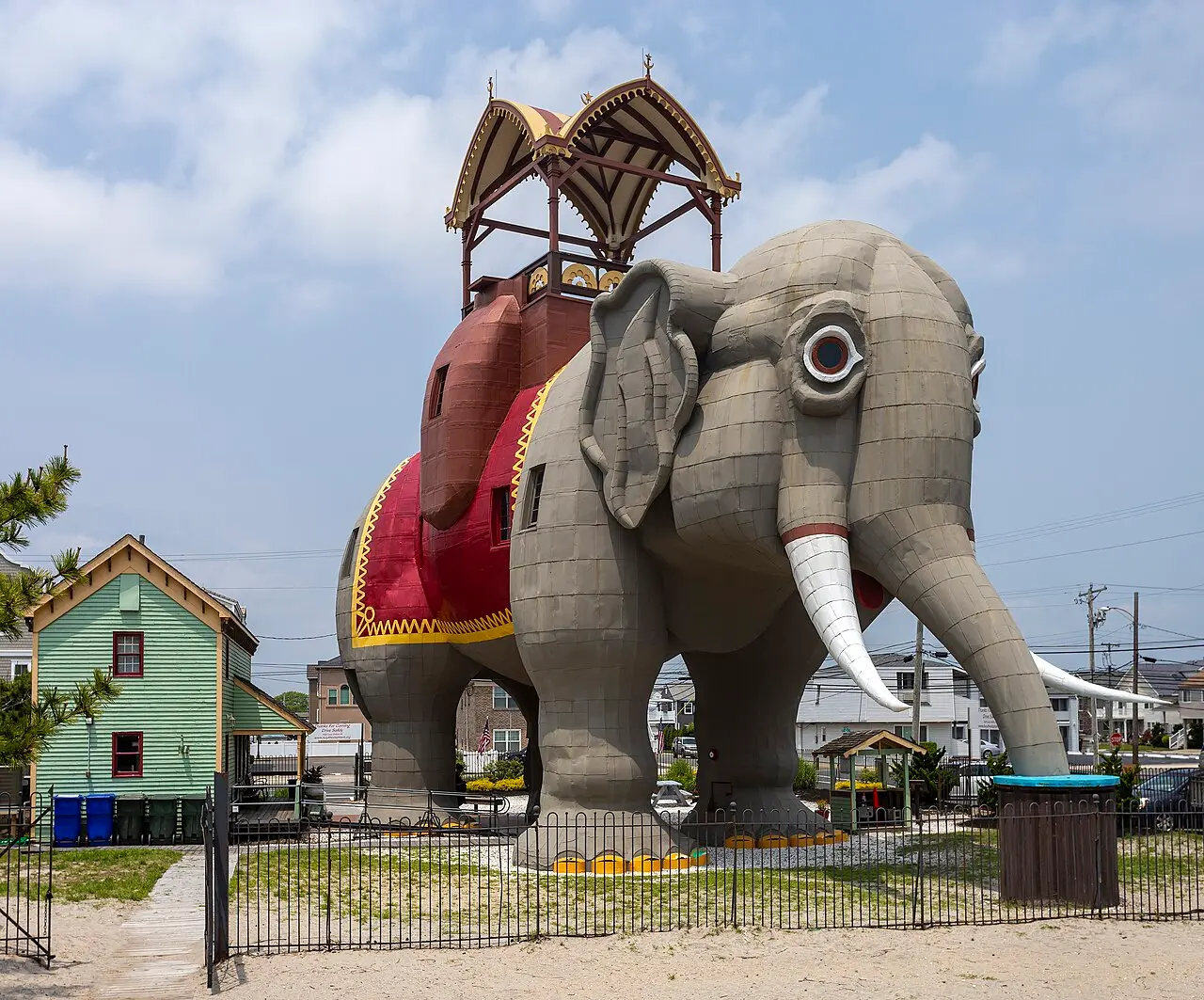
Steel Pier is still out over the water with a Ferris wheel, and four miles down the beach in Margate stands Lucy the Elephant, a six-story wooden elephant built in 1881 as a real-estate gimmick and now a National Historic Landmark you can climb inside.
Asbury Park
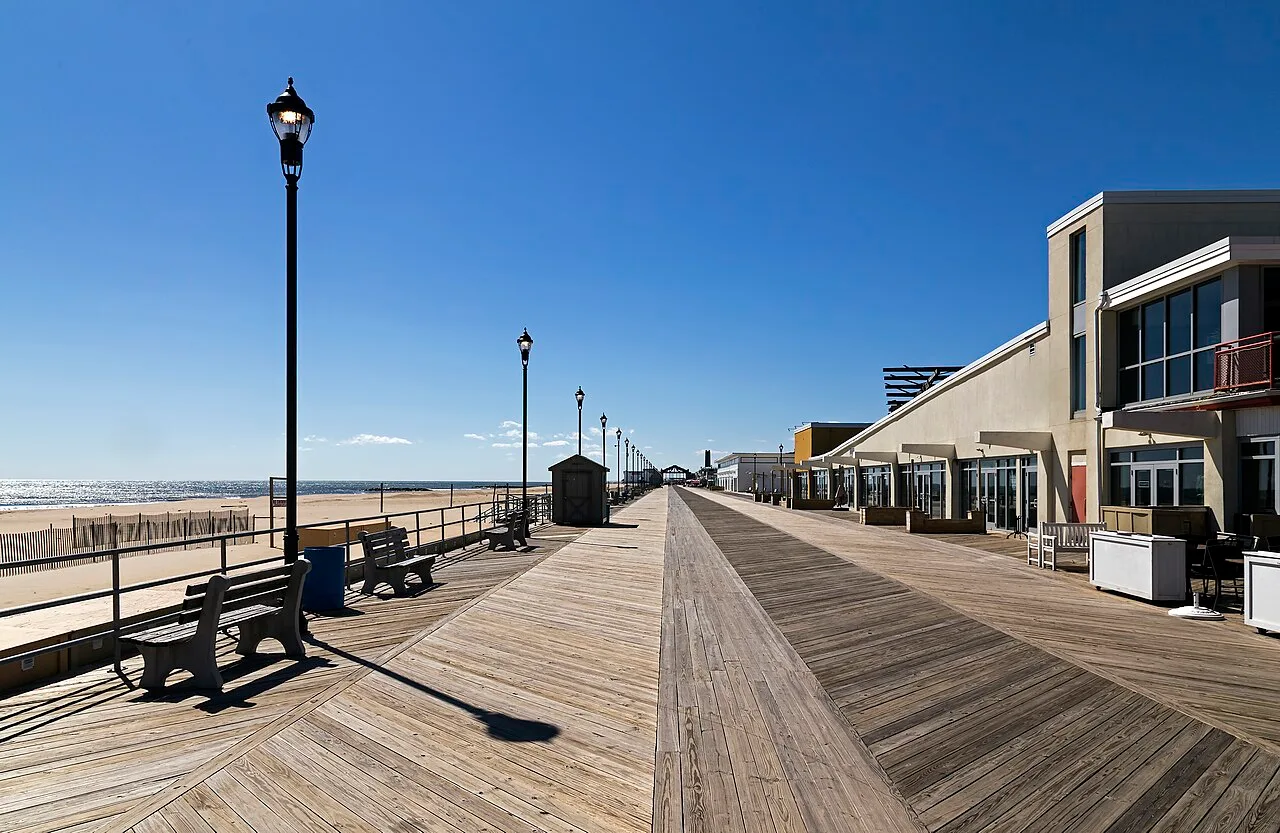
Asbury Park is the shore town for people who don’t much like shore towns. It was a wreck for thirty years, and the recovery has left it with a boardwalk of independent bars, a huge vinyl store, a strong LGBTQ scene and the Stone Pony, the club where Bruce Springsteen and Southside Johnny built their reputations in the mid-1970s and where touring bands still play. The beach is ordinary. Everything behind it isn’t.
It’s also the easiest shore town to reach without a car. NJ Transit’s North Jersey Coast Line runs from New York Penn Station, sometimes with a change at Long Branch, and the station is a few minutes’ walk from Cookman Avenue and the sand. Come for a Saturday, leave on the last train, skip the Parkway entirely.
Inland: the Pine Barrens, the Gap and Princeton
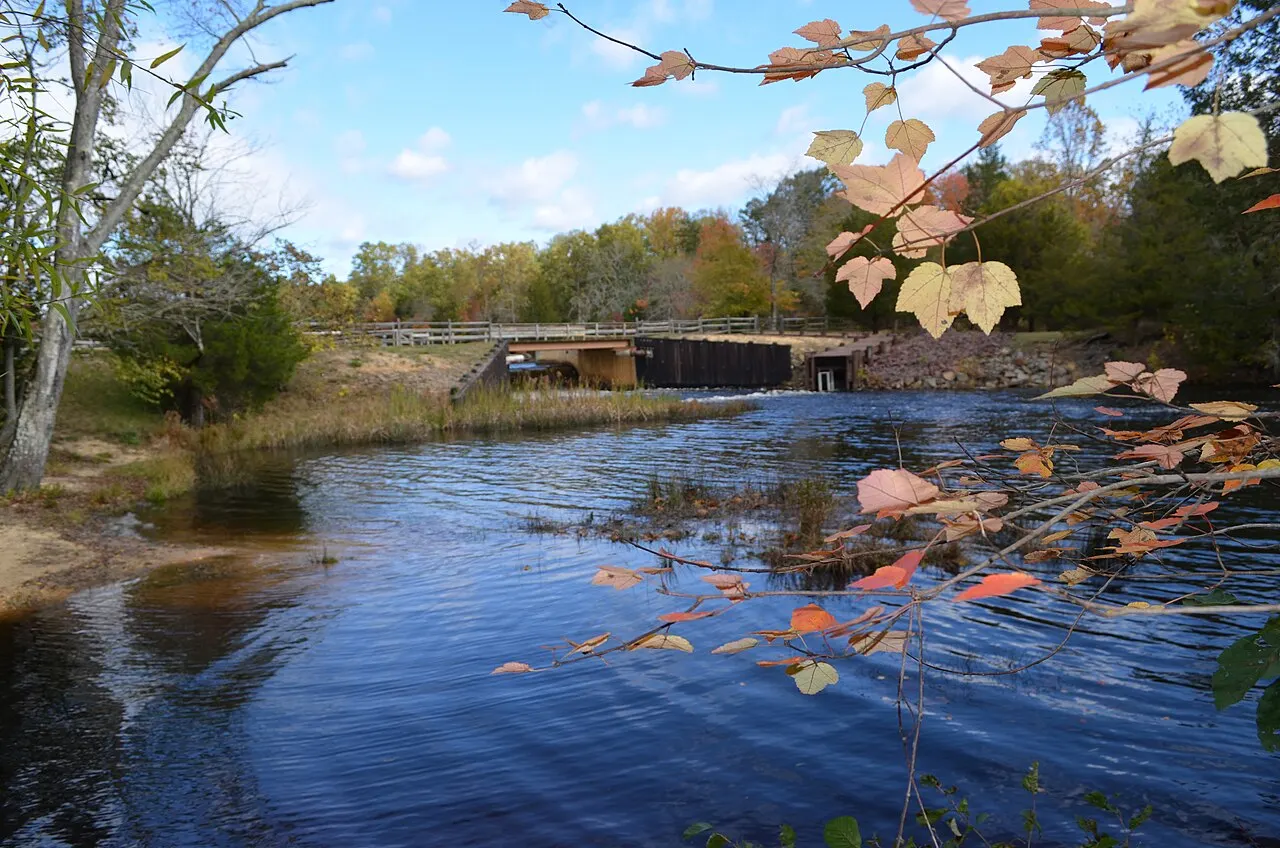
The Pinelands National Reserve covers more than a million acres across seven counties in the south of the state - Congress created it in 1978 as the first National Reserve in the country, and it’s also a UN Biosphere Reserve. On the ground it’s dwarf pine forest, tea-colored cedar rivers and near-empty sand roads, with canoe and kayak rentals on the Mullica and Batsto and the restored ironworks village at Batsto as the obvious first stop. It’s 20 minutes from the Atlantic City casinos and feels like a different century.
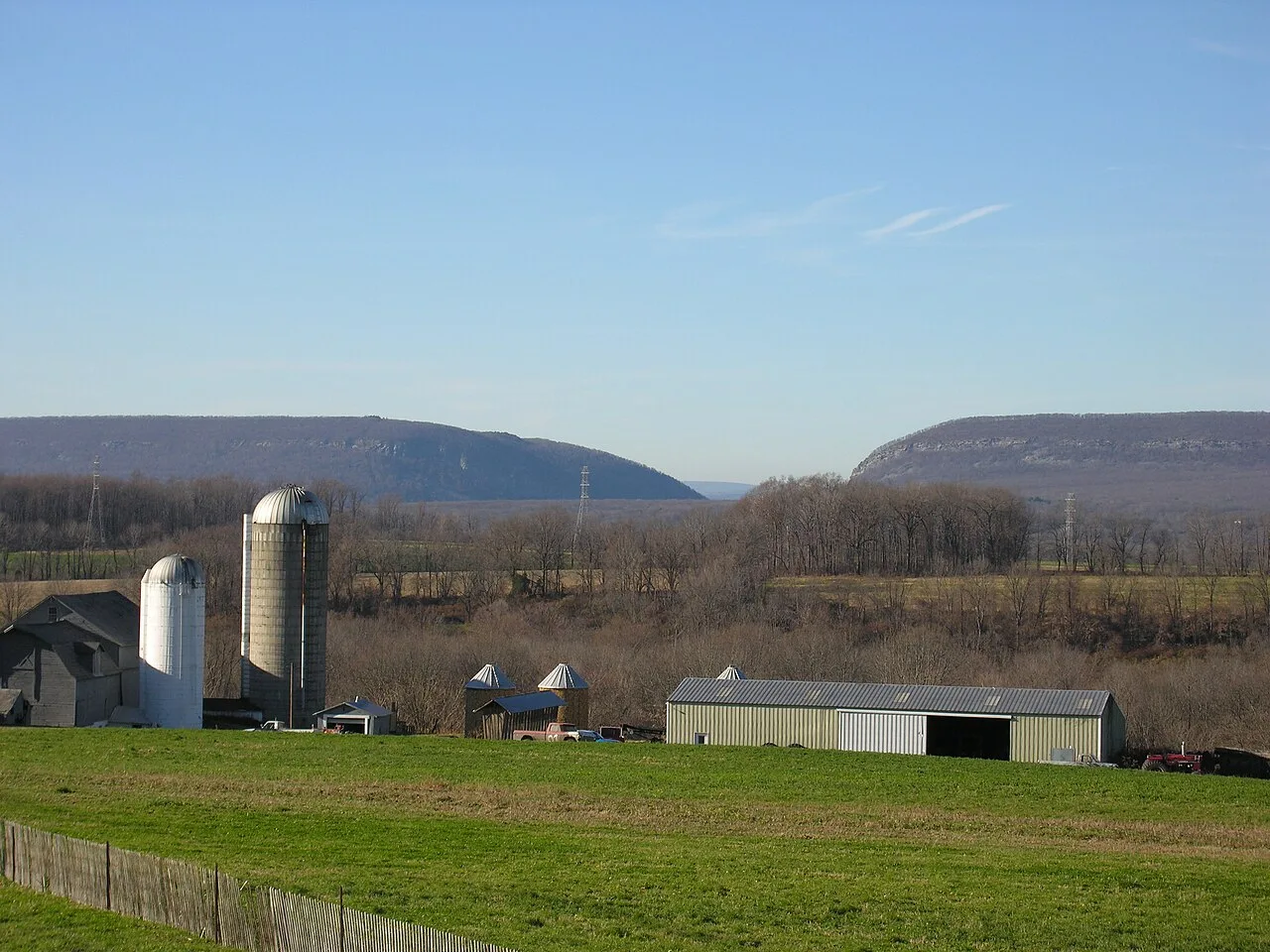
In the northwest, the Delaware Water Gap cuts a notch through the Kittatinny Ridge, with the Appalachian Trail running along the top and swimming, tubing and waterfall hikes below. And in the middle of the state, Princeton is a beautiful campus town, an easy half day from either city, with a Gothic university you can walk through for nothing.
Driving here: two local rules
You can’t pump your own gas. New Jersey has banned self-service since the Retail Gasoline Dispensing Safety Act of 1949, and when Oregon dropped its ban in 2023 this became the only state in the country where an attendant has to do it. Stay in the car, say how much you want, and don’t get out to help.
You also often can’t turn left. Across much of the state, a left turn is made by exiting right onto a ramp called a jughandle, which loops you around to cross at the light. Watch for the “All Turns” and “Left Turns” signs on the right shoulder, and if your navigation says turn left at a big divided highway, expect the ramp to come up before the intersection, not after.
The roads add two more things to plan for. The Garden State Parkway and the New Jersey Turnpike are both toll roads on E-ZPass, and rental companies add a daily fee for their transponder. And Friday afternoon southbound on the Parkway in July is a bad idea; go early, go late, or take the train.
When to go, and where it fits
Beach season is Memorial Day to Labor Day, and the shore is at its most expensive and most crowded through July and August. September is the local secret: warm ocean, thin crowds, tags no longer checked in most towns after Labor Day. October belongs to Cape May and the bird migration.
New Jersey also solves a problem for anyone doing New York. The Statue of Liberty ferries run from Liberty State Park in Jersey City as well as from Manhattan, with parking at about $7 a car and far shorter lines, which makes it the smart approach if you’re driving - see things to do in New York City for how the rest of that day fits together, and where to stay in New York if a cheaper base across the river appeals.
Read also
- The city next door: things to do in New York City
- Beyond the boroughs: New York State travel guide
- Another Atlantic coast trip: Massachusetts travel guide
- Browse more US states and US cities
On the map
The map loads on click - to keep the page lightweight.
The map didn’t load. Check your connection and refresh the page.
Good to know
Beach tag prices and ferry fares are set town by town and change every season - the figures here were checked in July 2026 against the 2026 rates, so confirm with the town or operator before you travel.
Details checked: July 24, 2026
Read also

States · 11 min read
Connecticut: Mystic, New Haven and the Shoreline
Verified · September 12, 2026Mystic Seaport at $35 adult, free Yale galleries in New Haven, and Gillette Castle on the river - how a Connecticut weekend actually fits.

States · 9 min read
North Dakota: Medora and Theodore Roosevelt NP
Verified · September 5, 2026The 36-mile South Unit loop starts in Medora, entrance $30 per vehicle, cashless from May 2026 - how to plan Theodore Roosevelt National Park.

States · 9 min read
Arkansas Travel Guide: Hot Springs & Ozarks
Verified · September 4, 2026Fee-free Hot Springs NP downtown, free Crystal Bridges in Bentonville, and the 135-mile Buffalo - how to string an Arkansas road trip.

States · 10 min read
Indiana Travel Guide: Indy, Speedway, Shore
Verified · September 5, 2026IMS Museum at $25, Kiss the Bricks at $15, Brown County hills and Lake Michigan shore - an Indiana trip beyond a Chicago beach day.