
Vermont Travel Guide: Route 100, Stowe and Maple Country
Burlington to the Northeast Kingdom: where Vermont fall color peaks first, why Route 100 beats I-89 and what to book before Columbus Day.
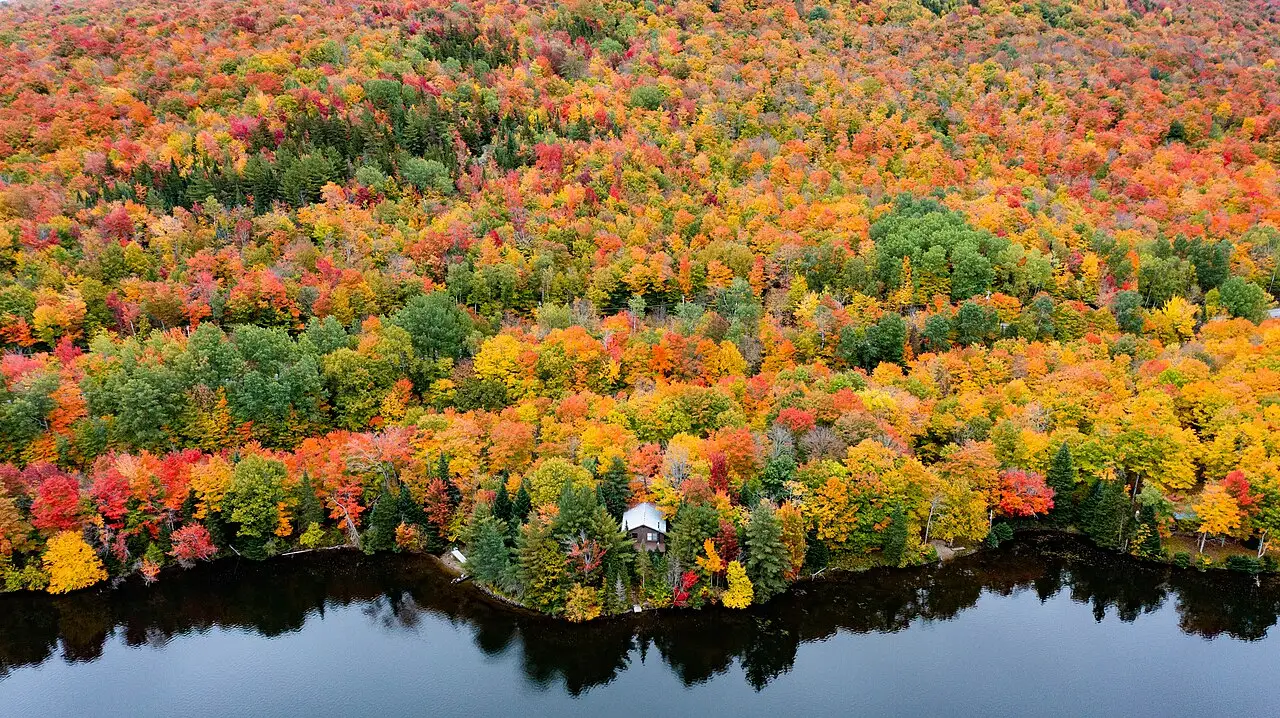
Vermont is the state people picture when they say “New England fall” - sugar maples, white church steeples, cider donuts - and they’re not wrong about the look. What catches first-timers off guard is the scale: you can cross the state in about two hours on I-89, yet the trips that work best take four days on back roads because every valley peaks on a different week.
You’ll fly into Burlington (BTV) or drive up from Boston, rent a car you actually want on mountain grades, and pick a north-to-south route - and know where the dates come from. The windows below are typical, off Yankee’s evergreen Vermont foliage guide, which is bylined September 2021: climatology, not a prediction. The one genuine 2026 signal in Yankee’s August forecast is that a warm pattern should push classic leaf-peeping weather later than usual, with a September update still to come. Typical windows, checked 27 August 2026: Northeast Kingdom early peak late September to early October, Smuggler’s Notch and central Vermont middle peak end of September to mid-October, statewide color mid-to-late September through mid-October. Our New England fall foliage planner explains how that wave compares to New Hampshire and Massachusetts.
Burlington and the Champlain Valley
Burlington is Vermont’s largest city - college town energy on Lake Champlain, a walkable downtown, and the airport most visitors use. It’s a smart first night if you’re arriving late from Boston or New York: you don’t sacrifice a foliage morning to white-knuckle a mountain pass in the dark.
The Champlain Islands and waterfront bike path give you low-elevation color that often peaks after the high gaps - useful if you’re building a trip that starts north and ends here. Montpelier, the state capital, sits inland to the southeast; it’s among the smallest state capitals by population in the country, which tells you how rural this state feels five minutes outside town.
Stowe and Smuggler’s Notch
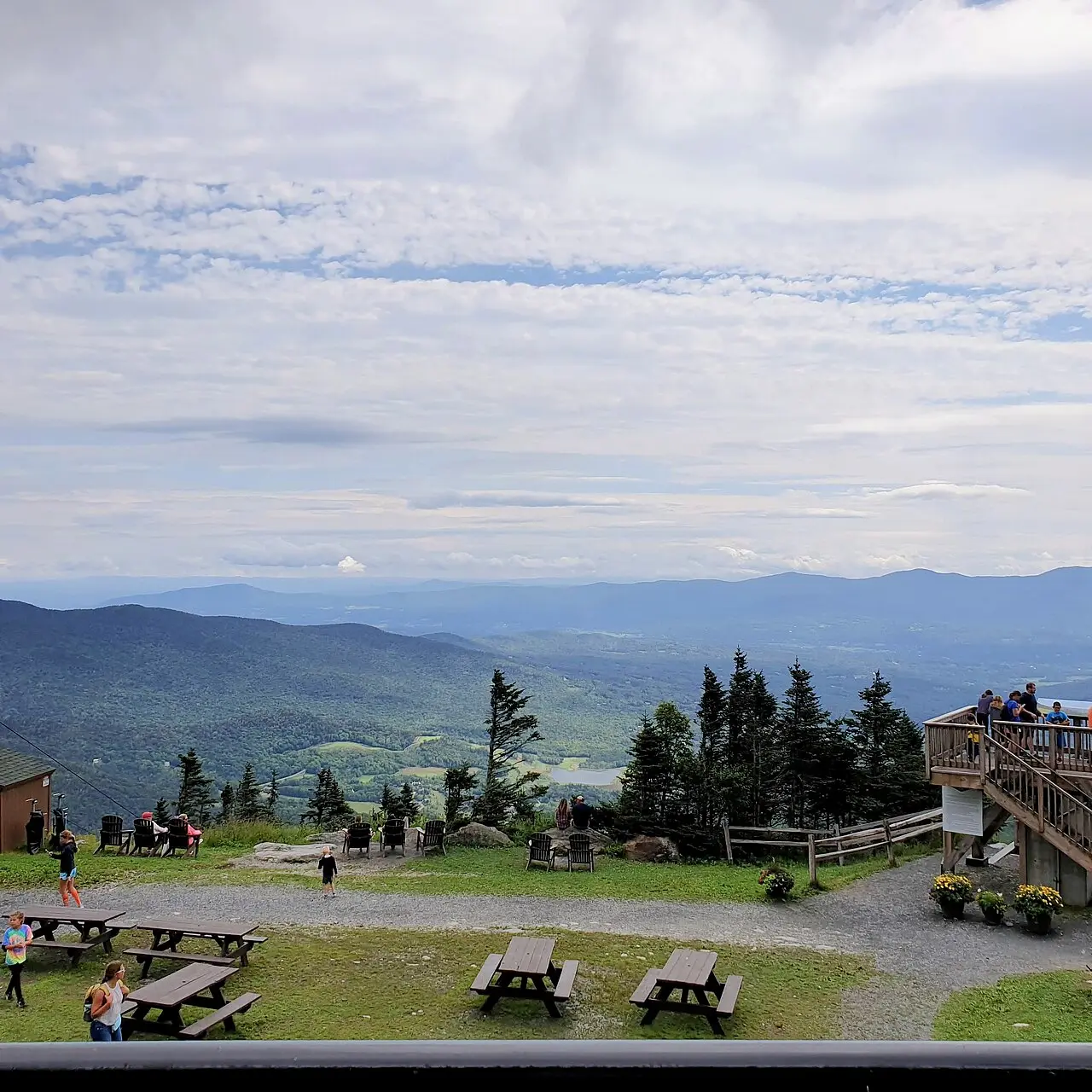
Stowe is the postcard Vermont of ski-country inns, craft beer and Mount Mansfield, the state’s highest peak. In fall, ski resorts run chairlift rides for leaf peepers - book ahead on Columbus Day weekends.
Smuggler’s Notch (Route 108 through the notch) is the dramatic shortcut between Stowe and Jeffersonville: tight turns, cliff walls and color that Yankee’s foliage guide places in middle peak (end of September to mid-October). RVs and long trailers are restricted; read the signs before you commit.
Route 100 and the Mad River Valley
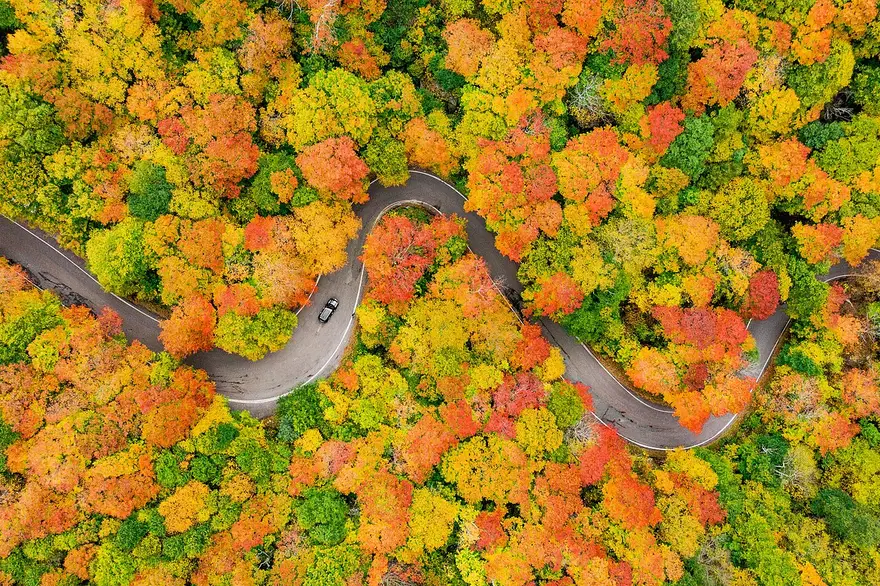
If Vermont had an official fall spine, it would be Route 100 - about 217 miles by the state route log, from the Massachusetts line at Stamford to VT 105 in Newport (Yankee’s guide rounds it to 200). Don’t try to “do” all of it in one day; you’ll spend the afternoon in parking lots.
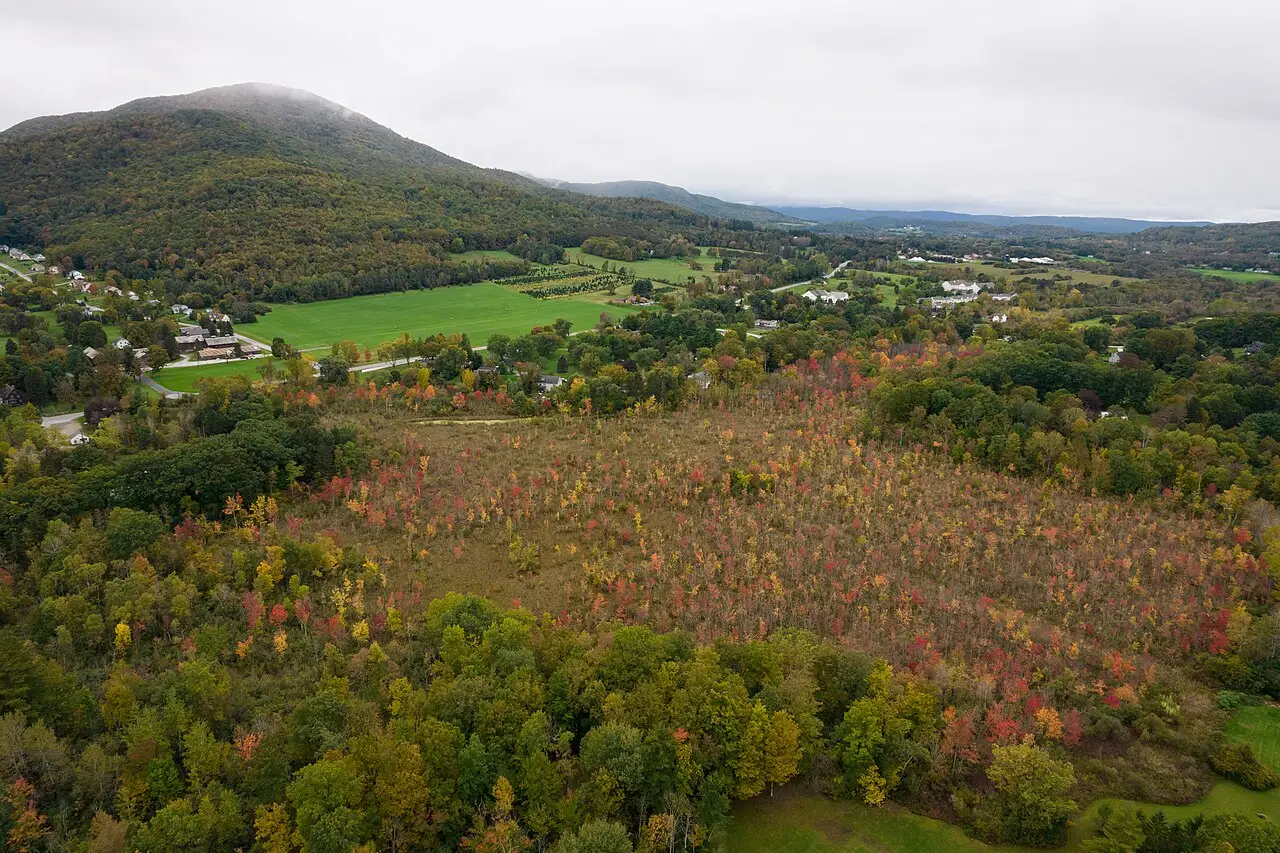
The Mad River Valley (Waitsfield, Warren, Fayston) is where locals go when Stowe feels crowded: covered bridges, farmstands and the kind of valley floor color that photographs well in morning fog. Waterbury adds the Ben & Jerry’s factory tour and decent coffee between drives - check benjerry.com for tour slots; they shrink in shoulder season.
Woodstock and the classic village loop
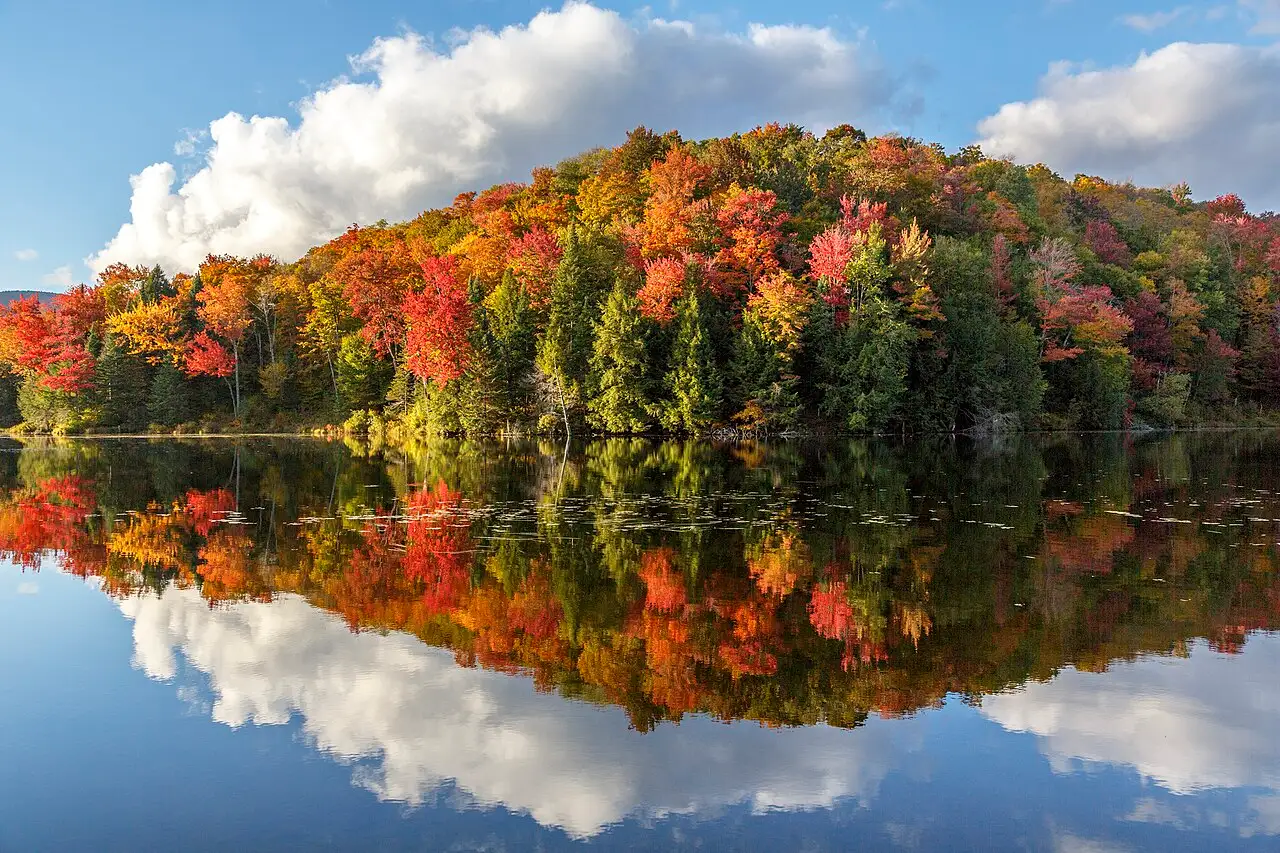
Woodstock is the Vermont you’ve seen on calendars: brick storefronts, the Middle Covered Bridge, and Billings Farm & Museum at the edge of town. It sits mid-sequence - lower and further south than the kingdom, so it turns after it - and you should book dinners before you arrive on an October Friday.
Nearby Quechee Gorge is a short detour for a vertigo view over the Ottauquechee River. If you’re comparing Vermont to New Hampshire for a first trip, Woodstock pairs naturally with a day across the border in the White Mountains - see our New Hampshire travel guide for the Kancamagus loop.
Northeast Kingdom and Lake Willoughby
The Northeast Kingdom - Norton, Island Pond, Derby Line - is colder, poorer and earlier than anywhere else in the state. Yankee puts early peak here in late September to early October, which makes it the right opening act when Yankee’s 2026 regional forecast says northern New England turns first.
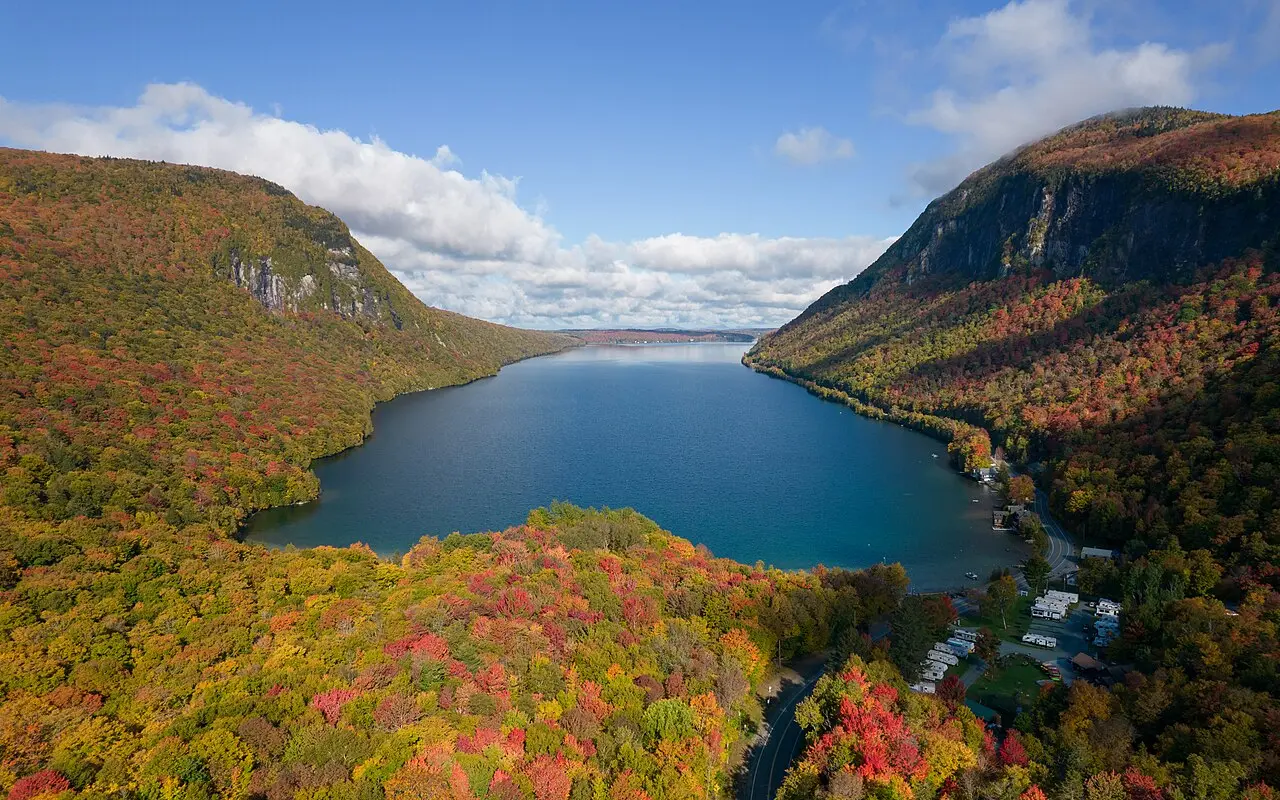
Lake Willoughby splits twin cliffs that look borrowed from a western fjord; hike the south trail for elevation color or paddle when the wind stays down. You’ll drive farther between services than on Route 100 - fuel and groceries in St. Johnsbury before you head north.
Southern Vermont and Bennington
Bennington anchors the southwest with the Bennington Battle Monument and easy access from the New York and Massachusetts borders. It’s low and far south, so it turns after the kingdom, the way southern valleys always do - a good last stop if you’re looping back to Albany or the Berkshires.
The Shires region (Manchester, Arlington) adds outlet shopping and Equinox Mountain’s toll road views for one summit panorama without a full hike. Vermont Tourism notes the state has the highest density of sugar maples in the U.S. - which is why the reds here feel unfair compared to states with more oak and birch.
Getting there without a car (and when you still need one)
Amtrak’s Vermonter runs between Washington, DC and St. Albans with stops including Brattleboro, Waterbury-Stowe and Essex Junction near Burlington. It’s a scenic way in, but you’ll still want a rental car parked at the station for Route 100, Smuggler’s Notch and the kingdom - Vermont public transit thins out exactly where the best color starts.
From Boston, figure three to four hours to Burlington depending on traffic on I-89 through New Hampshire - combine both states in one trip via our New England fall foliage guide.
Where to sleep in fall
Fall lodging behaves like ski season lite: Stowe, Woodstock and Waitsfield sell out Columbus Day weekend first. Two-night minimums are common; Wednesday arrivals often get the last affordable rooms.
- Champlain Valley / Burlington: best if you’re flying BTV or starting late-season color.
- Stowe or Waterbury: central for Smuggler’s Notch and Route 100 north.
- Woodstock: classic village base with easy drives south and east into New Hampshire.
- Northeast Kingdom: it peaks first, so aim for late September to early October. Come in the second half of October and you’ll find bare branches here while Instagram is still showing peak in Stowe, which turns later.
Maple, cider and the food worth stopping for
Vermont’s fall calories are the point: maple creemees, hot cider donuts at farmstands, and cheddar from producers along Route 100. Vermont Tourism pushes farm visits and harvest festivals from September onward - check town calendars rather than assuming every orchard allows pick-your-own on the same weekends.
For broader American fall food context (including how Maine’s lobster roll differs), see what to eat across the USA.
Winter preview: what closes after foliage
Scenic lift rides finish earlier than people expect. Ski Vermont lists the Stowe Gondola SkyRide, Bolton Valley, the Jay Peak tram and Mount Snow’s Bluebird Express as running only to mid-October: by late October they’re closed, not closing. Gorge walks and high-elevation campgrounds shut around then too, even when leaves still cling in the valleys. If your trip runs into November, assume Smuggler’s Notch may close to through traffic on short notice and that Billings Farm drops from daily to weekends and select days only on 1 November - a November Tuesday finds it shut, not merely shorter.
That’s not a reason to skip Vermont - it’s why the second week of October is the classic bet, with one warning: Columbus Day weekend is the busiest of the whole season, and rooms are priced accordingly. Ski season marketing begins almost the day after peak, and some inns reprice rooms toward winter rates faster than the last maple leaf drops.
Read also
- Regional timing: New England fall foliage
- Next state east: New Hampshire travel guide
- Neighbor south: Massachusetts travel guide
- Gateway from NYC: New York State travel guide
- Browse all US states
On the map
The map loads on click - to keep the page lightweight.
The map didn’t load. Check your connection and refresh the page.
Good to know
Fall peak windows from Yankee Magazine Vermont Fall Foliage Guide, checked 27 August 2026. Confirm live color on newengland.com/foliage the week you travel.
Details checked: August 27, 2026
Read also

States · 11 min read
Connecticut: Mystic, New Haven and the Shoreline
Verified · September 12, 2026Mystic Seaport at $35 adult, free Yale galleries in New Haven, and Gillette Castle on the river - how a Connecticut weekend actually fits.

States · 9 min read
North Dakota: Medora and Theodore Roosevelt NP
Verified · September 5, 2026The 36-mile South Unit loop starts in Medora, entrance $30 per vehicle, cashless from May 2026 - how to plan Theodore Roosevelt National Park.

States · 9 min read
Arkansas Travel Guide: Hot Springs & Ozarks
Verified · September 4, 2026Fee-free Hot Springs NP downtown, free Crystal Bridges in Bentonville, and the 135-mile Buffalo - how to string an Arkansas road trip.

States · 10 min read
Indiana Travel Guide: Indy, Speedway, Shore
Verified · September 5, 2026IMS Museum at $25, Kiss the Bricks at $15, Brown County hills and Lake Michigan shore - an Indiana trip beyond a Chicago beach day.