
Redwood National Park: Tall Trees, Fog and the Coast Drive
Fern Canyon and Tall Trees Grove need separate reservations, and the parkway closes to cars one Saturday a month. What's free, and what needs a permit.
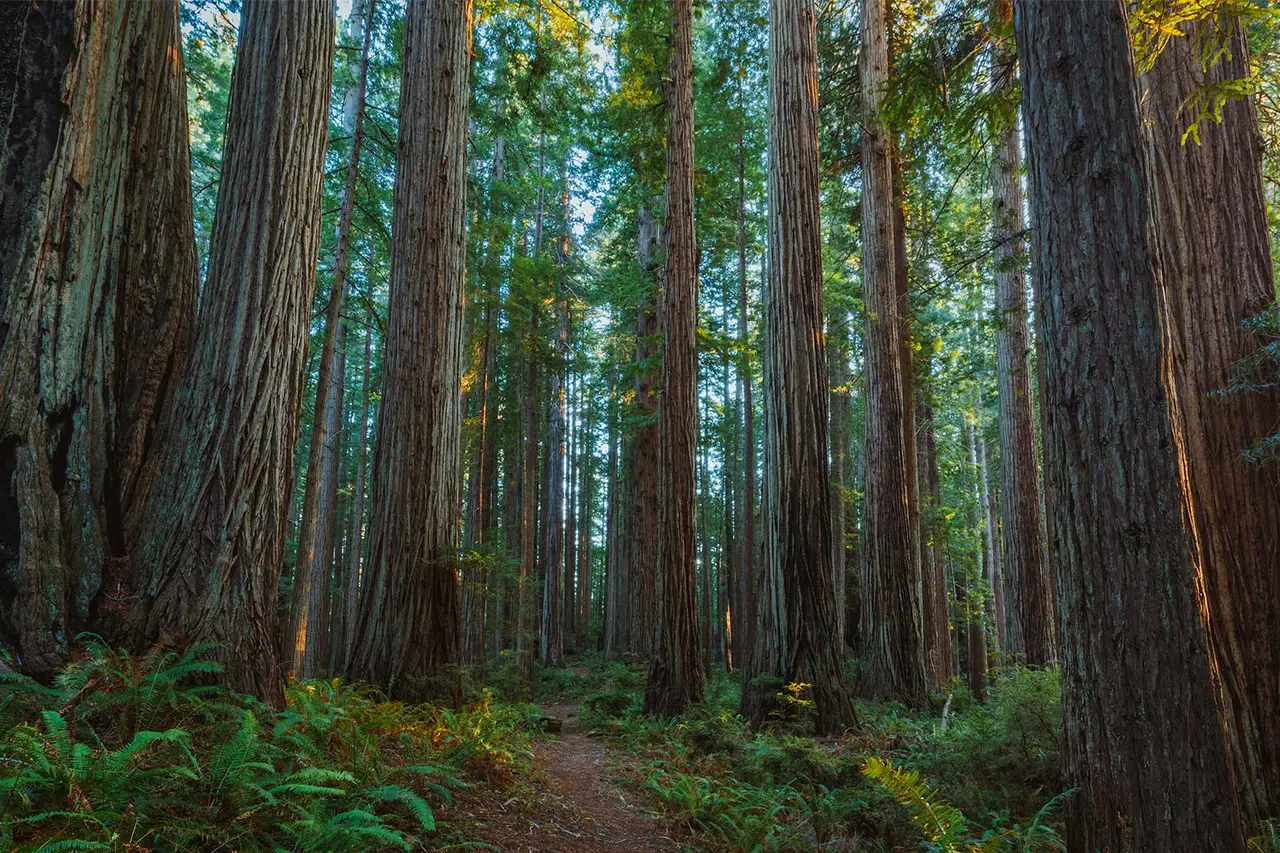
Redwood National Park charges nothing to get in. There are no entrance stations and no per-vehicle fee, because the park has nowhere to collect one. That’s the headline, and it’s also the trap: two of the park’s best-known stops, Tall Trees Grove and Fern Canyon, each require their own separate reservation that has nothing to do with paying to enter the park. Skip that step and you’ll drive up to a locked gate or a full parking lot with a perfectly valid ticket to a park that never checked it.
This isn’t one park so much as four, run together. Redwood National Park sits alongside three California State Parks - Jedediah Smith Redwoods, Del Norte Coast Redwoods, and Prairie Creek Redwoods - and the four have been jointly managed since 1994. The national side is free. The state side charges day-use fees at specific spots. Knowing which is which before you plan the day saves you a wasted drive.
Four parks under one name, and the entrance that doesn’t exist
Redwood National Park was created by Congress in 1968, decades after California had already protected the three state parks it now shares a boundary with. Those three - Jedediah Smith, Del Norte Coast, and Prairie Creek Redwoods - date to the 1920s, when the Save-the-Redwoods League pushed the state to save what logging hadn’t already taken. By 1994, protecting the whole coastline as one connected system made more sense than four agencies working separately, so NPS and California State Parks signed a joint management agreement that still runs the parks together today. The whole complex became a UNESCO World Heritage Site in 1980.
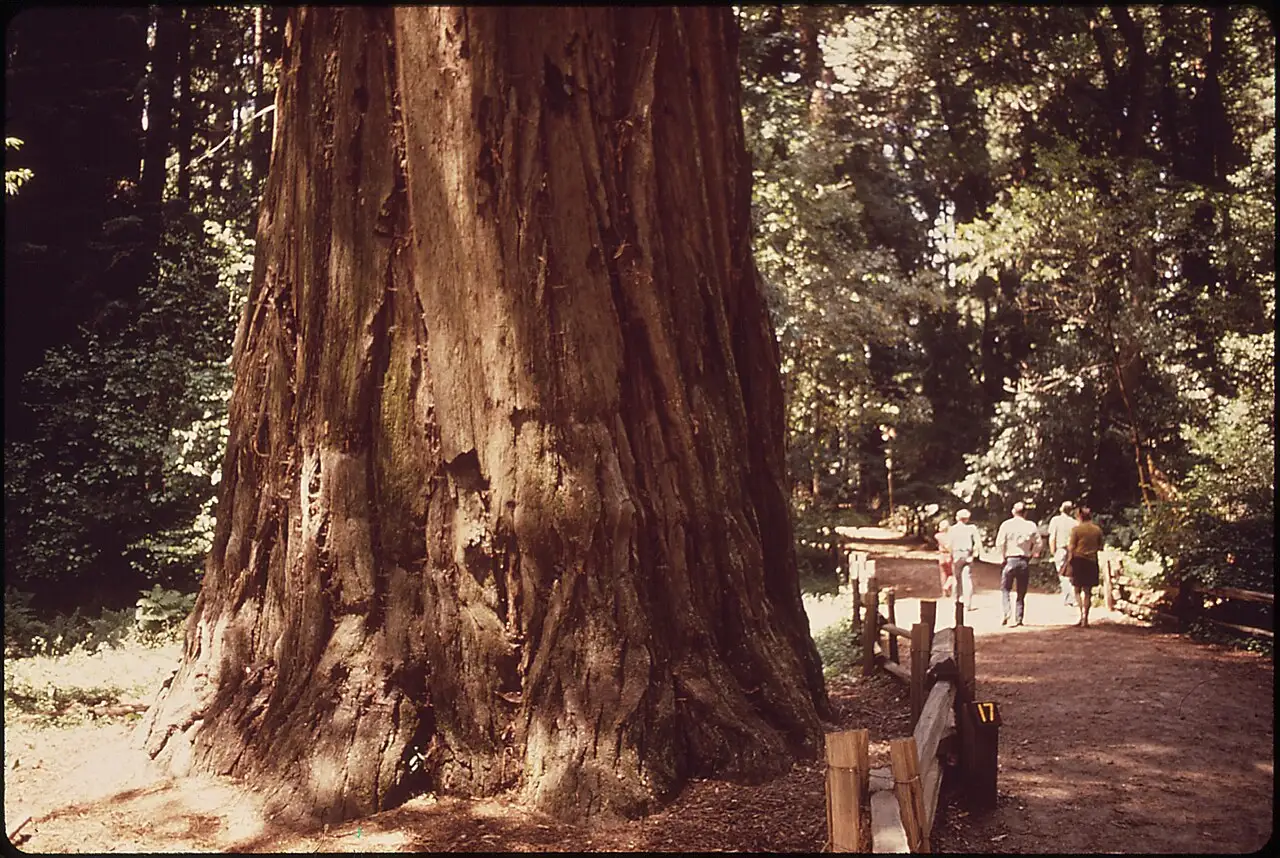
Yosemite and Sequoia & Kings Canyon both charge $35 to drive in. Redwood doesn’t: no gate, no fee, nothing to show a ranger on the way past. The national park side genuinely doesn’t sell an annual or senior America the Beautiful pass, because it has no entrance station to use one at. If you’re stacking this park with Yosemite or Sequoia & Kings Canyon on the same trip and you bought an America the Beautiful pass for those, it won’t do anything for you at Redwood’s own gate - there isn’t one. It DOES help you at the three state park units, though: Jedediah Smith, Del Norte Coast and Prairie Creek all charge day-use fees at specific developed areas (not general driving) and accept the federal pass for a discount or waiver there.
Two reservations that have nothing to do with entering the park
The free entry doesn’t mean unrestricted access everywhere. Two specific, popular spots each run their own separate reservation system, and neither one is a park entrance fee - they’re capacity controls for a single road and a single parking lot.
Fern Canyon and Gold Bluffs Beach need an online reservation to park, required seasonally from May 15 through September 15; the reservation covers the whole day, 9am-5pm, not a fixed arrival slot. The day-use fee is $12 per vehicle, cash or check only - no cards - or a federal/state pass, or a current Gold Bluffs Beach or Elk Prairie campground reservation, which exempts you from the separate day-use reservation too. The access road, Davison Road, is 8 miles of single-lane gravel with two stream crossings you’ll drive straight through; RVs over 24 feet and trailers can’t use it. Walking in to Fern Canyon via the James Irvine Trail from Prairie Creek Visitor Center skips the reservation entirely - it just takes longer.
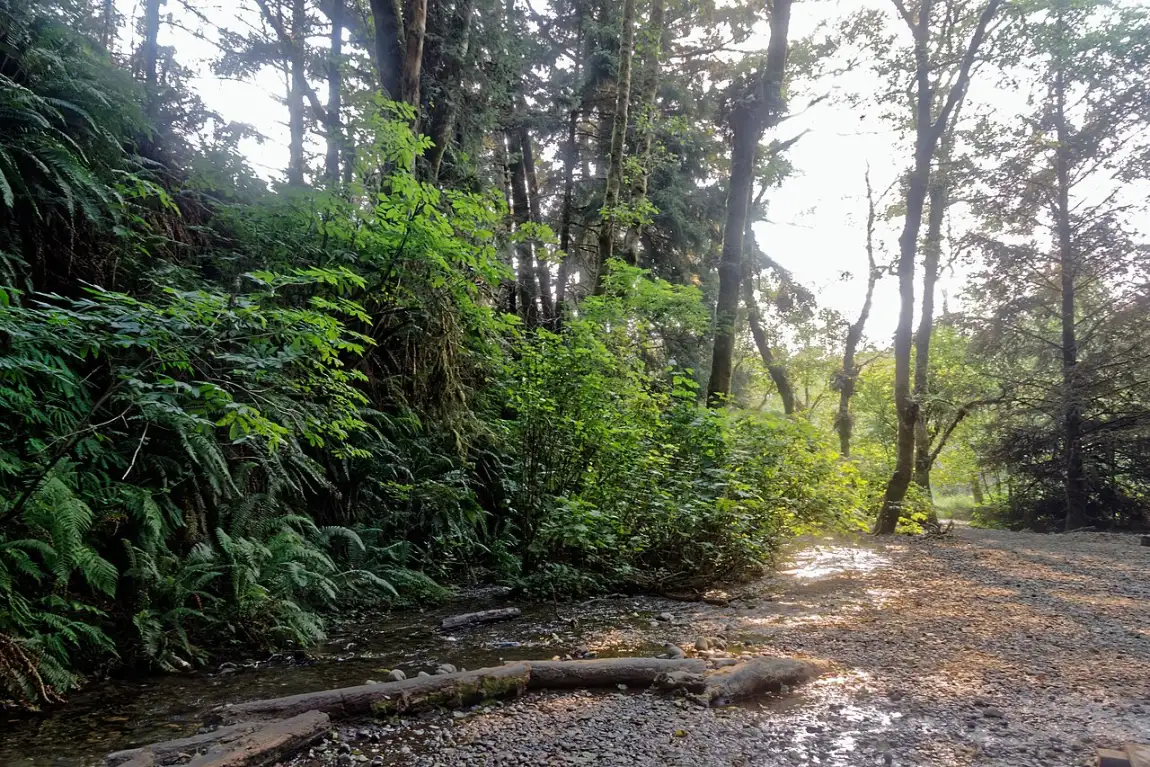
Tall Trees Grove runs a completely separate system, and it’s stricter: the reservation is required all year, not just summer, and there are only 65 slots issued per day - 45 booked up to 180 days ahead, plus 20 released the day before in two half-day batches. The access road is 6 miles of dirt, roughly a one-hour drive each way from the nearest visitor center, and the parking area can’t take RVs over 21 feet or anything towing a trailer. NPS’s own guidance is to budget at least four hours total for the round trip, driving and hiking together, on a trail that’s 4.5 miles round trip and drops 800 feet in the first mile and a half - the climb back out is the part people underestimate.
The tree everyone asks about, and why the park won’t tell you where it is
Somewhere inside this park is Hyperion, long cited as the world’s tallest known living tree at roughly 380 feet. You will not find directions to it here, and that’s deliberate: the Park Service closed public access to it in 2022 after years of people bushwhacking off-trail to see it, compacting the soil around its roots, cutting informal paths through the understory, and leaving trash behind at its base. Anyone caught near it now risks a $5,000 fine and up to six months in jail. The park’s own Tall Trees permit page links to a page titled, pointedly, “Should you hike to Hyperion?” - it isn’t a recommendation. Redwood National and State Parks also holds the second, fourth and fifth-tallest known trees on Earth, and none of those have public access either. If height records are what drew you here, the specific record-holders simply aren’t the trip - Tall Trees Grove and the Drury Parkway groves will show you trees just as humbling without the fine.
Ten miles that explain why people fly here
If you only have time for one drive, make it the Newton B. Drury Scenic Parkway: ten miles through the heart of Prairie Creek Redwoods State Park, open to any vehicle of any size on a normal day, reached from Highway 101 at exit 765 or 753. Give it at least 20 minutes without stopping, though almost nobody manages that. One schedule quirk worth knowing before you plan a date: the parkway closes to motor vehicles the first Saturday of every month, October through May, for a car-free “Hike and Bike Day,” shutting Friday afternoon and reopening Sunday morning - and winter storms or fallen trees can close stretches of it for days beyond that, unscheduled. Check the live road status before you build a whole day around driving it.
The Park Service’s own pitch for this road is blunt about how rare it is: outside of the Avenue of the Giants, a similar 31-mile drive through Humboldt Redwoods State Park about 100 miles south of here, there’s nowhere else on Earth a driver of any vehicle gets this experience. That’s also the one mix-up worth clearing up before you plan a route: Avenue of the Giants is a different park, further south, and it isn’t part of this trip unless you specifically add it. About 95% of the world’s old-growth redwoods were logged within the last century - these ten miles, and the Avenue further south, are most of what’s left that you can drive through rather than hike into.
Fog is not bad weather here, it’s the point
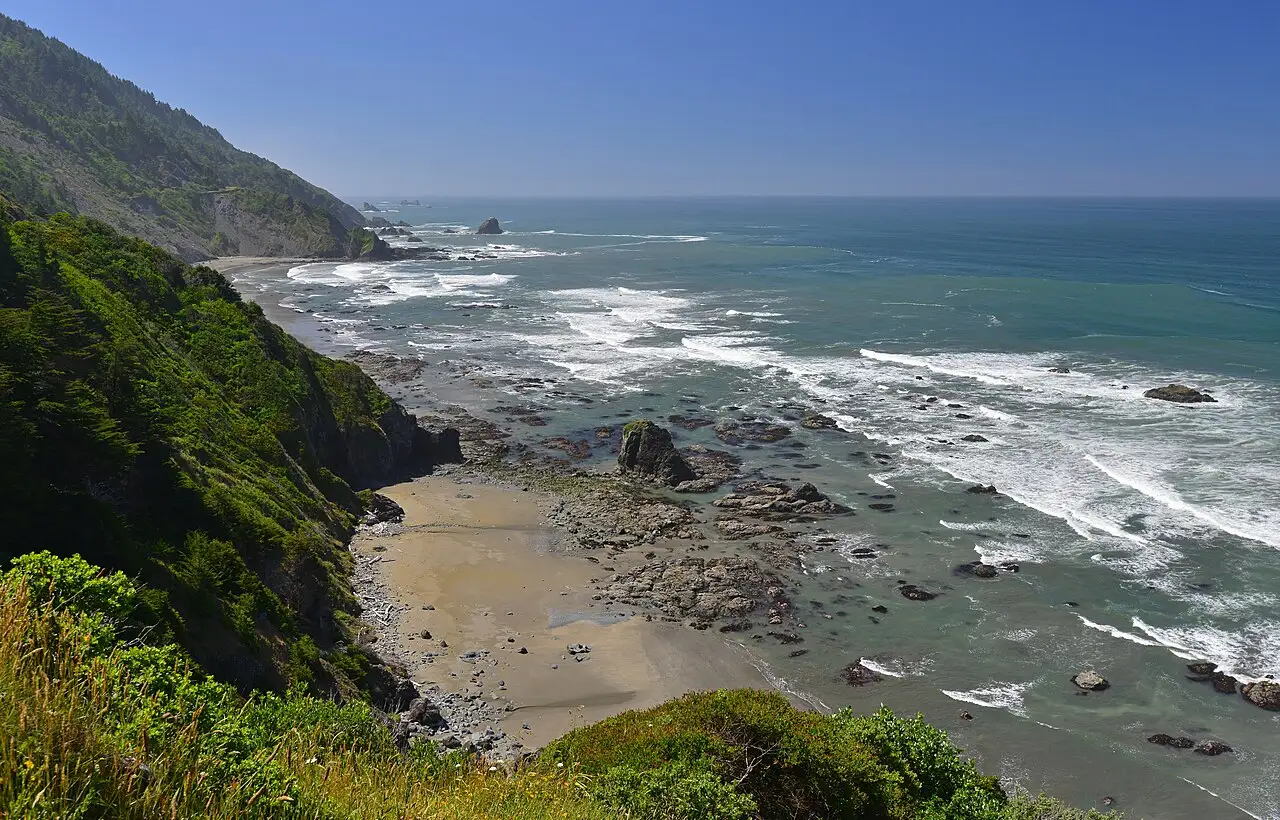
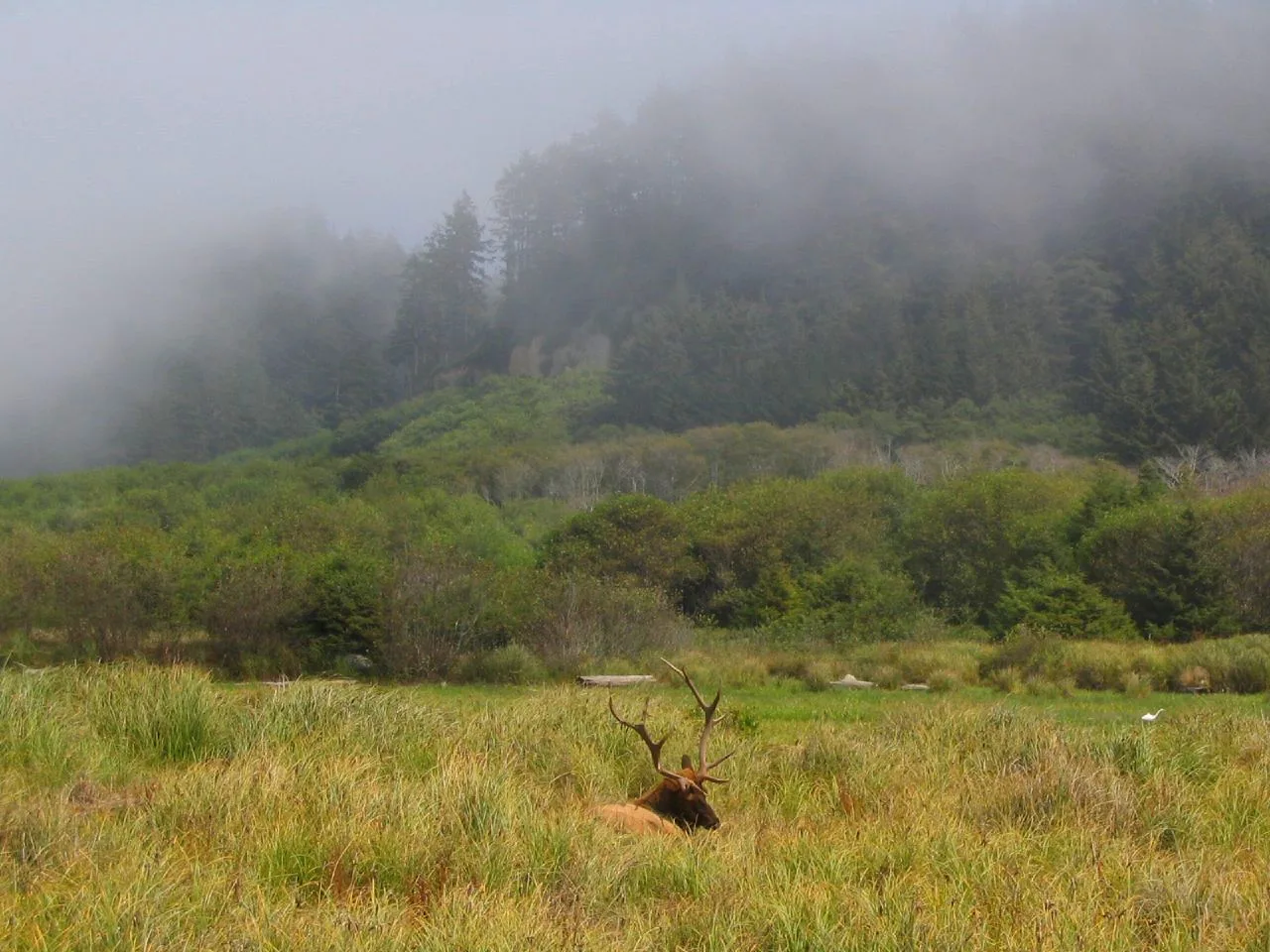
Don’t come expecting a summer heat escape. Coastal temperatures run a narrow band, mid-40s to low-60s Fahrenheit, essentially year-round. Winter, October through April, brings the bulk of 60 to 80 inches of annual rain. Summer doesn’t bring sun so much as it swaps rain for fog: the high-pressure system that drives winter storms slides north, and the California Current pulls cold, deep ocean water toward the coast instead, and where that cold water meets warm dry land, fog forms and pushes inland up the river canyons. That fog isn’t just scenery - redwoods pull as much as 40% of their annual water from it, and a mature tree can take up around 160 gallons a day. It’s also part of why you should layer up even in July; inland spots away from the coast run noticeably warmer and sunnier than the groves right along Highway 101.
Elk on the road, and the herd that almost disappeared
Watch for Roosevelt elk anywhere along Davison Road and around Elk Meadow, especially early morning and evening. The population here is a genuine conservation comeback: an NPS site bulletin puts California’s Roosevelt elk at as few as 15 animals statewide by 1925, with a last surviving herd holding on in what’s now Prairie Creek Redwoods State Park; protection of that habitat let the state population rebound past 1,000. Elk Prairie Campground takes its name from the same herd that still grazes the meadow it’s built next to - don’t be surprised to find one blocking the road on your way to a campsite.
Camping, gateway towns and getting here
The four developed campgrounds - Jedediah Smith, Mill Creek, Elk Prairie, and Gold Bluffs Beach - run $35 a night, and you’ll want to book at least 48 hours ahead through ReserveCalifornia. Backcountry permits are free and issued online, with one exception: the Gold Bluffs Beach backcountry site runs $5 per person, per night. A handful of cabin properties sit right at the Orick gateway if camping isn’t the plan, but options thin out fast - Crescent City, Klamath, and Orick are the practical bases, and Eureka and Arcata, further south, trade a longer daily drive for more restaurant choices.
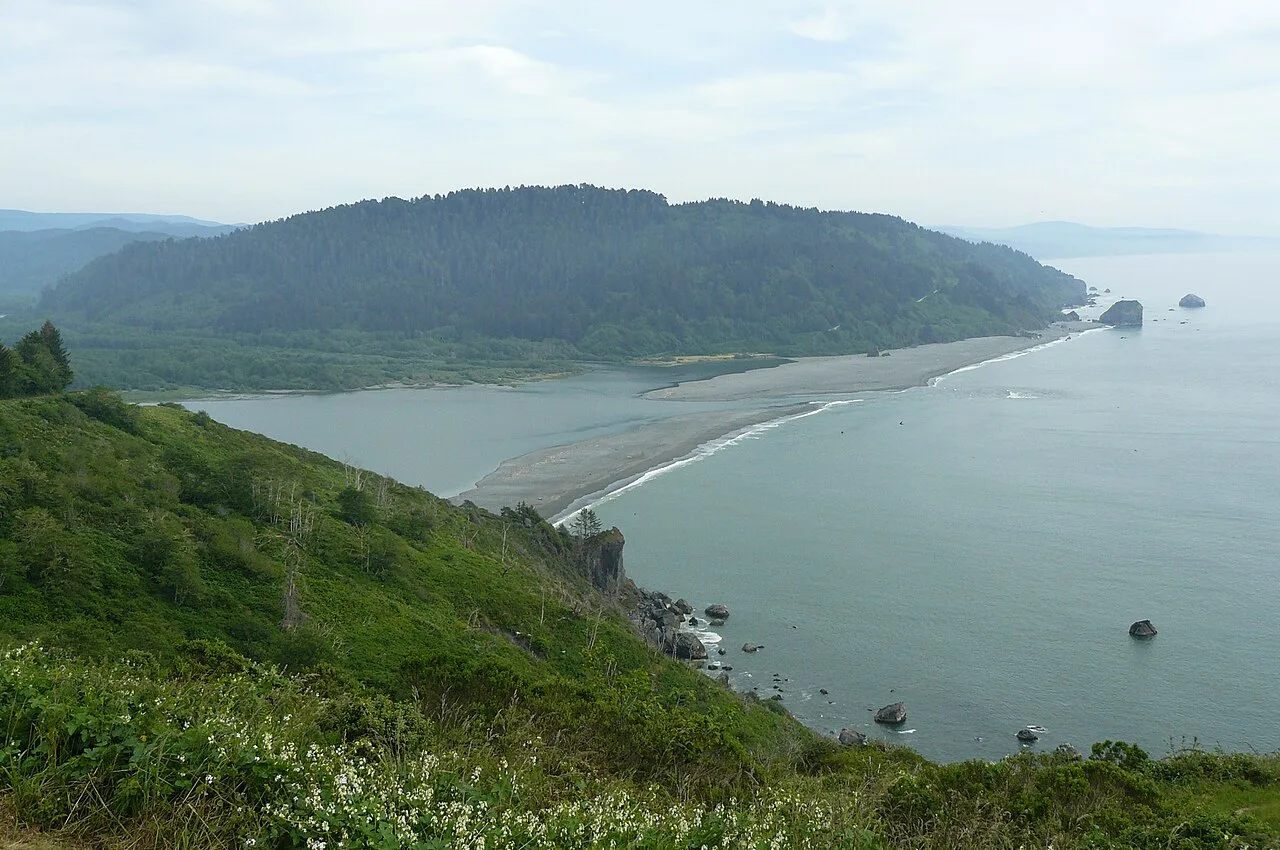
It’s a genuine haul to get here: a free-flow driving query puts San Francisco to Prairie Creek Visitor Center at close to seven hours, not the “five to six” some trip-planning pages assume - budget accordingly and add real stops for the coast towns on the way. And don’t plan the far ends of the park into one day: Stout Grove, up in Jedediah Smith near Crescent City, sits roughly 50 miles - about 45 minutes - from Prairie Creek and the Drury Parkway at the southern end. Pick a base near whichever half you’re prioritizing rather than commuting between them. Pair the trip with the wider California travel guide if you’re building a longer route, or give it a dedicated few days on its own instead of a rushed detour off a San Francisco itinerary - Muir Woods, an hour north of the city, is a lovely grove but a much smaller one, and it isn’t a substitute for driving this far north.
Before you go:
- Book Tall Trees Grove and, if you’re visiting May 15-September 15, Fern Canyon/Gold Bluffs Beach online in advance - both are separate from park entry and both can sell out.
- Check the Drury Parkway’s live road status: closed to cars the first Saturday of the month, October-May, plus occasional unscheduled storm closures.
- Bring layers for fog and rain regardless of the month; there is no reliable “hot and dry” season here.
- Don’t plan a route around finding Hyperion. Plan one around the Drury Parkway, Fern Canyon, and Tall Trees Grove instead - all three are legal, all three are extraordinary, and none of them come with a fine.
On the map
The map loads on click - to keep the page lightweight.
The map didn’t load. Check your connection and refresh the page.
Admission and opening hours
- Admission price
- Redwood National Park itself has no entrance fee and no entrance stations. The three California State Park units inside the same boundary charge day-use fees at specific developed areas: Fern Canyon/Gold Bluffs Beach is $12 per vehicle, cash or check only (federal/state passes and current campground reservations also accepted). Camping $35/night at the four developed campgrounds. Backcountry permits free online (Gold Bluffs Beach backcountry camp $5/person/night).
- Opening hours
- Park roads generally open year-round, but the Newton B. Drury Scenic Parkway closes to motor vehicles the first Saturday of every month, October through May, for a car-free Hike and Bike Day. Tall Trees Trailhead reservations required every day of the year. Fern Canyon/Gold Bluffs Beach day-use reservations required seasonally, May 15 through September 15.
This is four separately-named parks under one joint management, and the fee/reservation rules differ by which piece of it you're visiting. Confirm current reservation windows, fees and road closures on nps.gov/redw before you drive up.
Details checked: August 22, 2026
Read also

National Parks · 12 min read
Canyonlands and Capitol Reef: Utah's Two Quiet Parks
Verified · August 29, 2026Canyonlands $30, Capitol Reef $20 for the Scenic Drive - what each park costs, which district to skip, and which one wins if you only have a day.

National Parks · 8 min read
Indiana Dunes from Chicago: Beaches & the $25 Gate
Verified · August 26, 2026Leave Chicago early for West Beach, the Dune Succession Trail and the South Shore Line to Dune Park. National and state park fees do not cross.

National Parks · 8 min read
Carlsbad Caverns: Natural Entrance and Bat Flight
Verified · August 25, 2026$15 entry plus $1 timed reservation, Natural Entrance vs elevator, Big Room loop, and free bat flights April-Oct.

National Parks · 8 min read
White Sands: Dunes, Sledding and Closures
Verified · August 25, 2026Gypsum dunes, $25 entry, sledding tips, and why missile-range tests can close Dunes Drive for hours - check NPS the morning you go.