
Bryce Canyon: Hoodoos, Sunrise and the Rim Trail
Open 24/7, $35 a car, free 2026 shuttle Apr 3-Oct 18. Sunrise Point, Rim Trail and the $100 nonresident fee.
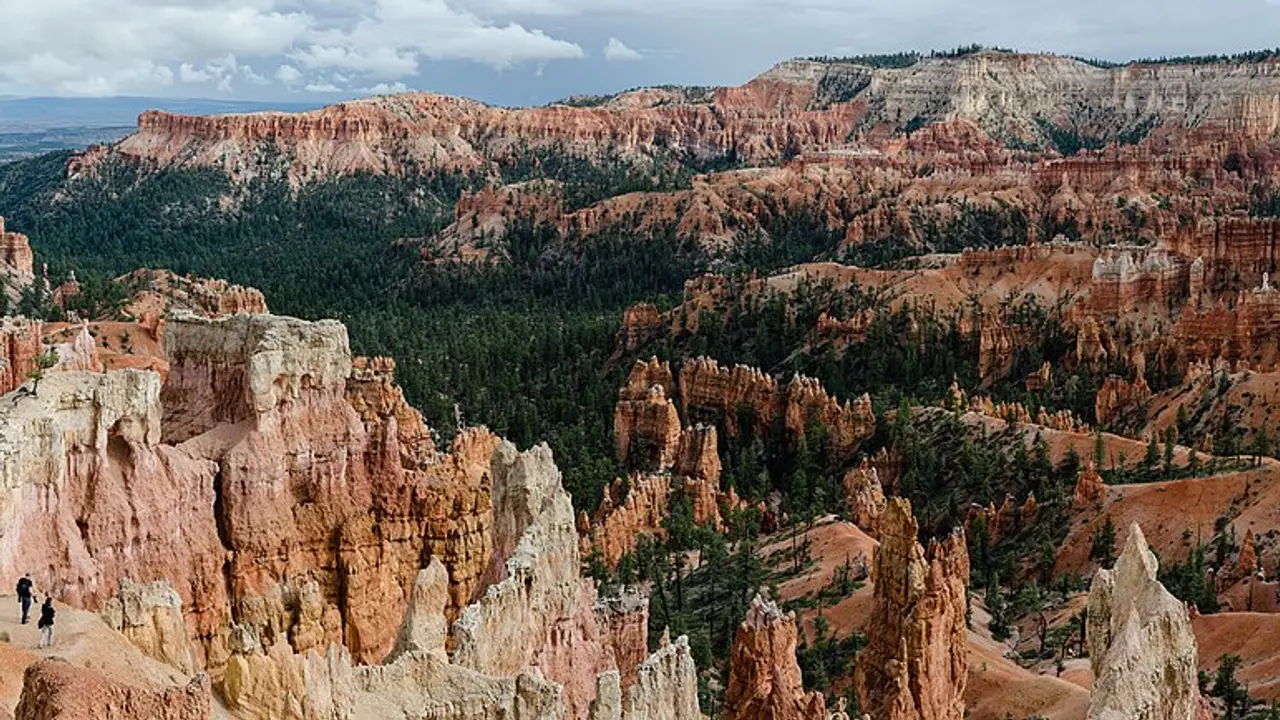
Bryce Canyon is the dense amphitheater of orange hoodoos on Utah’s Paunsaugunt Plateau, open 24 hours a day with no timed-entry reservation. A private vehicle costs $35 for seven days. Through the season - April 3 to October 18 in 2026, nothing in winter - a free shuttle loops the Bryce Amphitheater viewpoints about every 15 minutes. Start at Sunrise Point for first light, then walk the paved half-mile of Rim Trail to Sunset Point - that short stretch is where most first-timers understand why this park is not just “another canyon overlook.”
The catch is elevation and parking, not a lottery. The rim sits near 8,000 feet, the Amphitheater lots fill by mid-morning in summer, and non-US visitors aged 16+ now face the $100 nonresident fee on top of the standard sticker unless they carry an Annual or America the Beautiful pass.
Why the hoodoos look the way they do
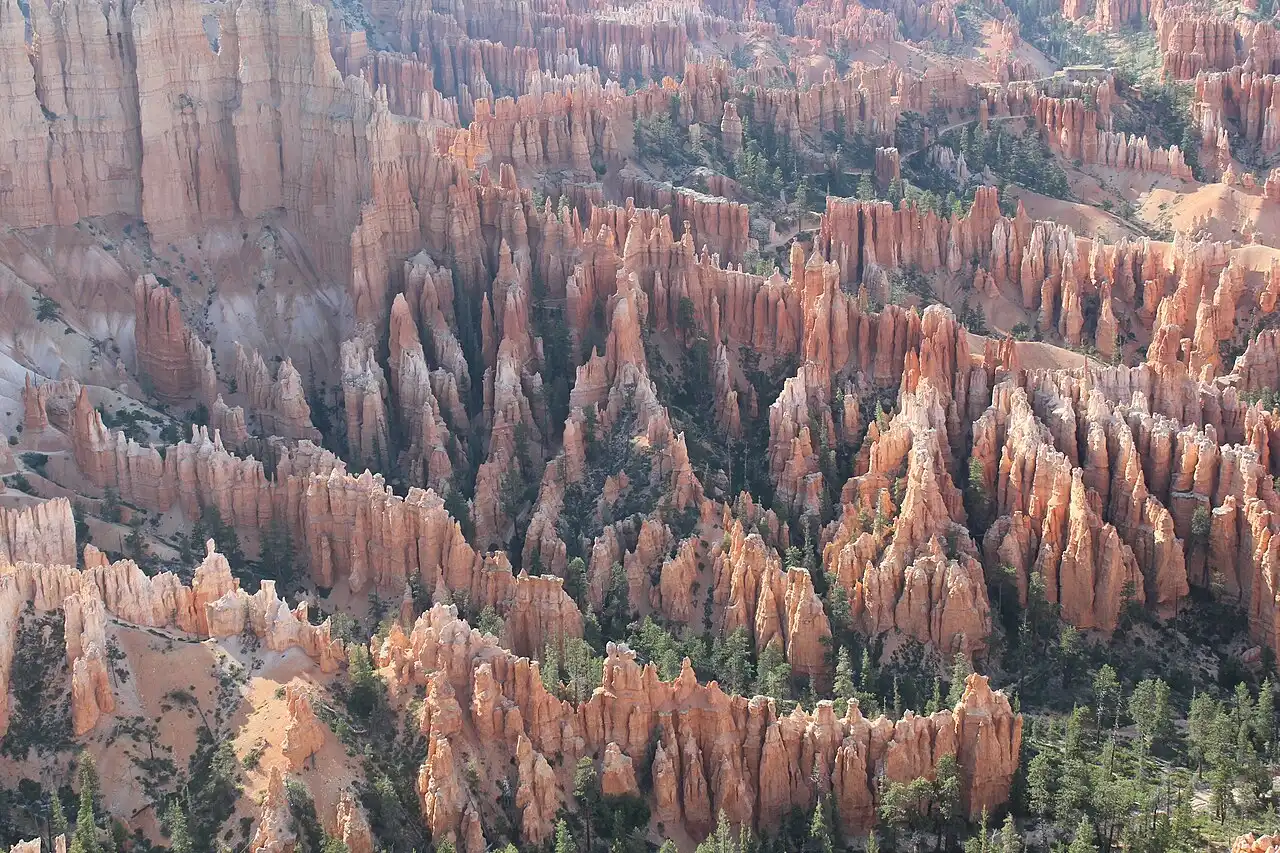
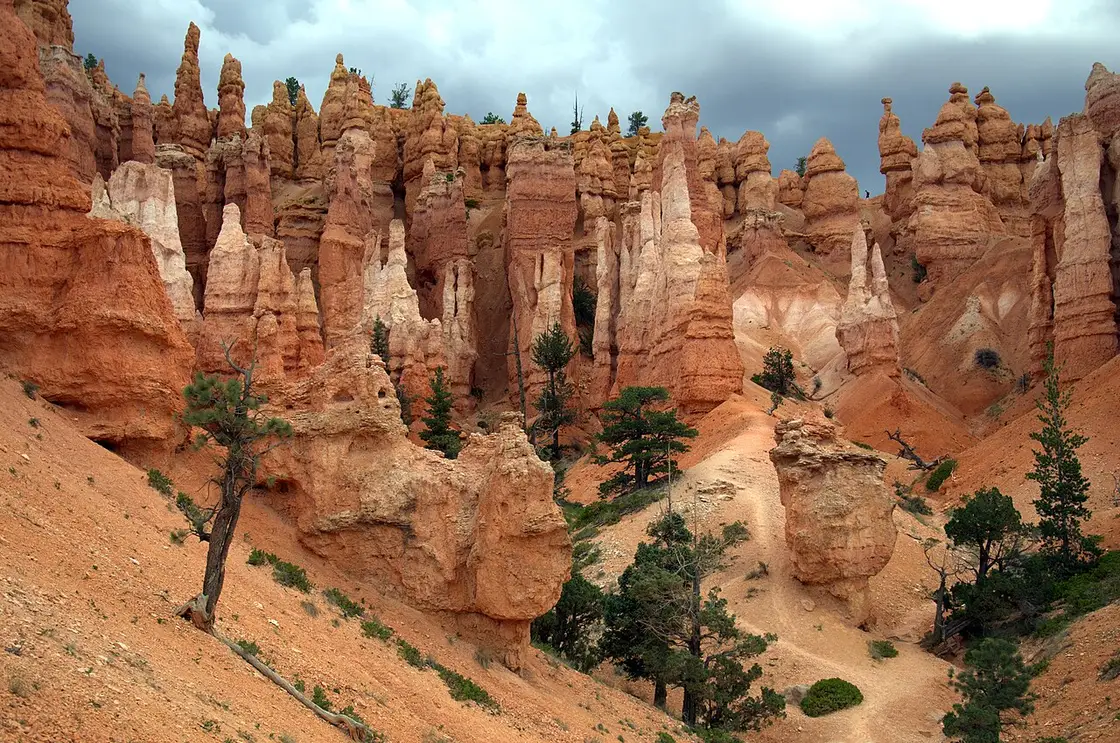
You’re looking into a series of natural amphitheaters cut into colorful Claron Formation rock. Freeze-thaw and rain carve the fins into the freestanding spires people call hoodoos. The views stack - Bryce Point, Inspiration Point, Sunset Point, Sunrise Point - and each one frames a different density of towers. You don’t need a geology degree to enjoy it, but you do need to get out of the car: the rim walk between those points is what turns a photo stop into a park day.
Sunrise first - then the Rim Trail
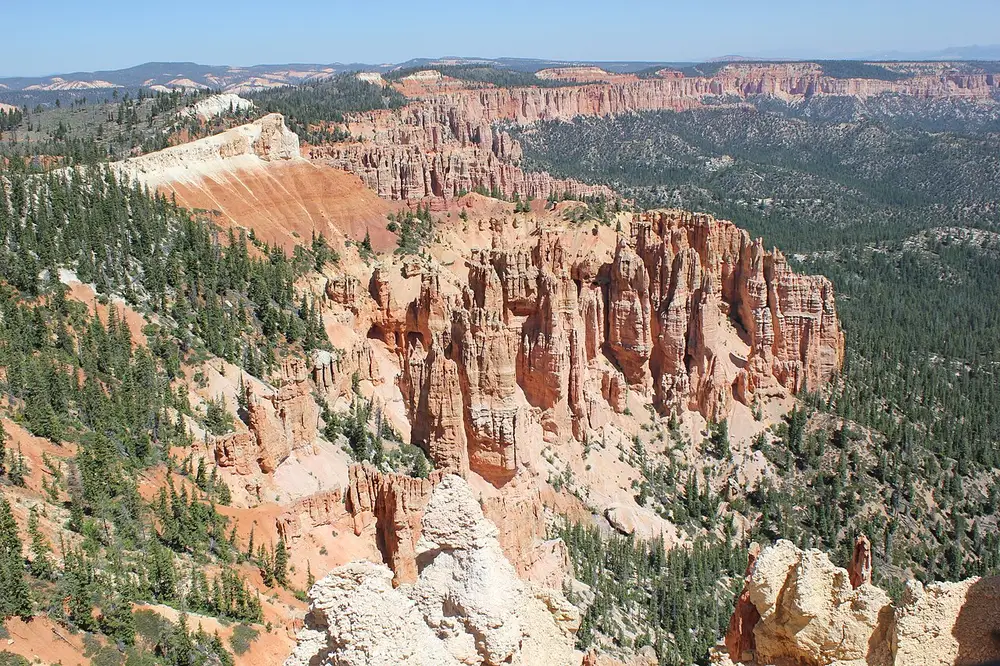
Sunrise Point earns its name. Arrive before the sun clears the eastern horizon, walk to the rail, and watch the hoodoos go from gray-blue to orange in minutes. Sunset Point is a flat, paved 0.5-mile (0.8 km) walk south along the Rim Trail - the park’s most accessible stretch, and the one section that allows leashed pets.
From there you can keep going. Inspiration Point is about 0.7 miles (1.1 km) beyond Sunset. Bryce Point sits another 1.5 miles (2.4 km) past Inspiration - that southern Rim Trail segment closes in winter, per the park shuttle page, so confirm conditions if you’re here between the first snow and spring thaw.
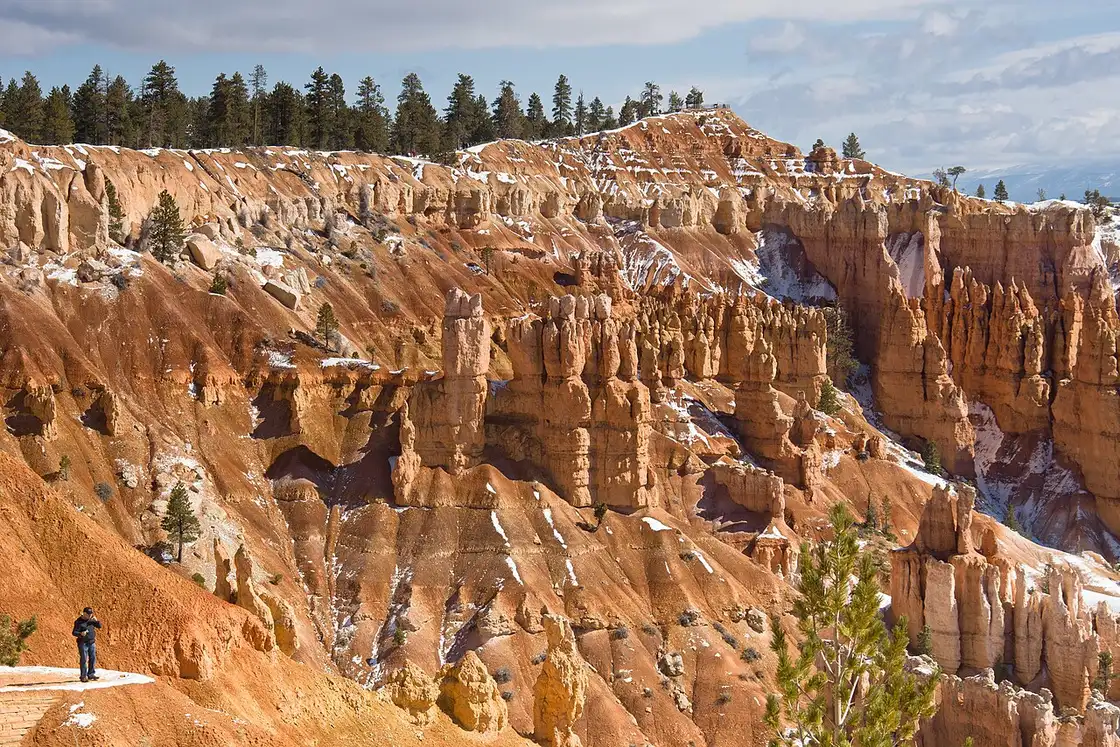
If you want to drop below the rim, the classic combo is the Queen’s Garden / Navajo Loop from Sunrise or Sunset Point - about 2.9 miles (4.6 km) and roughly two hours on the Visitor Guide’s estimate. Switchbacks, sand and altitude make it feel longer than the map. Carry water even when the rim feels cool.
Fees that actually matter in 2026
| Entry | Price | Notes |
|---|---|---|
| Private vehicle (15 seats or fewer) | $35 / 7 days | Covers everyone in the car |
| Motorcycle | $30 / 7 days | Up to 2 bikes / 4 people |
| Walk-in / bicycle (16+) | $20 | Under 16 free |
| Park annual (US citizens/residents) | $70 | Bryce only |
| Nonresident surcharge (16+) | +$100 per person | Waived with Annual or America the Beautiful |
| America the Beautiful annual | $80 residents / $250 non-residents | Non-residents pay the higher tier - it is not $80 for you |
Bryce is cashless at the fee stations. Digital passes via Recreation.gov work for the shuttle boarding check outside the park. If you’re stacking Zion, Bryce and more, run the math on the America the Beautiful Pass before you pay $35 at every gate - Bryce is one of the eleven parks with the 2026 nonresident surcharge. Do that math with the right number: the annual pass costs non-US residents $250, not the $80 residents pay. For two adults visiting from abroad it still wins here ($35 + $100 + $100 = $235 at this gate alone, before any second park), but a solo traveler doing one park does not beat $250 and should just pay at the booth.
Getting there without fighting the parking lots
The shuttle isn’t mandatory, but it’s the sane play in high season. 2026 service runs April 3 through October 18. Typical windows on the NPS shuttle page: 8:00 a.m. to 6:00 p.m. early and late season, and 8:00 a.m. to 8:00 p.m. from May 9 through September 20 - always check last-bus times for your stop before you walk off at Bryce Point. Buses usually come about every 15 minutes, and admission is already covered by your park pass.
Park at the Shuttle Station in Bryce Canyon City (Stop 1) or the Additional Parking lot across from the Visitor Center. During shuttle hours, vehicles 23 feet (7 m) or longer can’t park at the Amphitheater viewpoints, Lodge or the Visitor Center’s one-hour lot. The Southern Scenic Drive past the Amphitheater still takes private cars without that length rule.
You’ll still need a car to reach Bryce from Zion or I-15 - the shuttle only solves the Amphitheater, not the state. For a Mighty 5 loop, rent for Utah and treat Bryce as a half-day to full-day stop between Zion and points east toward Moab’s Arches.
How long to stay
Half a day covers sunrise (or sunset), the paved Rim Trail, and one more viewpoint by shuttle. One full day adds Queen’s/Navajo below the rim and a second light change at the opposite end of the day. Overnight in Bryce Canyon City or at the Lodge makes the 5 a.m. alarm less brutal and pairs cleanly with a Zion day before or after - the Utah travel guide maps how the Mighty 5 usually sequence.
Don’t try to “do” Zion and Bryce as two full below-rim hike days back to back unless your group is already acclimated. Zion’s canyon floor sits thousands of feet lower; Bryce’s rim will feel thinner on day two. Many people keep Bryce as the rim-and-viewpoint day and save the long slot-canyon effort for Zion - you’ll enjoy both more.
Practical notes that save the day
Elevation hits harder than the map suggests. Drink water, slow down on the first climb out of the amphitheater, and bring a layer - rim mornings stay cold when the desert floor at Zion is already warm. Summer thunderstorms build in the afternoon; if lightning is near, leave exposed viewpoints. Winter ice can close trail sections and the Bryce-to-Inspiration Rim Trail segment; the park stays open, but your footwear plan changes.
Pets stay on the paved Sunrise-Sunset Rim Trail stretch when leashed - they don’t ride the shuttle and they don’t belong on the steeper below-rim routes. Leave the drone in the car; national park rules still apply.
If you’re chasing first light, check the overnight low before you commit to shorts. August rim mornings can still sit in the 40s F while afternoon highs climb into the 70s and 80s. That swing is normal here - pack a fleece even when the forecast looks like beach weather at lower elevations.
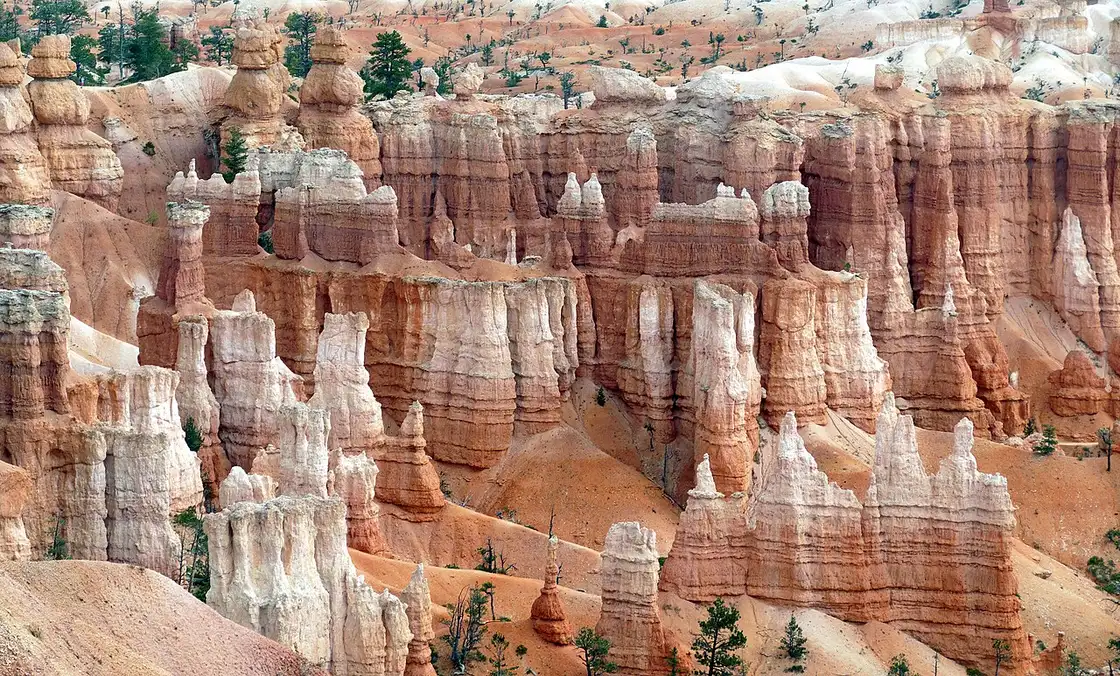
If you’re already looping southern Utah, Bryce is the compact amphitheater day between Zion’s walls and the longer drives toward Capitol Reef or Moab. Price the pass once, ride the shuttle in summer, and put Sunrise Point on the alarm - the hoodoos do the rest.
Putting the day together
Bryce rewards a slower morning more than a packed afternoon. Rim overlooks change character as the sun climbs, and the same amphitheatre can look flat at noon and sharp an hour later. Arrive with water, sun protection, and a plan for which overlooks are walk-up versus which need a short stroll, so you are not improvising in the first parking area you find.
Altitude surprises people who drove up from lower desert parks the same day. Take the first viewpoint easy, notice how fast you breathe on stairs, and keep snacks handy. Afternoon thunderstorms can cut a rim walk short; having a indoor or in-car plan for a squall keeps the day from feeling ruined.
If you are combining Bryce with Zion, decide which park gets the early start based on shuttle rules and where you sleep, not based on which name is more famous. One focused Bryce morning plus a calm scenic drive often beats a frantic attempt to tick every overlook. Leave with a short list of favorite hoodoo views rather than a complete set of rushed photos.
On the map
The map loads on click - to keep the page lightweight.
The map didn’t load. Check your connection and refresh the page.
Admission and opening hours
- Admission price
- Entrance checked 12 August 2026 (nps.gov/brca fees): private vehicle $35 for 7 days; motorcycle $30; per person on foot or bicycle aged 16+ $20; under 16 free. Park annual pass $70 (US citizens/residents). Non-US residents aged 16+ pay an extra $100 per person unless admitted on an Annual or America the Beautiful pass. Cash not accepted at the fee stations. Shuttle free with park admission, 2026 season April 3-October 18.
- Opening hours
- Park open 24 hours a day year-round. No advance reservation required to enter. Visitor Center open daily (hours vary; check nps.gov). Free park shuttle 2026: April 3-May 8 and September 21-October 18 roughly 8 a.m.-6 p.m.; May 9-September 20 roughly 8 a.m.-8 p.m. (confirm last bus times on the shuttle page).
Fees, shuttle dates and winter trail closures change. Confirm on nps.gov/brca before you drive. Elevation is about 8,000 feet at the rim - bring layers even in summer.
Details checked: August 12, 2026
Read also

National Parks · 12 min read
Canyonlands and Capitol Reef: Utah's Two Quiet Parks
Verified · August 29, 2026Canyonlands $30, Capitol Reef $20 for the Scenic Drive - what each park costs, which district to skip, and which one wins if you only have a day.

National Parks · 8 min read
Indiana Dunes from Chicago: Beaches & the $25 Gate
Verified · August 26, 2026Leave Chicago early for West Beach, the Dune Succession Trail and the South Shore Line to Dune Park. National and state park fees do not cross.

National Parks · 8 min read
Carlsbad Caverns: Natural Entrance and Bat Flight
Verified · August 25, 2026$15 entry plus $1 timed reservation, Natural Entrance vs elevator, Big Room loop, and free bat flights April-Oct.

National Parks · 8 min read
White Sands: Dunes, Sledding and Closures
Verified · August 25, 2026Gypsum dunes, $25 entry, sledding tips, and why missile-range tests can close Dunes Drive for hours - check NPS the morning you go.