
Ohio: Rock Hall, Cuyahoga Valley and Amish Country
Rock Hall costs $45, Cuyahoga Valley costs nothing, and Holmes County holds the world's second-largest Amish settlement. How to fit all three.

Ohio gets treated as the state you fly over, which is a mistake the Rock and Roll Hall of Fame’s glass pyramid on the Cleveland waterfront makes hard to defend. Eleven miles south of Public Square, at Lock 38, you’re already inside Cuyahoga Valley - a full national park that charges nothing at the gate. An hour and 40 minutes south of the city, Holmes County holds the second-largest Amish settlement in the world. None of the three needs the others to justify a stop.
Cashless, mostly underground, and $45 to get inside
Adult admission runs $45, with $40 for locals, students, and military or first responders with ID, $30 for kids 6 to 12, and free for anyone younger or holding a membership. The museum is entirely cashless - card or mobile pay only, so leave the bills in the hotel room. Plan on two to three hours: most of the exhibits sit underground on Level 0, and the building itself, I.M. Pei’s steel-and-glass pyramid jutting over Lake Erie, is worth the walk around the outside before you go in.
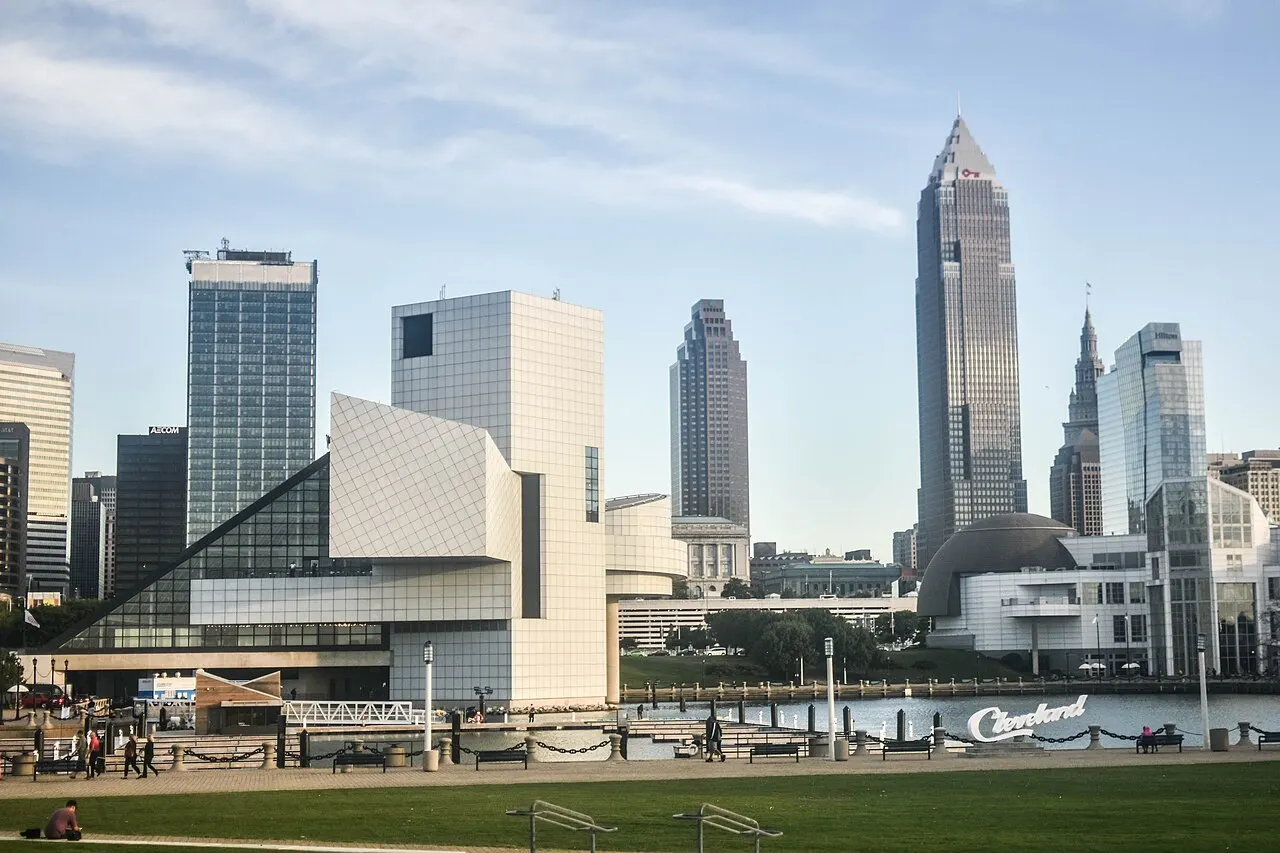
Hours shift with the season: daily 10 a.m. to 5 p.m. from September through June, with Thursdays running until 9 p.m., and a longer Thursday-through-Saturday summer schedule from July through August. Parking is paid meters and lots around the museum - the Rock Hall doesn’t validate, so budget for that separately.
Cuyahoga Valley charges nothing at the gate
Cuyahoga Valley National Park charges no entrance fee and requires no pass of any kind - true of 22 of the 63 units carrying “National Park” in their name, Kentucky’s Mammoth Cave among them. It sits in the gap between Cleveland and Akron, and the two numbers people quote for it are both right about different places. The park’s northern edge, the Canal Exploration Center at Lock 38, is about 11 miles from Public Square. The main Boston Mill Visitor Center, where the staffed desk and the big parking lot are, is about 22 miles - half an hour or so, and worth the extra distance on a first visit. Showing up is the whole plan.
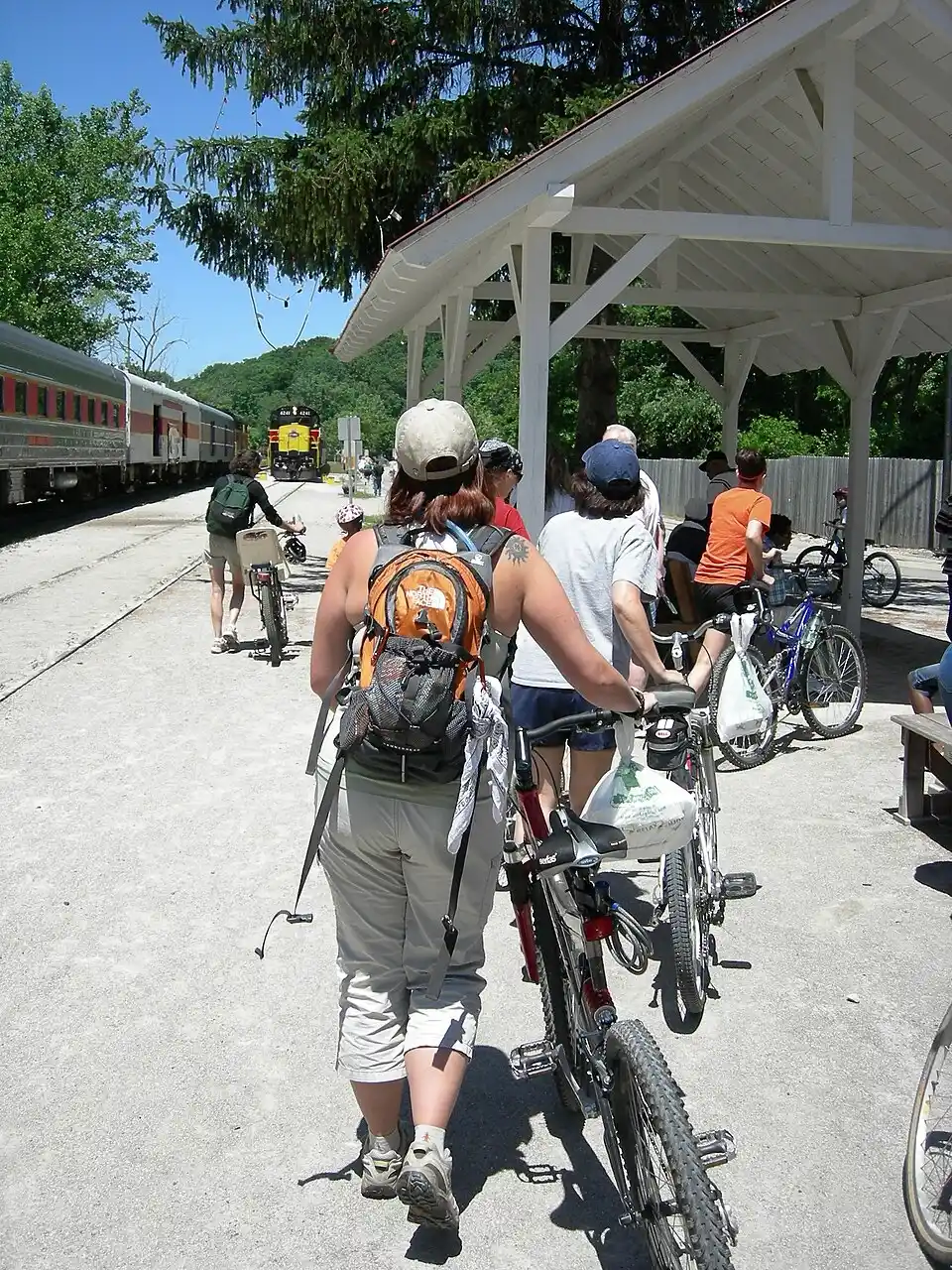
The Cuyahoga Valley Scenic Railroad runs the length of the park on a heritage line, with seating from plain coach up to a glass-roofed Dome car if you book ahead. The railroad puts tickets at $25 to $38 a person, and the spread is mostly seat class rather than route. Two shapes of trip: the Classic 24-mile round trip out of Rockside in Independence or Akron Northside takes about four hours and 15 minutes, while the Express out of Peninsula runs about two hours and 20 minutes in either direction. Four hours is a lot of train with small children; the Express exists for exactly that reason. The seasonal Explorer program is the smarter move if you’re active: hike, bike, or paddle the Ohio & Erie Canal Towpath Trail one direction, then ride back to your car.
The Towpath Trail itself follows the route mules once walked pulling barges along the Ohio & Erie Canal, a 308-mile waterway that ran from 1827 to 1913 and linked East Coast markets to Ohio’s interior before railroads made it obsolete. Twenty miles of trail run through the park. The trail itself runs more than 93 miles today, part of the way toward a planned 101, inside the larger Ohio & Erie Canalway National Heritage Area. The Canal Exploration Center at historic Lock 38, a building that once served as a canal-era tavern, store and residence, explains the mechanics with hands-on exhibits and costs nothing to walk through - one more reason this park rewards a full day instead of a highway pull-off.
Brandywine Falls and the Ledges, both inside the free park
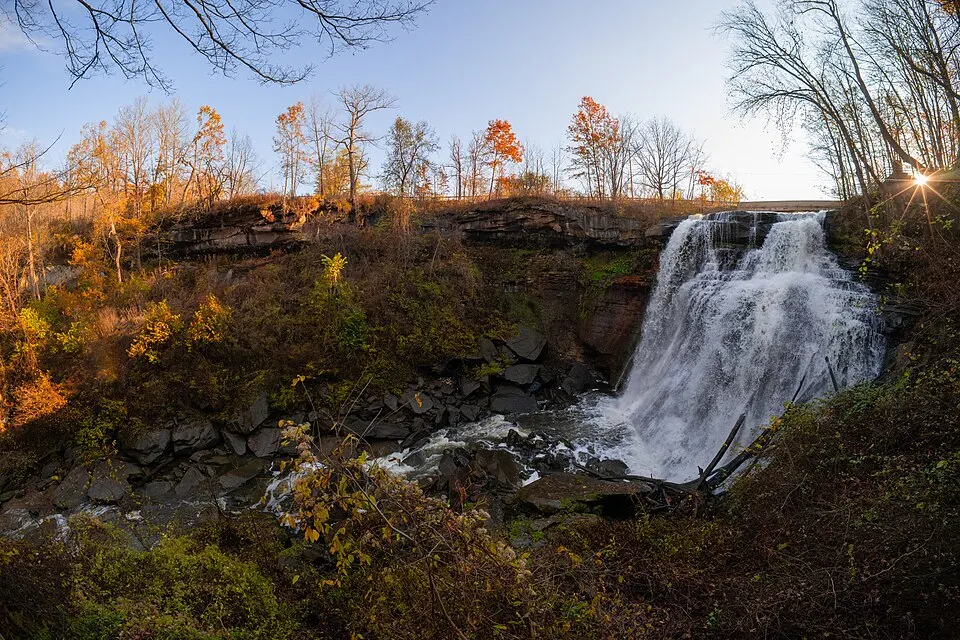
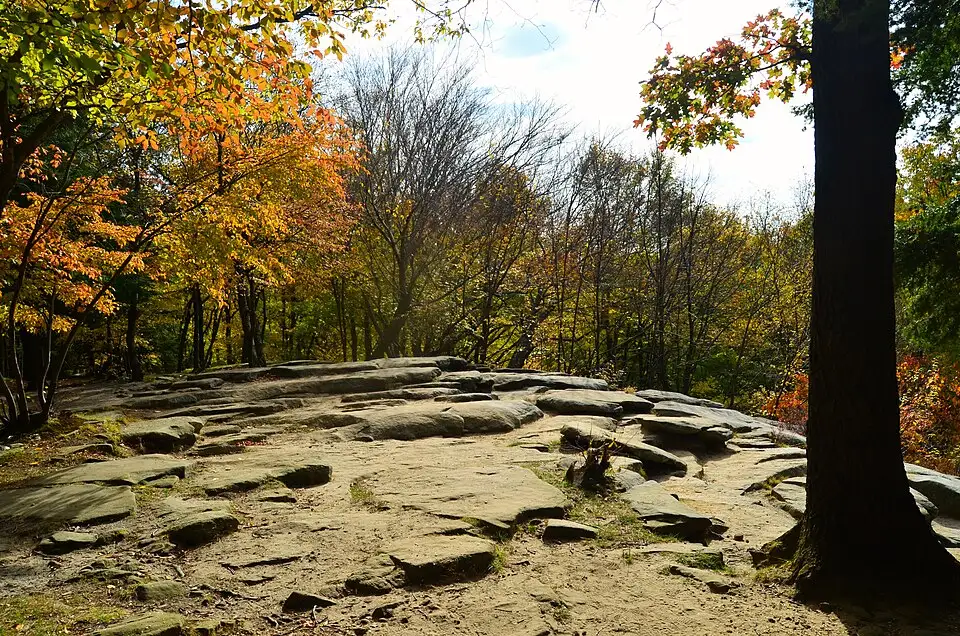
Brandywine Falls drops about 60 feet over a cap of Berea Sandstone, with softer Bedford shale underneath giving the water its thin, bridal-veil look, a short boardwalk walk from the parking area - it’s the park’s signature waterfall and it costs nothing to see, same as everything else here. The Ledges, a jumble of Sharon Conglomerate outcrops a few miles away, gets less foot traffic for a formation just as strange to walk through, cool crevices and all even on a hot Ohio afternoon.
Holmes County holds the world’s second-largest Amish settlement
About an hour and 40 minutes south of Cleveland, Holmes County and its neighbors hold the second-largest Amish settlement in the world by population - about 39,040 people across 322 church districts as of the Young Center’s 2025 count, behind only the Lancaster County, Pennsylvania settlement’s roughly 44,765. Population isn’t the number you feel on the ground, though. Amish America, which tracks these settlements, puts about 46% of Holmes County’s own residents as Amish and describes the county’s eastern half as some of the most densely settled Amish country in North America. That eastern half is the part visitors drive, which is why a buggy ahead of you around Berlin and Millersburg reads as traffic. Nobody local pulls over to photograph it.
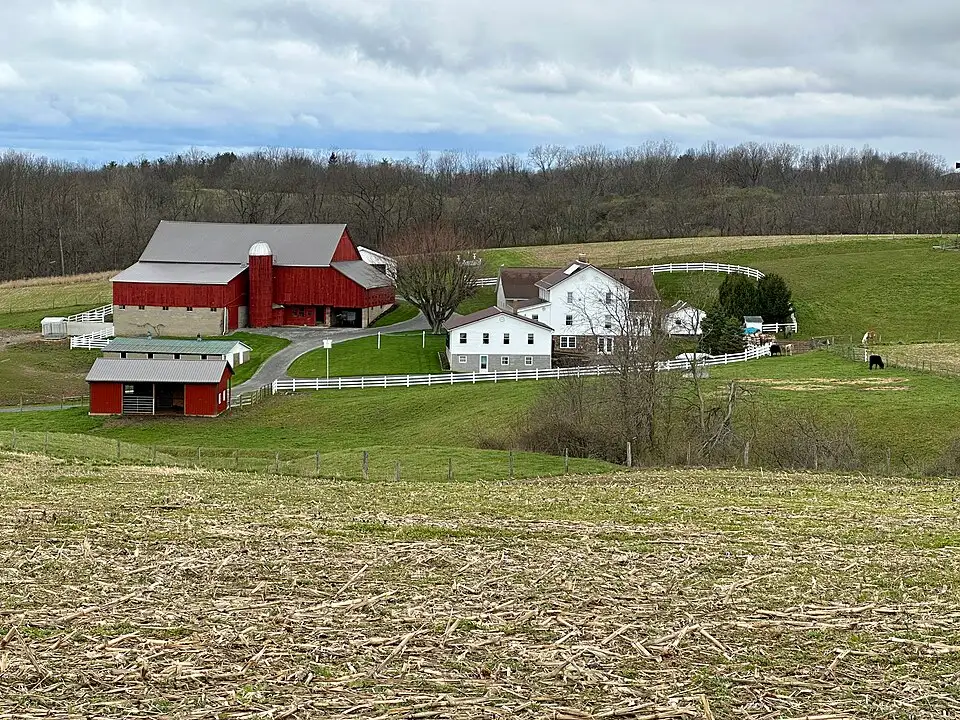
Yoder’s Amish Home outside Millersburg runs a seasonal farm and buggy-ride tour that’s built for visitors rather than found by accident, which makes it a fair place to start if you don’t know anyone here. The full package is $15 for adults 13 and up and $10 for ages 2 to 12, and it takes about an hour and a half; the pieces are sold separately too, at $9 for the home and barn tour and $4.75 for the buggy ride alone. From late August through October 24 the place narrows to Thursday, Friday and Saturday only. The Behalt cyclorama at the Amish & Mennonite Heritage Center, on County Road 77 between Berlin and Millersburg, does something no other stop in the region does: a 265-foot painted panorama, wrapped around a single room, telling the region’s Anabaptist history in one continuous image - one of only four cycloramas left in North America, and the only one painted by a single artist. Admission is $14 for the 40-minute guided tour ($6 for kids 12 and under); the museum, gift shop and a short video are free.
Food is its own reason to detour through here. Guggisberg Cheese in nearby Charm has made Swiss cheese since 1950, when Alfred Guggisberg - who trained in the Alps and came over from Switzerland in 1947 - took over a valley cheese house that Amish dairy farmers needed running. He worked out what’s now sold worldwide as Baby Swiss in the 1960s; his wife Margaret gave it the name after seeing a wheel of it next to a full-size Emmental. It’s still made within about eleven miles of where it was invented - Guggisberg added a second, higher-volume plant in nearby Sugarcreek in 1995, and the original Doughty Valley plant keeps running too - closer to home than most “world famous” food claims can say.
Lehman’s and the byway connecting the small towns
Lehman’s Hardware in Kidron started in 1955 selling oil lamps and hand tools to Amish neighbors who don’t run electric lines; it’s now a 45,000-square-foot “Low Tech Superstore” that draws tourists and off-grid homesteaders in equal numbers, built out of a genuine hand-hewn log cabin and a run of pre-Civil War buildings. Buy nothing and it’s still worth an hour - half the point is seeing what a store looks like when nothing inside it needs a plug.
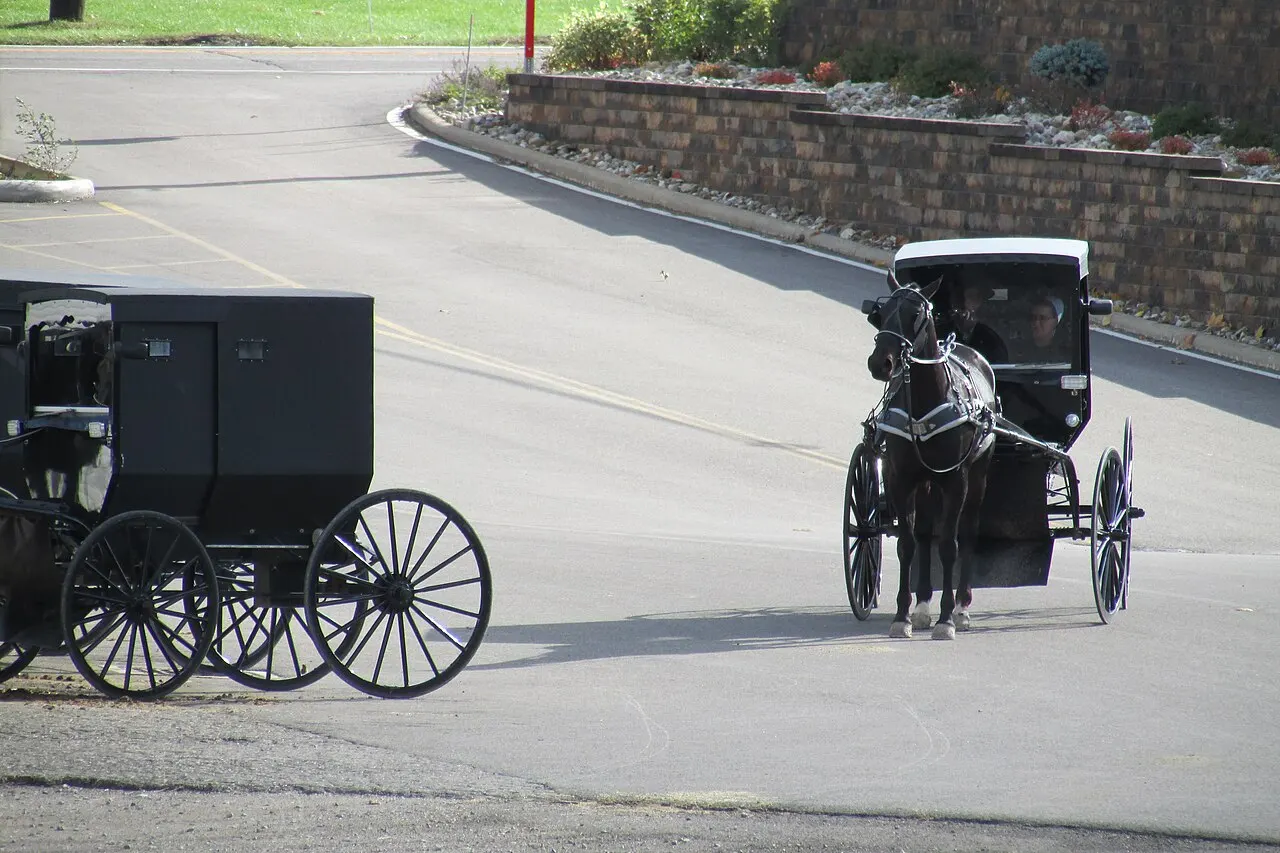
The Amish Country Byway threads roughly 160 miles through Wilmot, Walnut Creek, Berlin, Millersburg, Killbuck, Loudonville and Brinkhaven, and it’s the easiest way to string the small towns together without a plan more detailed than “keep driving.” Traffic here often means a horse-drawn buggy on a two-lane road instead of a red light. Give it plenty of room, and don’t try to pass on a blind curve.
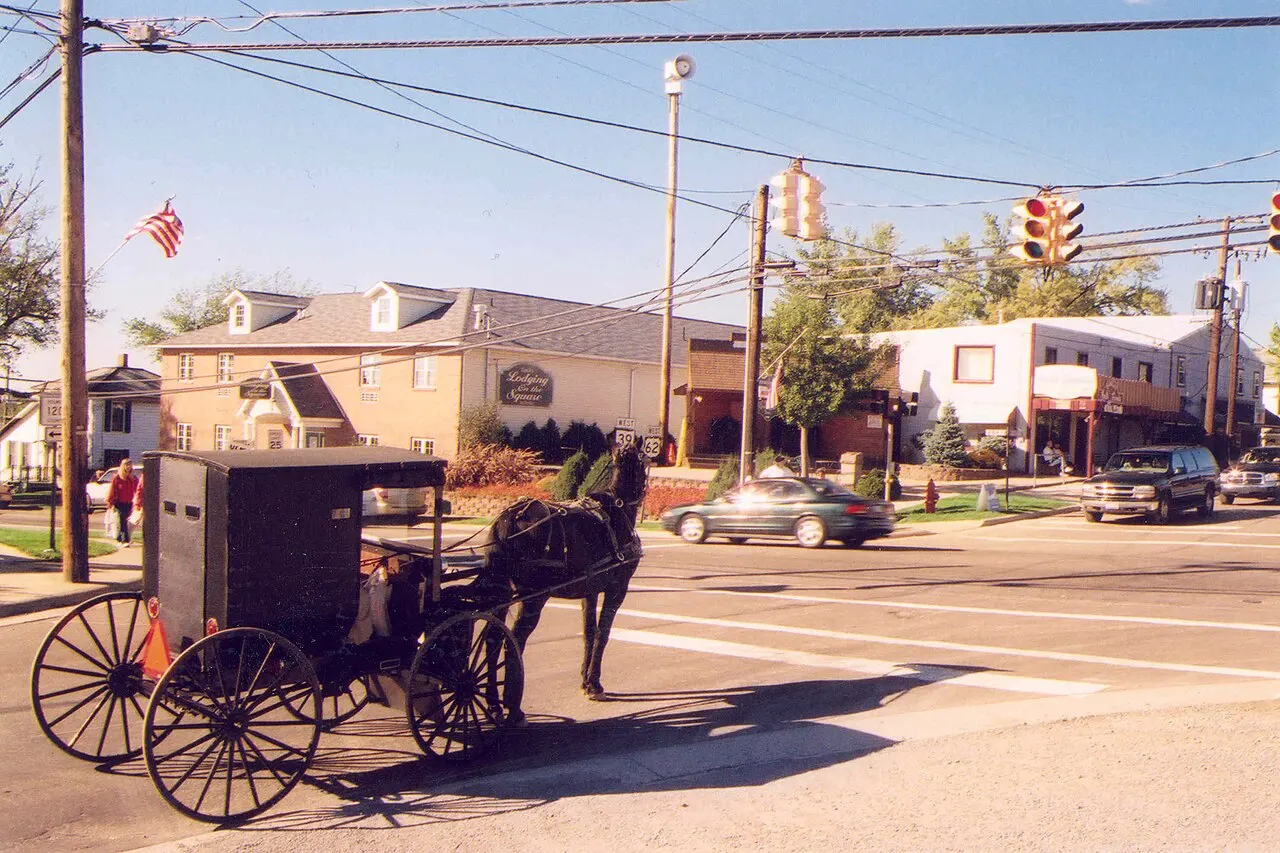
Getting around Ohio
Cleveland Hopkins is the airport for the Rock Hall and Cuyahoga Valley; Columbus and Cincinnati/Northern Kentucky cover the southern half of the state if your trip runs further that way. Holmes County has its own small general-aviation field, Holmes County Airport, but no scheduled commercial flights and no train service - it’s a car trip, about 72 miles and an hour and 40 minutes from Cleveland on a mix of interstate and two-lane state routes, and there’s no public transit substitute once you’re off I-77.
Beyond that, Ohio is measured in interstate hours. Columbus is 142 miles down I-71 from Cleveland, two and a half hours; Cincinnati is another 107 miles and two hours past that. That makes Columbus the natural middle stop on a road trip strung across several cities, and a poor plan if you were hoping to fly into one airport and stay put.
If you’ve got an extra day and want a fourth stop that isn’t remotely quiet, Cedar Point in Sandusky runs 18 roller coasters for the 2026 season, including Top Thrill 2 at 420 feet and 120 mph. It’s about 65 miles west of Cleveland along the lake, an hour and 20 minutes, and about as far from Amish Country’s pace as Ohio gets.
A long weekend, in the order that saves a drive
The three anchors fit a long weekend, but not in the order most people book them. Fly into Cleveland, do the Rock Hall on arrival afternoon - it’s two to three hours and it’s downtown, so it survives a delayed flight. Give day two to Cuyahoga Valley on the way south: Boston Mill, Brandywine Falls, the Ledges, and the Towpath if you rent bikes. Sleep in Berlin or Millersburg that night, so you wake up in Amish Country instead of driving to it. Day three is Holmes County at buggy speed, then back up to Cleveland for the flight, or on to Columbus if the trip continues south.
Do it the other way - Amish Country as a day trip out of a Cleveland hotel - and you drive those 72 miles twice in one day, and you arrive after the shops open and leave before the light gets good. Cedar Point only fits if you add a fourth day; it’s a full-day park, not a stop.
Fall is the strongest season to time any of this around. The Cuyahoga Valley’s maples and the Ledges’ oaks turn color in October, right as Amish Country’s roadside stands load up with the last of the apple harvest, and by then the humidity that makes a Cleveland summer sticky has already broken.
Read also
Ohio sits between two states already covered on this site: Michigan picks up the Great Lakes shoreline to the north, and Pennsylvania carries the same Amish Country story east into Lancaster County, the settlement Holmes County trails by population alone. West across the line, Indiana continues the Midwest road-trip corridor. If a Great Lakes loop is the bigger plan, Indiana Dunes closes the arc at the far end of Lake Michigan - a bit over 300 miles west of Cleveland, and the one stop on that loop where you swim.
On the map
The map loads on click - to keep the page lightweight.
The map didn’t load. Check your connection and refresh the page.
Admission and opening hours
- Admission price
- Rock and Roll Hall of Fame: adult $45, locals/students/military with ID $40, youth 6-12 $30, under 6 free, members free. Cuyahoga Valley National Park: no entrance fee, no pass required at all. Amish & Mennonite Heritage Center (Behalt cyclorama), on County Road 77 between Berlin and Millersburg: $14 adult and $6 for kids 12 and under for the 40-minute guided tour; the museum, gift shop and 15-minute video are free. Yoder's Amish Home: full package $15 adult (13+), $10 for ages 2-12; home and barn tour alone $9, buggy ride alone $4.75.
- Opening hours
- Rock Hall: September-June daily 10 a.m.-5 p.m., Thursday until 9 p.m.; July-August Sunday-Wednesday 10 a.m.-5 p.m., Thursday-Saturday 10 a.m.-8 p.m.; closed Thanksgiving and Christmas. Cuyahoga Valley National Park: open year-round, no gate hours; Boston Mill Visitor Center hours vary seasonally.
Rock Hall is entirely cashless - card or mobile pay only, and budget 2-3 hours since most exhibits sit underground on Level 0. Cuyahoga Valley Scenic Railroad tickets run $25-$38 per person depending on seat class; the Classic round trip takes about 4h15m, the Peninsula Express about 2h20m. Yoder's Amish Home narrows to Thursday-Saturday only from the back half of August through October 24.
Details checked: August 29, 2026
Read also

States · 11 min read
Connecticut: Mystic, New Haven and the Shoreline
Verified · September 12, 2026Mystic Seaport at $35 adult, free Yale galleries in New Haven, and Gillette Castle on the river - how a Connecticut weekend actually fits.

States · 9 min read
North Dakota: Medora and Theodore Roosevelt NP
Verified · September 5, 2026The 36-mile South Unit loop starts in Medora, entrance $30 per vehicle, cashless from May 2026 - how to plan Theodore Roosevelt National Park.

States · 9 min read
Arkansas Travel Guide: Hot Springs & Ozarks
Verified · September 4, 2026Fee-free Hot Springs NP downtown, free Crystal Bridges in Bentonville, and the 135-mile Buffalo - how to string an Arkansas road trip.

States · 10 min read
Indiana Travel Guide: Indy, Speedway, Shore
Verified · September 5, 2026IMS Museum at $25, Kiss the Bricks at $15, Brown County hills and Lake Michigan shore - an Indiana trip beyond a Chicago beach day.