
Nebraska: Sandhills, Trails, Crane Migration
Platte River crane season as a recurring window, free Scotts Bluff, Chimney Rock and Sandhills miles - how to time a Nebraska road trip.
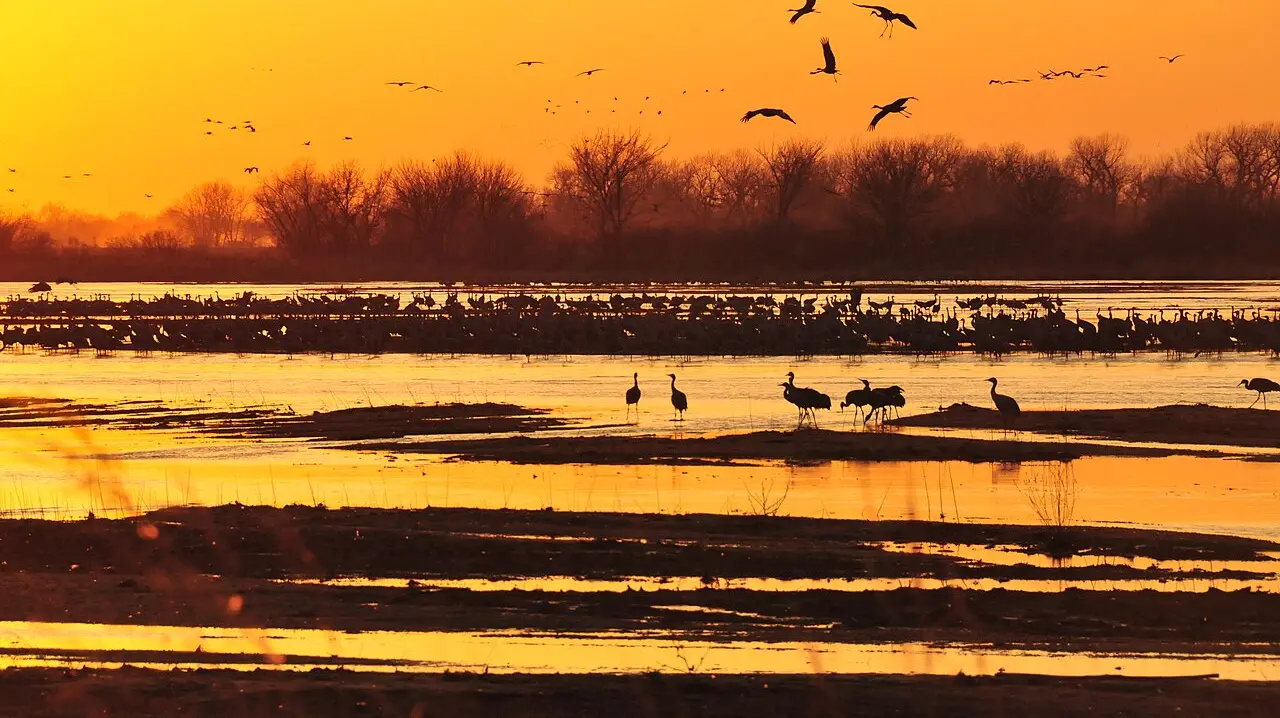
Nebraska looks empty from 35,000 feet and gets interesting the minute you slow down. Three trips share the license plate: the spring crane staging on the central Platte, the grass-covered Sandhills that swallow two-lane roads, and the Oregon Trail landmarks in the Panhandle. They don’t fit into one polite long weekend. Pick the season that matches the birds or the trails, then rent the car.
I-80 is the conveyor belt. Omaha and Lincoln handle airports and hotels. Kearney and Grand Island put you on the Platte for crane mornings. Scottsbluff and Gering put you under the bluffs where wagon trains aimed west. Iowa sits on the eastern door if you’re already mid-crossing; South Dakota pulls north when the Badlands are next on the list.
Crane season is a window, not a single magic date
Every late winter and early spring, sandhill cranes stage on the central Platte River before pushing north to nest. Audubon’s Rowe Sanctuary describes the pattern in plain language: birds typically begin arriving around Valentine’s Day and leave around Tax Day, with the sanctuary framing Crane Season as roughly February 15 to April 15. Peak numbers usually land in mid-to-late March, but Rowe schedules public tours for the stretches when its five-year average shows 30,000 or more birds on its river segment - so early, mid and late windows can all deliver a serious show even when the headline count isn’t the absolute maximum.
That’s the mechanic. Don’t treat a blog’s “best day” as a guarantee, and don’t invent a single peak date for your calendar invite. Book a blind for a morning or evening inside the published season, then watch the sky. Bring layers - March mornings on the Platte are cold even when the afternoon thaws - and expect a walk from the parking area to the blind in the dark for sunrise tours.
Kearney and Grand Island are the practical sleep towns. Omaha is about 154 miles east of Grand Island; Lincoln sits closer to the interstate hinge if you’re combining campus or museum time with a crane morning later in the week. Don’t try to fly into Omaha at noon and make a sunset blind the same day unless your schedule is unusually clean.
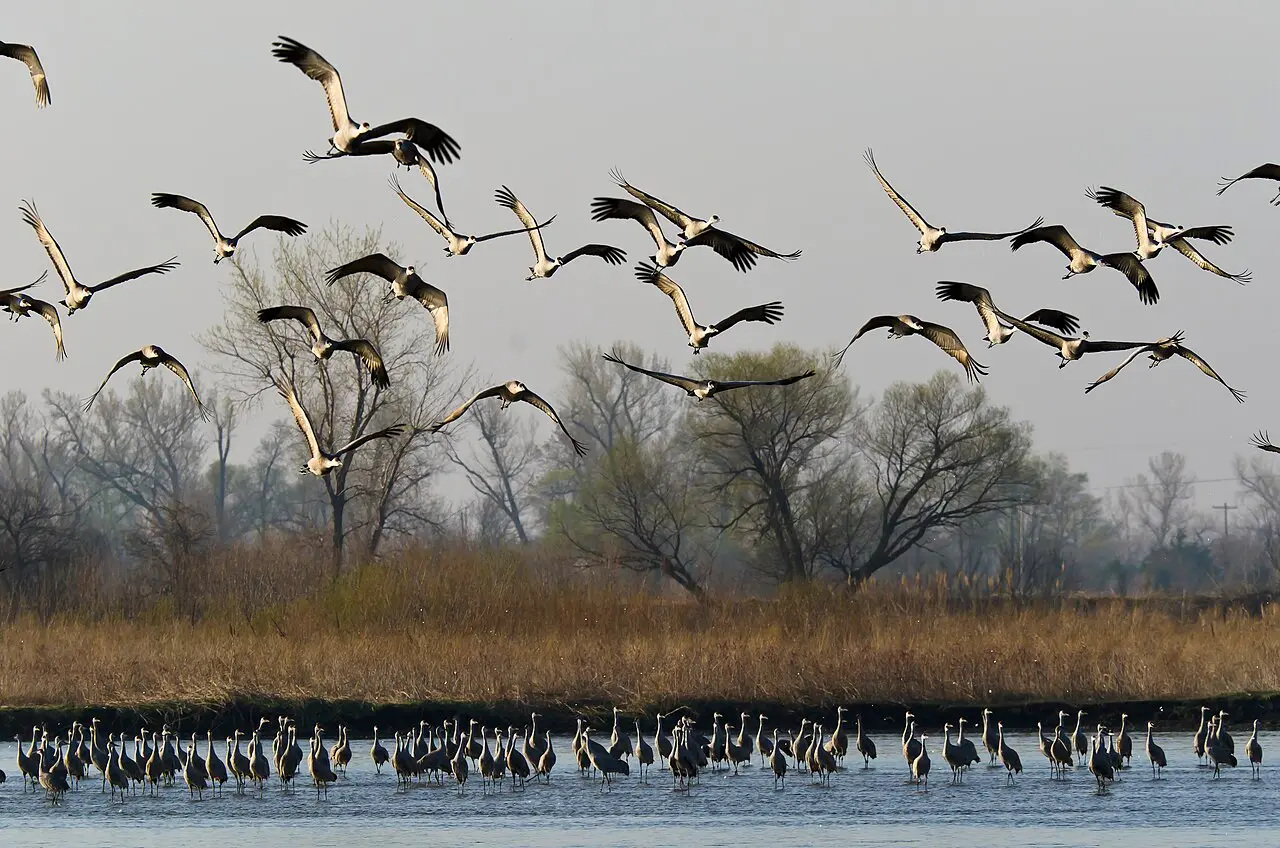
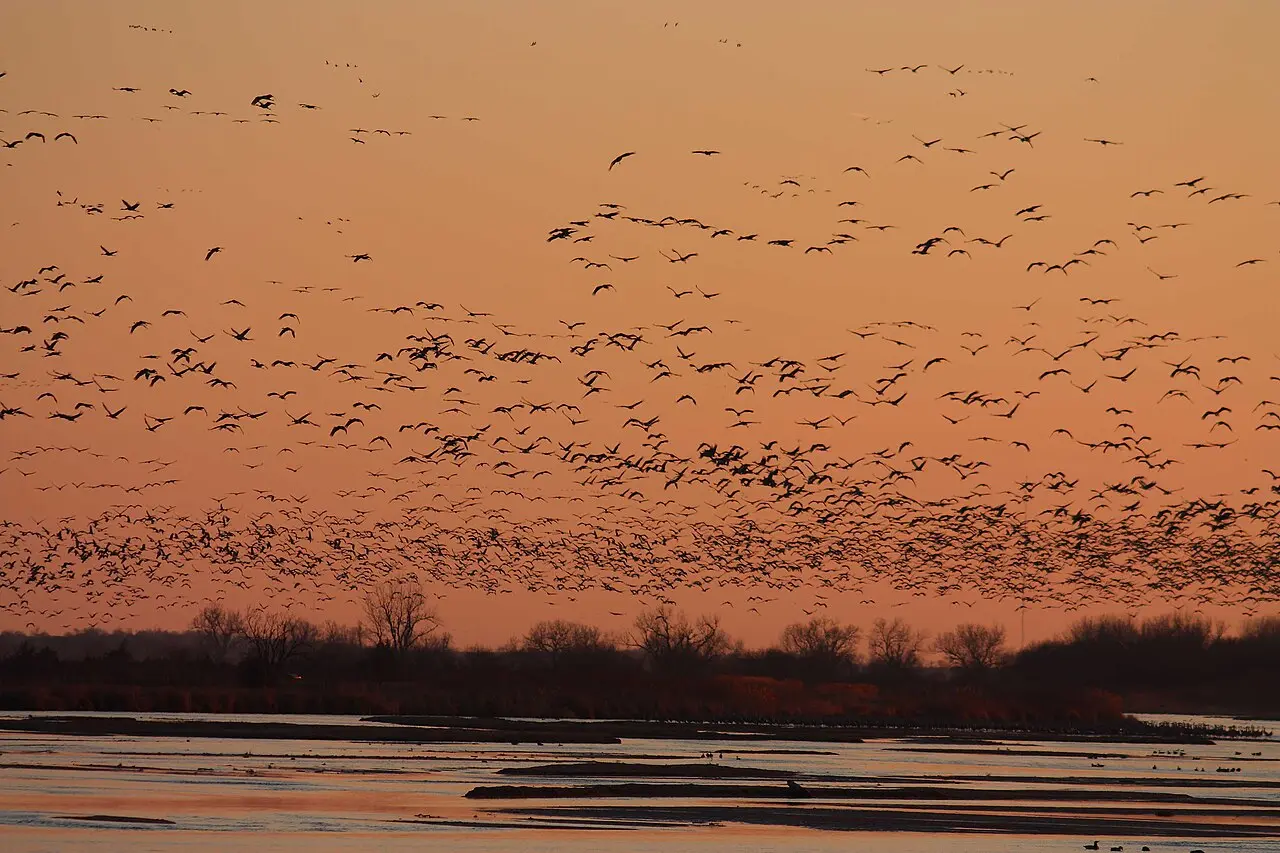
Audubon Rowe Sanctuary near Gibbon runs guided sunrise and sunset viewing from riverside blinds. For the next published season on the operator’s site (checked September 2026), the standard Guided Crane Experience is listed March 3 through April 6, 2027 at $60 per person plus taxes and fees for about three hours. Photography and overnight blinds carry higher rates and narrower date bands on the same pages - confirm before you pay, because wildlife calendars and prices update. Reservations for that season open January 7, 2027 at 9 a.m. CST and sell out; treat “we’ll wing it” as a plan to watch from a public bridge with binoculars instead. And if you’re traveling with kids, the operator isn’t vague about it: the guided tour is ages 10 and up, with the blunt condition that all guests be able to remain still and quiet for up to three hours. A seven-year-old isn’t a borderline case there - take the public viewing spots this trip and save the blind for when they’re older.
During crane season, Rowe limits trail use so roosting birds aren’t pushed off the river. Follow the sanctuary’s public-viewing guidance rather than improvising a hike to the bank. Whooping cranes sometimes appear later in the window; treat any sighting as luck, not an itinerary promise.
Sandhills: the state’s real empty quarter
North and west of the Platte, the Nebraska Sandhills roll for roughly a quarter of the state - grass-stabilized dunes, cattle, alkaline lakes and horizons that make people recalibrate what “flat” means. This isn’t a theme-park loop. It’s a drive for people who like gravel shoulders, ranch gates and weather you can see coming for twenty miles.
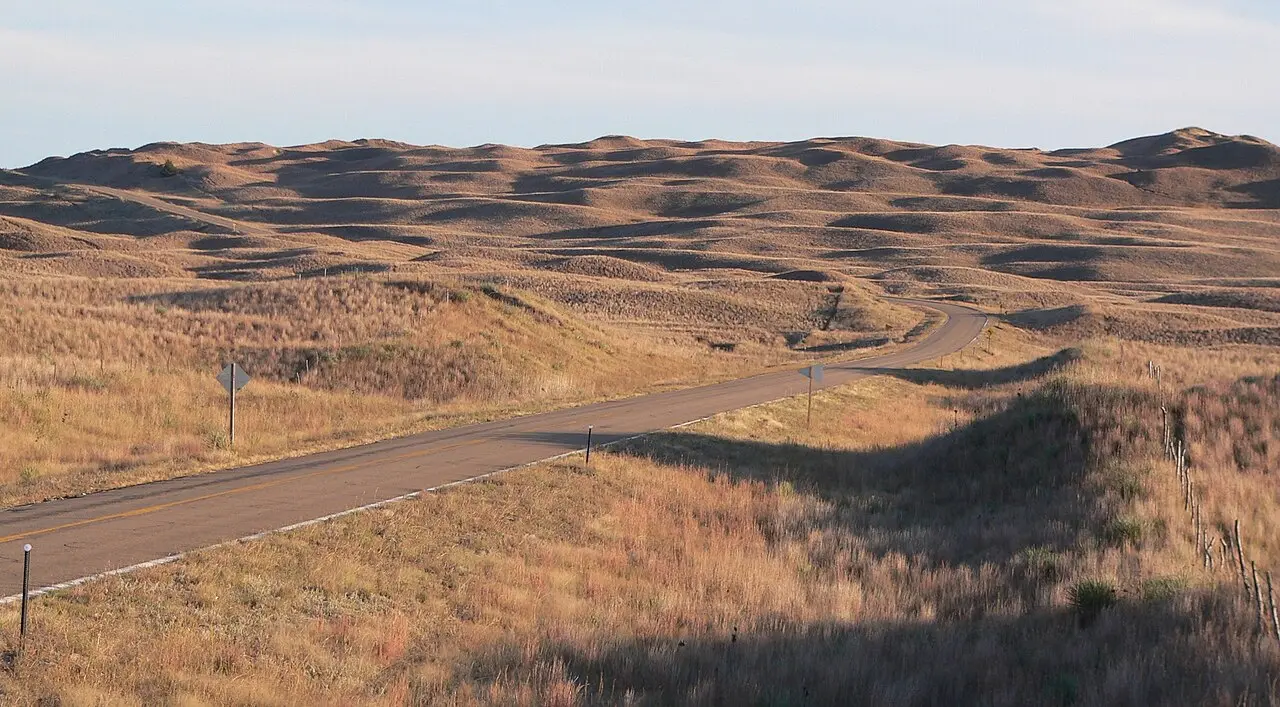
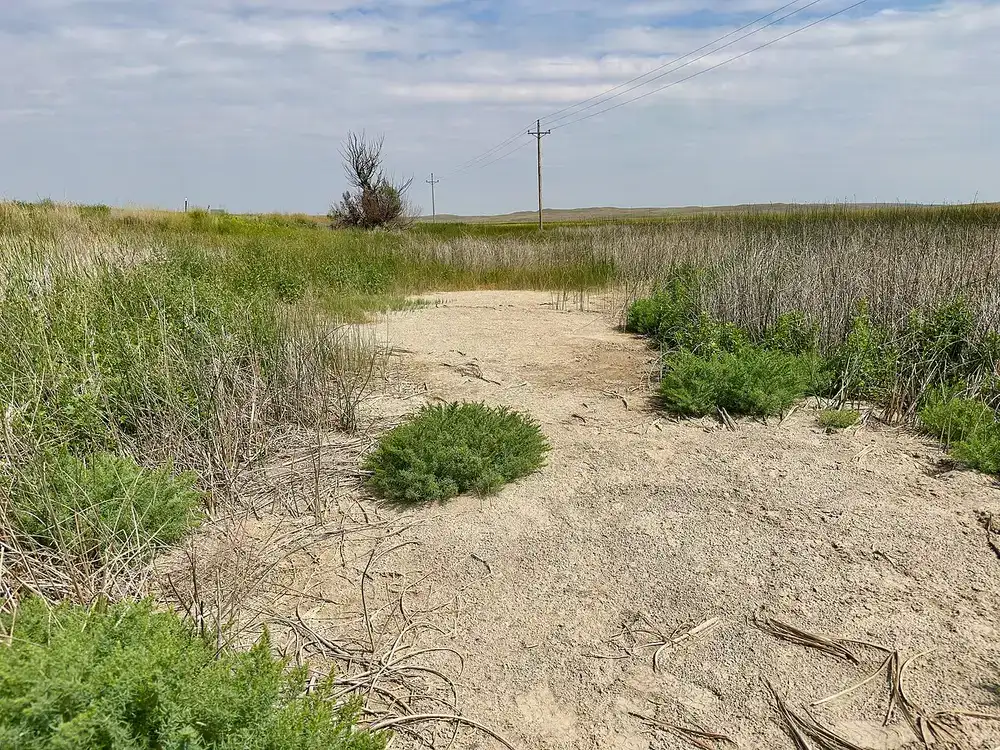
Fuel, food and lodging thin out fast once you leave Broken Bow, Valentine or Thedford. Download offline maps. Summer thunderstorms and winter whiteouts both rewrite itineraries here. Pair a Sandhills day with a return to an I-80 town unless you’re equipped for real remoteness. Highway 2 across the Sandhills is the classic transect; it isn’t a shortcut to anywhere except the feeling that the Midwest still has blank spots on the map.
Ranch hospitality and guided birding days exist, but prices live with operators and change by season - this guide doesn’t invent a ranch day rate. Treat the Sandhills as scenery and solitude first, shopping second.
Pioneer Trail landmarks without a second fee wall
Western Nebraska’s postcard is the Oregon-California-Mormon trail corridor along the North Platte. Chimney Rock is the spire emigrants sketched in diaries; Scotts Bluff National Monument is the bigger mass where wagons squeezed through Mitchell Pass.
Scotts Bluff charges nothing at the gate - no entrance fee, no pass required to enter or to drive the Summit Road, per NPS. Rangers may staff the entrance in summer to watch for oversized vehicles on the climb, not to take your card. That makes it one of the easier national monuments on a cross-country budget. Give the summit drive and a short trail an hour or two; the views over the North Platte valley explain why emigrants celebrated when the bluff finally appeared.
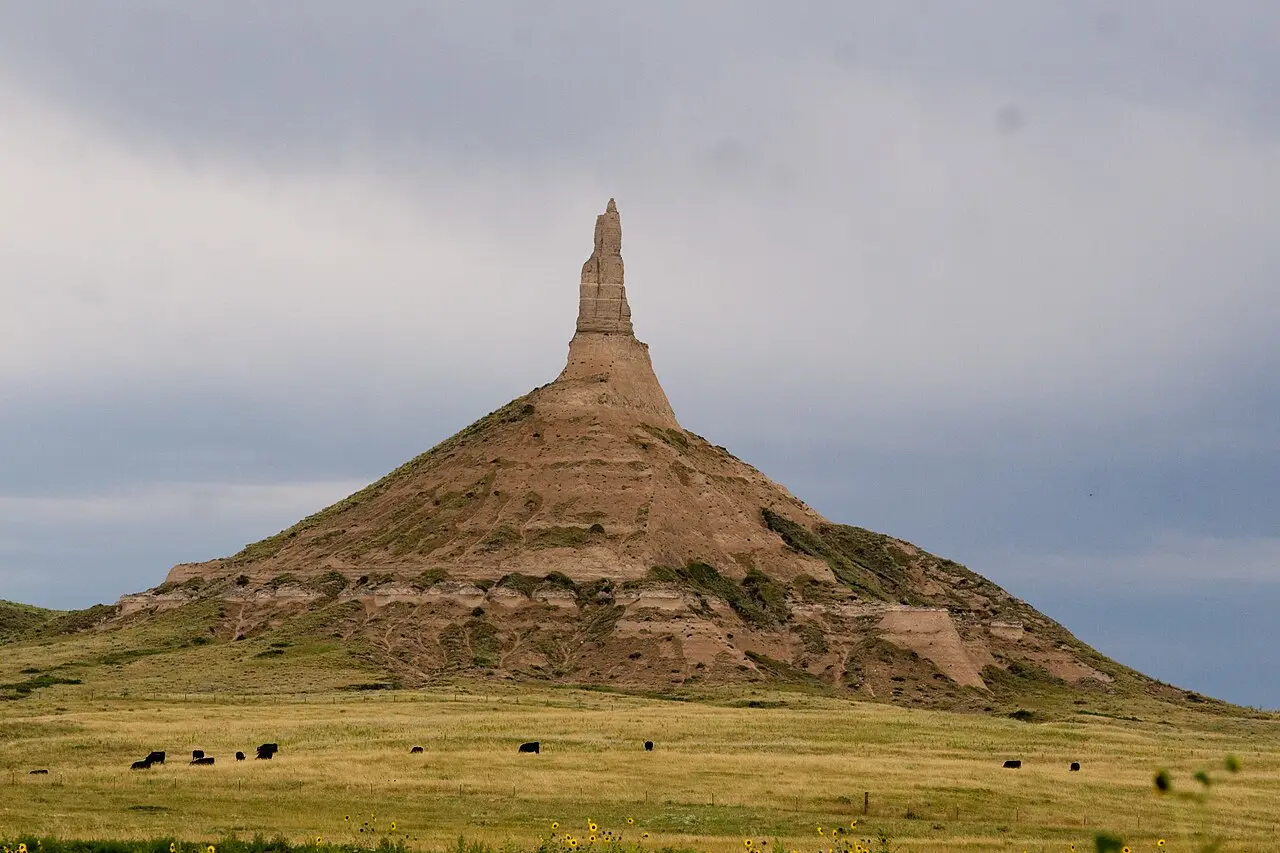
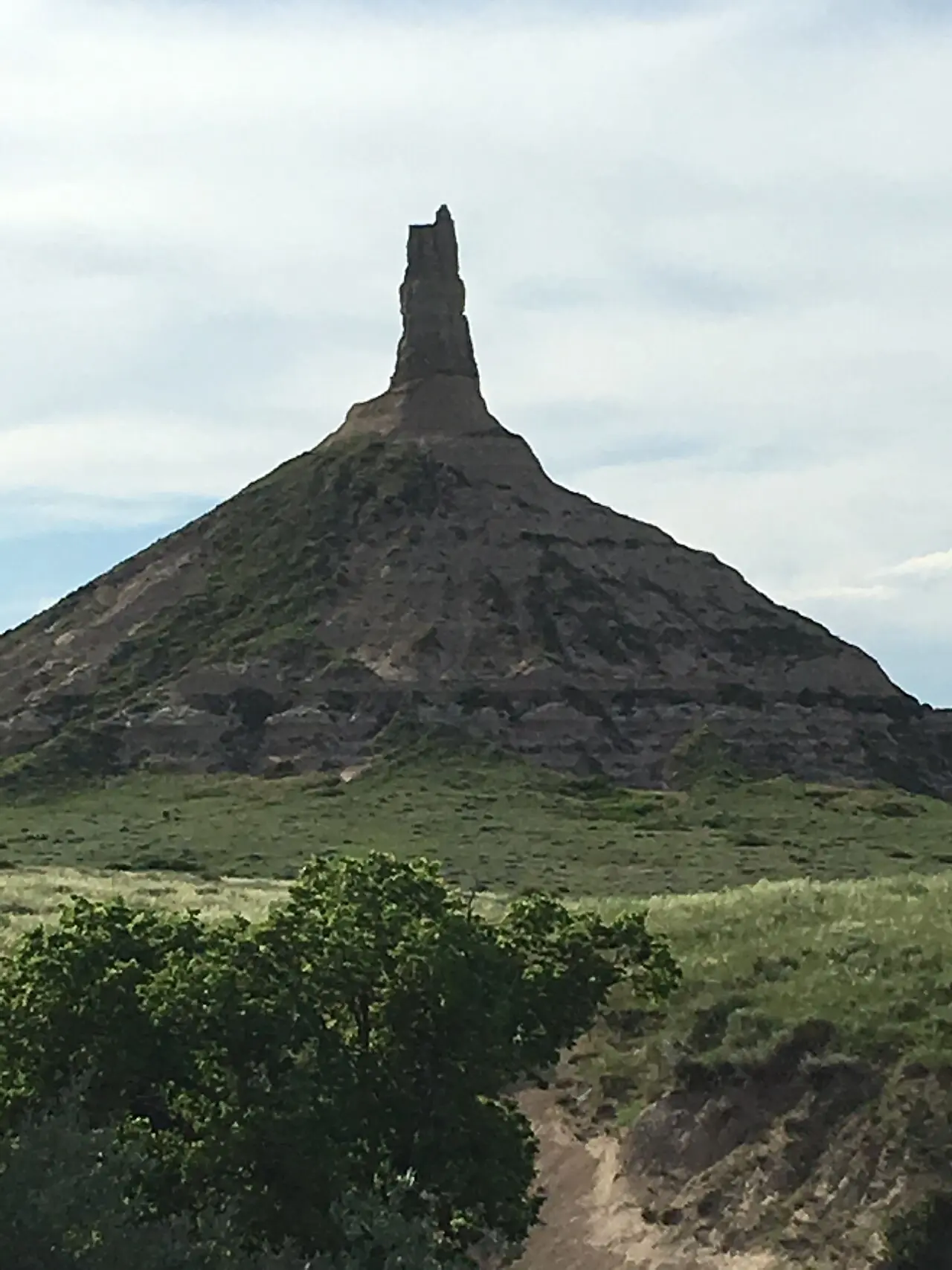
Chimney Rock sits about 23 miles from Scottsbluff on the same valley logic - call it half an hour behind the wheel, not a day trip. The visitor center is at 9822 County Rd 75, Bayard, NE 69334, and History Nebraska runs it at $5 for adults 19 and over, $3 for ages 5-18, and free for ages 4 and under (members and listed reciprocal categories free; Museums for All discounts with SNAP EBT). The spire is visible from the road, so the postcard shot doesn’t depend on buying a ticket. Together with free Scotts Bluff, the two stops fill an afternoon without an America the Beautiful pass.
Omaha, Lincoln or the Panhandle
From Eppley Airfield in Omaha you’re about 64 miles from Lincoln and about 154 miles from Grand Island. Lincoln to Kearney runs about 130 miles. Those are the eastern and central legs. The Panhandle is a different flight plan - often into Denver or a long I-80 push west - so don’t pretend a crane weekend and a Scotts Bluff weekend share a rental return desk.
Crane travelers: sleep in Kearney, Grand Island or nearby towns, book the blind first, plan a second day for sandhill daylight feeding fields if weather cooperates. Trail travelers: base in Scottsbluff or Gering, do Chimney Rock and Scotts Bluff, then decide whether the Sandhills deserve a northbound day or you’re turning back toward I-80. Trying to stitch cranes and the Panhandle into 72 hours means you’ll see a lot of interstate and not enough sky.
Summer heat on the Summit Road is real; spring crane mornings are cold enough for layers even when the afternoon feels mild. Nebraska doesn’t do half measures with weather. Check road conditions before a Sandhills loop in shoulder season - a closed ranch road stranding isn’t the postcard you came for.
You’ll get more from this state by choosing one story - birds, grass or wagons - than by trying to collect all three stamps before the rental is due. The cranes will be back next February either way; the only deadline is the blind reservation for the year you’re actually traveling.
On the map
The map loads on click - to keep the page lightweight.
The map didn’t load. Check your connection and refresh the page.
Admission and opening hours
- Admission price
- Scotts Bluff National Monument: no entrance fee; Summit Road free. Chimney Rock State Historic Site (History Nebraska visitor center, 9822 County Rd 75, Bayard, NE 69334): adults 19+ $5, children 5-18 $3, ages 4 and under free - the spire itself is visible from the road, and the fee is for the visitor center and museum. Rowe Sanctuary Guided Crane Experience (next published season): $60 per person plus taxes and fees for the spring viewing season, which the operator sets each year and gives as March 3-April 6 in 2027, ages 10 and up; reservations open January 7, 2027 at 9 a.m. CST - confirm live prices and dates on audubon.org/rowe before you book.
- Opening hours
- Crane staging on the central Platte typically runs from around Valentine's Day into mid-April (Audubon Rowe: arrive around Valentine's Day, leave around Tax Day; Crane Season framed February 15-April 15). Guided Rowe tours run on operator calendars inside that window. Scotts Bluff grounds sunrise to sunset; confirm visitor center hours seasonally. Chimney Rock visitor center hours shift seasonally - confirm on history.nebraska.gov/rock.
Crane timing is a recurring seasonal mechanic, not a single snapshot date. Numbers shift year to year; Rowe schedules tours when its five-year average shows 30,000+ birds on its river stretch. Book blinds early - they sell out.
Details checked: September 3, 2026
Read also

States · 11 min read
Connecticut: Mystic, New Haven and the Shoreline
Verified · September 12, 2026Mystic Seaport at $35 adult, free Yale galleries in New Haven, and Gillette Castle on the river - how a Connecticut weekend actually fits.

States · 9 min read
North Dakota: Medora and Theodore Roosevelt NP
Verified · September 5, 2026The 36-mile South Unit loop starts in Medora, entrance $30 per vehicle, cashless from May 2026 - how to plan Theodore Roosevelt National Park.

States · 9 min read
Arkansas Travel Guide: Hot Springs & Ozarks
Verified · September 4, 2026Fee-free Hot Springs NP downtown, free Crystal Bridges in Bentonville, and the 135-mile Buffalo - how to string an Arkansas road trip.

States · 10 min read
Indiana Travel Guide: Indy, Speedway, Shore
Verified · September 5, 2026IMS Museum at $25, Kiss the Bricks at $15, Brown County hills and Lake Michigan shore - an Indiana trip beyond a Chicago beach day.